

Band Single Leg Reverse Calf Raise vs Peroneals Stretch: Complete Comparison Guide
Band Single Leg Reverse Calf Raise vs Peroneals Stretch — you’re choosing between a loaded isolation move and a targeted mobility option for the lower-leg. I’ll walk you through mechanics, muscle activation, equipment needs, technique cues, and when each tool belongs in your program. Expect clear reps/ranges, specific technique tips (like knee angle and tempo), and biomechanical reasoning (lever arms, length–tension, force vectors) so you can pick the best option for strength, hypertrophy, rehab, or mobility.
Exercise Comparison
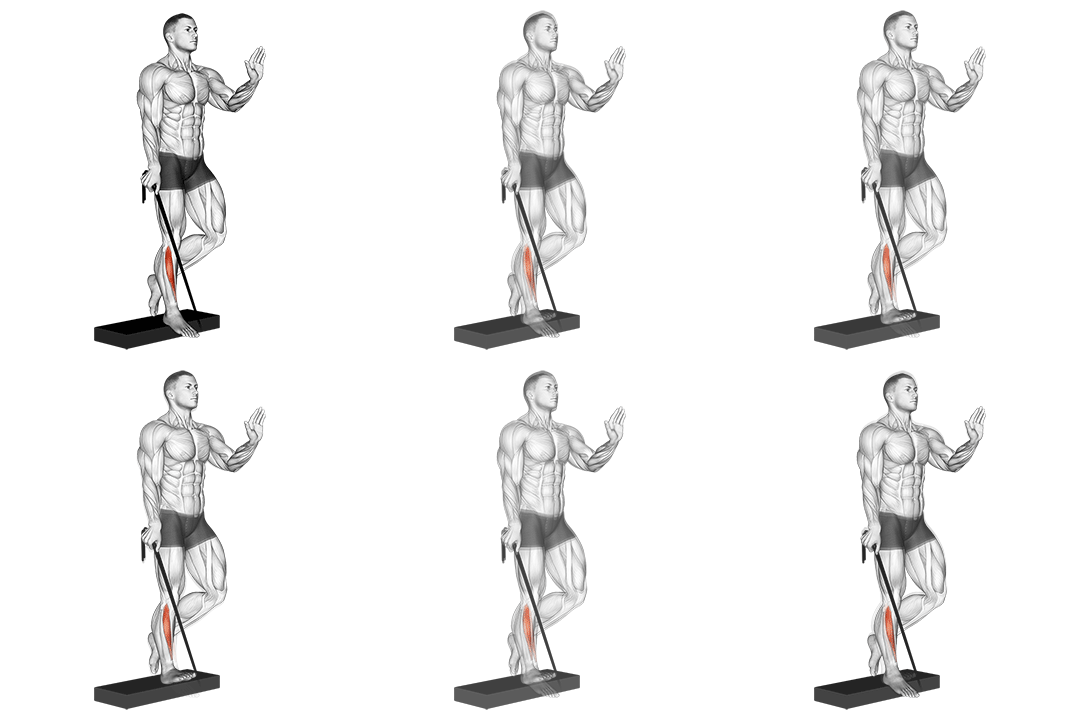
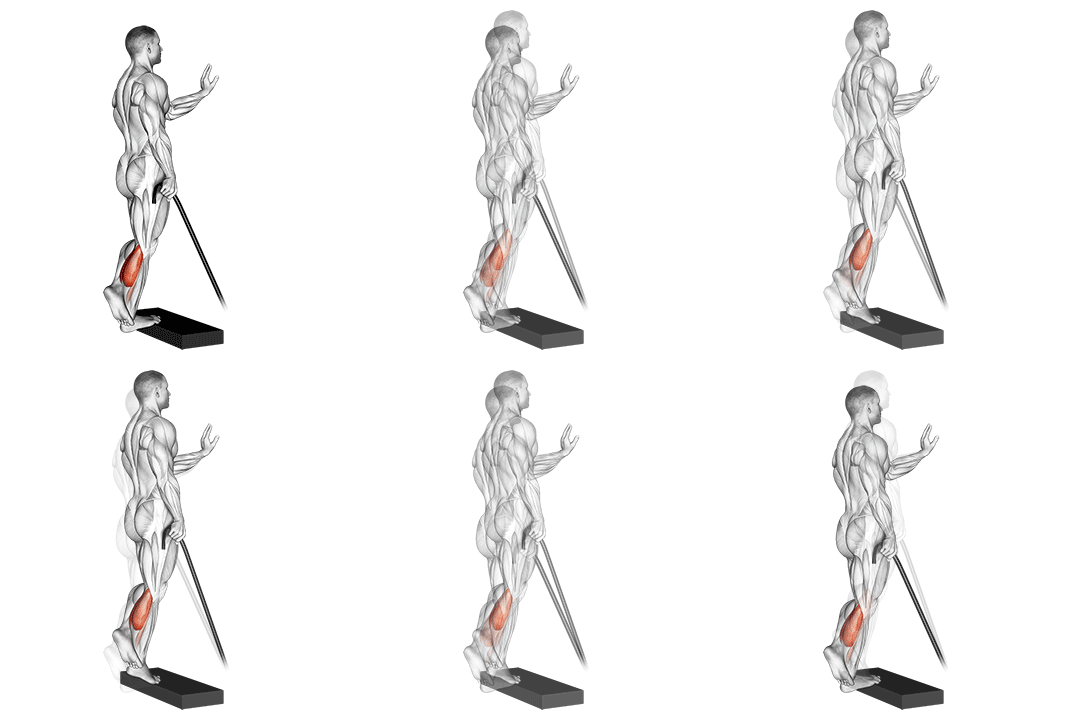
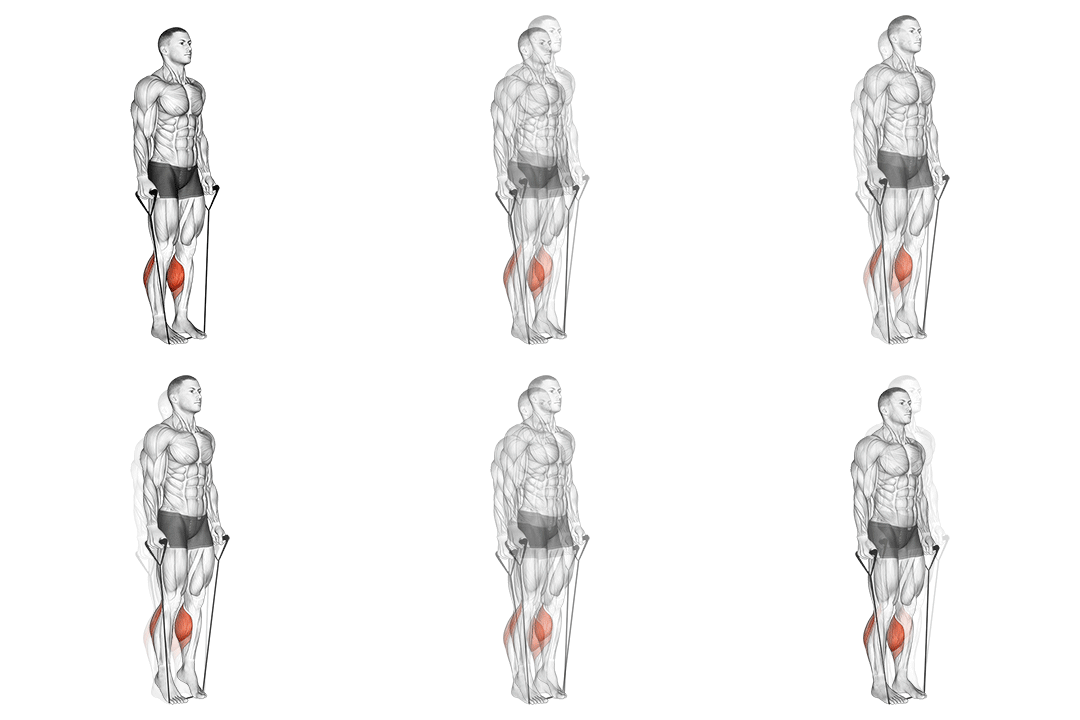
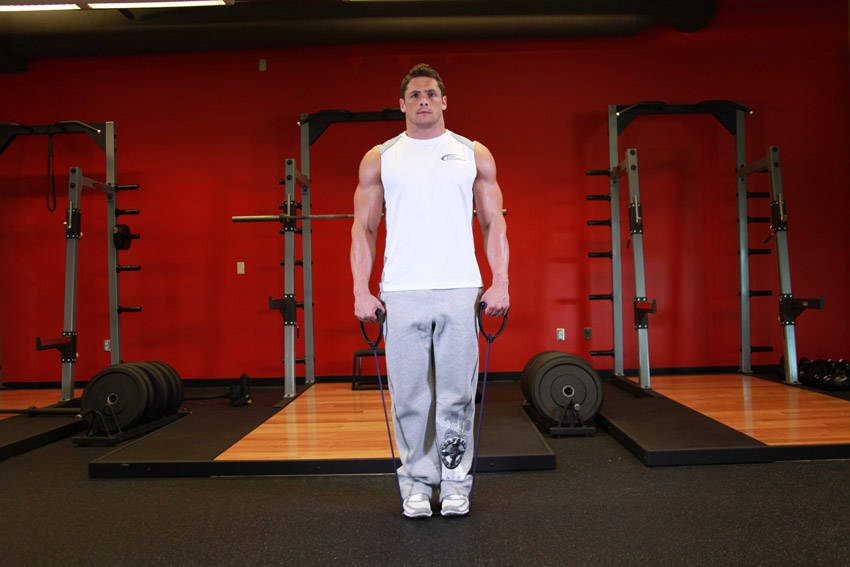
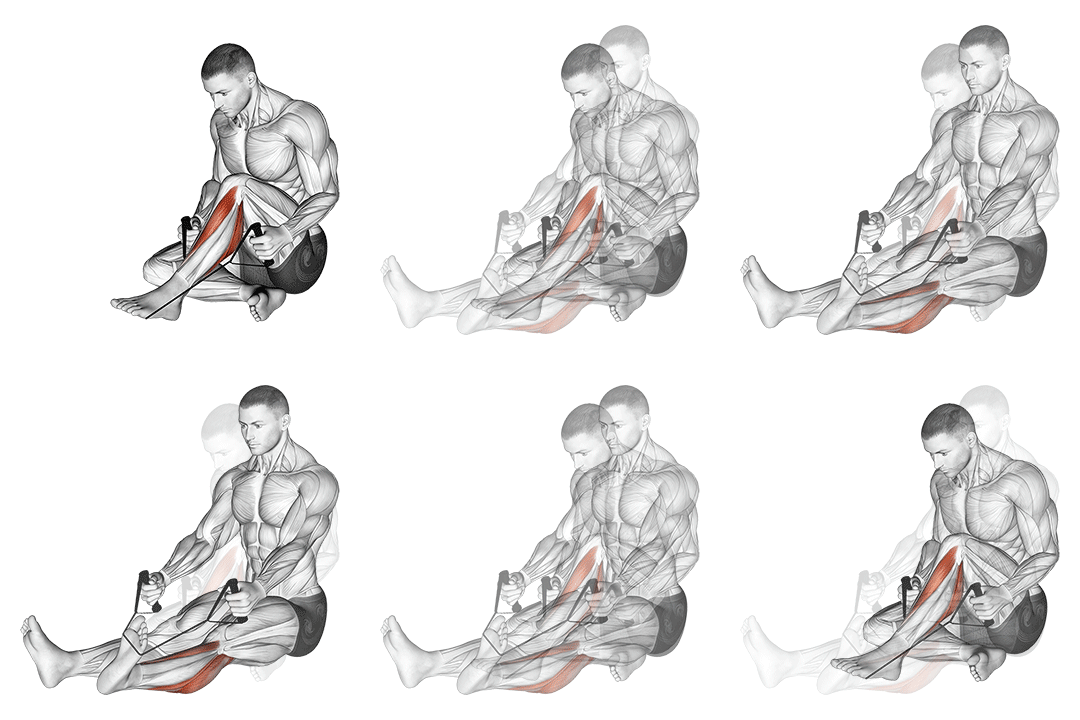
Band Single Leg Reverse Calf Raise
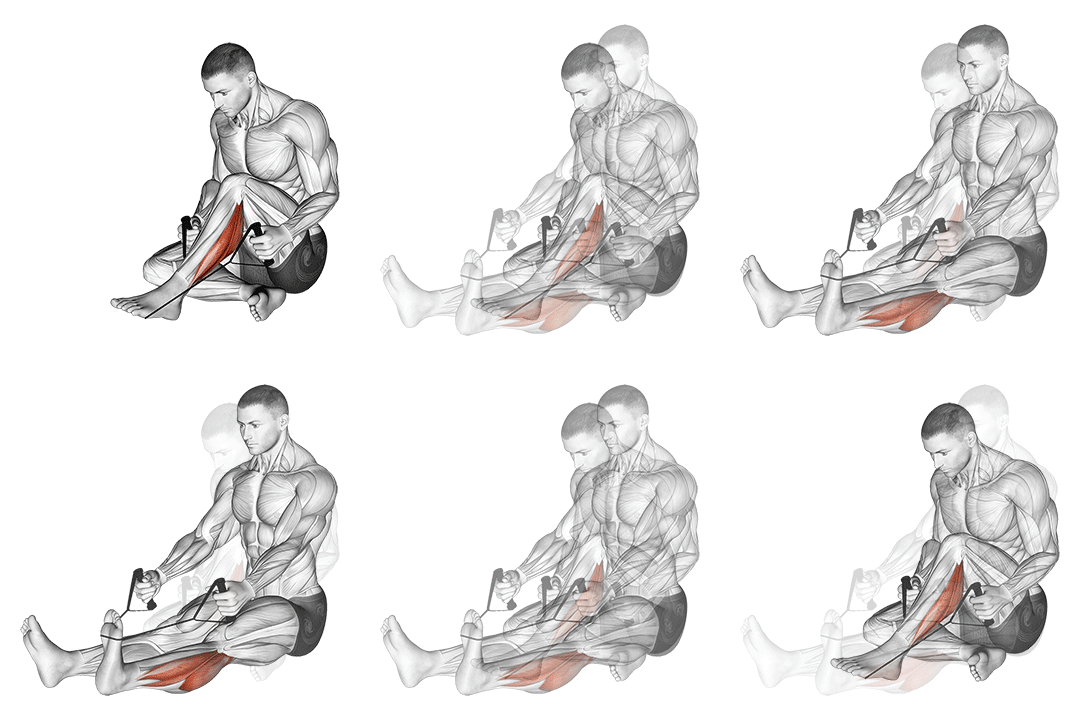
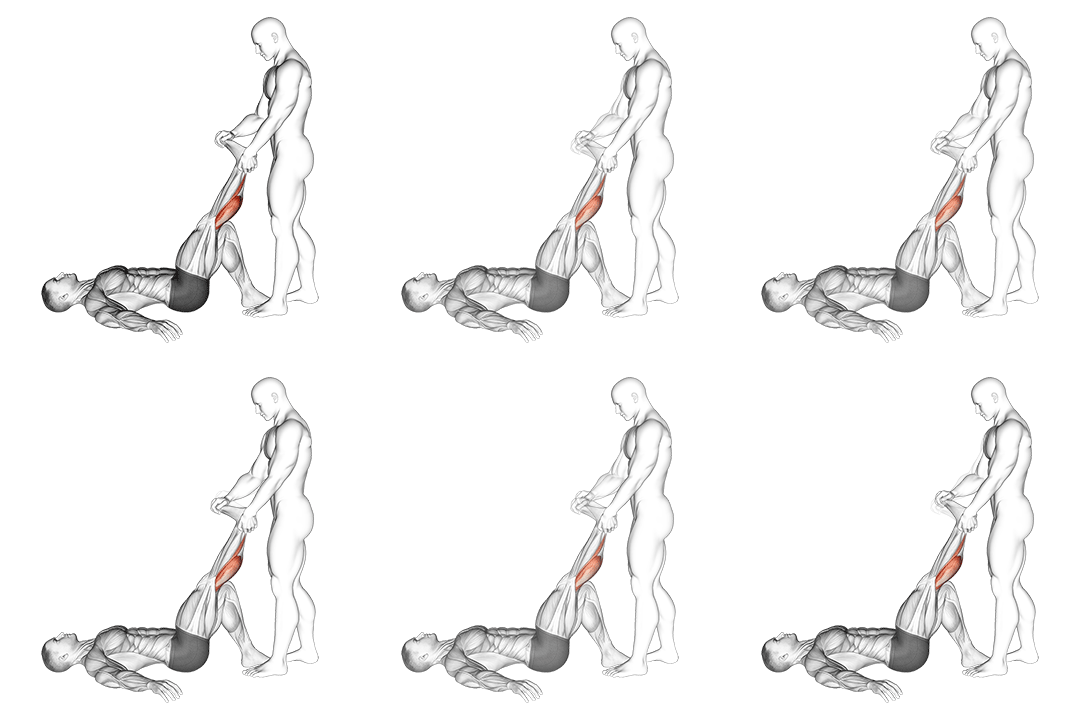
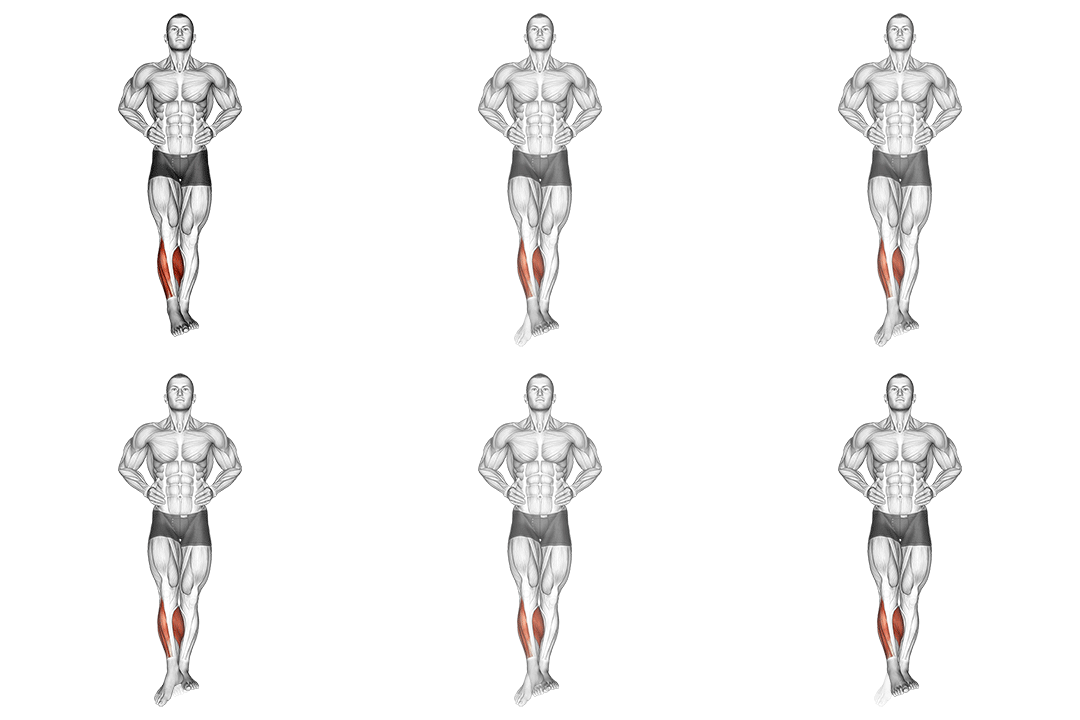
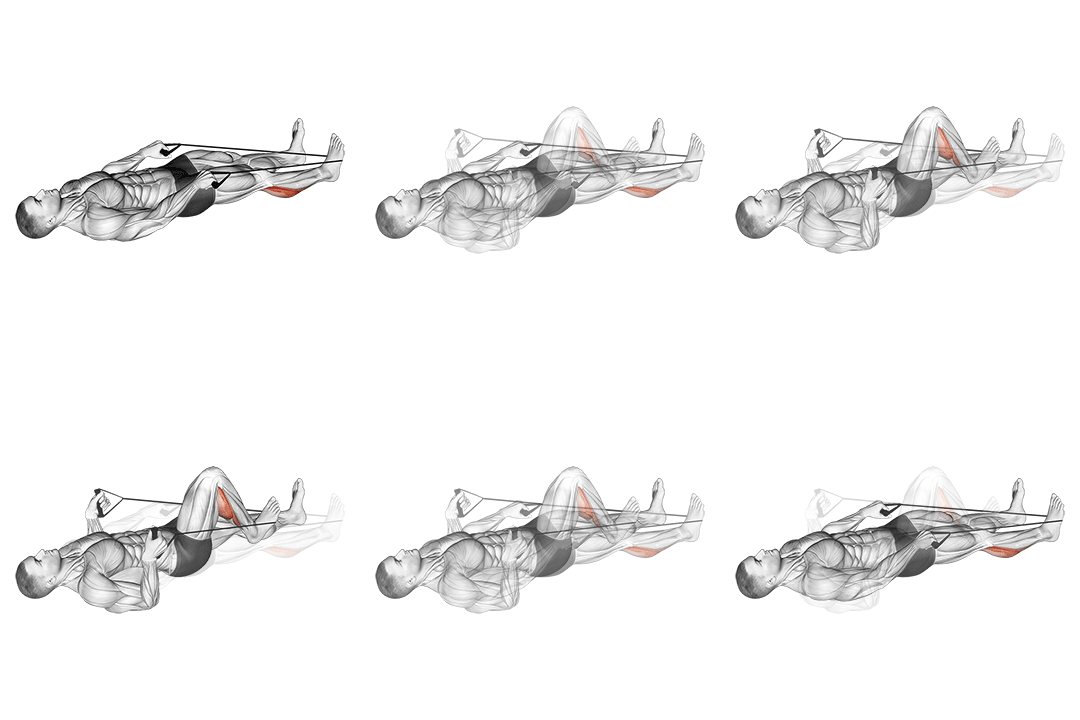
Peroneals Stretch
Head-to-Head Comparison
| Attribute | Band Single Leg Reverse Calf Raise | Peroneals Stretch |
|---|---|---|
| Target Muscle |
Calves
|
Calves
|
| Body Part |
Lower-legs
|
Lower-legs
|
| Equipment |
Band
|
Rope
|
| Difficulty |
Beginner
|
Beginner
|
| Movement Type |
Isolation
|
Isolation
|
| Secondary Muscles |
2
|
2
|
Secondary Muscles Activated
Band Single Leg Reverse Calf Raise
Peroneals Stretch
Visual Comparison
Overview
Band Single Leg Reverse Calf Raise vs Peroneals Stretch — you’re choosing between a loaded isolation move and a targeted mobility option for the lower-leg. I’ll walk you through mechanics, muscle activation, equipment needs, technique cues, and when each tool belongs in your program. Expect clear reps/ranges, specific technique tips (like knee angle and tempo), and biomechanical reasoning (lever arms, length–tension, force vectors) so you can pick the best option for strength, hypertrophy, rehab, or mobility.
Key Differences
- Equipment differs: Band Single Leg Reverse Calf Raise uses Band, while Peroneals Stretch requires Rope.
Pros & Cons
Band Single Leg Reverse Calf Raise
+ Pros
- Direct mechanical tension to gastrocnemius and soleus for muscle growth and strength
- Single-leg stance improves unilateral stability and engages hamstrings and glutes
- Easy progressive overload by increasing band tension or reps (8–20 rep range)
- Can be loaded eccentrically to target tendon remodeling and force production
− Cons
- Requires balance and coordination; may be hard for unsteady beginners
- If performed with poor ankle alignment, it can overload the Achilles
- Limited maximum load compared with weighted calf raises unless using very strong bands
Peroneals Stretch
+ Pros
- Excellent for increasing peroneal and lateral ankle flexibility and reducing lateral ankle tightness
- Low-load, low-risk method to improve ankle dorsiflexion when combined with subtalar positioning
- Useful in rehab or prehab to address inversion sprain history
- Requires minimal strength; suitable for very deconditioned or injured clients
− Cons
- Does not provide significant mechanical tension for calf muscle hypertrophy
- Proper stretching alignment (subtalar neutral vs pronated) is technical and easy to do incorrectly
- Progressions are limited if the goal is strength rather than mobility
When Each Exercise Wins
It creates active mechanical tension through concentric and eccentric phases, can be progressed via band tension and volume (8–20 reps), and places the calf under load across a functional ROM—key drivers of muscle growth.
The single-leg loading increases ankle moment and neural drive to the plantarflexors; tempo manipulation and eccentric emphasis build force capacity more directly than a passive stretch.
It’s simpler to perform, lower risk, and helps restore ankle mobility and tissue length before adding loaded exercises; ideal if your priority is pain-free range or rehab.
Resistance bands are cheap and portable, and a single-band setup lets you train both strength and stability at home without special anchors required for effective stretching variations.
Frequently Asked Questions
Can I do both Band Single Leg Reverse Calf Raise and Peroneals Stretch in the same workout?
Yes. Do the Peroneals Stretch as a warm-up or mobility set first (30–60s holds) to improve dorsiflexion, then follow with band single-leg raises for strength (3–4 sets, 8–20 reps). This sequence uses improved range to produce safer, stronger contractions.
Which exercise is better for beginners?
For absolute beginners or those with ankle stiffness, the Peroneals Stretch is better to restore mobility and reduce injury risk. Once you have pain-free range and basic single-leg balance, progress to the band single-leg raise for strength.
How do the muscle activation patterns differ?
Band single-leg raises produce active concentric plantarflexion and eccentric control of gastrocnemius and soleus, peaking in mid-range length–tension. The peroneals stretch mainly creates passive tension in the lateral compartment with minimal active EMG unless you add resisted eversion.
Can Peroneals Stretch replace Band Single Leg Reverse Calf Raise?
No—if your goal is strength or hypertrophy, the peroneals stretch cannot replace the mechanical tension provided by the band raise. Use the stretch to support mobility and tendon health, but include loaded calf work for strength adaptations.
Expert Verdict
Choose the Band Single Leg Reverse Calf Raise when your goal is calf strength, unilateral stability, or muscle growth—use 3–4 sets of 8–20 reps, keep the knee ~20–30° to bias soleus, control a 2–3 second eccentric, and increase band tension progressively. Use the Peroneals Stretch when your priority is ankle mobility, peroneal tendon health, or prehab after inversion sprain—hold 30–60 seconds, maintain neutral tibial alignment, and avoid sharp pain. For a balanced program, start sessions with peroneal mobility to restore range, then load the calf with the band raise for strength and hypertrophy.
Also Compare
More comparisons with Band Single Leg Reverse Calf Raise
Compare More Exercises
Use our free comparison tool to analyze any two exercises head-to-head.
Compare Exercises