

Barbell Bench Front Squat vs Barbell One Leg Squat: Complete Comparison Guide
Barbell Bench Front Squat vs Barbell One Leg Squat is the matchup many lifters ask about when they want bigger quads and better single-leg strength. You’ll get a straight, practical breakdown of how each exercise loads the quadriceps, which secondary muscles kick in, and how biomechanics change with bar position and stance. I’ll cover muscle activation, movement cues (elbow position, knee tracking, depth angles), equipment needs, progression paths, and who's best suited for each lift so you can pick the right tool for your goals.
Exercise Comparison
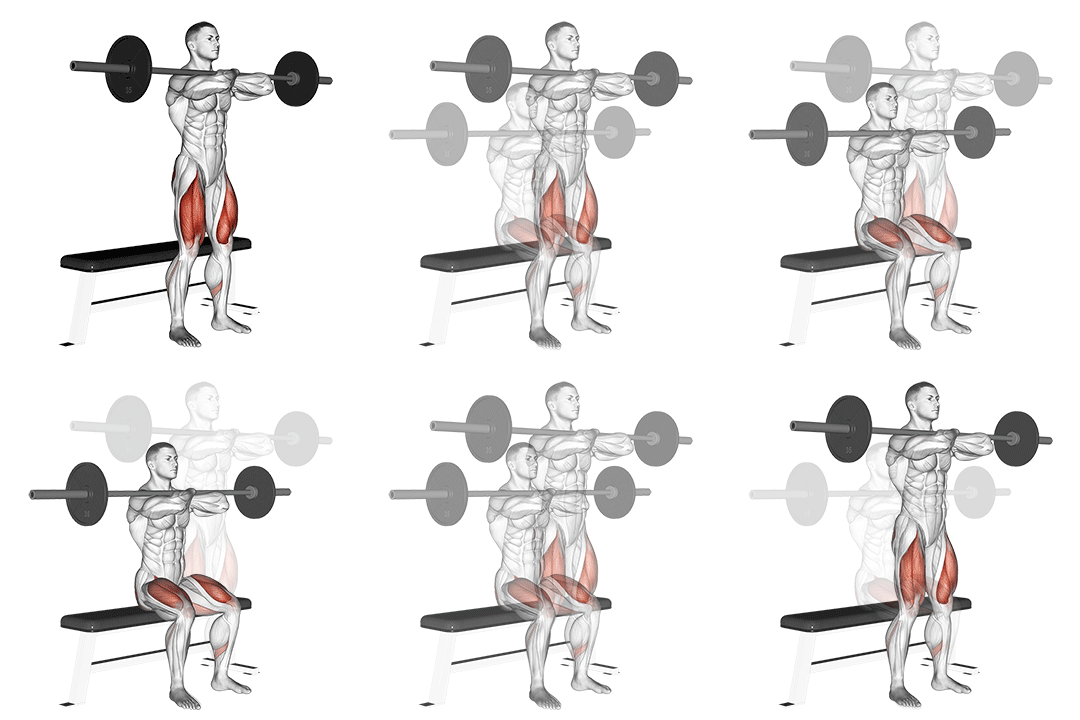
Barbell Bench Front Squat
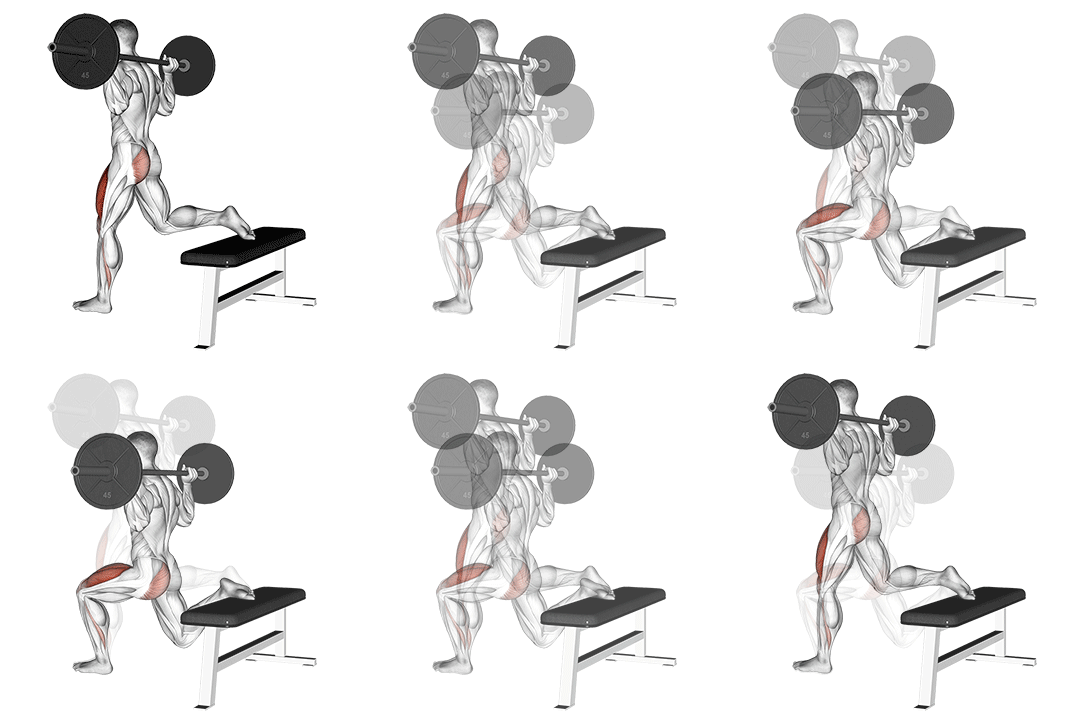
Barbell One Leg Squat
Head-to-Head Comparison
| Attribute | Barbell Bench Front Squat | Barbell One Leg Squat |
|---|---|---|
| Target Muscle |
Quads
|
Quads
|
| Body Part |
Upper-legs
|
Upper-legs
|
| Equipment |
Barbell
|
Barbell
|
| Difficulty |
Intermediate
|
Advanced
|
| Movement Type |
Compound
|
Compound
|
| Secondary Muscles |
3
|
3
|
Secondary Muscles Activated
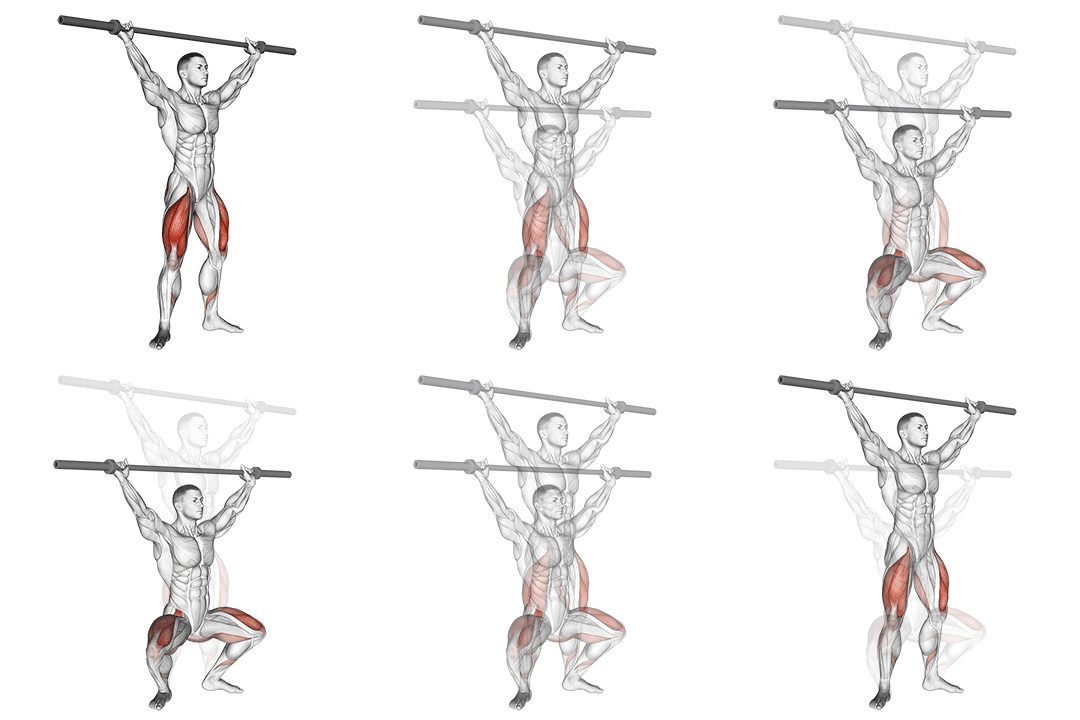
Barbell Bench Front Squat
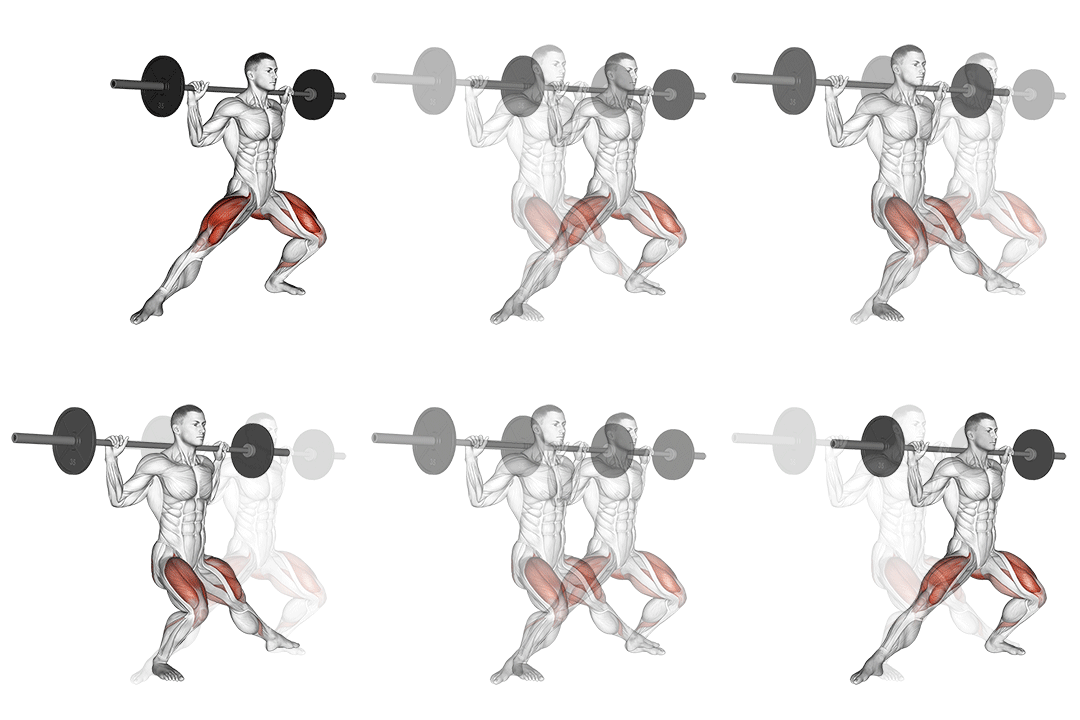
Barbell One Leg Squat
Visual Comparison
Overview
Barbell Bench Front Squat vs Barbell One Leg Squat is the matchup many lifters ask about when they want bigger quads and better single-leg strength. You’ll get a straight, practical breakdown of how each exercise loads the quadriceps, which secondary muscles kick in, and how biomechanics change with bar position and stance. I’ll cover muscle activation, movement cues (elbow position, knee tracking, depth angles), equipment needs, progression paths, and who's best suited for each lift so you can pick the right tool for your goals.
Key Differences
- Difficulty levels differ: Barbell Bench Front Squat is intermediate, while Barbell One Leg Squat is advanced.
- Both exercises target the Quads using Barbell. The main differences are in their movement patterns and muscle activation angles.
Pros & Cons
Barbell Bench Front Squat
+ Pros
- Allows heavier bilateral loading for quad hypertrophy and strength
- More stable spinal alignment due to front rack and upright torso
- Easier to program progressive overload with small weight increments
- Bench depth provides consistent, reproducible depth and technique cue
− Cons
- Requires good front-rack mobility (wrists, shoulders, thoracic)
- Less carryover to unilateral balance and single-leg stability
- Can be limited by grip/wrist discomfort for some lifters
Barbell One Leg Squat
+ Pros
- Builds unilateral strength and corrects side-to-side imbalances
- Increases glute medius and ankle stabilizer recruitment
- Improves balance, proprioception, and single-leg power
- Can produce high quad activation per leg with lighter absolute loads
− Cons
- Technically demanding with a steep learning curve
- Harder to safely overload without a spotter or rack
- Greater risk of form breakdown (knee valgus, forward trunk collapse)
When Each Exercise Wins
Front bench squats let you use heavier bilateral loads and keep the quads under consistent tension across sets, which suits 6–12 rep ranges for hypertrophy. The upright torso and shorter moment arms produce high quad mechanical tension per rep, maximizing muscle growth stimulus.
For raw bilateral strength, the bench front squat allows progressive overload in small increments and safer heavy sets using a rack. While one-leg squats build single-leg strength, front squats scale better for increasing absolute squat strength.
Beginners learn bar path, bracing, and knee control more quickly with a bilateral front squat to a bench; depth is reproducible and the movement has fewer balance demands. That lets you focus on progressive loading and quad recruitment without excessive coordination overhead.
If you lack a full rack, the one leg squat allows effective quad work with lighter barbell loads or a single kettlebell and needs less heavy equipment. It also provides unilateral stimulus to maintain strength and balance in cramped setups.
Frequently Asked Questions
Can I do both Barbell Bench Front Squat and Barbell One Leg Squat in the same workout?
Yes. Pair a heavy front bench squat session (3–5 sets of 3–6) with lighter unilateral work (3–4 sets of 6–10 per leg) later in the workout. Do the bilateral heavy lift first to prioritize neural intensity, then use one-leg squats for accessory volume and imbalance correction.
Which exercise is better for beginners?
The Barbell Bench Front Squat is better for most beginners because it has a more predictable bar path, easier depth control with a bench, and smoother progression options. Start with bodyweight or goblet variations, build front-rack mobility, then progress to bench front squats.
How do the muscle activation patterns differ?
Front bench squats produce high quad activation through a vertical spinal alignment and consistent knee extension moment arm across both legs. One leg squats shift timing and increase stabilizer activation—glute medius, hamstrings, and calves fire earlier and longer to control hip and ankle, and quad peak activation tends to occur closer to full extension.
Can Barbell One Leg Squat replace Barbell Bench Front Squat?
Not entirely. One leg squats can replace some volume and improve unilateral strength and balance, but they’re less efficient for heavy bilateral overload and maximal quad hypertrophy. Use one-leg squats as a complementary tool rather than a full replacement unless your priority is single-leg performance.
Expert Verdict
Choose the Barbell Bench Front Squat when your primary goal is quad hypertrophy or increasing bilateral lower-body strength; its upright torso, reproducible depth, and capacity for heavier loads make it the workhorse for progressive overload. Use strict cues—high elbows, bar on anterior deltoids, knees tracking over toes, and drive through the midfoot—to protect the wrists and spine. Opt for the Barbell One Leg Squat when you need to fix imbalances, develop single-leg power, or train stability under load; emphasize slow eccentric control, neutral pelvis, and knee alignment. Program both selectively: front squats for heavy compound loading and one-leg squats for accessory unilateral overload and transfer to sport-specific tasks.
Also Compare
More comparisons with Barbell Bench Front Squat
More comparisons with Barbell One Leg Squat
Compare More Exercises
Use our free comparison tool to analyze any two exercises head-to-head.
Compare Exercises