

Barbell Bench Front Squat vs Barbell Side Split Squat: Complete Comparison Guide
Barbell Bench Front Squat vs Barbell Side Split Squat — you’re choosing between two quad-dominant, barbell-based compounds that load your upper legs differently. If you want clear direction, this guide breaks down muscle targets, movement mechanics, equipment needs, learning curves, and program placement. You’ll get concrete cues for setup and execution, comparisons of force vectors and joint moments, suggested rep ranges (6–12 for hypertrophy, 3–6 for strength), and actionable recommendations so you can pick the exercise that matches your goals and movement constraints.
Exercise Comparison
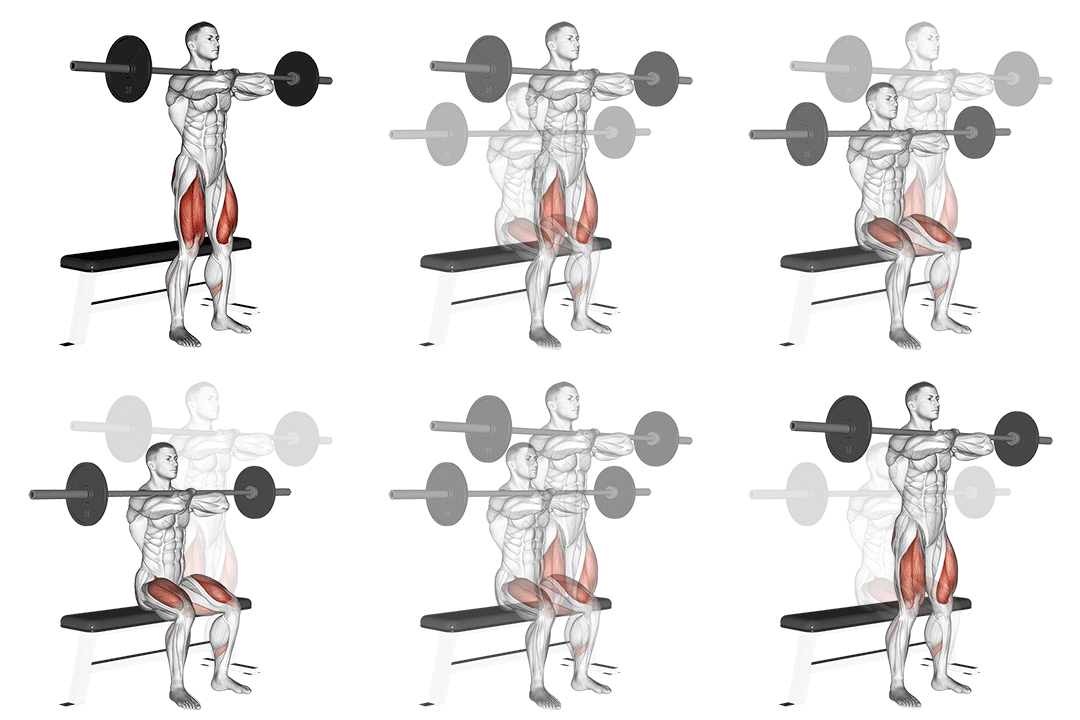
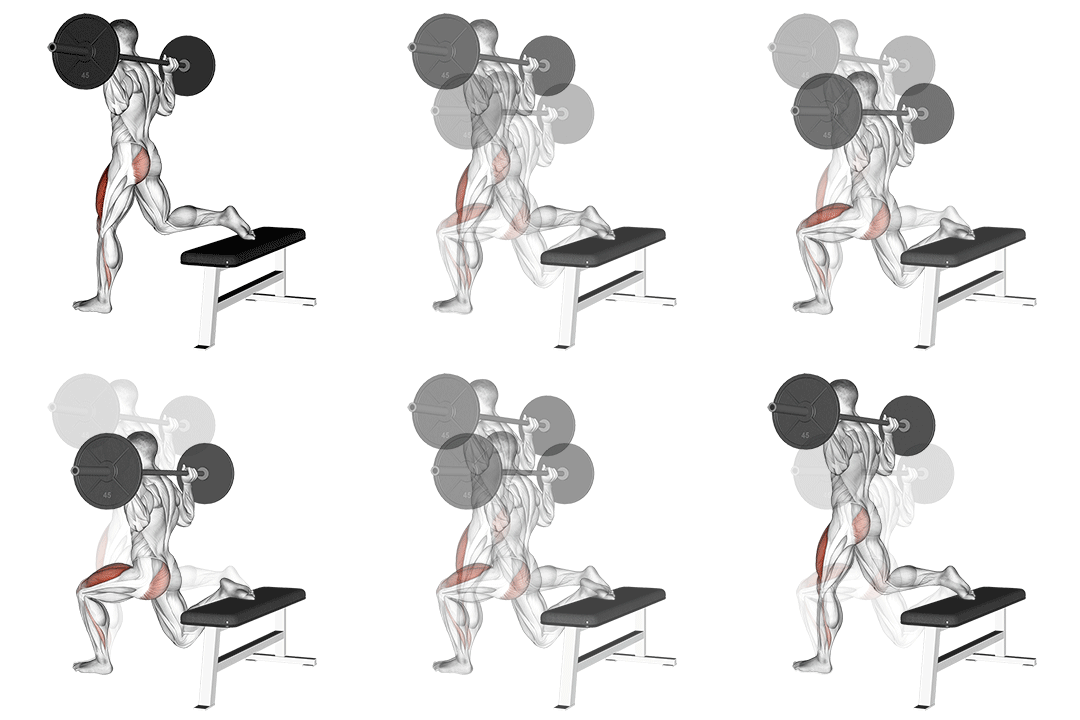
Barbell Bench Front Squat
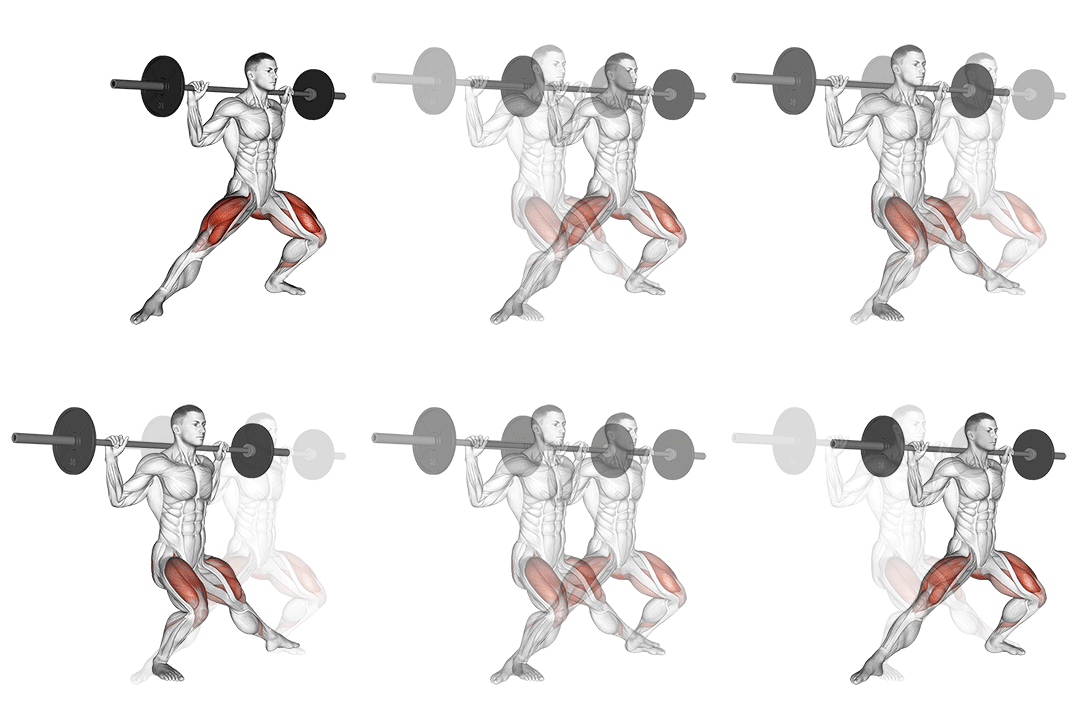
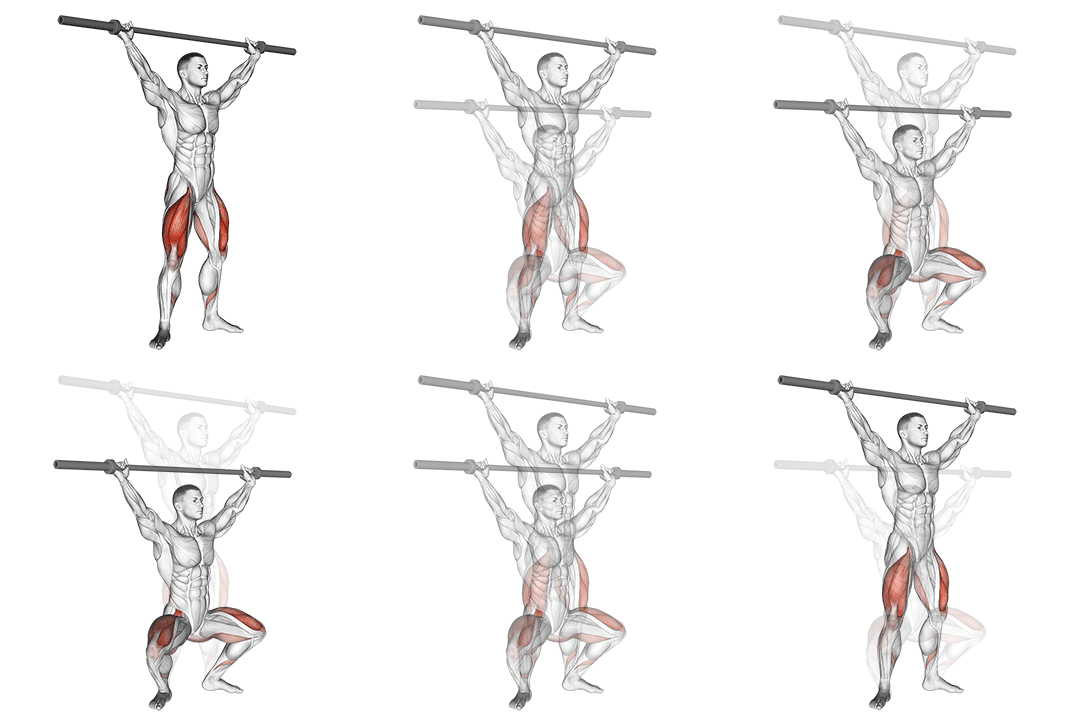
Barbell Side Split Squat
Head-to-Head Comparison
| Attribute | Barbell Bench Front Squat | Barbell Side Split Squat |
|---|---|---|
| Target Muscle |
Quads
|
Quads
|
| Body Part |
Upper-legs
|
Upper-legs
|
| Equipment |
Barbell
|
Barbell
|
| Difficulty |
Intermediate
|
Intermediate
|
| Movement Type |
Compound
|
Compound
|
| Secondary Muscles |
3
|
3
|
Secondary Muscles Activated
Barbell Bench Front Squat
Barbell Side Split Squat
Visual Comparison
Overview
Barbell Bench Front Squat vs Barbell Side Split Squat — you’re choosing between two quad-dominant, barbell-based compounds that load your upper legs differently. If you want clear direction, this guide breaks down muscle targets, movement mechanics, equipment needs, learning curves, and program placement. You’ll get concrete cues for setup and execution, comparisons of force vectors and joint moments, suggested rep ranges (6–12 for hypertrophy, 3–6 for strength), and actionable recommendations so you can pick the exercise that matches your goals and movement constraints.
Key Differences
- Both exercises target the Quads using Barbell. The main differences are in their movement patterns and muscle activation angles.
Pros & Cons
Barbell Bench Front Squat
+ Pros
- High quad loading due to anterior bar position and forward center of mass
- Efficient bilateral strength and hypertrophy stimulus—good for adding overall leg capacity
- Easier to overload with heavier absolute loads in a gym setup
- Requires less lateral space and simpler setup
− Cons
- Demands wrist and thoracic mobility to hold the bar correctly
- Can fatigue spinal erectors and upper back when heavy
- Less unilateral balance carryover compared to single-leg variations
Barbell Side Split Squat
+ Pros
- Stronger unilateral emphasis improves balance and corrects imbalances
- Greater glute medius and adductor engagement from lateral stabilization
- Reduced absolute loading on the spine compared to heavy bilateral squats
- Versatile progressions (tempo, pause, step width) for targeted adaptations
− Cons
- Needs more lateral space and coordination for safe execution
- Harder to load heavily compared to bilateral front squats
- Higher technical demand on hip stability—can expose weaknesses
When Each Exercise Wins
The front squat allows higher bilateral loading and greater total work per set, making it efficient for quad hypertrophy using 6–12 rep ranges and 3–5 sets. Its consistent sagittal plane force vector produces sustained knee-extensor tension that drives muscle growth.
Front squats permit heavier, progressive loading and better neural adaptation for bilateral force production. Use 3–6 rep ranges and heavier sets to maximize 1RM-style strength improvements in the lower body.
The bilateral stance is more stable and easier to coach; beginners can focus on load, upright posture, and knee tracking without the added balance demands of unilateral splits.
Because it needs less lateral space and fewer coordination demands, the front squat fits better in limited home setups. If space is available and you want unilateral training, choose the side split squat instead.
Frequently Asked Questions
Can I do both Barbell Bench Front Squat and Barbell Side Split Squat in the same workout?
Yes. A common approach is to perform heavy bilateral front squat sets first (3–6 reps) then use side split squats as an accessory (8–12 reps per leg) to target unilateral strength and stability without compromising the main strength stimulus.
Which exercise is better for beginners?
Barbell Bench Front Squat is generally better for beginners because it offers a more stable bilateral platform and easier progression loading. Start with light loads to master wrist and torso positioning before increasing intensity.
How do the muscle activation patterns differ?
Front squats create a larger knee-extensor moment and sustained quadriceps activation through deeper knee flexion angles (~60–110°), while side split squats produce asymmetric loading with higher glute medius and adductor activation for lateral stabilization and single-leg control.
Can Barbell Side Split Squat replace Barbell Bench Front Squat?
Not completely. Side split squats are excellent for unilateral conditioning and stability, but they don’t replace the bilateral overload potential of front squats for max strength and high-volume hypertrophy. Use them complementary based on your goals.
Expert Verdict
Use the Barbell Bench Front Squat when your priority is raw quad hypertrophy or bilateral strength and you have a rack and adequate load. Its anterior load increases knee extensor torque and lets you apply progressive overload efficiently. Choose the Barbell Side Split Squat when you need to correct side-to-side imbalances, build lateral hip stability, or emphasize unilateral control—it produces greater glute-medial and adductor activation and improves single-leg transfer. For balanced development, rotate both across training blocks: prioritize front squats for heavy, high-volume phases and use side split squats for accessory unilateral work and stability training.
Also Compare
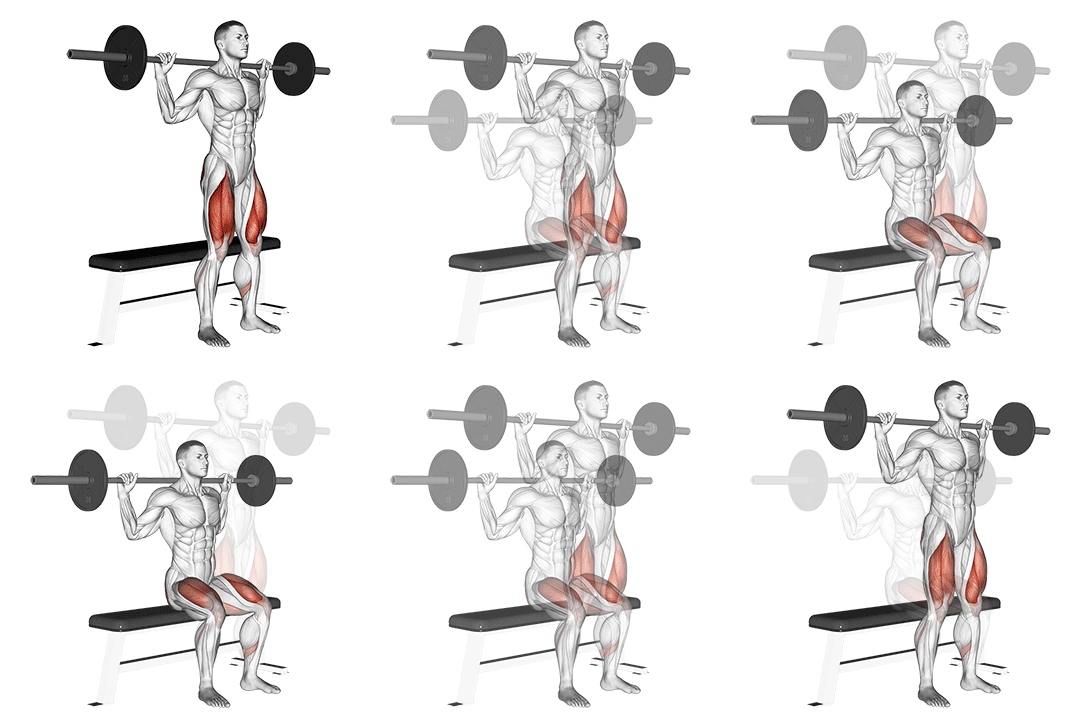
More comparisons with Barbell Bench Front Squat
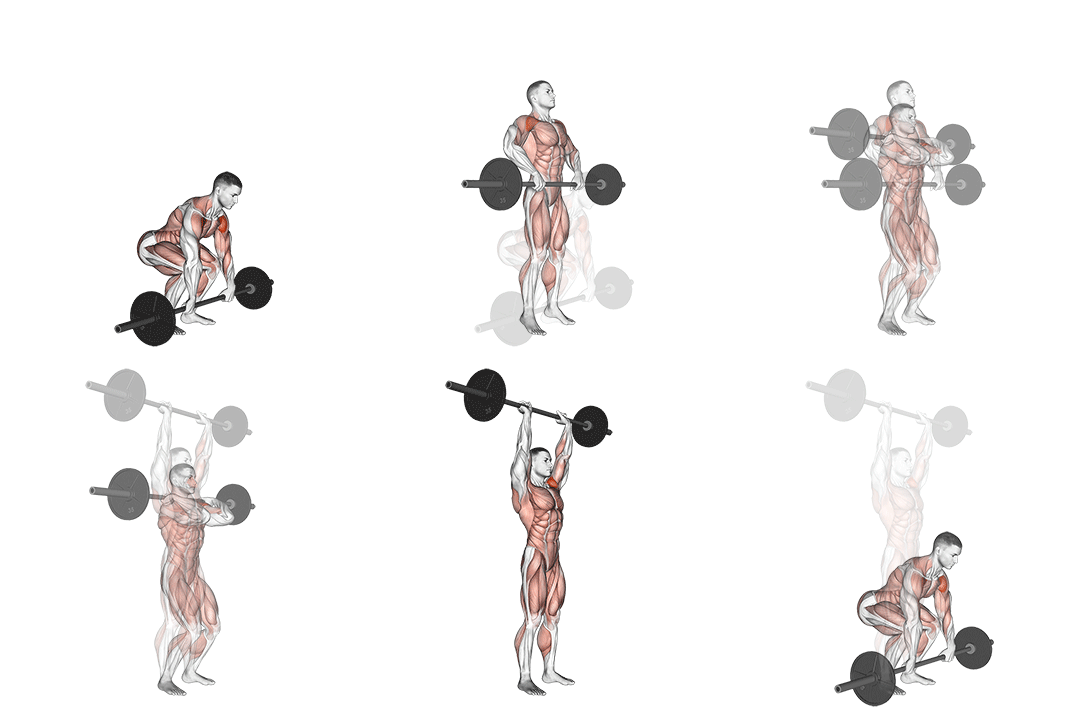
More comparisons with Barbell Side Split Squat
Compare More Exercises
Use our free comparison tool to analyze any two exercises head-to-head.
Compare Exercises