

Barbell Bench Front Squat vs Barbell Squat: Complete Comparison Guide
Barbell Bench Front Squat vs Barbell Squat — both load your quads hard, but they do it in different ways. If you want clear guidance on which movement to prioritize, this guide walks you through muscle activation, biomechanics, equipment needs, and practice cues so you can pick the right lift for strength, hypertrophy, or rehab. You’ll get technique tips (bar placement, torso angle, knee tracking), rep-range recommendations, and scenario-based winners to help you program these squats into your routine.
Exercise Comparison
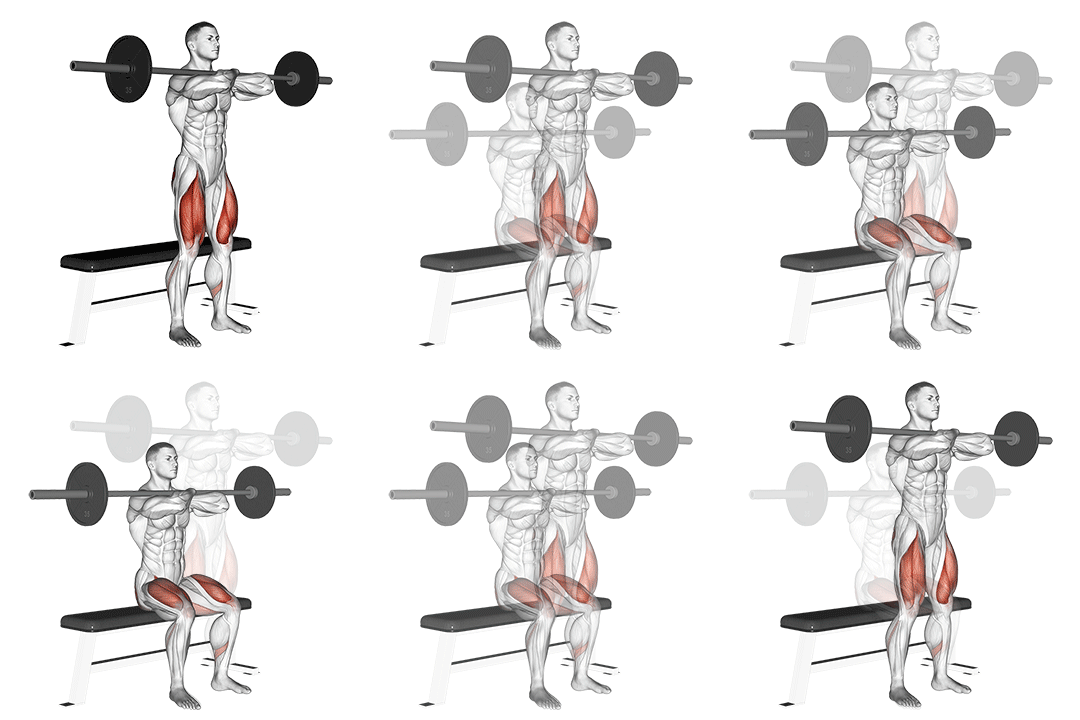
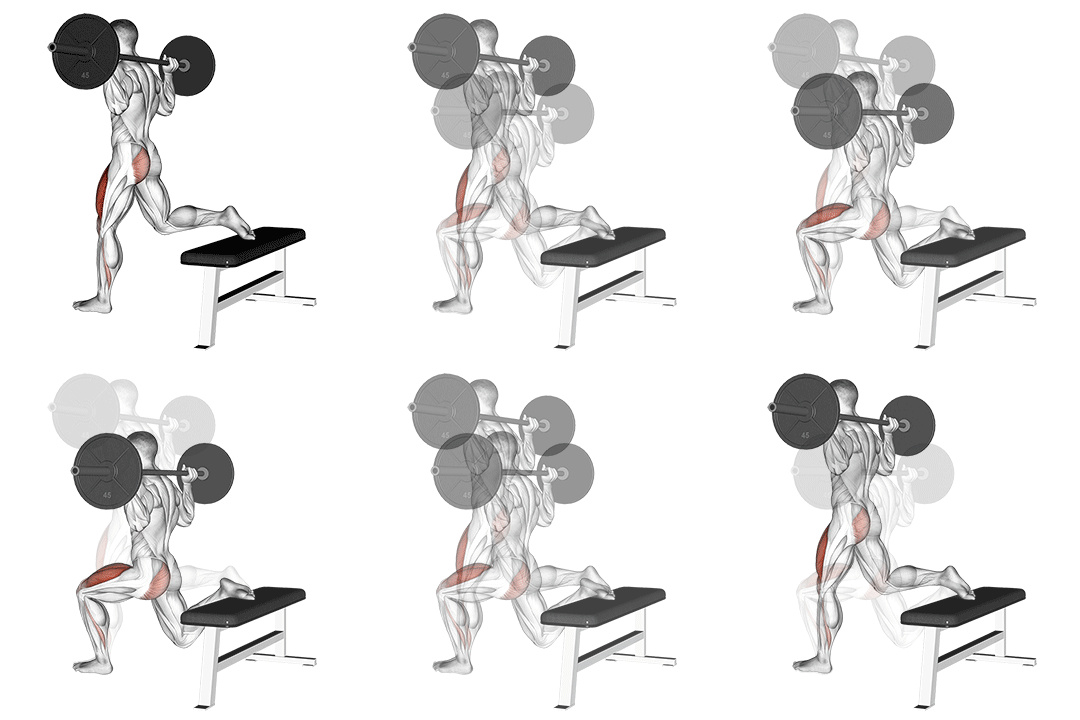
Barbell Bench Front Squat
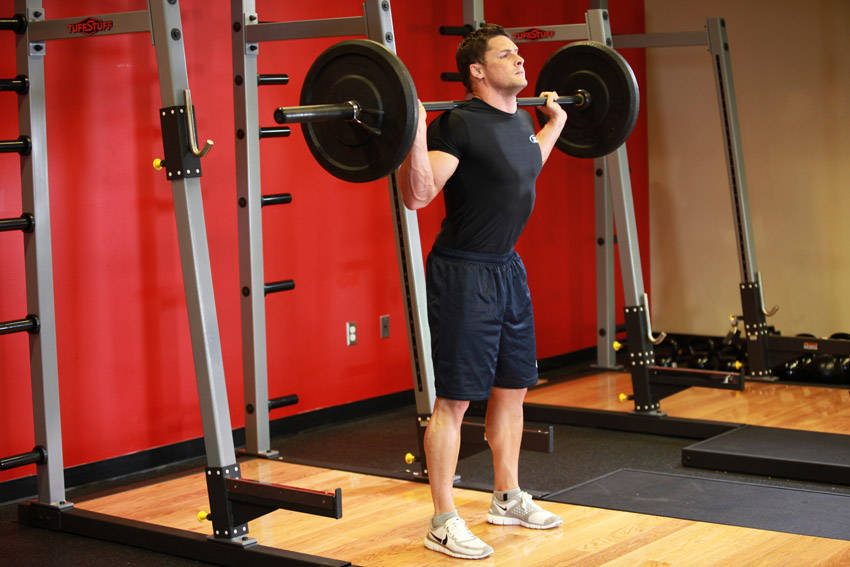
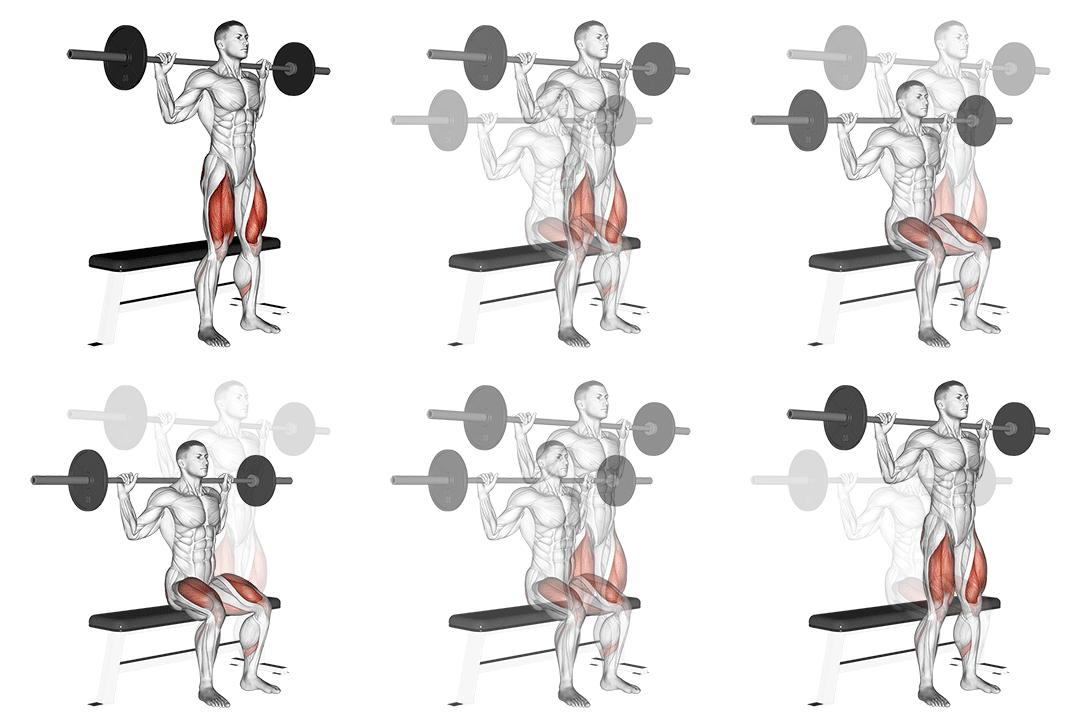
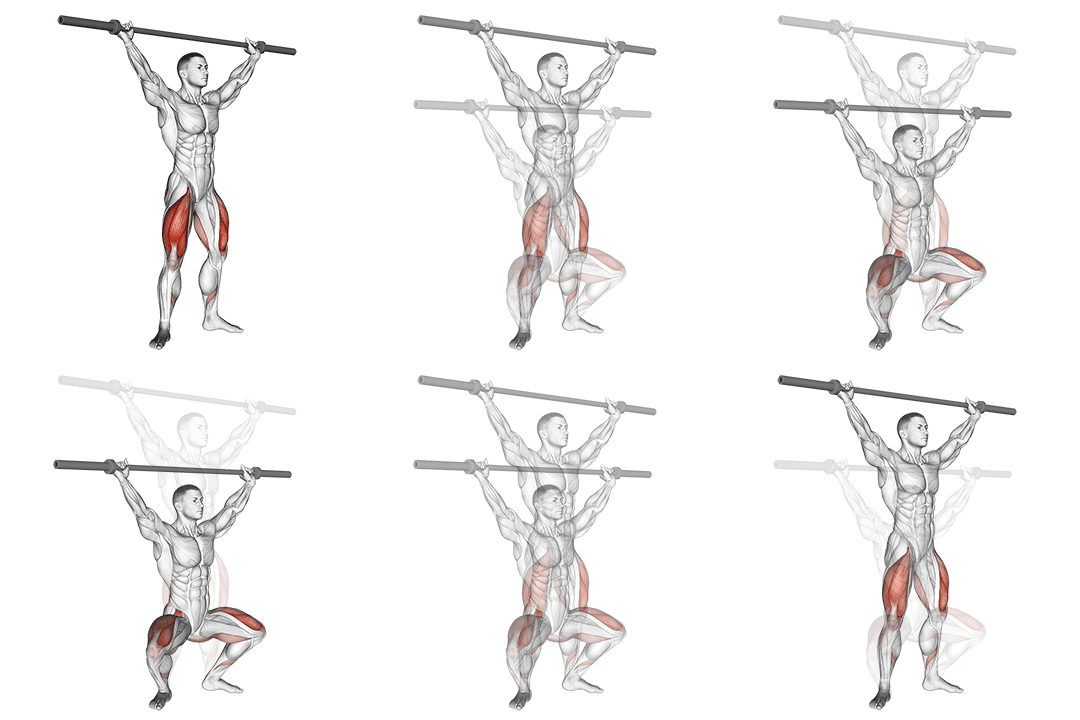
Barbell Squat
Head-to-Head Comparison
| Attribute | Barbell Bench Front Squat | Barbell Squat |
|---|---|---|
| Target Muscle |
Quads
|
Quads
|
| Body Part |
Upper-legs
|
Upper-legs
|
| Equipment |
Barbell
|
Barbell
|
| Difficulty |
Intermediate
|
Intermediate
|
| Movement Type |
Compound
|
Compound
|
| Secondary Muscles |
3
|
4
|
Secondary Muscles Activated
Barbell Bench Front Squat
Barbell Squat
Visual Comparison
Overview
Barbell Bench Front Squat vs Barbell Squat — both load your quads hard, but they do it in different ways. If you want clear guidance on which movement to prioritize, this guide walks you through muscle activation, biomechanics, equipment needs, and practice cues so you can pick the right lift for strength, hypertrophy, or rehab. You’ll get technique tips (bar placement, torso angle, knee tracking), rep-range recommendations, and scenario-based winners to help you program these squats into your routine.
Key Differences
- Both exercises target the Quads using Barbell. The main differences are in their movement patterns and muscle activation angles.
Pros & Cons
Barbell Bench Front Squat
+ Pros
- Stronger quad emphasis via increased knee extensor moment
- More upright torso reduces lumbar shear and lower-back loading
- Easier to maintain depth and vertical shin angle—good for quad hypertrophy
- Bench touch variant enforces consistent depth and tempo control
− Cons
- Requires solid front-rack mobility or modified grip
- Generally uses lighter loads than back squat, limiting absolute strength progressions
- Places higher compressive and shearing forces on the knee if depth/technique are poor
Barbell Squat
+ Pros
- Greater overall loading potential and progression variety
- Better posterior chain development (glutes, hamstrings, lower back)
- More accessible grip/positioning for most lifters
- Easily modified (high-bar, low-bar, pause, box, tempo) for specific goals
− Cons
- Increased torso lean can raise lumbar shear if not braced properly
- Less pure quad isolation compared to front-loaded variations
- Technical variations (low-bar) require coaching to avoid hip/back dominance
When Each Exercise Wins
Front squats put more load on the quads through a larger knee extensor moment arm and an upright torso, making them ideal for 6–12 rep ranges to drive quad hypertrophy. If you want targeted upper-leg development, front-loaded mechanics concentrate tension on the quads more reliably than back squats.
Back squats allow heavier absolute loads and better posterior chain recruitment, which translates to greater maximal strength carryover. Use 4–6 rep ranges with progressive overload and low-bar or high-bar variations depending on your leverages.
Back squats are easier to learn initially because they tolerate small technique errors and require less shoulder/wrist mobility. Begin with high-bar squats and focus on bracing, 90° knee depth, and consistent foot placement before adding complexity.
Most home setups include a rack or can substitute goblet variations; back squats don’t require a bench or strict front-rack mobility. If you lack a rack, split squats, Bulgarian split squats, or goblet squats mimic back squat loading more easily than a bench front squat.
Frequently Asked Questions
Can I do both Barbell Bench Front Squat and Barbell Squat in the same workout?
Yes—pairing them is possible but manage intensity. Do the more technical or priority lift first (typically front squats for quad focus), then use back squats later for volume at moderate intensity (5–8 sets of 5–8 reps) to avoid excessive fatigue that degrades technique.
Which exercise is better for beginners?
Barbell Squat is generally better for beginners because it has a gentler learning curve and fewer mobility demands. Start with high-bar back squats, emphasize hip hinge, knee tracking, and bracing before introducing front-rack positions.
How do the muscle activation patterns differ?
Front squats increase knee extensor activation earlier in the concentric phase due to a forward center of mass and shorter hip moment arm, while back squats shift more load to the hip extensors and posterior chain as torso lean increases. This changes where peak force is produced across the range of motion.
Can Barbell Squat replace Barbell Bench Front Squat?
If your goal is general strength or posterior chain development, yes—barbell squats can replace front squats. If you need targeted quad hypertrophy or lower-back relief, keep front squats in rotation rather than fully replacing them.
Expert Verdict
Use the Barbell Bench Front Squat when your priority is quad-focused hypertrophy, knee-dominant strength, or reducing lumbar shear — program it for 6–12 reps with paused or bench-touch variations and keep elbows high and chest proud. Choose the Barbell Squat when you want maximal strength, posterior chain development, or the broadest progression tools; load back squats heavier in 3–6 rep blocks and vary high- vs low-bar based on your hip structure. Both lifts deserve a place in a balanced program: rotate them by block (4–8 weeks) to emphasize either quad development or total strength.
Also Compare
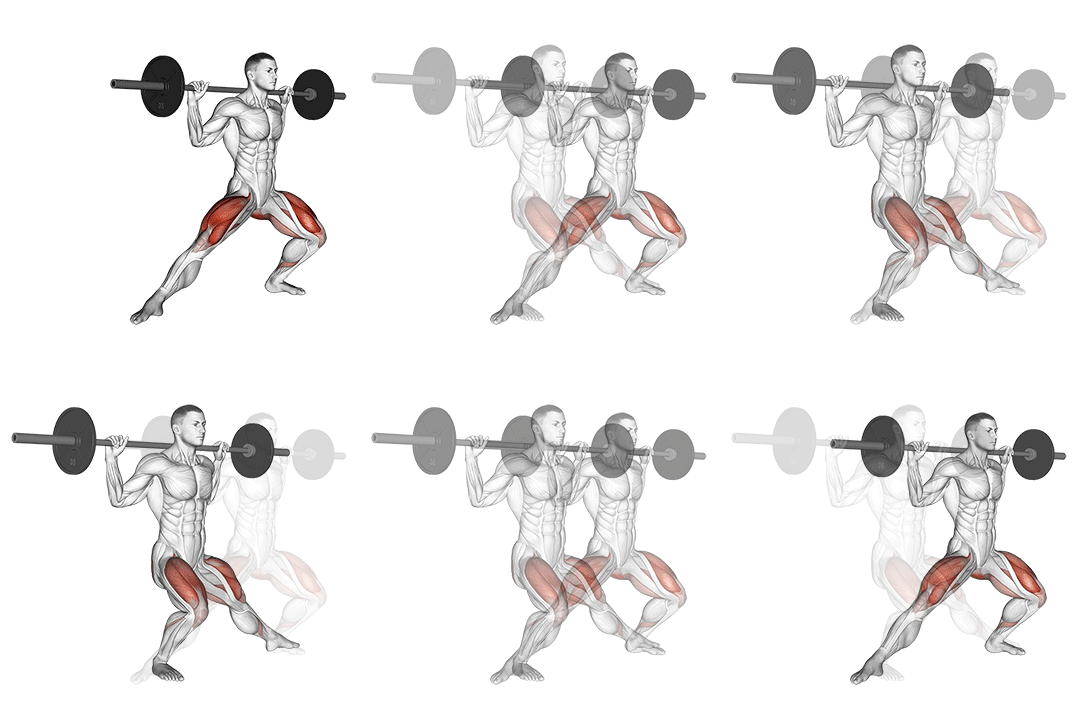
More comparisons with Barbell Bench Front Squat
Compare More Exercises
Use our free comparison tool to analyze any two exercises head-to-head.
Compare Exercises