

Barbell Bench Press vs Barbell Deadlift: Complete Comparison Guide
Barbell Bench Press vs Barbell Deadlift is a classic training split that forces you to choose where you invest time and effort. You’ll get a clear breakdown of which muscles each exercise targets, what equipment and setup you need, how they load joints differently, and which suits strength, hypertrophy, or beginners. I’ll cover movement mechanics, specific technique cues you can apply immediately, recommended rep ranges, and risk-management tips so you can decide which lift belongs in your program or how to program both effectively.
Exercise Comparison
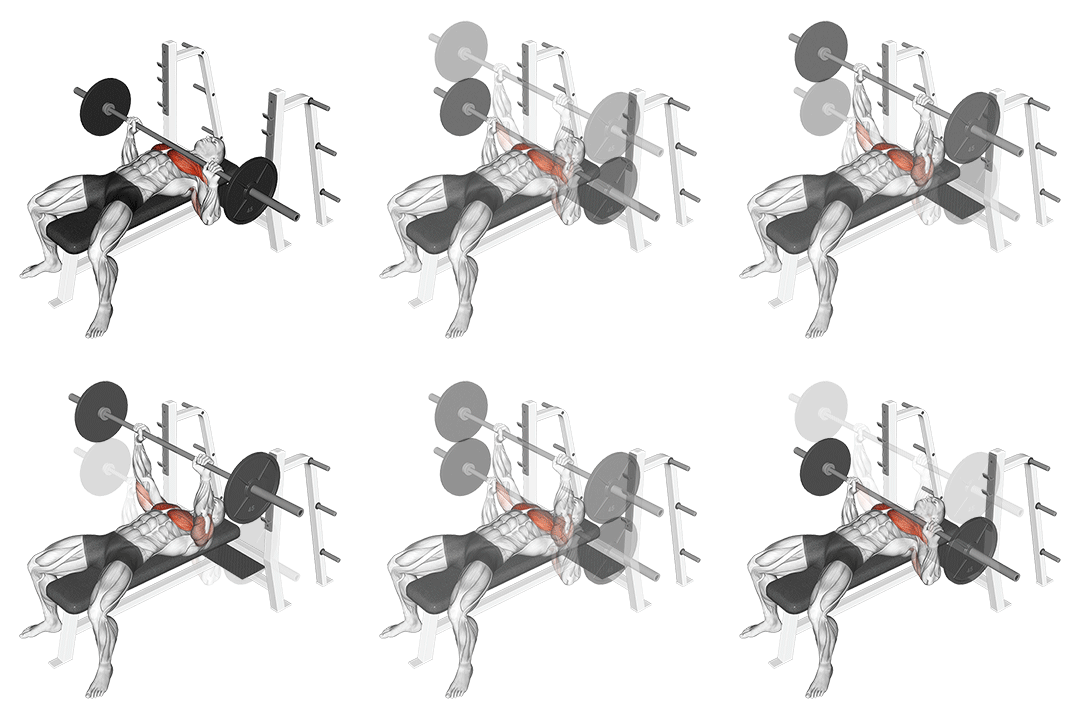
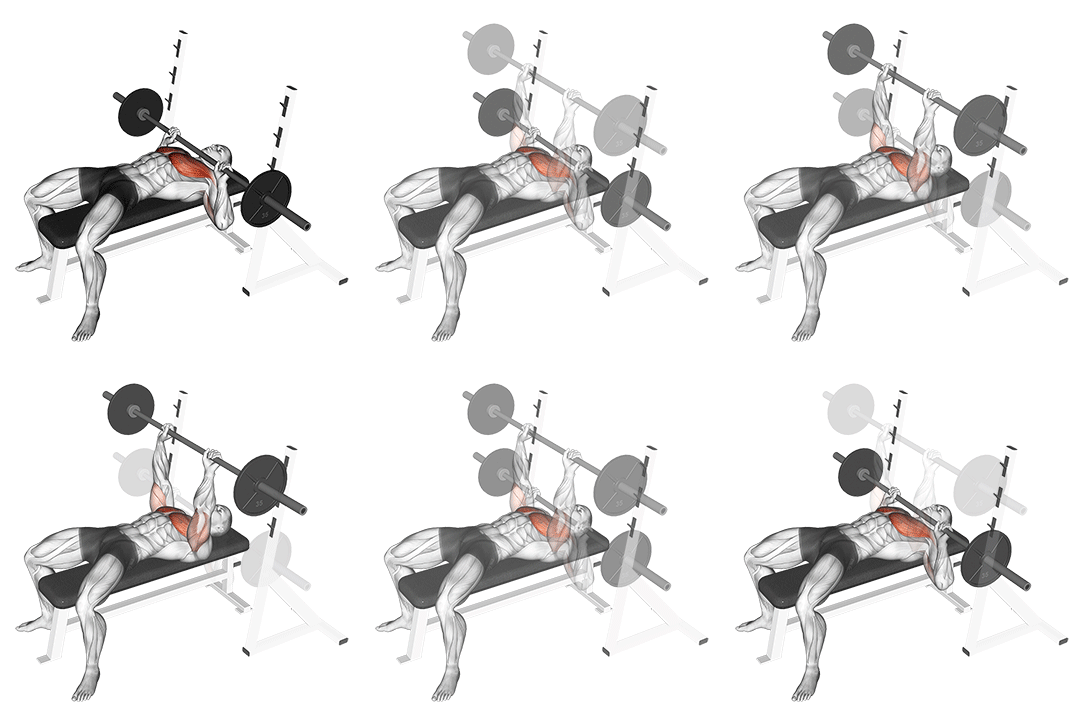
Barbell Bench Press
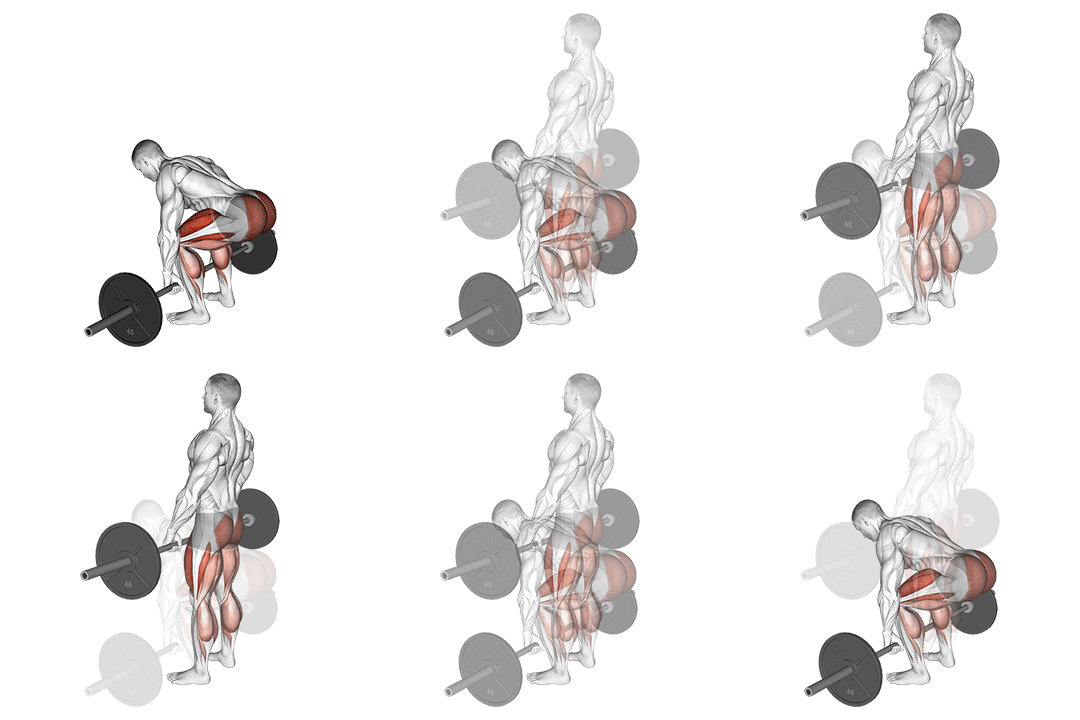
Barbell Deadlift
Head-to-Head Comparison
| Attribute | Barbell Bench Press | Barbell Deadlift |
|---|---|---|
| Target Muscle |
Pectorals
|
Glutes
|
| Body Part |
Chest
|
Upper-legs
|
| Equipment |
Barbell
|
Barbell
|
| Difficulty |
Intermediate
|
Advanced
|
| Movement Type |
Compound
|
Compound
|
| Secondary Muscles |
2
|
2
|
Secondary Muscles Activated
Barbell Bench Press
Barbell Deadlift
Visual Comparison
Overview
Barbell Bench Press vs Barbell Deadlift is a classic training split that forces you to choose where you invest time and effort. You’ll get a clear breakdown of which muscles each exercise targets, what equipment and setup you need, how they load joints differently, and which suits strength, hypertrophy, or beginners. I’ll cover movement mechanics, specific technique cues you can apply immediately, recommended rep ranges, and risk-management tips so you can decide which lift belongs in your program or how to program both effectively.
Key Differences
- Barbell Bench Press primarily targets the Pectorals, while Barbell Deadlift focuses on the Glutes.
- Difficulty levels differ: Barbell Bench Press is intermediate, while Barbell Deadlift is advanced.
Pros & Cons
Barbell Bench Press
+ Pros
- Direct overload of the pectorals for chest development and hypertrophy
- Easy to program into upper-body days with clear rep schemes (6–12 hypertrophy, 1–5 strength)
- Improves pressing strength transferable to push variants (overhead press, dips)
- Scapular retraction cueing and elbow tuck reduce shoulder strain and increase force transfer
− Cons
- Requires a bench and rack or spotter, limiting home accessibility
- Places stress on the shoulder joint, increasing risk with poor setup or excessive flaring
- Less total-body stimulus than heavy lower-body/hip-dominant lifts
Barbell Deadlift
+ Pros
- Massive systemic stimulus — uses glutes, hamstrings, quads, and back for whole-body strength
- High potential for progressive overload and neural adaptation (heavy singles/doubles)
- Requires minimal equipment — easy to do without a rack or bench
- Teaches durable hip-hinge mechanics that improve posture and everyday lifting
− Cons
- Higher technical demand on hip hinge and spine bracing; form breakdown increases injury risk
- Can induce significant CNS and grip fatigue, limiting same-session volume for accessory work
- Requires careful management of low-back stress and recovery when training heavy
When Each Exercise Wins
Bench press isolates the pectorals more directly and allows clean sets in the 6–12 rep range that favor sarcoplasmic and myofibrillar hypertrophy. Pair it with accessory presses and triceps work to maximize chest muscle growth.
Deadlift recruits larger muscle groups and allows much heavier absolute loads, producing greater neural adaptation and maximal strength increases when trained in low-rep ranges (1–5). It also improves whole-body force transfer and posterior chain durability.
Bench press has a more repeatable setup and a constrained plane of motion that beginners can learn quickly with fewer coaching hours. Start with lighter loads, focus on scapular retraction and a 45° elbow tuck to build safe pressing mechanics.
Deadlift requires only a barbell and plates and delivers a large training stimulus without a bench or rack. You can scale it with Romanian deadlifts or trap-bar variations for safer home progressions.
Frequently Asked Questions
Can I do both Barbell Bench Press and Barbell Deadlift in the same workout?
Yes — but sequence matters. Do the lift that needs the freshest CNS and best form first (usually deadlifts for lower-body strength), and keep total heavy sets reasonable (e.g., 3–5 sets of 1–5 for deadlifts, then 3–5 sets of 4–8 for bench). Split intensity across the week if both lifts are trained heavy to avoid cumulative fatigue.
Which exercise is better for beginners?
For early trainees the Barbell Bench Press is easier to learn safely because the movement is more constrained and predictable. Teach pressing setup, scapular retraction, and elbow path first; introduce deadlifts once the trainee has sound hip-hinge mechanics and core bracing.
How do the muscle activation patterns differ?
Bench press produces peak pectoral activation in the mid-range with rising triceps activity toward lockout, driven by a horizontal force vector. Deadlift produces peak glute and hamstring activation off the floor and through lockout, with steady erector spinae activity to resist spinal flexion under a vertical force vector.
Can Barbell Deadlift replace Barbell Bench Press?
No — deadlifts do not replace the bench press for targeted chest development because the force vector and joint moments are different. Use deadlifts for posterior-chain strength and systemic overload, and keep bench press or pressing variations if your goal includes upper-body hypertrophy or pressing performance.
Expert Verdict
Choose the Barbell Bench Press when your priority is targeted chest development and upper-body pressing strength; use 6–12 reps for hypertrophy and 1–5 for strength work, cueing scapular retraction, controlled descent to the sternum, and a slightly tucked elbow to protect the shoulder. Choose the Barbell Deadlift when you want maximal whole-body strength, posterior chain development, and efficient overload — prioritize hip hinge mechanics, bracing, and reps in the 1–5 range for strength or 4–8 for hypertrophy. If possible program both: deadlifts for lower-body and systemic strength, bench press for upper-body size and pressing performance. Progress both with linear load increases, and manage fatigue by rotating heavy days and using accessory variations.
Also Compare
More comparisons with Barbell Bench Press
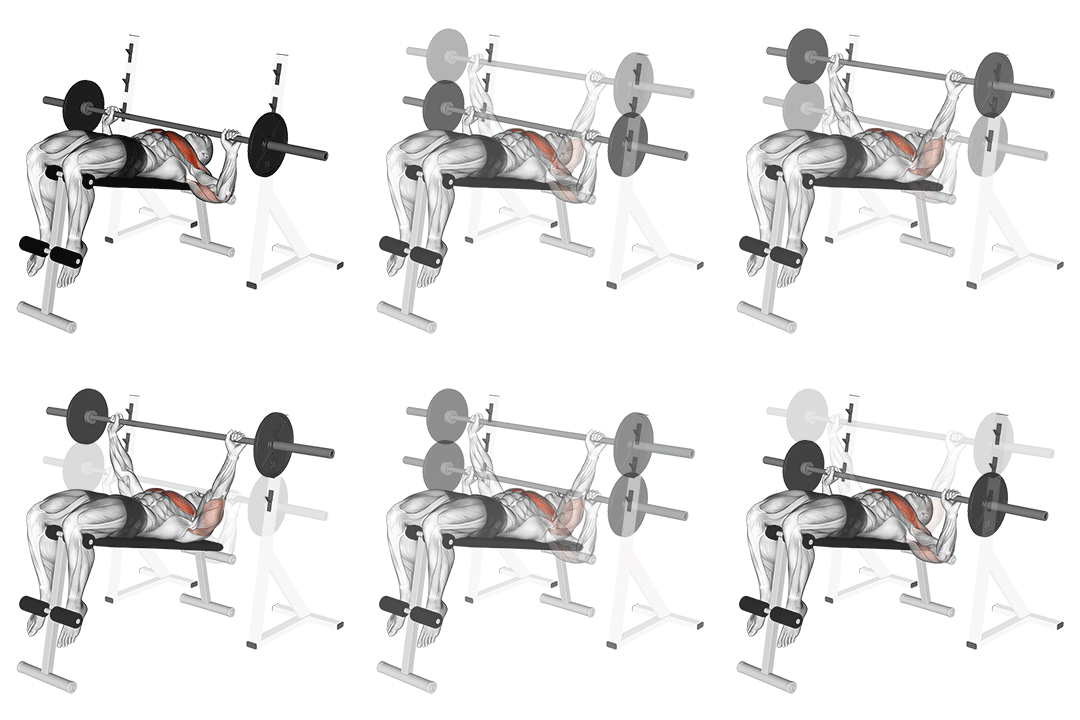
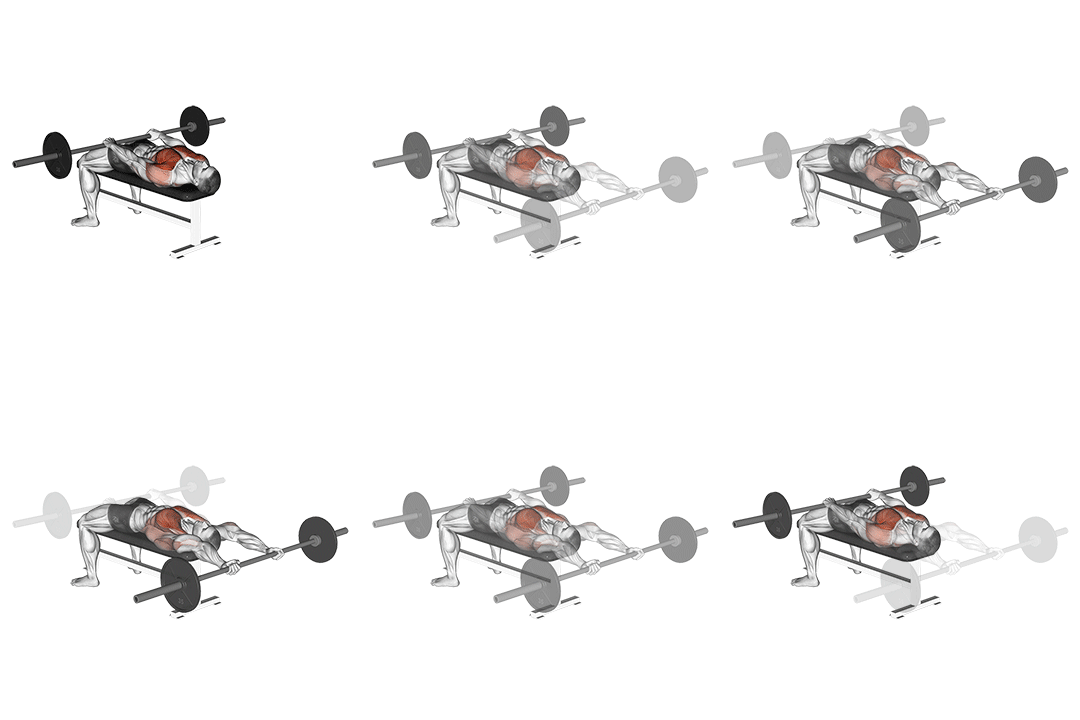
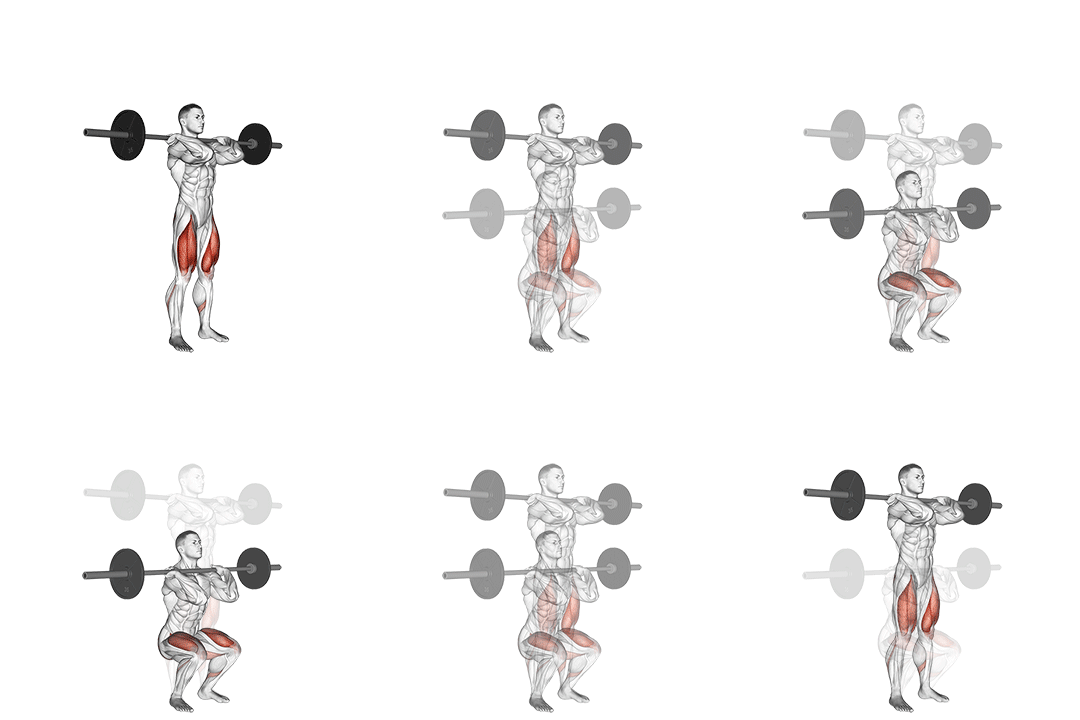
Compare More Exercises
Use our free comparison tool to analyze any two exercises head-to-head.
Compare Exercises