Barbell Clean-grip Front Squat vs Barbell Deadlift

Compare target muscles, equipment, difficulty, movement type, and secondary muscles for Barbell Clean-grip Front Squat and Barbell Deadlift.

Change comparison Share

Get comparison link

Select the link and use your device's Copy command.

Comparison overview

AI-generated
Barbell Clean-grip Front Squat vs Barbell Deadlift are two heavy, advanced compound lifts that both target the glutes and upper-legs. You’ll get a direct comparison of muscle emphasis, joint angles, force vectors, equipment needs, and technical cues so you can choose the right lift for hypertrophy, strength, or limited gear. I’ll cover movement mechanics (torque at the knee vs hip), recommended rep ranges (3–5 for max strength, 6–12 for muscle growth), common progression strategies, and clear technique checks you can use in your next session.

Exercise Comparison

Exercise A
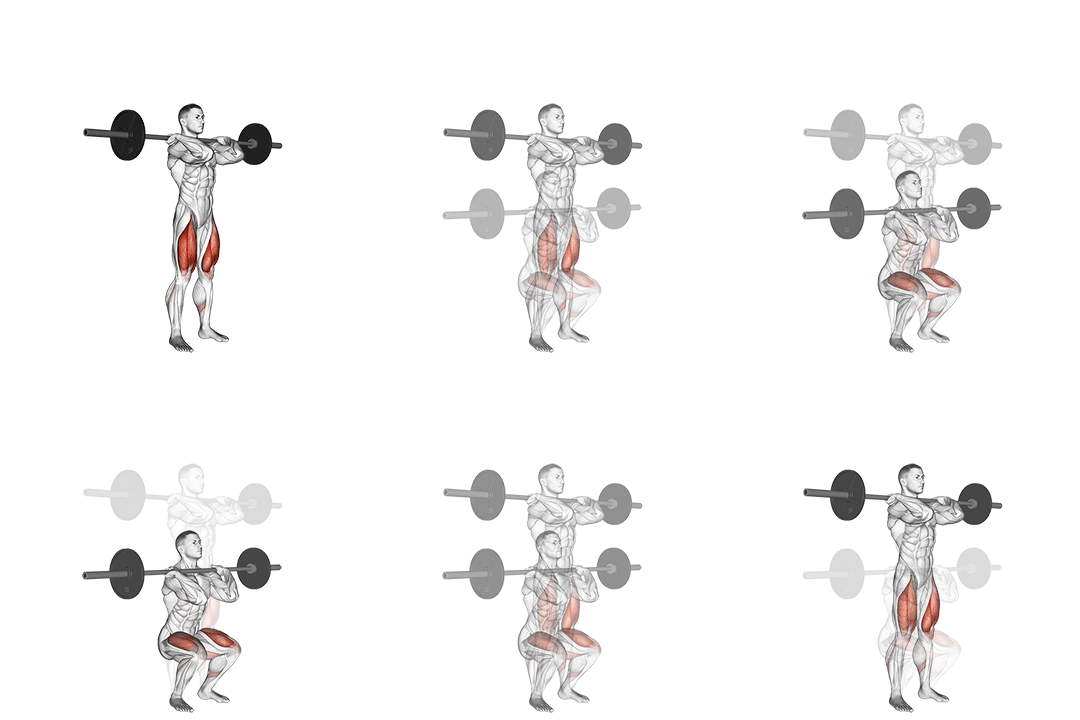
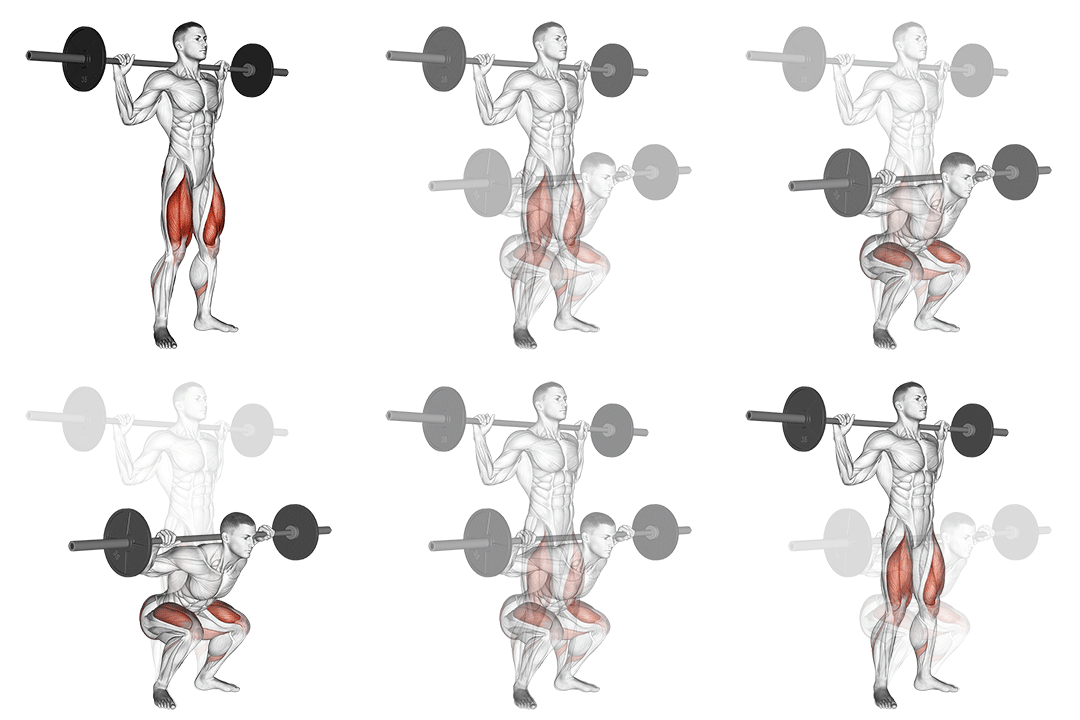
Barbell Clean-grip Front Squat demonstration

Barbell Clean-grip Front Squat

Target Glutes
Equipment Barbell
Body Part Upper-legs
Difficulty Advanced
Movement Compound
Secondary Muscles
Quadriceps Hamstrings Calves Core
VS
Exercise B
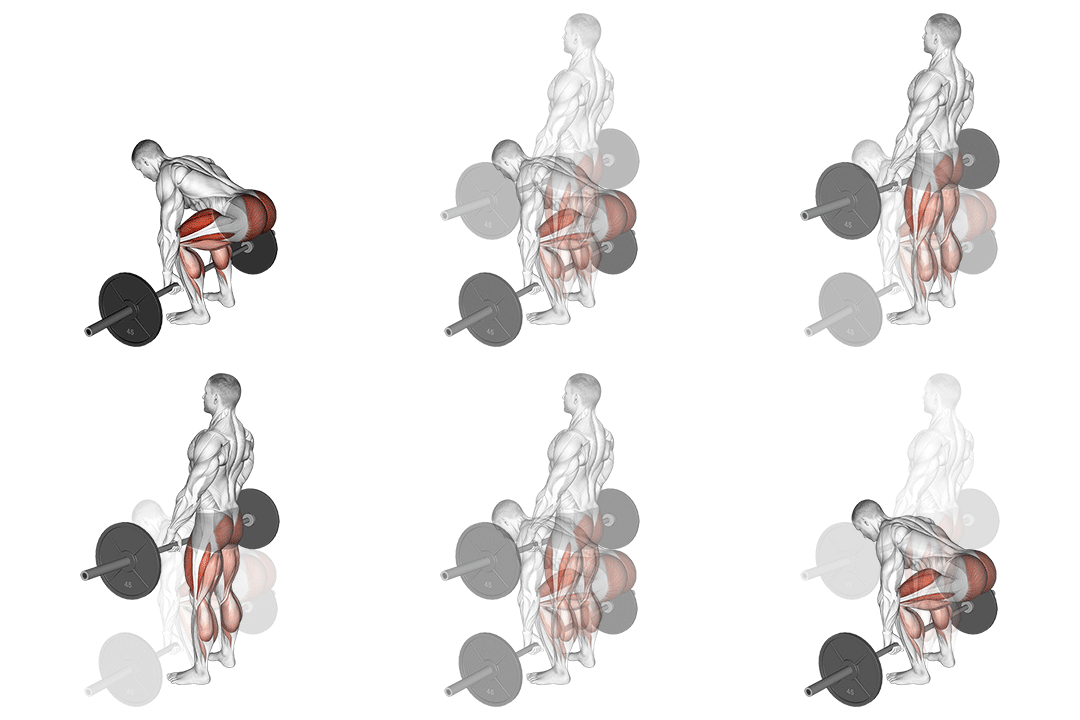
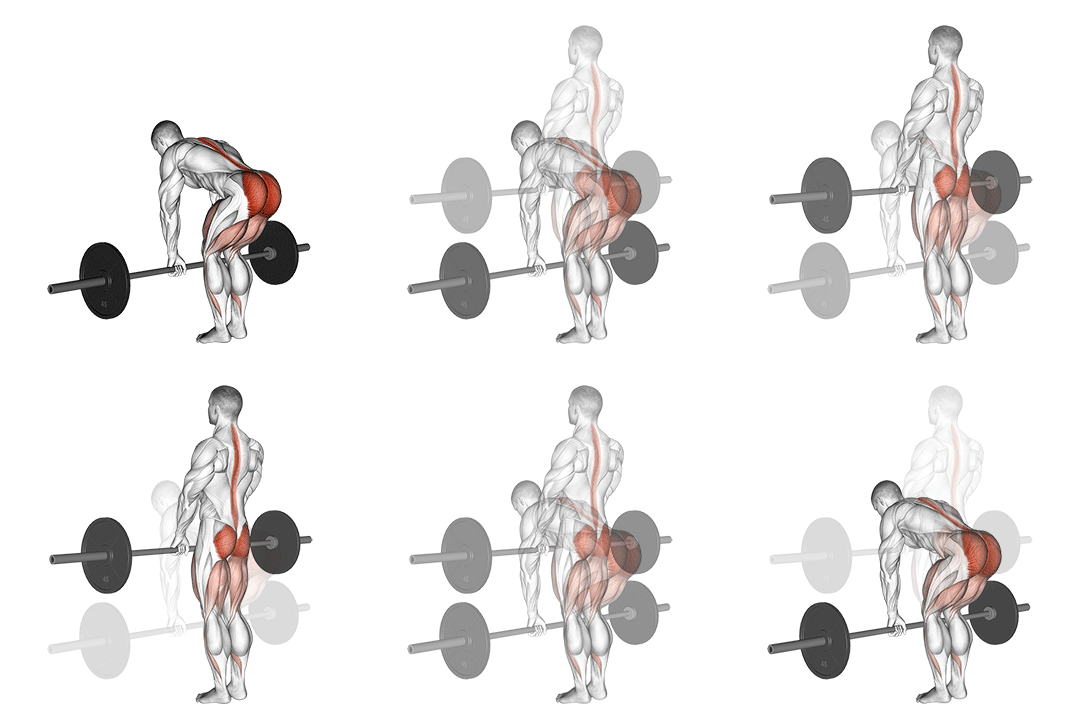
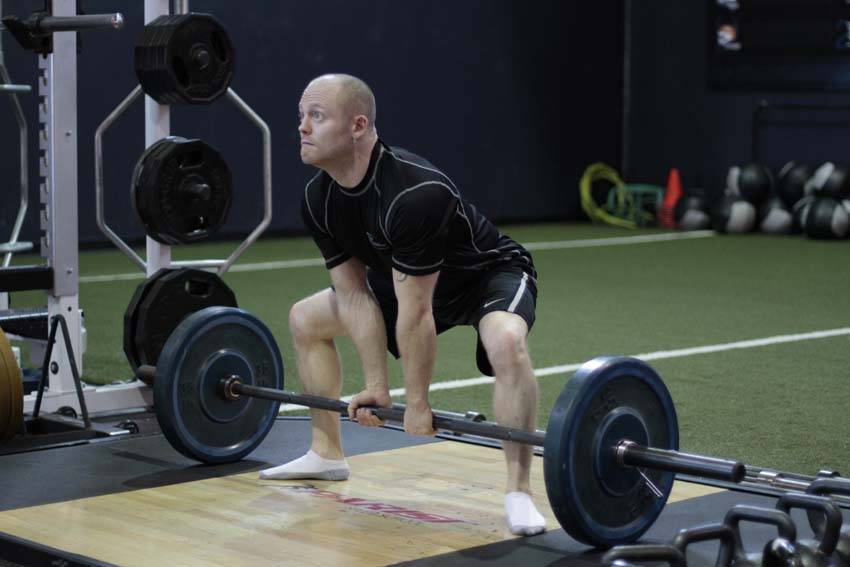
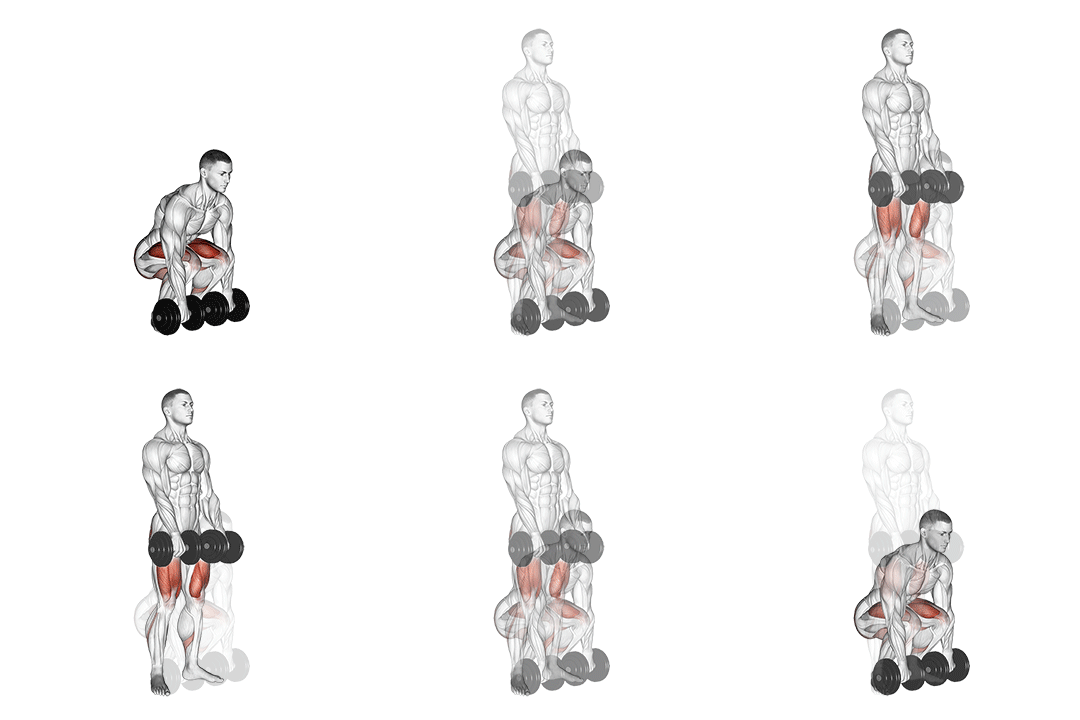
Barbell Deadlift demonstration

Barbell Deadlift

Target Glutes
Equipment Barbell
Body Part Upper-legs
Difficulty Advanced
Movement Compound
Secondary Muscles
Hamstrings Lower Back

Head-to-Head Comparison

Different values are marked. These are catalogue attributes, not performance scores.

Muscles used

Listed target and secondary muscles, shown on the body. Locations, not activation or strength scores.

  • Target
  • Secondary
  • Not highlighted

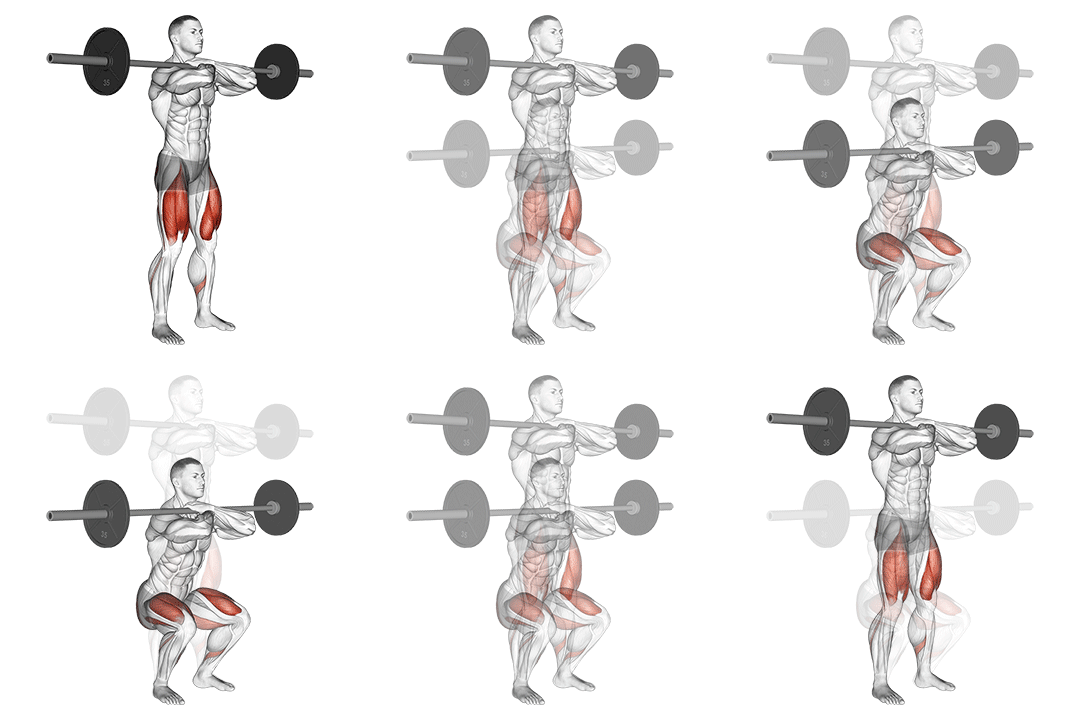
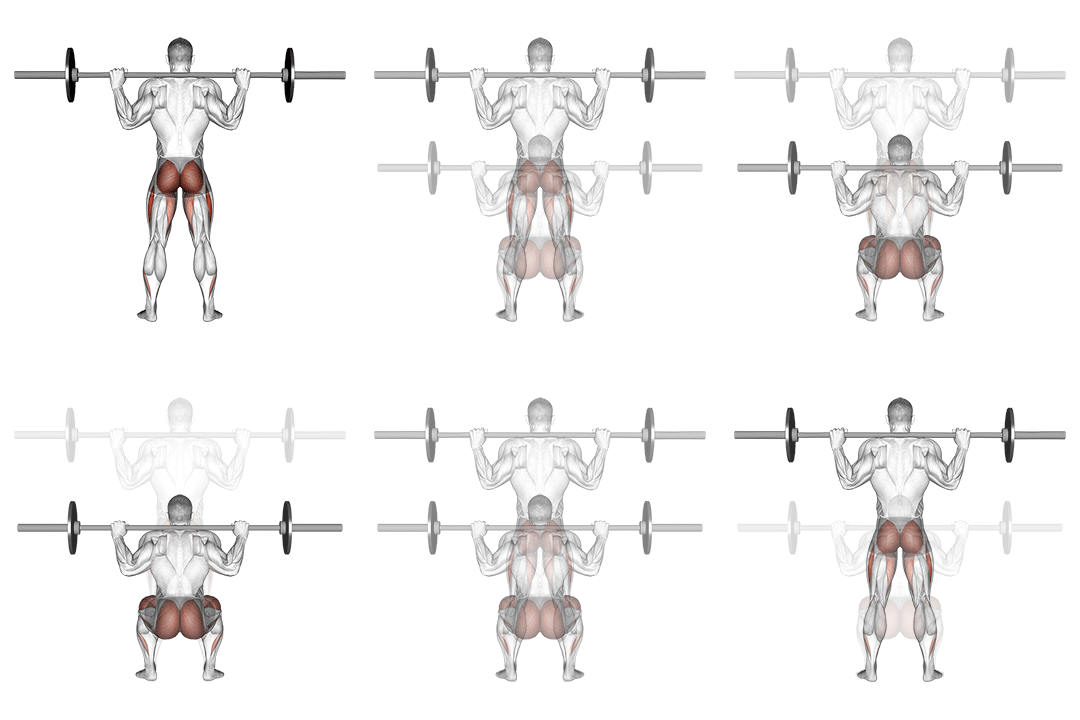
Barbell Clean-grip Front Squat

Front
Barbell Clean-grip Front Squat: front muscle locationsSolid: listed target. Striped: listed secondary. Grey: not highlighted. Locations, not activation or strength scores. See the muscle names below.
Back
Barbell Clean-grip Front Squat: back muscle locationsSolid: listed target. Striped: listed secondary. Grey: not highlighted. Locations, not activation or strength scores. See the muscle names below.
Target
Glutes
Secondary
Quadriceps, Hamstrings, Calves, Core

Not shown on diagram: Core. These labels do not identify a precise region on this map.

Barbell Deadlift

Front
Barbell Deadlift: front muscle locationsSolid: listed target. Striped: listed secondary. Grey: not highlighted. Locations, not activation or strength scores. See the muscle names below.
Back
Barbell Deadlift: back muscle locationsSolid: listed target. Striped: listed secondary. Grey: not highlighted. Locations, not activation or strength scores. See the muscle names below.
Target
Glutes
Secondary
Hamstrings, Lower Back

Grey does not mean a muscle is unused. The diagrams show only the mapped catalogue labels.

Attribute Barbell Clean-grip Front Squat Barbell Deadlift
Target Muscle
Glutes
Glutes
Body Part
Upper-legs
Upper-legs
Equipment
Barbell
Barbell
Difficulty
Advanced
Advanced
Movement Type
Compound
Compound
Secondary Muscles Different
Quadriceps, Hamstrings, Calves, Core
Hamstrings, Lower Back

Visual Comparison

An illustrative 1–10 profile derived from catalog difficulty, equipment, and listed-muscle fields—not measured performance or muscle activation.

Key Differences

  • Both exercises target the Glutes using Barbell. The catalogue does not establish which exercise is better for an individual goal.

Muscle comparison

Shared target muscles

Both exercises drive hip extension and load the glutes heavily. The overlap is strongest during the concentric hip extension phase: both require powerful glute contraction from roughly 30° of hip flexion through full extension. Deadlifts typically allow higher absolute loads (often 20–40% more weight), increasing overall force production in the glutes. Front squats, however, maintain a more vertical torso and greater knee-extension torque, so the glutes work alongside stronger quad contribution during the ascent.

Secondary muscle differences

Secondary recruitment diverges: the Barbell Clean-grip Front Squat biases the quadriceps and core due to a 90°+ knee flexion at the bottom and a high vertical force vector. The Barbell Deadlift loads the hamstrings and lower back more because the hip hinge creates a longer posterior moment arm and greater lumbar erector demand. Calves and abdominal bracing are secondary in the front squat; hamstrings and spinal erectors are secondary in the deadlift.

Muscle involvement analysis

During a front squat the knee moment arm is larger, so quadriceps EMG and knee-extension torque peak near 60–90° knee flexion while glute activation rises as you pass parallel to full extension. In the deadlift, peak glute and hamstring activation occurs early in the concentric as the hips extend from ~45° hip flexion; the lumbar erectors sustain high isometric load because of the posterior bar position. Bar path and torso angle change the force vector: an anterior bar (front squat) increases knee torque, a posterior bar (deadlift) increases hip torque.

Equipment and setup

Barbell Clean-grip Front Squat: setup

Barbell, squat rack or power rack set at appropriate height, good knurling bar, and sufficient shoulder/wrist mobility for the clean grip; lifting platform optional.

Barbell Deadlift: setup

Barbell and flat floor or platform; no rack required for conventional deadlifts. Straps, chalk, or bumper plates can help but are optional.

Access and practicality

Barbell Deadlift — it requires less specialized setup (no rack) and fewer mobility demands. You can load from the floor and progress with simpler increments, making it more accessible in gyms or home setups.

Learning and progression

Learning the movements

Barbell Clean-grip Front Squat has a steeper learning curve due to clean-grip wrist and thoracic mobility requirements and maintaining an upright torso under load. The deadlift pattern (hip hinge) is more intuitive for many lifters and easier to teach basic form.

Progression considerations

Barbell Deadlift offers greater absolute progression because lifters can handle 20–40% heavier loads and use heavy singles/doubles for neural strength. Front squats provide superior loading for moderate reps (6–12) and time under tension, making them ideal for structured hypertrophy phases.

Limitations and precautions

Deadlifts carry higher risk to the lumbar spine if technique breaks (rounded back under heavy load), while front squats present greater risk to wrists and thoracic spine if mobility is poor. Overall spinal compression is high in both; with technique coaching, front squats are often safer for the lower back due to a more upright torso and reduced posterior shear.

Pros & Cons

Barbell Clean-grip Front Squat

+ Pros

  • Strong quad and glute development via vertical force vector and deep knee flexion
  • Upright torso reduces lumbar shear compared with posterior-loaded lifts
  • Great carryover to cleans and athletic vertical force production
  • Effective for 6–12 rep hypertrophy work and front-rack stability

− Cons

  • Requires clean-grip mobility and thoracic extension
  • Rack and proper setup needed, less convenient in some gyms
  • Upper-back or wrist fatigue can limit loading before lower-body failure

Barbell Deadlift

+ Pros

  • Highest absolute loading potential for posterior chain strength
  • Simple setup—no rack required—good for heavy singles and doubles
  • Strong transfer to everyday tasks and pulling strength
  • Greater hamstring and lower-back development per rep

− Cons

  • Higher lumbar loading and risk if form breaks under max loads
  • Less quad emphasis than front squats; may underload quads for some athletes
  • Technique breakdown (rounded back) increases injury risk with heavy loads

When Each Exercise Wins

1
For muscle hypertrophy: Barbell Clean-grip Front Squat

Front squats allow controlled 6–12 rep sets with a vertical torso and high knee flexion, increasing time under tension for quads and glutes. They suit programs that prioritize hypertrophy volume while limiting lumbar shear.

2
For strength gains: Barbell Deadlift

Deadlifts permit heavier absolute loads and low-rep strength work (1–5 reps), stimulating maximal neural adaptations and hip-extension strength via long posterior moment arms.

3
For beginners: Barbell Deadlift

The hip-hinge pattern is easier to learn initially and requires less specialized mobility than the clean grip and upright posture of front squats. Beginners can safely develop posterior chain strength with basic coaching.

4
For home workouts: Barbell Deadlift

Deadlifts need only a barbell and floor space—no rack—so they fit limited-equipment setups. You can modify load increments and use straps or bumper plates for small-space training.

Frequently Asked Questions

Can I do both Barbell Clean-grip Front Squat and Barbell Deadlift in the same workout?

Yes—pairing is effective but arrange intensity. Use the heavier, low-rep deadlifts early if strength is the priority (1–5 reps), or perform front squats first if hypertrophy and quad fatigue are the goal. Keep total weekly volume and recovery in mind to avoid overtaxing the posterior chain.

Which exercise is better for beginners?

Barbell Deadlift is generally better for beginners because the hip-hinge is easier to teach and requires less wrist and thoracic mobility than the clean-grip front squat. Start with light loads, focus on hip drive and neutral spine, then add front squat work as mobility and core stability improve.

How do the muscle activation patterns differ?

Front squats load the knee extensors more due to a larger knee moment arm and an upright torso, so quad EMG and knee-extension torque peak as you rise from ~90° knee flexion. Deadlifts create larger hip torques and posterior chain activation—glutes and hamstrings fire strongly during the initial hip extension from ~45° hip flexion while erectors sustain isometric load.

Can Barbell Deadlift replace Barbell Clean-grip Front Squat?

Not completely. Deadlifts can substitute for posterior-chain strength and glute stimulus, but they underemphasize the quads and front-rack stability benefits of front squats. If your goal is balanced upper-leg development, include both or program one as the primary lift and the other as an accessory.

Comparison Summary

Choose the Barbell Clean-grip Front Squat when you want quad-dominant hypertrophy, improved front-rack stability, and a lift that limits lumbar shear thanks to a more vertical torso. Favor 6–12 rep sets and focus on knee drive and tight core bracing. Choose the Barbell Deadlift when your priority is maximal posterior-chain strength, higher absolute loads, and simple equipment needs; emphasize tight lats, a neutral spine, and hip drive for 1–5 heavy reps or 5–8 for strength-endurance. For rounded programs, rotate both: use front squats in volume phases and deadlifts for heavy strength blocks, adjusting sets, reps, and technical coaching to your mobility and recovery.

Exercise instructions

Steps from the exercise catalogue. Read the full sequence before starting.

Barbell Clean-grip Front Squat

  1. Start by standing with your feet shoulder-width apart and the barbell resting on your upper chest, with your elbows pointing forward.
  2. Lower your body by bending your knees and pushing your hips back, as if you are sitting back into a chair.
  3. Keep your chest up and your back straight as you lower down, making sure your knees do not go past your toes.
Read remaining steps for Barbell Clean-grip Front Squat
  1. Continue lowering until your thighs are parallel to the ground, or as low as you can comfortably go.
  2. Pause for a moment at the bottom, then push through your heels to stand back up, extending your hips and knees.
  3. Repeat for the desired number of repetitions.

Barbell Deadlift

  1. Stand with your feet shoulder-width apart and the barbell on the ground in front of you.
  2. Bend your knees and hinge at the hips to lower your torso and grip the barbell with an overhand grip, hands slightly wider than shoulder-width apart.
  3. Keep your back straight and chest lifted as you drive through your heels to lift the barbell off the ground, extending your hips and knees.
Read remaining steps for Barbell Deadlift
  1. As you stand up straight, squeeze your glutes and keep your core engaged.
  2. Lower the barbell back down to the ground by bending at the hips and knees, keeping your back straight.
  3. Repeat for the desired number of repetitions.

Also Compare

Compare another pair

Choose two exercises to see their differences side by side.

Compare Exercises