

Barbell Bench Press vs Barbell Incline Bench Press: Complete Comparison Guide
Barbell Bench Press vs Barbell Incline Bench Press — if you want a stronger, fuller chest you need to pick the right tool. Here you’ll get a direct comparison so you can choose based on muscle emphasis, technique, and programming. I’ll cover primary and secondary muscle activation, bench angles (15–45°), equipment needs, learning curve, injury risk, and specific rep ranges for strength (4–6) and hypertrophy (8–12). Read on and you’ll know which press belongs in your workouts and how to execute each lift for safer, faster muscle growth.
Exercise Comparison
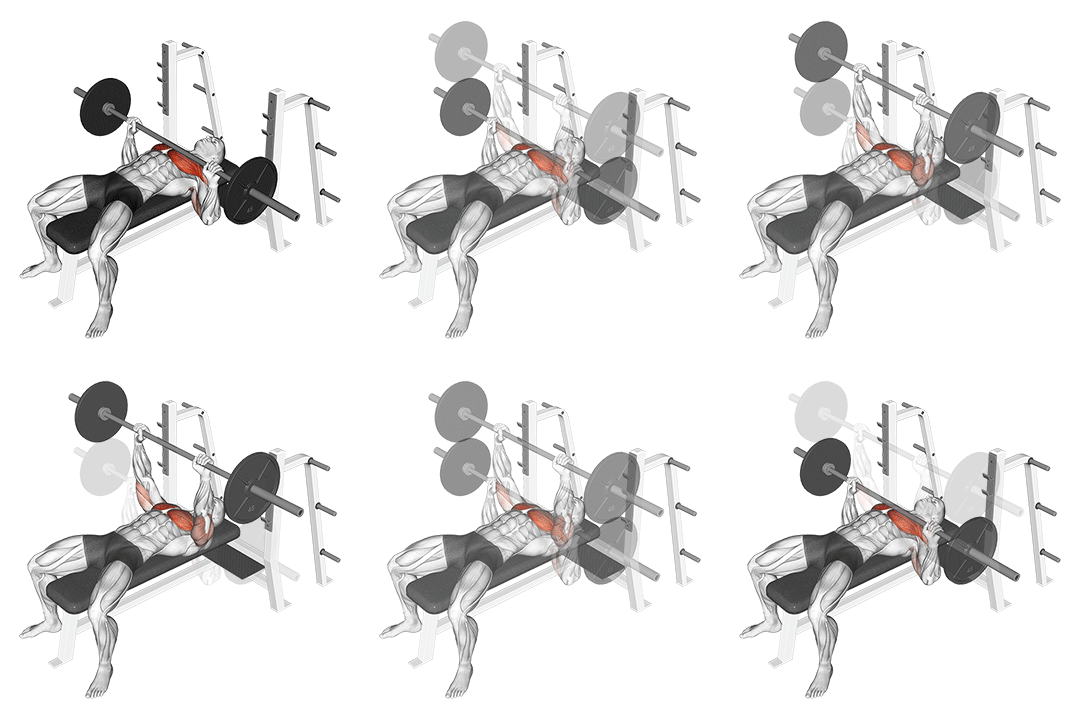
Barbell Bench Press
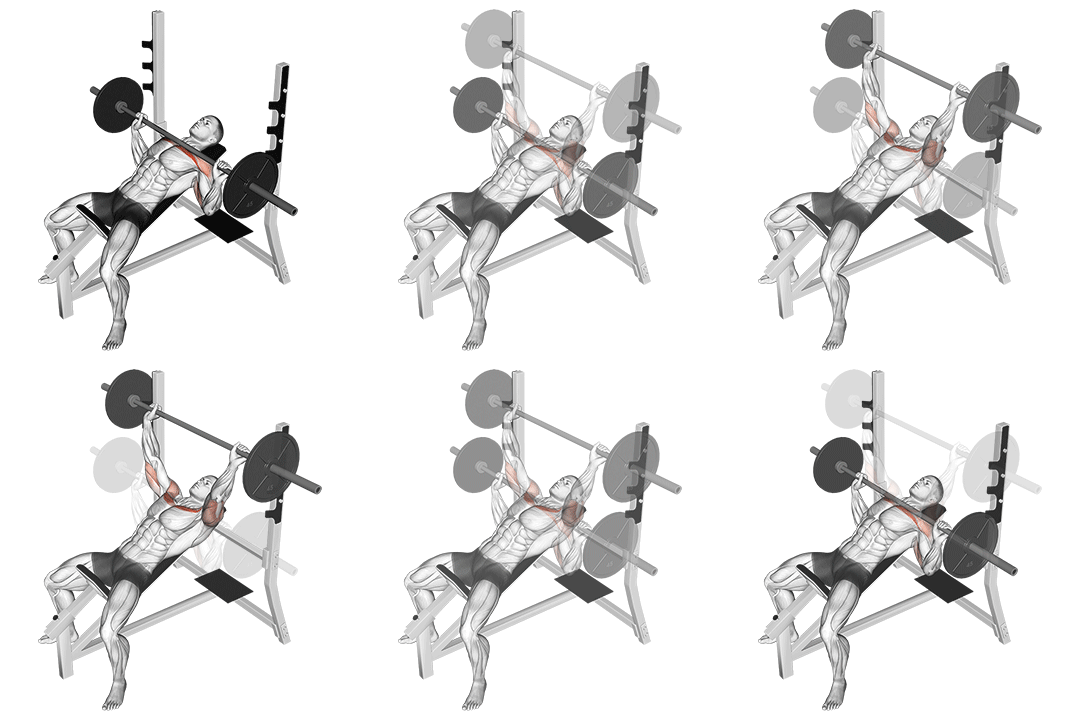
Barbell Incline Bench Press
Head-to-Head Comparison
| Attribute | Barbell Bench Press | Barbell Incline Bench Press |
|---|---|---|
| Target Muscle |
Pectorals
|
Pectorals
|
| Body Part |
Chest
|
Chest
|
| Equipment |
Barbell
|
Barbell
|
| Difficulty |
Intermediate
|
Intermediate
|
| Movement Type |
Compound
|
Compound
|
| Secondary Muscles |
2
|
2
|
Secondary Muscles Activated
Barbell Bench Press
Barbell Incline Bench Press
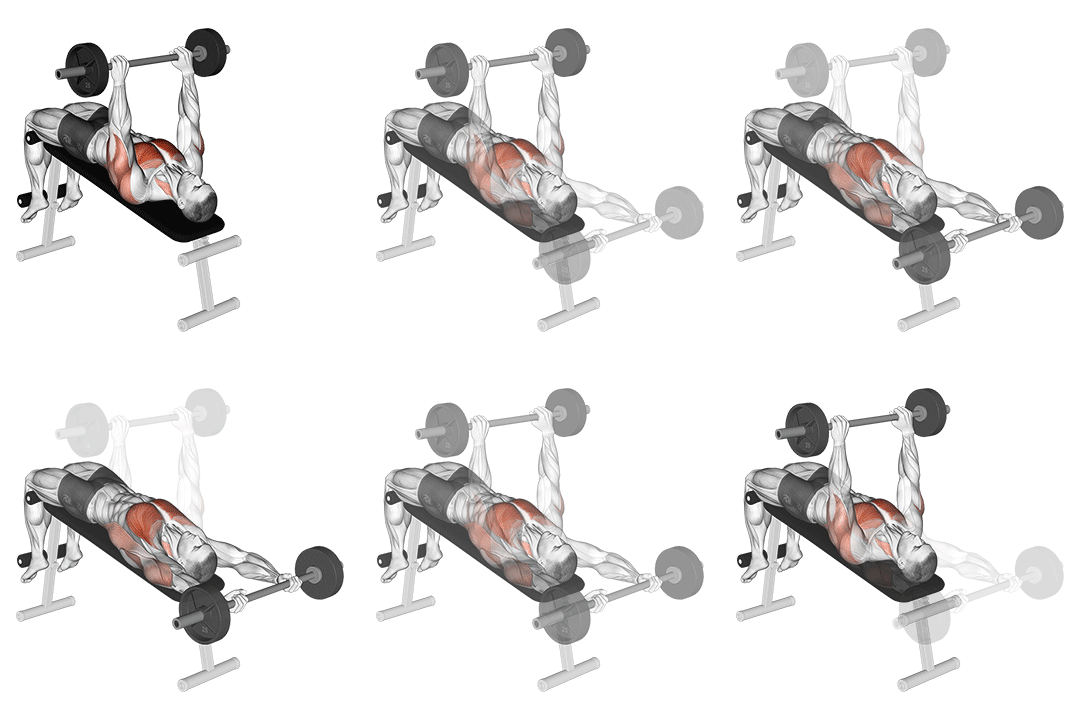
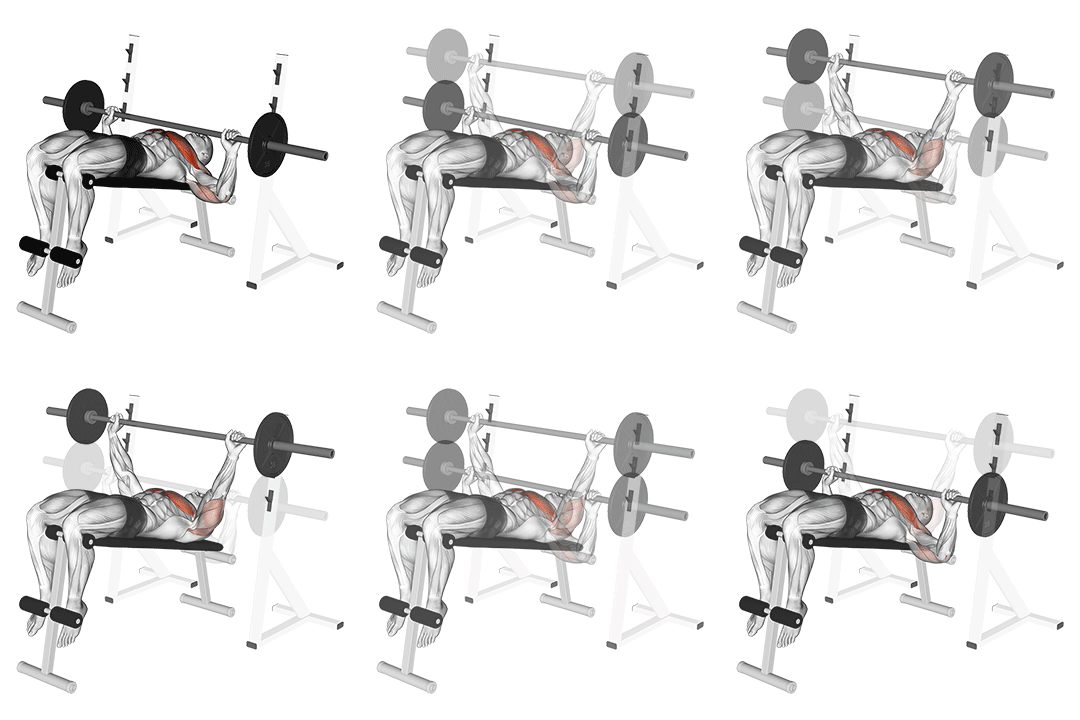
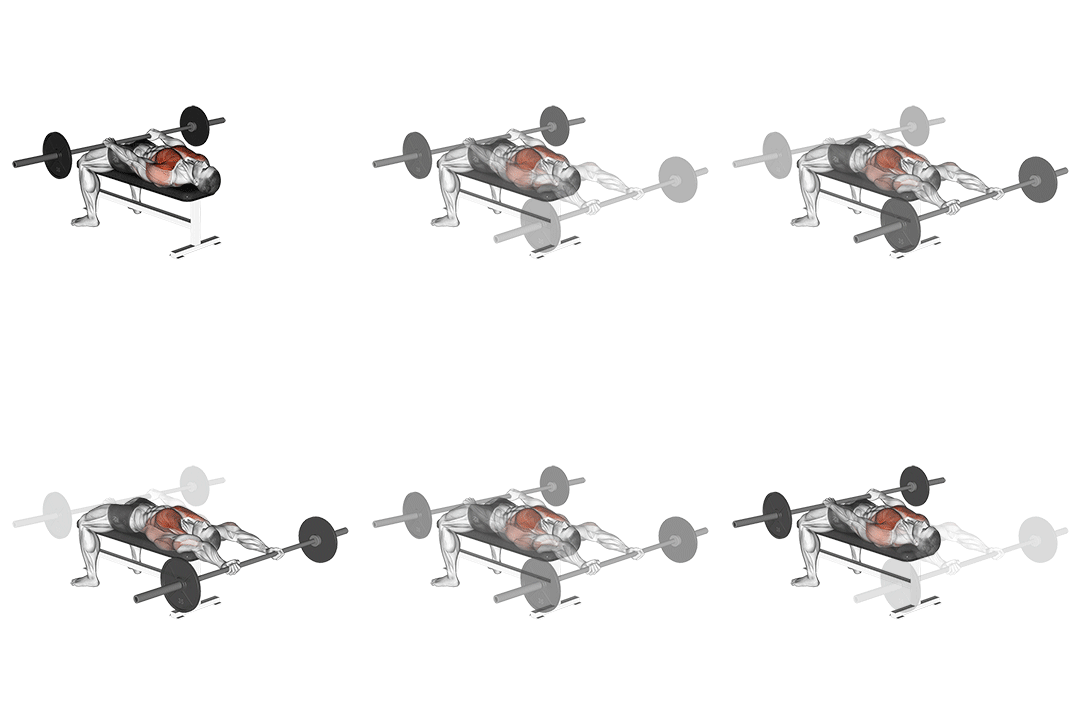
Visual Comparison
Overview
Barbell Bench Press vs Barbell Incline Bench Press — if you want a stronger, fuller chest you need to pick the right tool. Here you’ll get a direct comparison so you can choose based on muscle emphasis, technique, and programming. I’ll cover primary and secondary muscle activation, bench angles (15–45°), equipment needs, learning curve, injury risk, and specific rep ranges for strength (4–6) and hypertrophy (8–12). Read on and you’ll know which press belongs in your workouts and how to execute each lift for safer, faster muscle growth.
Key Differences
- Both exercises target the Pectorals using Barbell. The main differences are in their movement patterns and muscle activation angles.
Pros & Cons
Barbell Bench Press
+ Pros
- Allows higher absolute loads for raw pressing strength
- Even mid-chest development due to horizontal force vector
- Simpler setup and more accessible in most gyms
- Easier to safety-pin in a rack for heavy singles
− Cons
- Less upper-pec emphasis compared with incline
- Can aggravate shoulders if elbows flare beyond 70°
- Plateaus may require accessory variations to target weaknesses
Barbell Incline Bench Press
+ Pros
- Greater emphasis on upper pectorals and clavicular head
- Improves bench symmetry and upper-chest thickness
- Useful accessory for balanced chest development
- Can reduce lower pec dominance and teach a steeper bar path
− Cons
- Requires adjustable bench and tighter setup
- Higher anterior shoulder involvement increases stress
- Generally lower absolute loads than flat bench for strength
When Each Exercise Wins
Incline better targets the upper pecs and balances chest development; use 3–4 sets of 8–12 reps at a 30° bench angle to maximize upper-clavicular fiber recruitment and hypertrophy.
Flat bench lets you move heavier loads with a more favorable force vector for maximal horizontal pressing strength; focus on 4–6 rep work, progressive overload, and paused reps to build raw pressing strength.
Flat bench has a simpler bar path and more stable setup, making it easier to learn pressing mechanics and safely progress under a coach or with rack safety.
Most home racks and flat benches accommodate the flat press and safety pins; adjustable benches for incline are less common, so the flat press offers better accessibility and easier spot-free training.
Frequently Asked Questions
Can I do both Barbell Bench Press and Barbell Incline Bench Press in the same workout?
Yes. Pair them smartly: do heavy flat bench first for strength (3–5 sets of 4–6 reps), then add 2–4 sets of incline at 8–12 reps for upper-pec hypertrophy. Keep total pressing volume in check to avoid shoulder overuse.
Which exercise is better for beginners?
Begin with the Barbell Bench Press because the bar path is more horizontal and the setup is simpler. Learn scapular retraction, foot drive, and a 30–45° elbow tuck before adding incline variations.
How do the muscle activation patterns differ?
Flat bench emphasizes mid-pec fibers via a near-horizontal force vector and greater triceps contribution, while incline shifts force upward, increasing clavicular head and anterior deltoid activation. The change in shoulder angle alters length-tension relationships and peak torque timing.
Can Barbell Incline Bench Press replace Barbell Bench Press?
Not completely. Incline is a powerful accessory for upper-chest development but typically won’t match flat bench for maximal strength due to lower absolute loads and different force vectors. Use incline to complement, not fully replace, flat pressing unless your goal prioritizes upper-chest aesthetics over maximal pressing strength.
Expert Verdict
Use the Barbell Bench Press as your foundation for upper-body strength: it lets you handle heavier loads, teaches core horizontal pressing mechanics, and is easier to set up safely. Add the Barbell Incline Bench Press to target the upper pecs and build balanced chest thickness—set the bench at 20–35° and program 8–12 rep ranges for hypertrophy. Program both across a training block: prioritize flat bench for heavy strength phases and increase incline volume during build phases to correct upper-chest lag. Choose based on your goal—strength, muscle growth, or shoulder health—and apply strict technique cues (scapular retraction, 30–45° elbow tuck) to minimize injury risk.
Also Compare
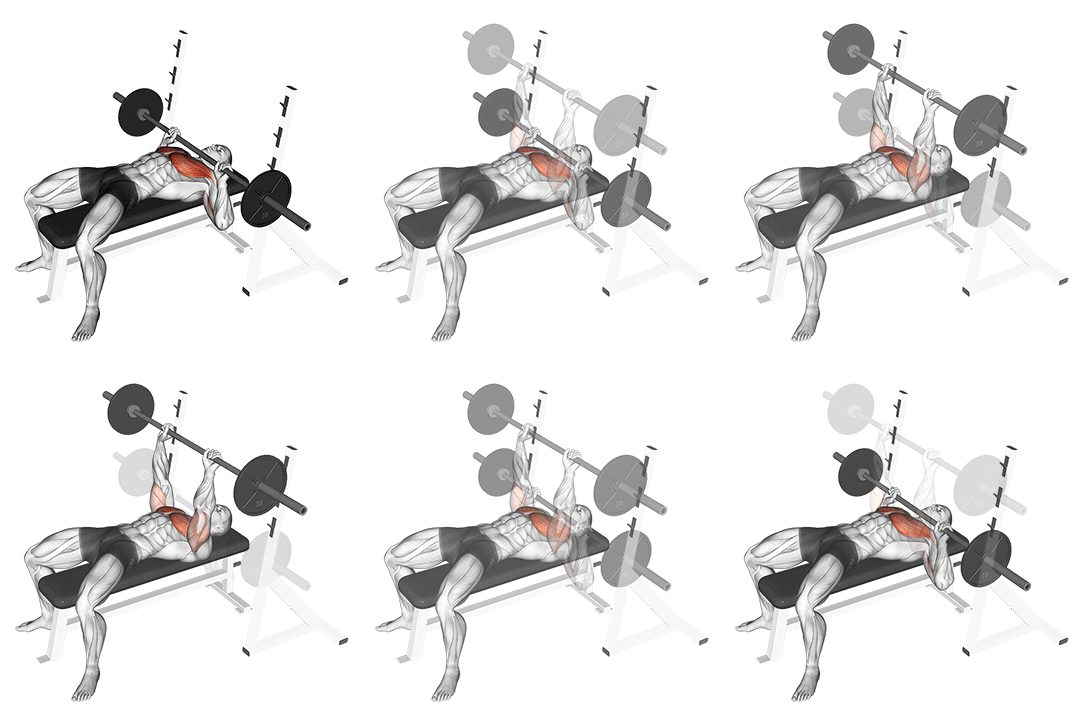
More comparisons with Barbell Bench Press
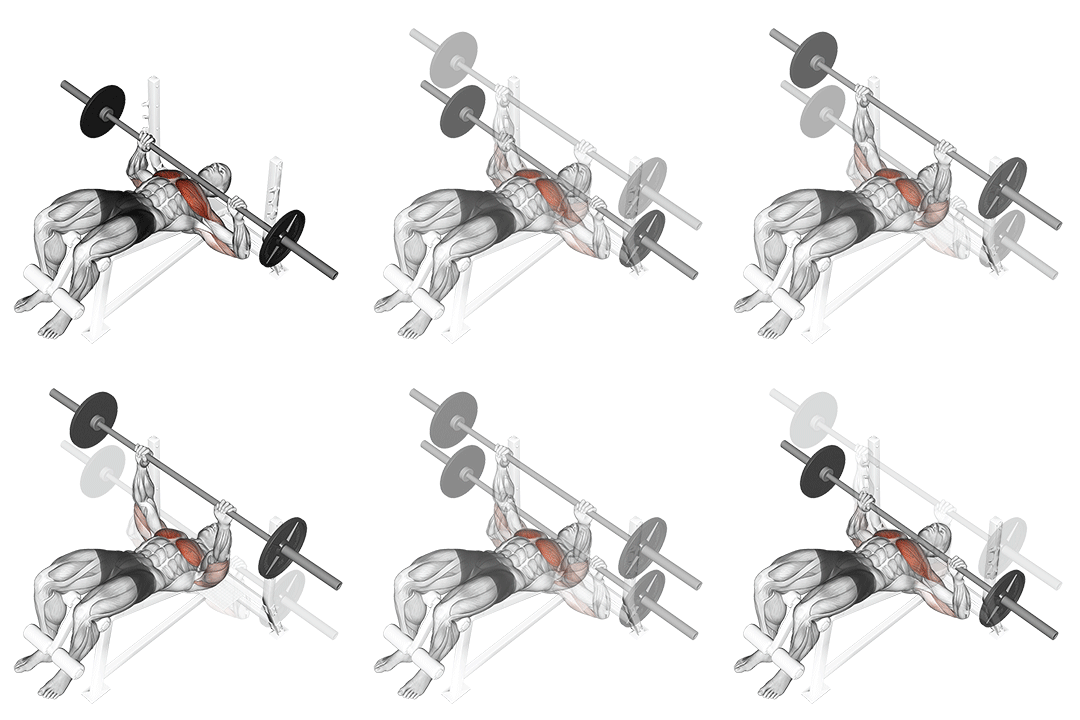
More comparisons with Barbell Incline Bench Press
Compare More Exercises
Use our free comparison tool to analyze any two exercises head-to-head.
Compare Exercises