Barbell Front Raise And Pullover vs Barbell Incline Bench Press

Compare target muscles, equipment, difficulty, movement type, and secondary muscles for Barbell Front Raise And Pullover and Barbell Incline Bench Press.

Change comparison Share

Get comparison link

Select the link and use your device's Copy command.

Comparison overview

AI-generated
Barbell Front Raise And Pullover vs Barbell Incline Bench Press — two compound barbell moves that both target the pectorals but load the chest through very different mechanics. You’ll get a clear, science-backed breakdown of primary muscle emphasis, secondary recruitment, equipment needs, safety considerations, and rep-range recommendations. I’ll show technique cues you can use today, explain the biomechanics (moment arms, force vectors, length-tension), and give decisive use-case winners so you can pick the right move for hypertrophy, strength, beginners, or home training.

Exercise Comparison

Exercise A
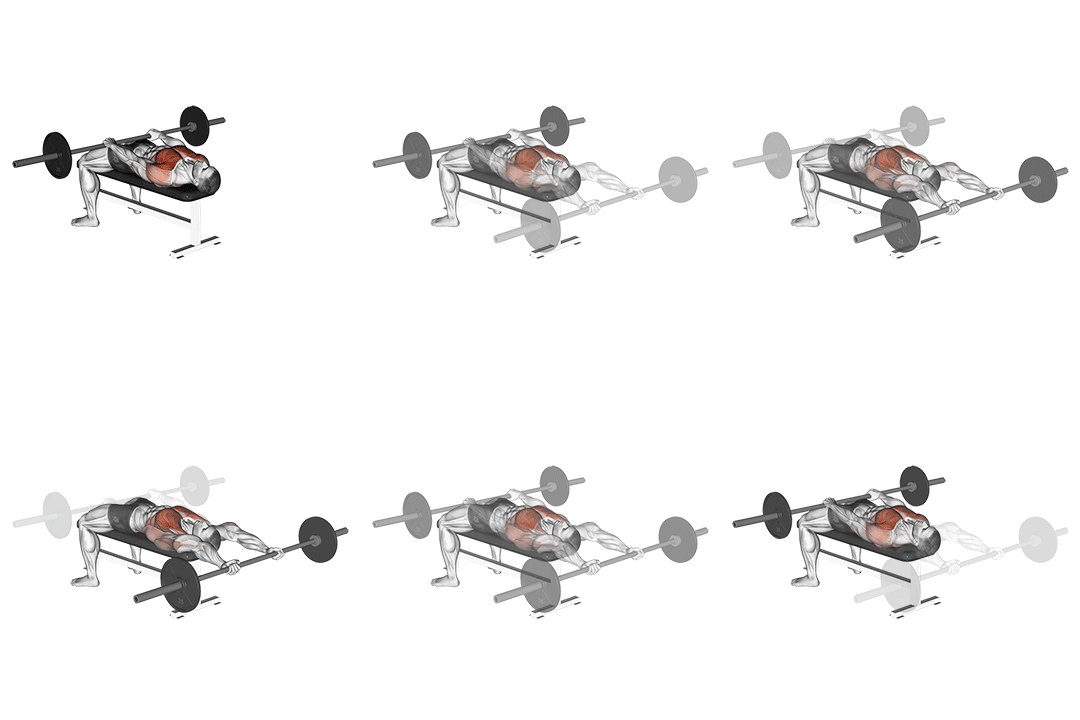
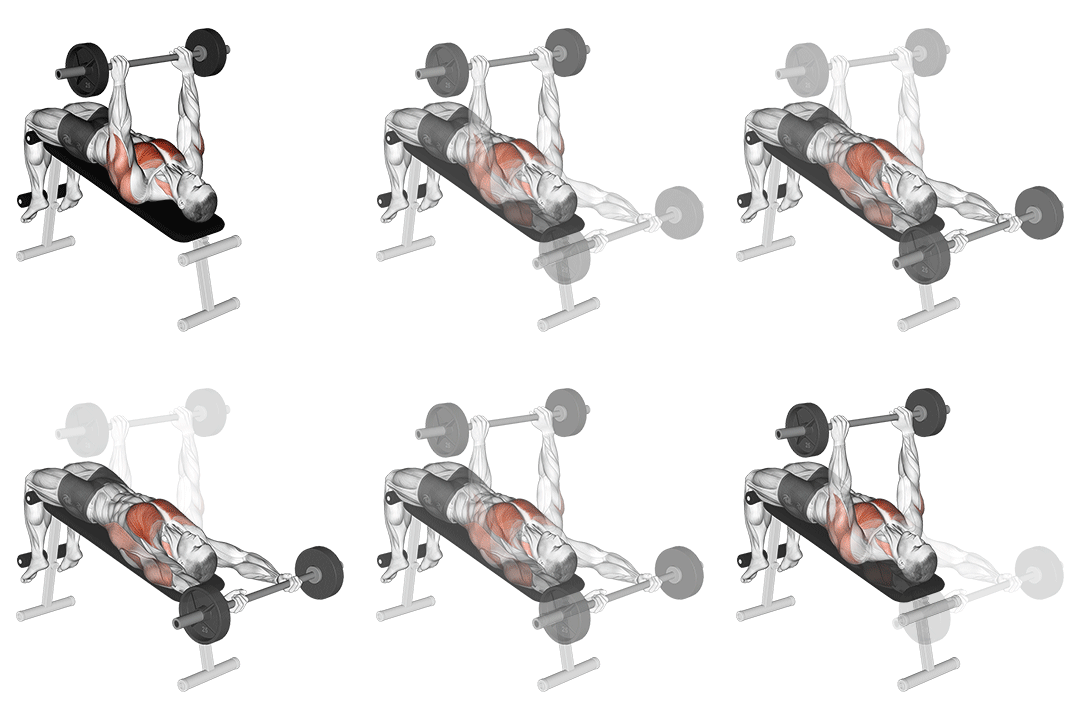
Barbell Front Raise And Pullover demonstration

Barbell Front Raise And Pullover

Target Pectorals
Equipment Barbell
Body Part Chest
Difficulty Intermediate
Movement Compound
Secondary Muscles
Deltoids Triceps
VS
Exercise B
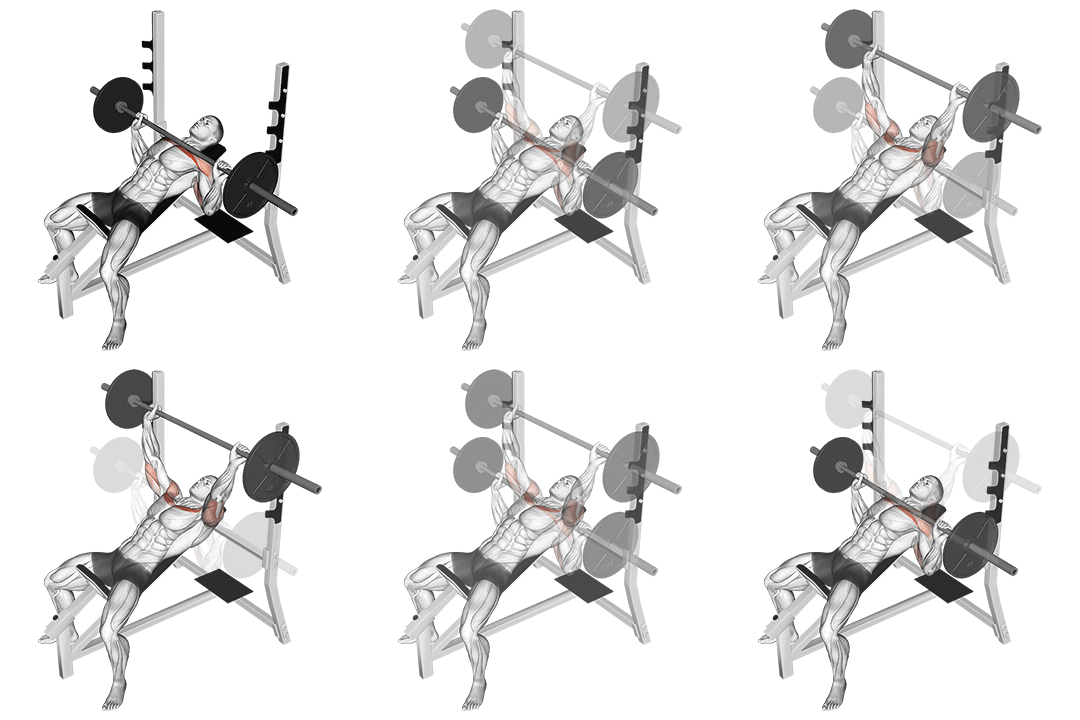
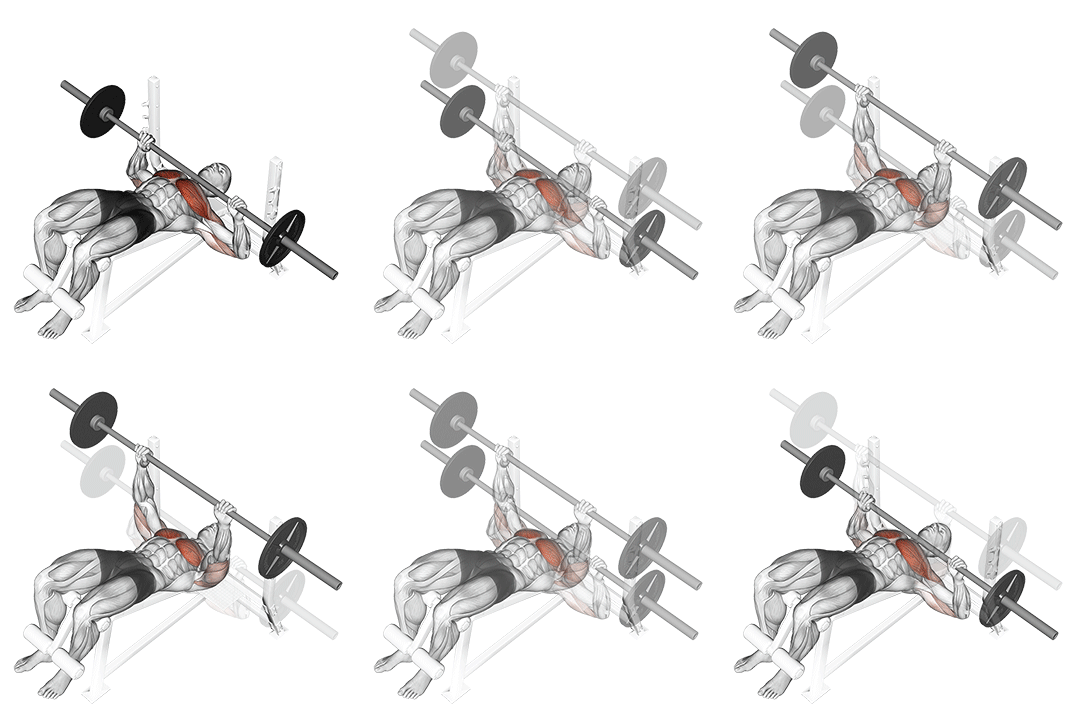
Barbell Incline Bench Press demonstration

Barbell Incline Bench Press

Target Pectorals
Equipment Barbell
Body Part Chest
Difficulty Intermediate
Movement Compound
Secondary Muscles
Shoulders Triceps

Head-to-Head Comparison

Different values are marked. These are catalogue attributes, not performance scores.

Muscles used

Listed target and secondary muscles, shown on the body. Locations, not activation or strength scores.

  • Target
  • Secondary
  • Not highlighted

Barbell Front Raise And Pullover

Front
Barbell Front Raise And Pullover: front muscle locationsSolid: listed target. Striped: listed secondary. Grey: not highlighted. Locations, not activation or strength scores. See the muscle names below.
Back
Barbell Front Raise And Pullover: back muscle locationsSolid: listed target. Striped: listed secondary. Grey: not highlighted. Locations, not activation or strength scores. See the muscle names below.
Target
Pectorals
Secondary
Deltoids, Triceps

Not shown on diagram: Deltoids. These labels do not identify a precise region on this map.

Barbell Incline Bench Press

Front
Barbell Incline Bench Press: front muscle locationsSolid: listed target. Striped: listed secondary. Grey: not highlighted. Locations, not activation or strength scores. See the muscle names below.
Back
Barbell Incline Bench Press: back muscle locationsSolid: listed target. Striped: listed secondary. Grey: not highlighted. Locations, not activation or strength scores. See the muscle names below.
Target
Pectorals
Secondary
Shoulders, Triceps

Not shown on diagram: Shoulders. These labels do not identify a precise region on this map.

Grey does not mean a muscle is unused. The diagrams show only the mapped catalogue labels.

Attribute Barbell Front Raise And Pullover Barbell Incline Bench Press
Target Muscle
Pectorals
Pectorals
Body Part
Chest
Chest
Equipment
Barbell
Barbell
Difficulty
Intermediate
Intermediate
Movement Type
Compound
Compound
Secondary Muscles Different
Deltoids, Triceps
Shoulders, Triceps

Visual Comparison

An illustrative 1–10 profile derived from catalog difficulty, equipment, and listed-muscle fields—not measured performance or muscle activation.

Key Differences

  • Both exercises target the Pectorals using Barbell. The catalogue does not establish which exercise is better for an individual goal.

Muscle comparison

Shared target muscles

Both exercises load the pectoralis major, but they bias different heads. Barbell Incline Bench Press (30–45° incline) shifts the force vector upward and increases clavicular (upper pec) and anterior deltoid activation—EMG work typically shows ~10–20% greater upper-pec activation at 30–45° versus flat pressing. The Barbell Front Raise And Pullover sequence places the pecs under stretch during the pullover phase, increasing sternal fiber length-tension engagement and emphasizing chest lengthening rather than pure horizontal adduction.

Secondary muscle differences

Secondary recruitment differs: incline bench is a press—the anterior deltoid and triceps contribute high force through elbow extension and shoulder horizontal adduction. The front raise + pullover relies more on anterior deltoid during the raise, then recruits lats and long-head triceps stabilizing the pullover; if you cue shoulder extension with a chest focus, the triceps and scapular stabilizers work isometrically rather than concentrically like a press.

Muscle involvement analysis

Incline press: concentric horizontal adduction and shoulder flexion with a large external load, producing high internal torque at the glenohumeral joint and consistent prime-mover activation through the concentric phase. Front raise → pullover: a sagittal-flexion to long-axis extension pattern; the pullover places the pecs on a long initial length and works them through a larger ROM, shifting peak tension later in the range (near end-range adduction), exploiting length-tension for hypertrophy rather than maximal absolute force.

Equipment and setup

Barbell Front Raise And Pullover: setup

Barbell Front Raise And Pullover needs a barbell and ideally a flat bench to perform the pullover through a full ROM; you can substitute the floor if a bench isn't available. Light-to-moderate load works best—usually 30–60% of a pressing 1RM when emphasizing control.

Barbell Incline Bench Press: setup

Barbell Incline Bench Press requires an adjustable incline bench set at 30–45° plus a barbell and rack or spotter for heavy sets. For heavy strength work you should have safety pins or a spotter.

Access and practicality

Barbell Front Raise And Pullover — because you can perform a usable version on the floor or with minimal setup and lighter loads. Incline bench press demands a sturdy adjustable bench and safer heavy-loading setup, making it less accessible for many home setups.

Learning and progression

Learning the movements

Incline bench press is easier to teach and scale: clear bar path, simple cueing (drive through feet, retract scapula, press up), and immediate load progression. The front raise + pullover sequence requires coordination of two planes and precise elbow positioning, so technique takes longer to master.

Progression considerations

Incline bench press offers greater progression options—progressive overload with larger absolute loads (5–10% jumps), pause reps, and percentage-based programming. The front raise & pullover suits volume progression and tempo work but caps out sooner in absolute load because of shoulder and wrist leverage.

Limitations and precautions

Barbell Front Raise And Pullover carries higher shoulder extension and anterior capsule stress if taken past safe ROM; excessive load can strain the rotator cuff. Incline bench press stresses the anterior shoulder and sternoclavicular region under heavy load and can aggravate impingement if scapular control is poor. Overall, pullover variation has a slightly higher risk for inexperienced lifters due to end-range stress.

Pros & Cons

Barbell Front Raise And Pullover

+ Pros

  • Stretches the pecs through a long ROM to exploit length-tension for hypertrophy
  • Requires minimal equipment—can be adapted to floor or bench
  • Combines anterior deltoid and chest stimulus for varied muscle coordination
  • Great accessory for upper-chest shaping and range-of-motion work

− Cons

  • Technical sequence with a steeper learning curve
  • Higher shoulder extension stress—risky with heavy loads
  • Limited absolute loading compared with pressing movements

Barbell Incline Bench Press

+ Pros

  • Provides greater absolute loading for strength and progressive overload
  • Directly targets upper chest (30–45°) with consistent prime-mover engagement
  • Simple bar path and easy to program with percentages and progressive sets
  • Strong carryover to pressing strength and compound upper-body power

− Cons

  • Requires an adjustable bench and safer heavy-loading setup
  • Can overload the anterior shoulder if scapular control is poor
  • Less ROM-focused stretch stimulus compared with pullover-style moves

When Each Exercise Wins

1
For muscle hypertrophy: Barbell Incline Bench Press

Incline pressing allows heavier loads and steady time under tension on the upper pecs; pair 6–12 reps at controlled tempo to maximize cross-sectional growth, while using pullover sequences as accessory volume to increase stretch-mediated hypertrophy.

2
For strength gains: Barbell Incline Bench Press

Presses let you overload the pecs and triceps with clear 1RM-based progression. Use 4–6 rep blocks and progressive percentages—incline press gives better neural and mechanical overload than a pullover-bodied sequence.

3
For beginners: Barbell Incline Bench Press

Easier motor pattern and straightforward loading make the incline press better for new lifters. Teach scapular retraction and foot drive first, then add variation work like pullovers once technique is solid.

4
For home workouts: Barbell Front Raise And Pullover

You can adapt the pullover+front-raise combo without an adjustable bench and use moderate loads to produce hypertrophy stimulus. It’s versatile for limited equipment and helps build chest shape and shoulder endurance.

Frequently Asked Questions

Can I do both Barbell Front Raise And Pullover and Barbell Incline Bench Press in the same workout?
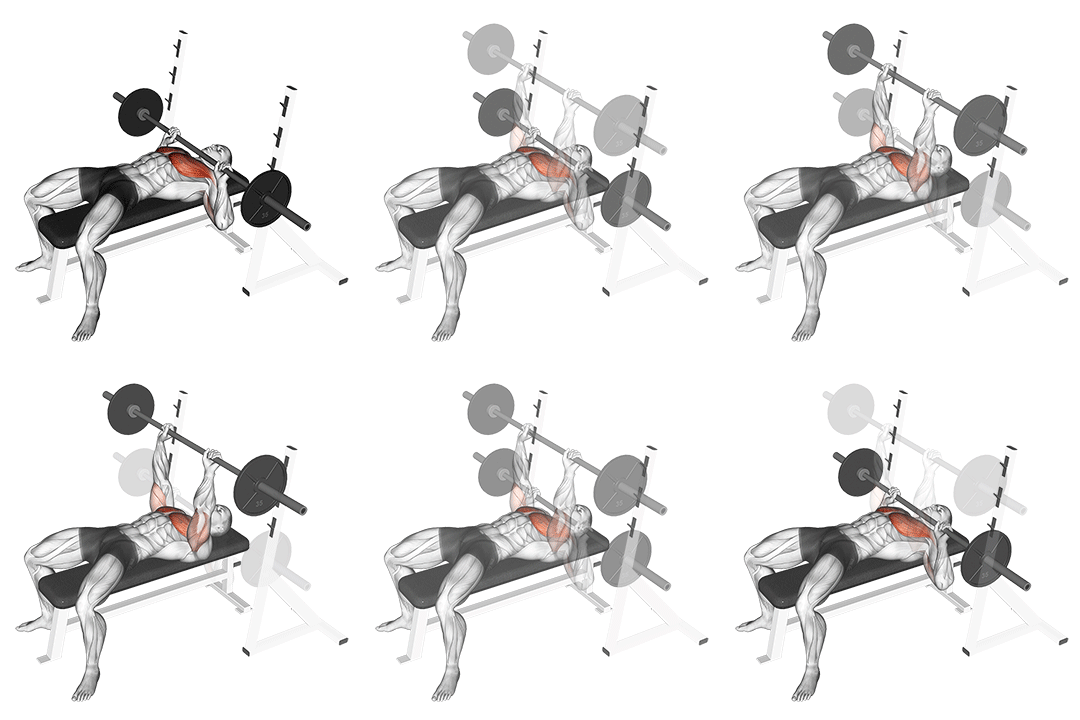
Yes. Place the Barbell Incline Bench Press early as your heavy compound (4–6 or 6–12 reps), then use the Barbell Front Raise And Pullover as an accessory for 8–15 controlled reps to increase stretch and finish the chest. Watch total shoulder volume to avoid overuse.

Which exercise is better for beginners?

Barbell Incline Bench Press is generally better for beginners because the press pattern is simpler and scales easily with load. Teach proper scapular retraction, foot drive, and elbow path first; then introduce pullover variations once stability and shoulder health are established.

How do the muscle activation patterns differ?

Incline press produces concentric horizontal adduction and strong clavicular-pec activation throughout the lift, while the front raise → pullover shifts peak tension later in the ROM, placing the pecs at longer muscle lengths and engaging stabilizers and lats more isometrically. The pullover emphasizes length-tension; the press emphasizes absolute force production.

Can Barbell Incline Bench Press replace Barbell Front Raise And Pullover?

If you need one movement for heavy loading and measurable progression, choose the incline press. It won’t replicate the long‑ROM stretch stimulus of the pullover, so keep a pullover or similar accessory in your program if you want that specific chest lengthening effect.

Comparison Summary

Use the Barbell Incline Bench Press when your goal is upper‑chest hypertrophy or measurable strength progression: set the bench at 30–45°, use controlled 6–12 rep blocks for muscle growth or 4–6 reps for strength, and prioritize scapular stability. Choose the Barbell Front Raise And Pullover as an accessory when you want long‑ROM chest loading, improved chest length‑tension stimulus, or a home-friendly option. Keep pullover loads light-to-moderate, maintain a slight elbow bend, and focus on control to protect the anterior shoulder. Pair both strategically—incline press as the heavy compound, pullover as a stretching, volume-focused accessory—to maximize chest development.

Exercise instructions

Steps from the exercise catalogue. Read the full sequence before starting.

Barbell Front Raise And Pullover

  1. Stand with your feet shoulder-width apart and hold a barbell with an overhand grip, palms facing down.
  2. Keep your arms straight and raise the barbell in front of you until it reaches shoulder height.
  3. Pause for a moment at the top, then slowly lower the barbell back down to the starting position.
Read remaining steps for Barbell Front Raise And Pullover
  1. Next, lower the barbell behind your head, keeping your arms straight.
  2. Pause for a moment at the bottom, then raise the barbell back up to the starting position.
  3. Repeat for the desired number of repetitions.

Barbell Incline Bench Press

  1. Set up an incline bench at a 45-degree angle.
  2. Lie down on the bench with your feet flat on the ground.
  3. Grasp the barbell with an overhand grip, slightly wider than shoulder-width apart.
Read remaining steps for Barbell Incline Bench Press
  1. Unrack the barbell and lower it slowly towards your chest, keeping your elbows at a 45-degree angle.
  2. Pause for a moment at the bottom, then push the barbell back up to the starting position.
  3. Repeat for the desired number of repetitions.

Also Compare

Compare another pair

Choose two exercises to see their differences side by side.

Compare Exercises