

Barbell Bench Squat vs Barbell One Leg Squat: Complete Comparison Guide
Barbell Bench Squat vs Barbell One Leg Squat — you’re choosing between a bilateral workhorse and a high-skill unilateral mover. If you want clear guidance, this comparison breaks down muscle targets, movement mechanics, equipment needs, injury risk, and when to program each exercise. I’ll give technique cues (knee angles, trunk position), rep ranges for strength and hypertrophy, plus practical progressions so you can pick the right option for quad development, single-leg power, or rehab work.
Exercise Comparison
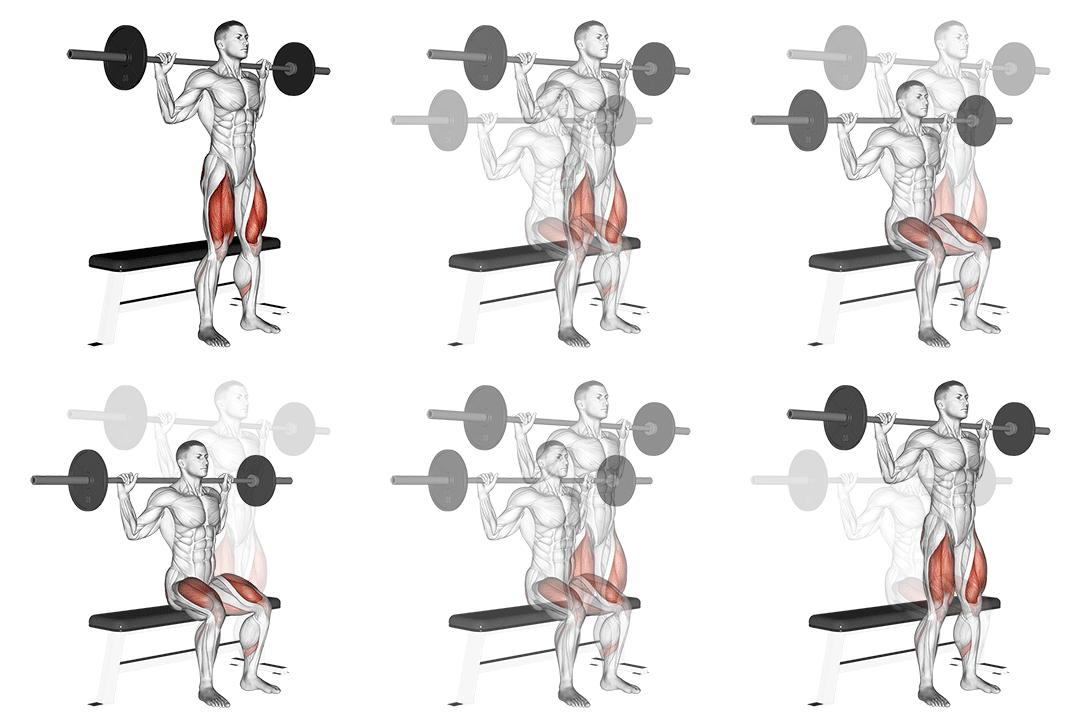
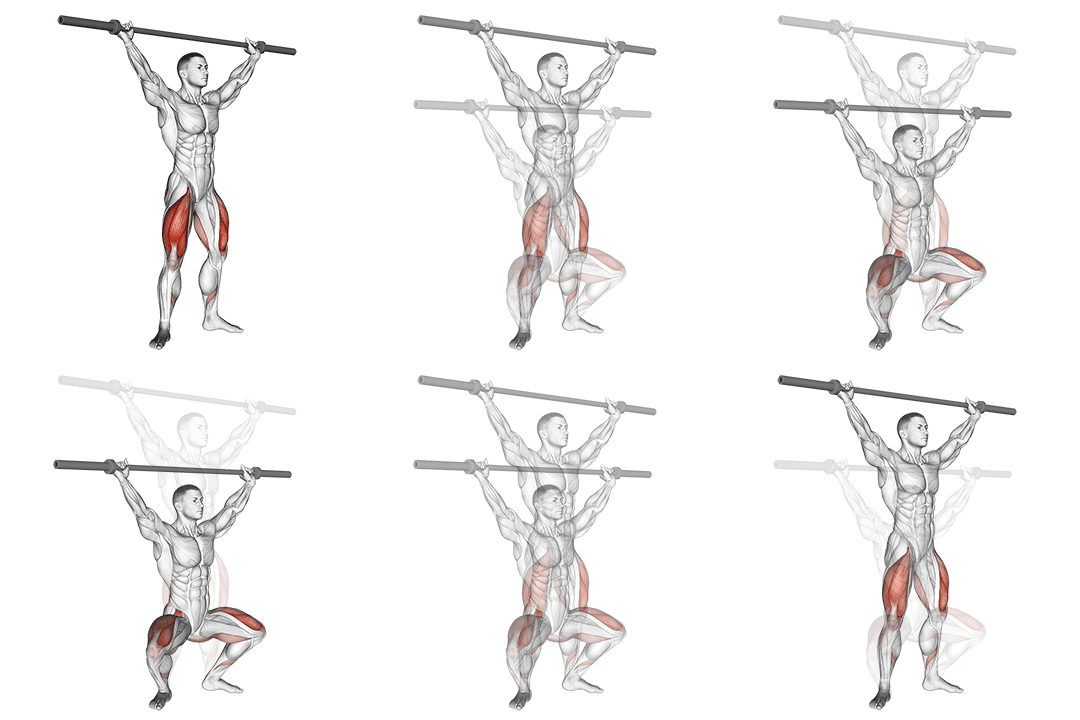
Barbell Bench Squat
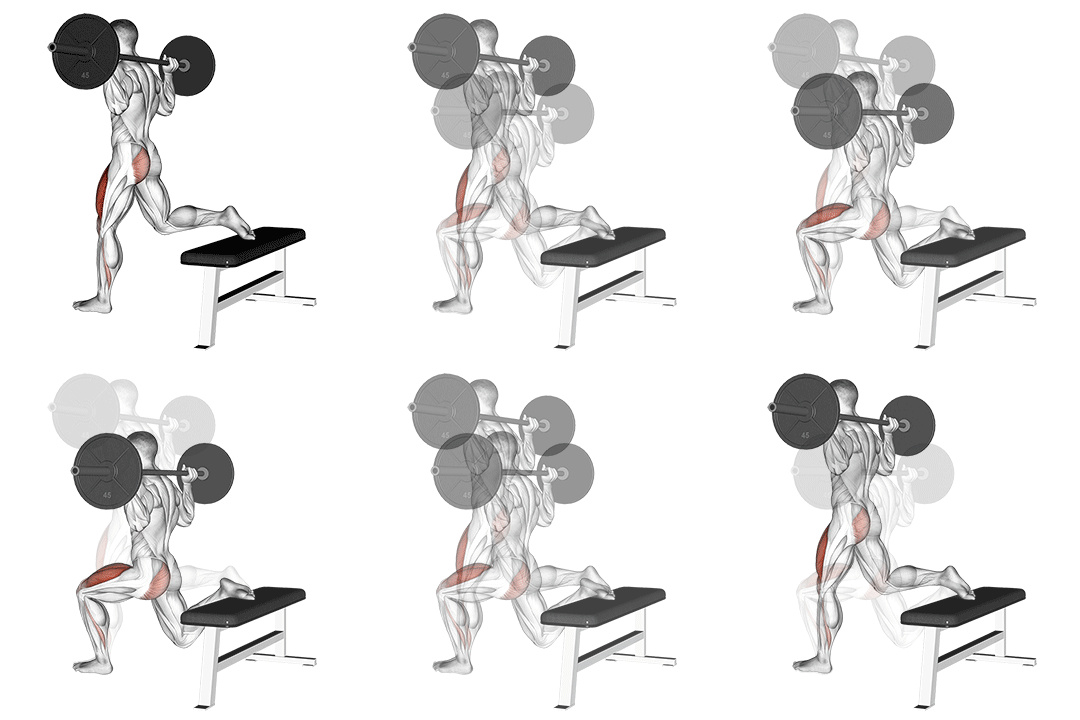
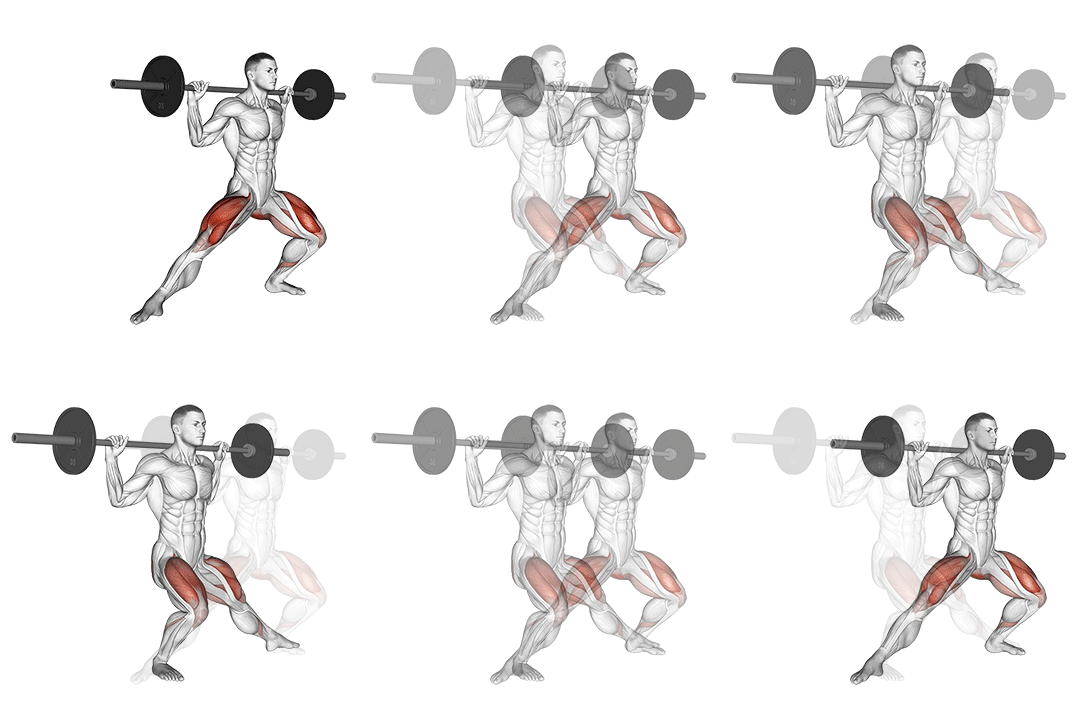
Barbell One Leg Squat
Head-to-Head Comparison
| Attribute | Barbell Bench Squat | Barbell One Leg Squat |
|---|---|---|
| Target Muscle |
Quads
|
Quads
|
| Body Part |
Upper-legs
|
Upper-legs
|
| Equipment |
Barbell
|
Barbell
|
| Difficulty |
Intermediate
|
Advanced
|
| Movement Type |
Compound
|
Compound
|
| Secondary Muscles |
3
|
3
|
Secondary Muscles Activated
Barbell Bench Squat
Barbell One Leg Squat
Visual Comparison
Overview
Barbell Bench Squat vs Barbell One Leg Squat — you’re choosing between a bilateral workhorse and a high-skill unilateral mover. If you want clear guidance, this comparison breaks down muscle targets, movement mechanics, equipment needs, injury risk, and when to program each exercise. I’ll give technique cues (knee angles, trunk position), rep ranges for strength and hypertrophy, plus practical progressions so you can pick the right option for quad development, single-leg power, or rehab work.
Key Differences
- Difficulty levels differ: Barbell Bench Squat is intermediate, while Barbell One Leg Squat is advanced.
- Both exercises target the Quads using Barbell. The main differences are in their movement patterns and muscle activation angles.
Pros & Cons
Barbell Bench Squat
+ Pros
- Allows heavier absolute loading for quad hypertrophy and maximal strength
- Simple depth cue (bench) yields consistent 90° knee flexion and repeatable sets
- Lower balance and coordination demand compared with unilateral movements
- Easier to program progressive overload with small weight increments
− Cons
- Can under-challenge unilateral stabilizers and reveal imbalances
- Higher axial spinal compression at heavy loads if core bracing is poor
- Less carryover to single-leg athletic tasks that require lateral stability
Barbell One Leg Squat
+ Pros
- Strong unilateral overload that corrects left-right asymmetries and boosts hip stability
- Higher gluteus medius and stabilizer activation due to frontal-plane demand
- Excellent for athletic transfer to sprinting and change-of-direction
- Can be scaled with bodyweight, dumbbells, or lighter barbells for home use
− Cons
- Technically demanding — needs good ankle, knee, and hip mobility
- Harder to load progressively with heavy barbells (per-leg absolute load is lower)
- Greater balance and injury risk if programmed without regressions
When Each Exercise Wins
The bilateral bench squat lets you use heavier absolute loads and higher volume (8–12+ sets at 6–12 reps) to tax the quads via consistent 60–90° knee joint torque, making progressive overload and time under tension easier to achieve.
For maximal bilateral strength the bench squat is superior because you can safely handle heavier weights (lower-rep work at 3–6 reps) and develop central nervous system adaptations that translate to higher 1RM increases.
Beginners benefit from the bench as a depth guide and from reduced balance demand; learning bracing, bar path, and knee tracking on bilateral work accelerates safe strength development before progressing to unilateral complexity.
When rack space or heavy plates are limited, one-leg variants scale well with bodyweight or light barbells/dumbbells and deliver strong unilateral stimulus without needing a full commercial setup.
Frequently Asked Questions
Can I do both Barbell Bench Squat and Barbell One Leg Squat in the same workout?
Yes. Pair them intelligently: perform heavy bilateral bench squats first to take advantage of maximal strength when fresh (3–6 reps), then follow with unilateral one-leg squats for 3–4 sets of 6–10 reps per leg to target stability and address imbalances without compromising the heavy sets.
Which exercise is better for beginners?
Barbell Bench Squat is better for beginners because the bench gives a reliable depth cue and the bilateral pattern reduces balance demands, letting you focus on bar path, bracing, and knee tracking before advancing to single-leg complexity.
How do the muscle activation patterns differ?
Bench squats produce symmetric quad-dominant activation with peak knee extensor torque around 60–90° of knee flexion. One-leg squats increase unilateral knee and hip torques, raising gluteus medius and stabilizer activation and requiring more hamstring and calf control to manage ankle and pelvis position.
Can Barbell One Leg Squat replace Barbell Bench Squat?
Not completely. One-leg squats excel at unilateral strength and stability but typically can’t match the absolute bilateral loads needed for maximal hypertrophy or 1RM strength. Use one-leg squats as a complement or when training constraints limit bilateral loading.
Expert Verdict
Use the Barbell Bench Squat when your priority is quad hypertrophy and maximal bilateral strength because it supports heavier loads, repeatable 90° depth, and straightforward progressive overload. Choose the Barbell One Leg Squat when you need to correct imbalances, build single-leg power, or improve hip-abductor and stabilizer function; program it for 6–10 reps per leg with controlled eccentrics. If you’re building a balanced program, alternate both: heavy bench squats 1–2x per week for load and volume, and 1 session of one-leg work for unilateral control and athletic transfer.
Also Compare
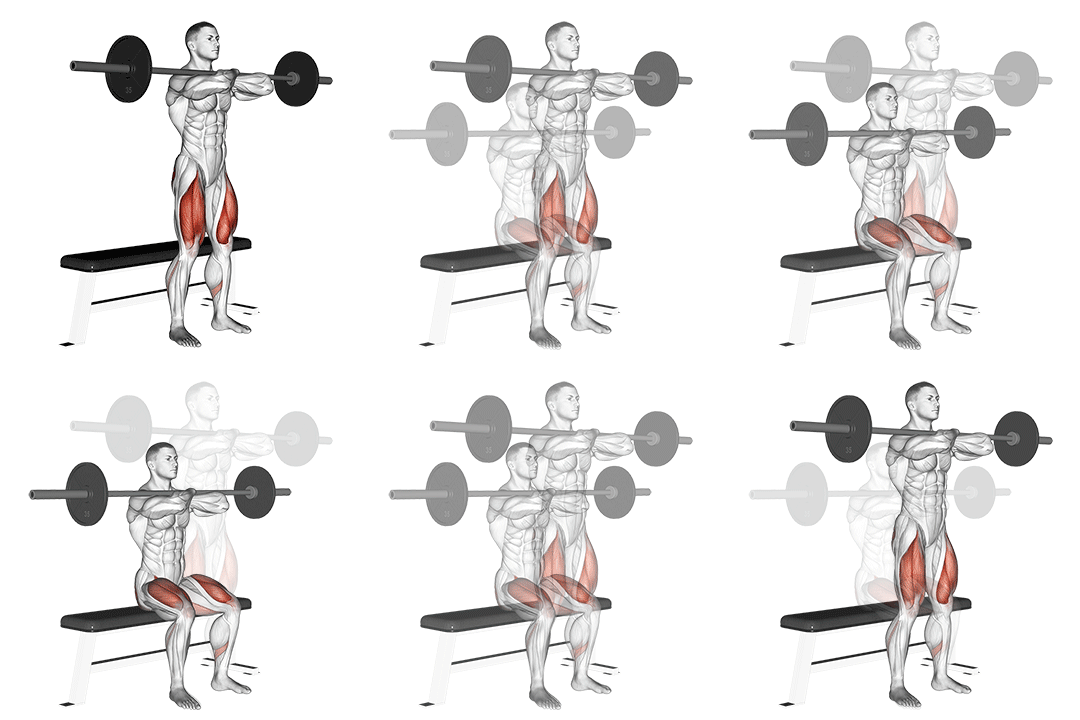
More comparisons with Barbell Bench Squat
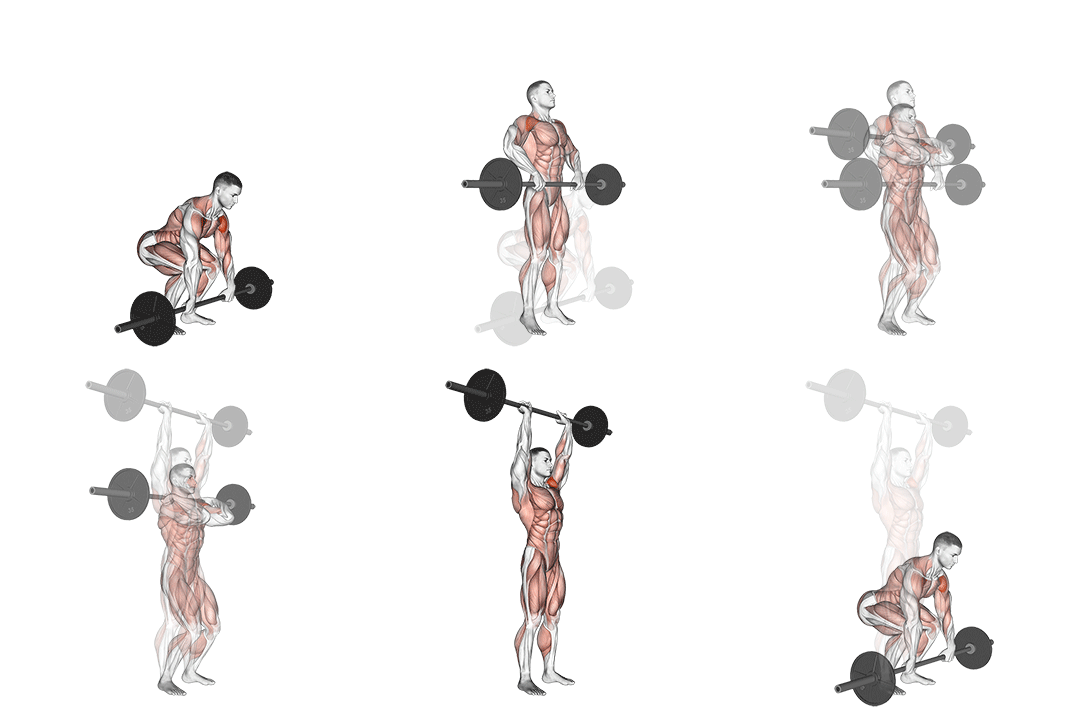
More comparisons with Barbell One Leg Squat
Compare More Exercises
Use our free comparison tool to analyze any two exercises head-to-head.
Compare Exercises