

Barbell Bench Squat vs Barbell Side Split Squat: Complete Comparison Guide
Barbell Bench Squat vs Barbell Side Split Squat — if you want stronger, thicker quads, you need to pick the right move for your program. You’ll get a direct comparison of muscle activation, equipment needs, technique cues, and programming choices. I’ll show how each exercise loads the knee and hip joints, which secondary muscles come online, and how to use rep ranges (3–5 for strength, 6–12 for hypertrophy, 8–15 for unilateral work) to match your goals. Expect clear cues for setup, desired joint angles, and when to rotate one into your workouts.
Exercise Comparison
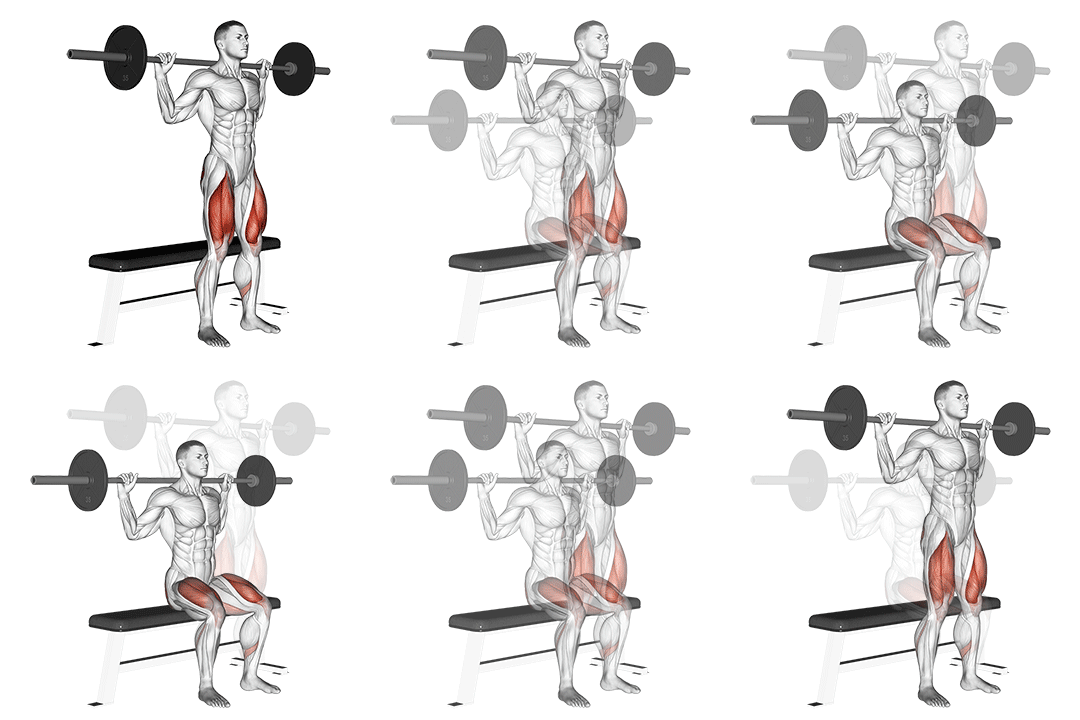
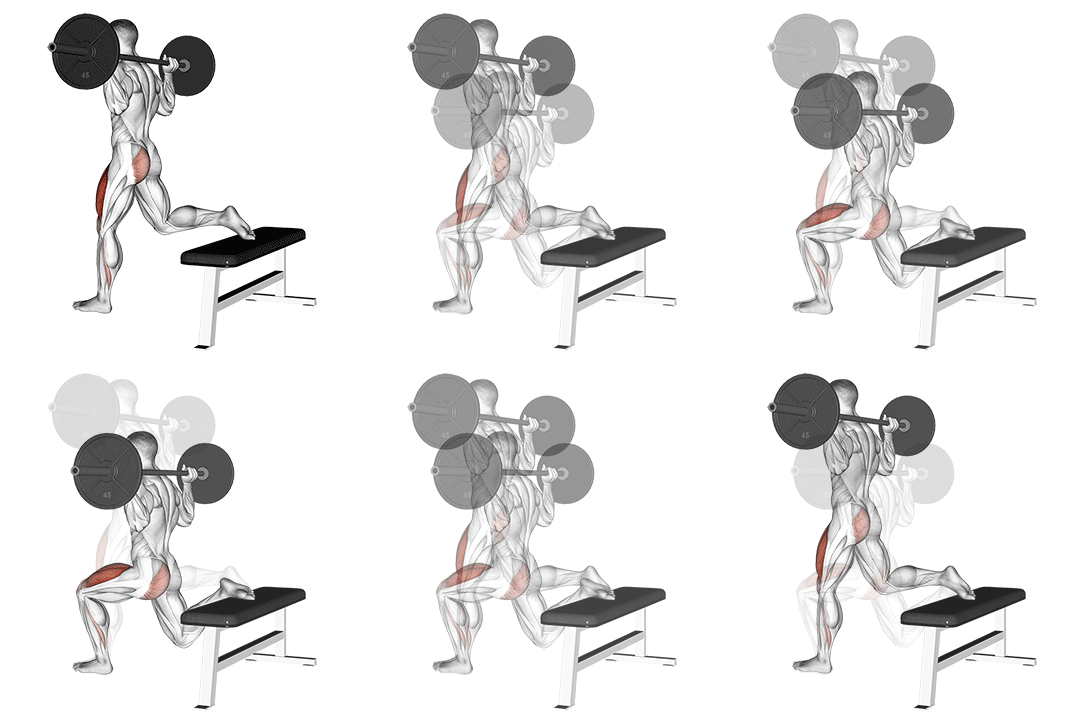
Barbell Bench Squat
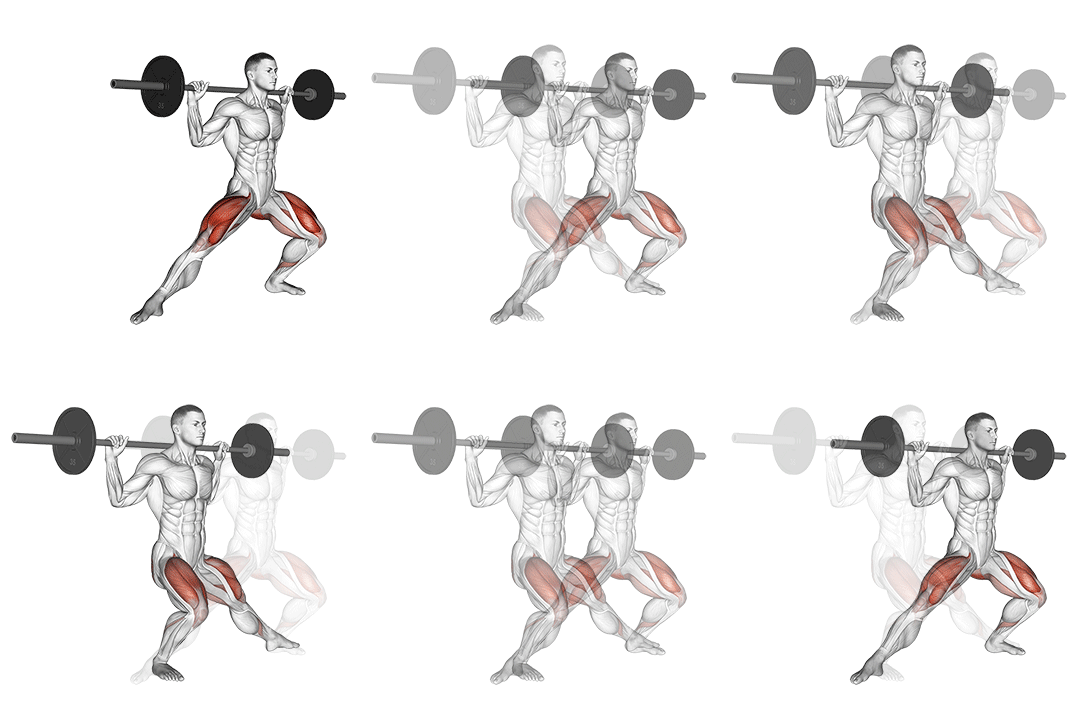
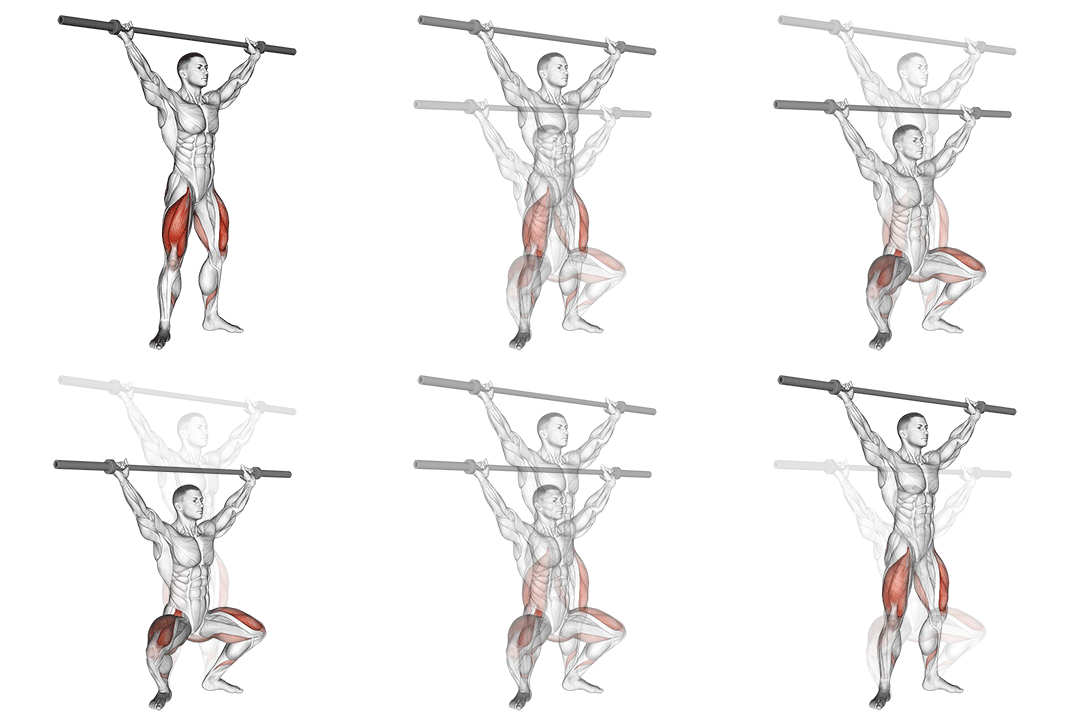
Barbell Side Split Squat
Head-to-Head Comparison
| Attribute | Barbell Bench Squat | Barbell Side Split Squat |
|---|---|---|
| Target Muscle |
Quads
|
Quads
|
| Body Part |
Upper-legs
|
Upper-legs
|
| Equipment |
Barbell
|
Barbell
|
| Difficulty |
Intermediate
|
Intermediate
|
| Movement Type |
Compound
|
Compound
|
| Secondary Muscles |
3
|
3
|
Secondary Muscles Activated
Barbell Bench Squat
Barbell Side Split Squat
Visual Comparison
Overview
Barbell Bench Squat vs Barbell Side Split Squat — if you want stronger, thicker quads, you need to pick the right move for your program. You’ll get a direct comparison of muscle activation, equipment needs, technique cues, and programming choices. I’ll show how each exercise loads the knee and hip joints, which secondary muscles come online, and how to use rep ranges (3–5 for strength, 6–12 for hypertrophy, 8–15 for unilateral work) to match your goals. Expect clear cues for setup, desired joint angles, and when to rotate one into your workouts.
Key Differences
- Both exercises target the Quads using Barbell. The main differences are in their movement patterns and muscle activation angles.
Pros & Cons
Barbell Bench Squat
+ Pros
- High bilateral quad overload—great for heavy progressive loading
- Consistent depth via bench reduces depth variability and preserves technique
- Easier to load progressively in small increments (microplates)
- Lower balance demand lets you focus on force production
− Cons
- Requires rack and bench for safe setup
- Sits back can increase hip hinge and posterior-chain bias if mis-cued
- Greater compressive load on spine and knees at heavy weights
Barbell Side Split Squat
+ Pros
- Stronger unilateral stimulus and ability to fix left-right imbalances
- Greater adductor and glute medius activation due to frontal-plane demand
- Often easier to scale to bodyweight or dumbbells for home training
- Improves lateral stability and single-leg control
− Cons
- Higher balance and mobility requirements—harder to load heavy
- Requires precise spacing and technique to protect the groin and knee
- Absolute overload potential is lower than bilateral bench-style squats
When Each Exercise Wins
The Bench Squat lets you load both quads simultaneously and apply heavier absolute weight with stable mechanics, accelerating progressive overload. Use 6–12 reps per set, controlled 2–3 second eccentrics, and 1–2 second pauses on the bench to maximize time under tension.
Because it supports heavier bilateral loading and small incremental jumps, the Bench Squat is superior for building maximal strength—aim for 3–6 sets of 3–5 reps at 80–90% 1RM. The symmetric force vector allows higher peak torque production at the knees.
Beginners get faster technical progress with the Bench Squat since it reduces balance demands and enforces consistent depth, letting you teach hip-hinge and knee tracking first. Start with light loads and focus on bracing, knee-over-toe alignment, and hitting ~90° knee flexion.
The Side Split Squat adapts well to dumbbells or kettlebells if you lack a rack, and it needs no bench—just space. Its unilateral nature still provides a robust quad stimulus with rep ranges of 8–15 per leg.
Frequently Asked Questions
Can I do both Barbell Bench Squat and Barbell Side Split Squat in the same workout?
Yes — pair them purposefully. Do Bench Squats early as your primary strength movement (3–6 sets of 3–6 or 6–10 reps) and use Side Split Squats later as an accessory for unilateral work (2–4 sets of 8–12 per leg) to address imbalances and increase time under tension.
Which exercise is better for beginners?
Barbell Bench Squat is generally better for beginners because it reduces balance demands and enforces consistent depth, letting you teach proper knee tracking and bracing. Start with light loads and perfect a slow eccentric to about 90° knee flexion before adding heavy weight.
How do the muscle activation patterns differ?
Bench Squat produces symmetrical sagittal-plane knee and hip torque with high bilateral quad activation and notable posterior-chain co-contraction when you sit back. Side Split Squat shifts forces laterally so the working limb experiences higher adductor and glute-med activation and increased stabilizer recruitment around the ankle and hip.
Can Barbell Side Split Squat replace Barbell Bench Squat?
Not completely — the Side Split Squat is excellent for unilateral strength, stability, and adductor work but won’t match the Bench Squat’s absolute overload for maximal strength and hypertrophy. Use the Side Split Squat as a complement or when equipment limits bilateral loading.
Expert Verdict
Use the Barbell Bench Squat when your goal is heavy quad overload, consistent depth, and steady strength progression—it’s the go-to for building absolute lower-body strength and hypertrophy because of the bilateral force vector and heavy loading potential. Choose the Barbell Side Split Squat when you want to correct imbalances, build single-leg strength, and target adductors and glute medius through frontal-plane work; it’s especially useful in accessory phases and rehab-style programming. Program both: prioritize Bench Squat for 4–8 week strength blocks and rotate in Side Split Squats as accessory work (2–3 sets of 8–12 per leg) to lock in stability and address asymmetries.
Also Compare
More comparisons with Barbell Bench Squat
More comparisons with Barbell Side Split Squat
Compare More Exercises
Use our free comparison tool to analyze any two exercises head-to-head.
Compare Exercises