

Barbell Bench Squat vs Barbell Squat: Complete Comparison Guide
Barbell Bench Squat vs Barbell Squat — both load the quads but shift stress differently through your hips, knees, and lower back. If you want clear guidance on which to use for hypertrophy, strength, rehab, or home training, you’re in the right place. I’ll break down primary and secondary muscle activation, specific technique cues (foot placement, torso angle, knee travel), equipment needs, difficulty and injury risk, plus programming suggestions with rep ranges. Read on and you’ll know which lift to prioritize based on your goals and movement mechanics.
Exercise Comparison
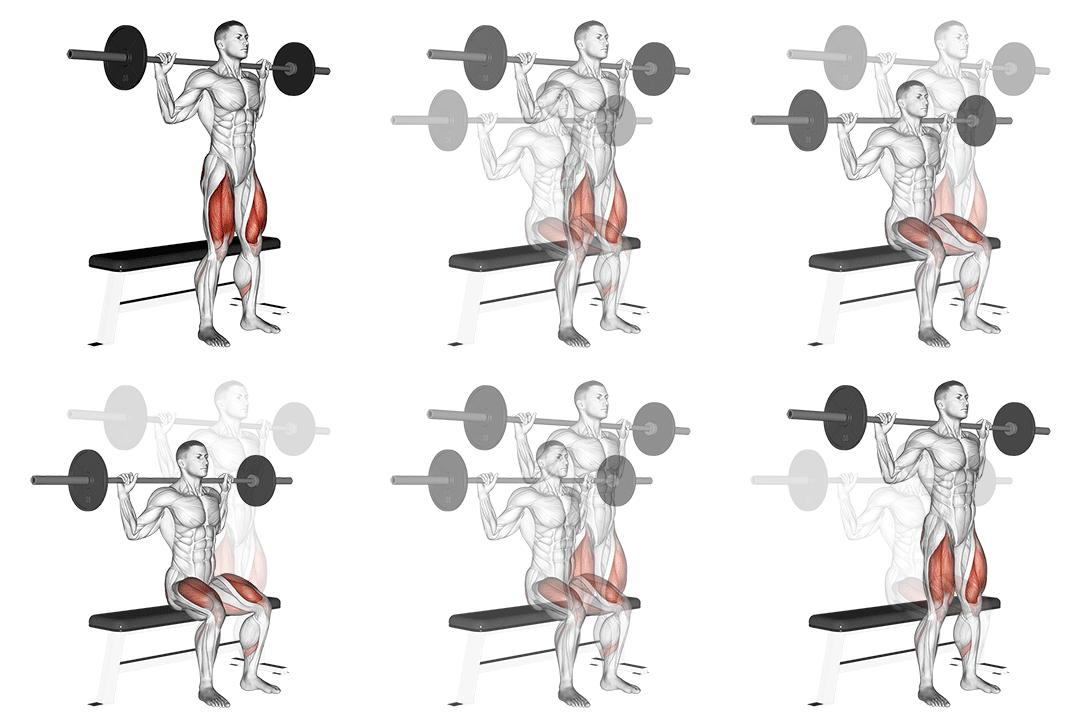
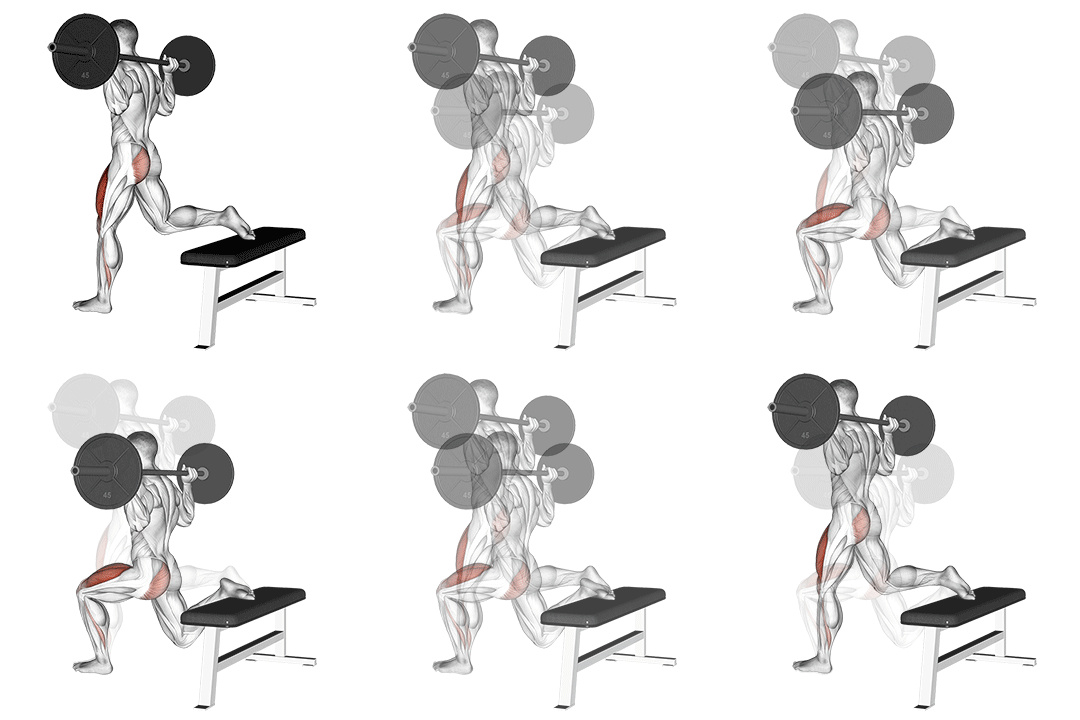
Barbell Bench Squat
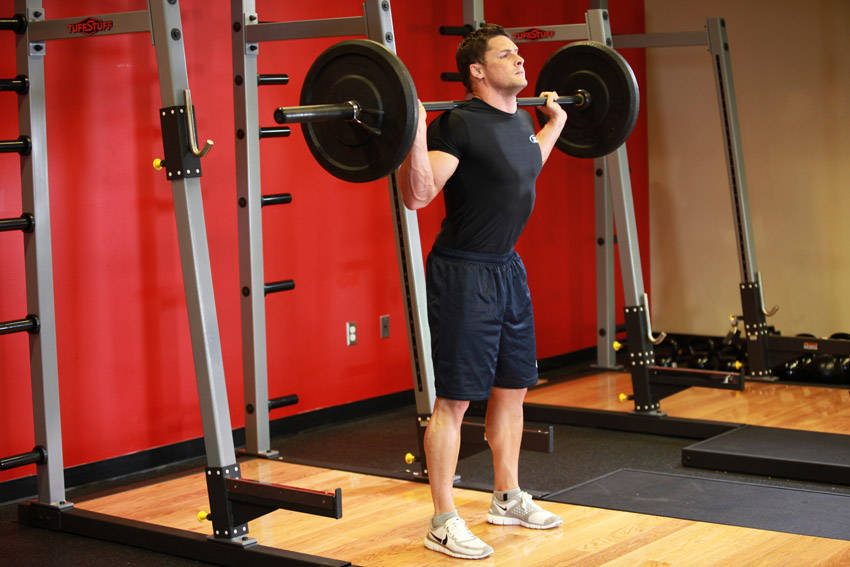
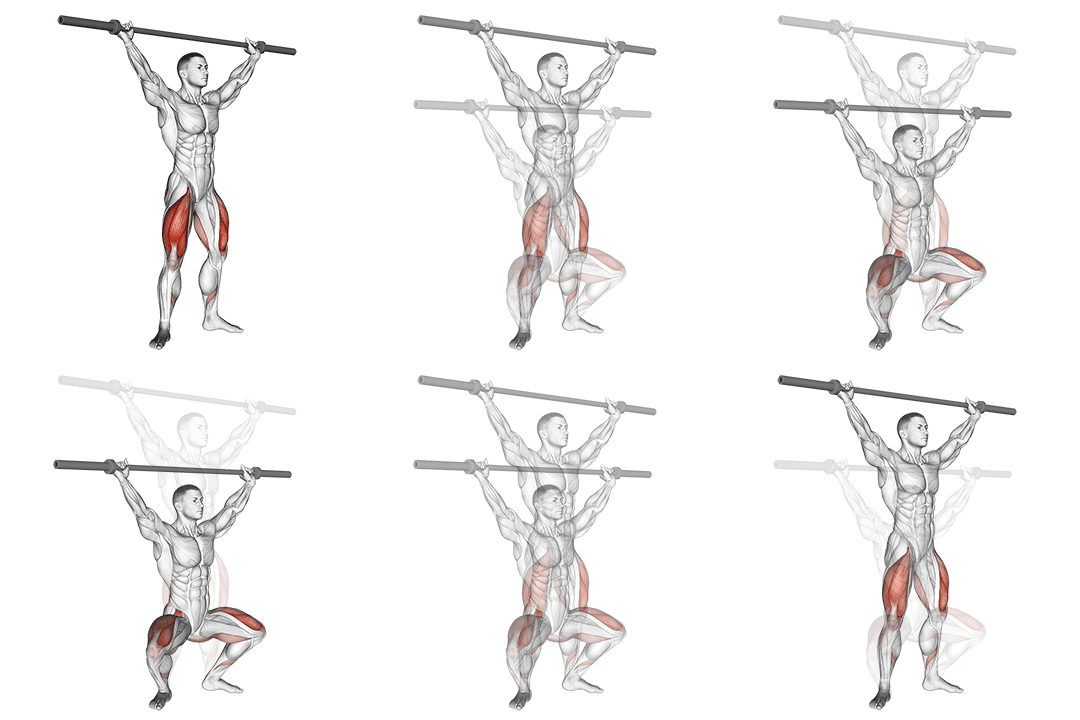
Barbell Squat
Head-to-Head Comparison
| Attribute | Barbell Bench Squat | Barbell Squat |
|---|---|---|
| Target Muscle |
Quads
|
Quads
|
| Body Part |
Upper-legs
|
Upper-legs
|
| Equipment |
Barbell
|
Barbell
|
| Difficulty |
Intermediate
|
Intermediate
|
| Movement Type |
Compound
|
Compound
|
| Secondary Muscles |
3
|
4
|
Secondary Muscles Activated
Barbell Bench Squat
Barbell Squat
Visual Comparison
Overview
Barbell Bench Squat vs Barbell Squat — both load the quads but shift stress differently through your hips, knees, and lower back. If you want clear guidance on which to use for hypertrophy, strength, rehab, or home training, you’re in the right place. I’ll break down primary and secondary muscle activation, specific technique cues (foot placement, torso angle, knee travel), equipment needs, difficulty and injury risk, plus programming suggestions with rep ranges. Read on and you’ll know which lift to prioritize based on your goals and movement mechanics.
Key Differences
- Both exercises target the Quads using Barbell. The main differences are in their movement patterns and muscle activation angles.
Pros & Cons
Barbell Bench Squat
+ Pros
- Enforces consistent depth and reduces technical variability
- Greater quad emphasis due to larger knee-extensor moment arm
- Lower lumbar loading because torso stays more upright
- Safer for training to near-failure when using a bench as a tactile stop
− Cons
- Can increase anterior knee stress if foot placement is poor
- Limited posterior-chain development compared to full squats
- Less carryover to athletic movements that require hip-dominant power
Barbell Squat
+ Pros
- Stronger posterior-chain and lower-back development
- Greater overall progression potential and load capacity
- Versatile (high-bar, low-bar, front squat variations)
- Better carryover to lifts and athletic movements that require hip drive
− Cons
- Requires better torso control to avoid excess lumbar stress
- Depth and technique are harder to self-cue reliably
- Higher technical demand increases risk of form breakdown under fatigue
When Each Exercise Wins
If your goal is quad hypertrophy, the bench squat’s enforced 90° depth and upright torso create a larger knee-extension torque and more targeted quadriceps loading. Use 6–12 reps, controlled 2–3 second eccentrics, and short 1–2 second pauses on the bench to maximize time under tension.
For overall lower-body strength, the barbell squat provides greater total load capacity and posterior-chain recruitment, which drives heavier 1–5RM progressions. Train with low reps (2–6), heavier loads, and include accessory hip-extension work like Romanian deadlifts.
Beginners learn depth and positional control faster with a bench as a tactile cue; the upright torso reduces the need for refined hip-hinge coordination. Start with bodyweight box squats and progress to a light barbell for 8–12 reps.
The bench squat can be performed safely with a simple bench or box and lighter loads, making it practical in limited space without spotters. You still need a rack for safe racking, but the fixed depth reduces technical errors.
Frequently Asked Questions
Can I do both Barbell Bench Squat and Barbell Squat in the same workout?
Yes. Structure them by intent: perform the heaviest, most technical lift first (usually the Barbell Squat for strength) and use the Bench Squat as a higher-volume accessory (8–12 reps). Keep total weekly volume in check to avoid CNS and joint overload.
Which exercise is better for beginners?
Barbell Bench Squat is generally better for beginners because the bench enforces depth and reduces the need for complex hip-hinge mechanics. Start with lighter loads and focus on knee tracking, midfoot pressure, and an upright chest.
How do the muscle activation patterns differ?
Bench squats bias knee-extension: higher rectus femoris and vasti activation with shorter hip moment arms. Back squats increase hip-extension demand, recruiting gluteus maximus, hamstrings, and erector spinae more as torso angle and hip flexion increase.
Can Barbell Squat replace Barbell Bench Squat?
Barbell Squat can replace the bench version if your goal is overall strength and posterior-chain development, but it won’t isolate the quads as effectively. If you want targeted quad hypertrophy or a safer depth cue, keep the Bench Squat in your program.
Expert Verdict
Use the Barbell Bench Squat when your priority is focused quad development, consistent depth, and safer heavy sets without a trained spotter. Its upright torso and fixed stop increase knee-extensor demand and simplify teaching cues. Choose the Barbell Squat when you want maximal strength, posterior-chain development, and transfer to athletic or compound lifts; its larger hip-extension moment and load capacity better build pure force. Program both: prioritize bench squats for hypertrophy blocks (6–12 reps) and cycle in full squats for strength blocks (2–6 reps) to balance quad size and whole-leg power.
Also Compare
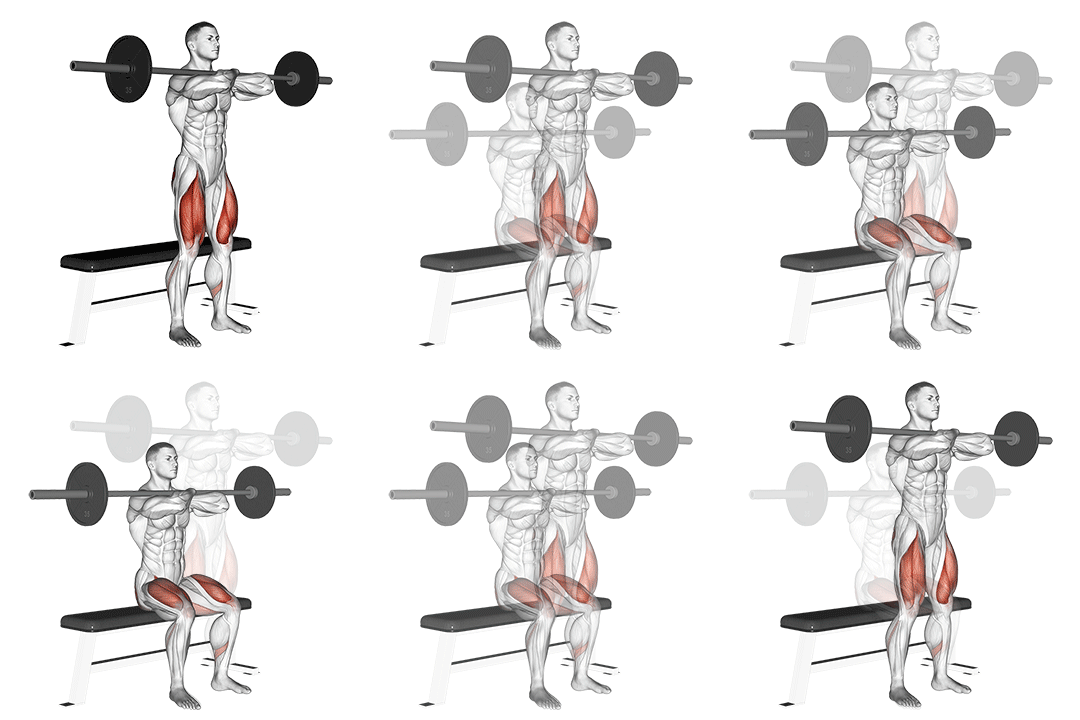
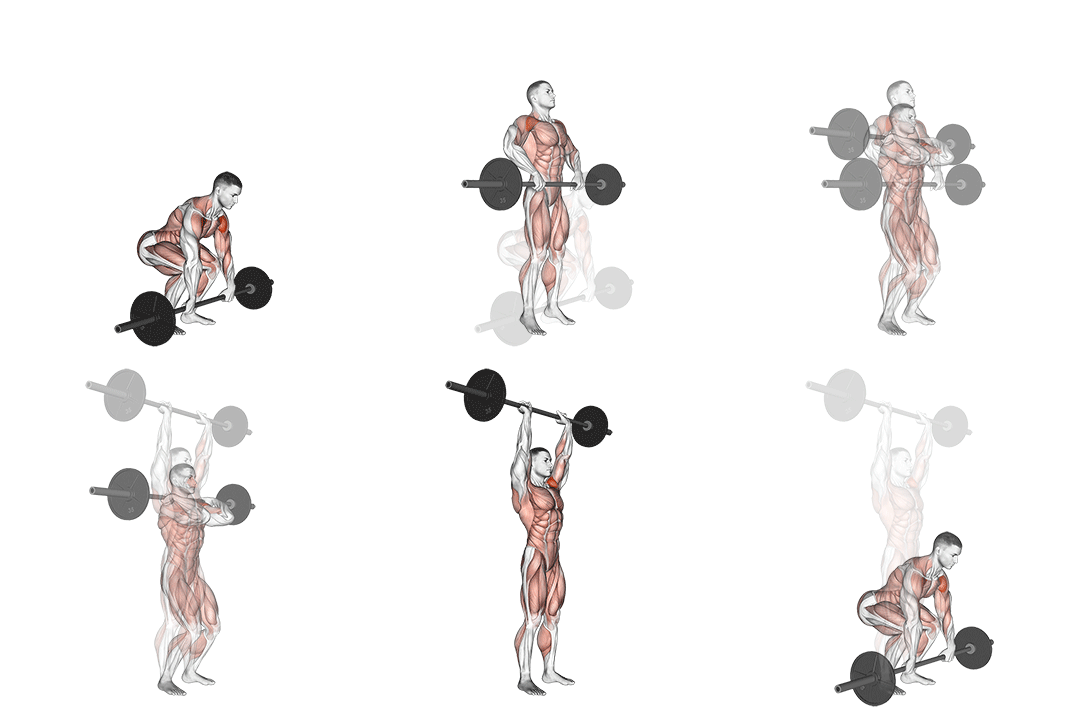
More comparisons with Barbell Bench Squat
Compare More Exercises
Use our free comparison tool to analyze any two exercises head-to-head.
Compare Exercises