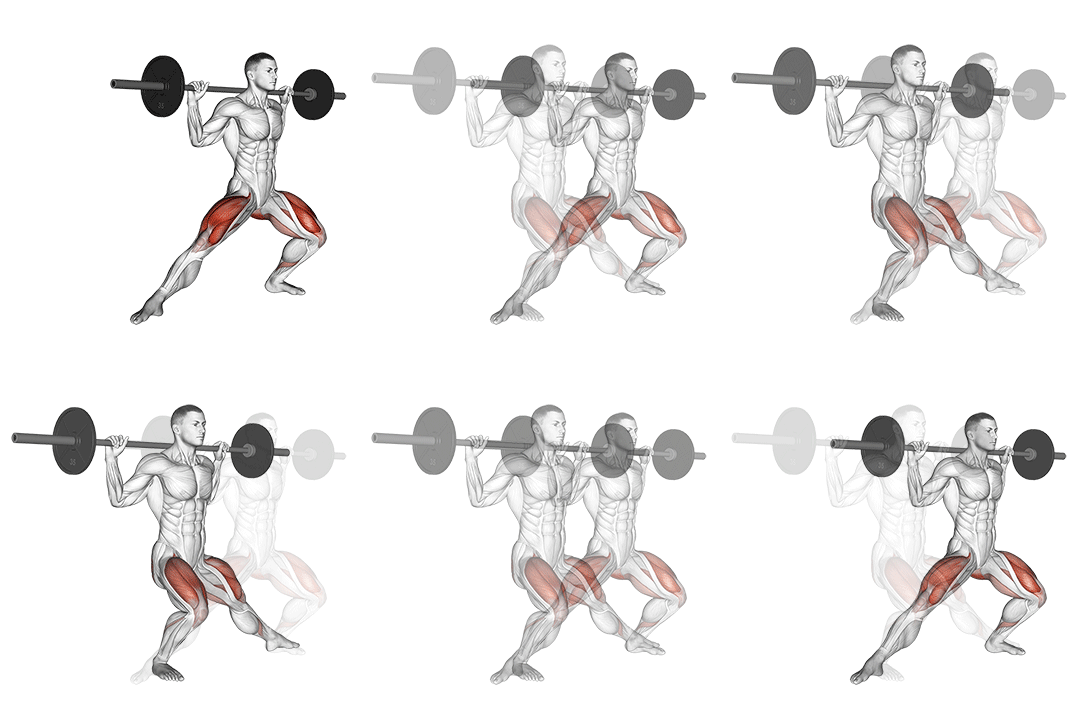
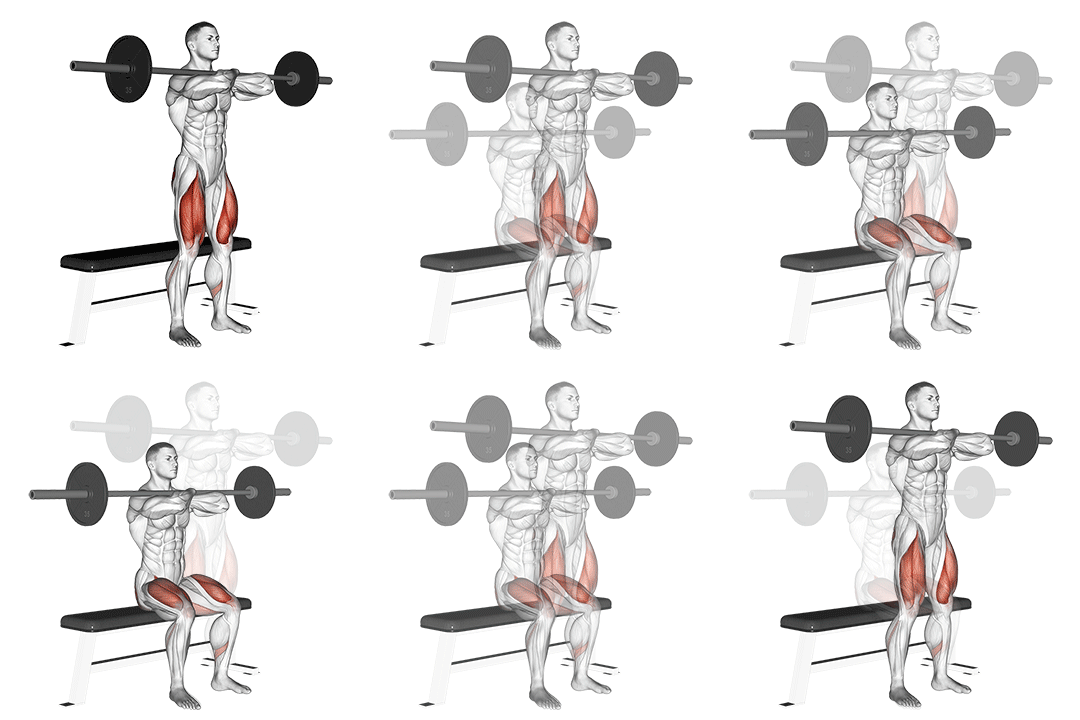
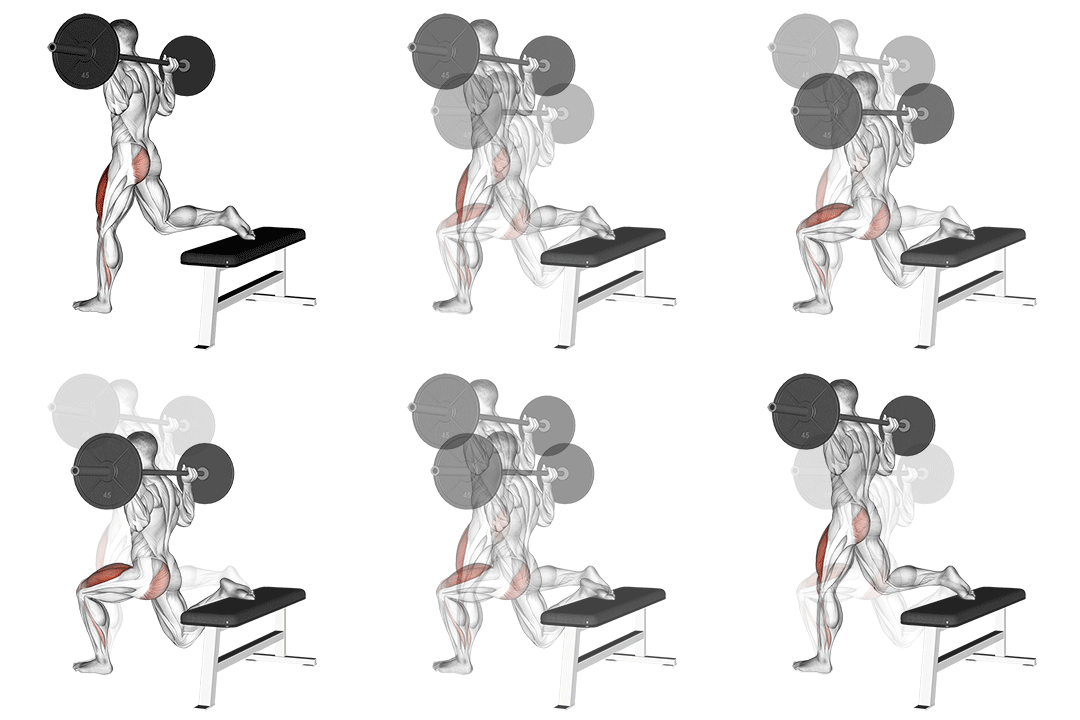
Barbell Clean And Press vs Barbell Overhead Squat

Compare target muscles, equipment, difficulty, movement type, and secondary muscles for Barbell Clean And Press and Barbell Overhead Squat.

Change comparison Share

Get comparison link

Select the link and use your device's Copy command.

Comparison overview

AI-generated
Barbell Clean And Press vs Barbell Overhead Squat is a head-to-head that matters if you train for quad strength, power, or mobility. You’ll learn how each exercise loads the quads, which secondary muscles get worked, and the movement patterns and mobility demands. I’ll give specific technique cues, rep-range suggestions (3–6 for power, 6–12 for hypertrophy), and clear recommendations so you can choose the lift that best fits your goals and training environment.

Exercise Comparison

Exercise A
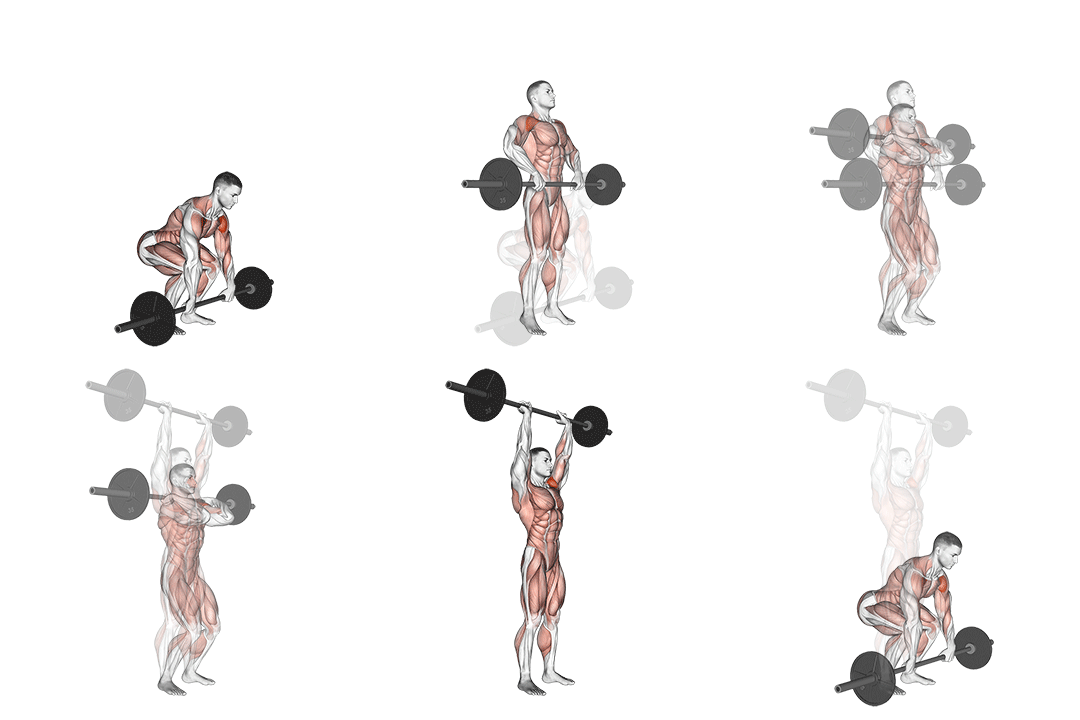
Barbell Clean And Press demonstration

Barbell Clean And Press

Target Quads
Equipment Barbell
Body Part Upper-legs
Difficulty Advanced
Movement Compound
Secondary Muscles
Hamstrings Glutes Shoulders Triceps
VS
Exercise B
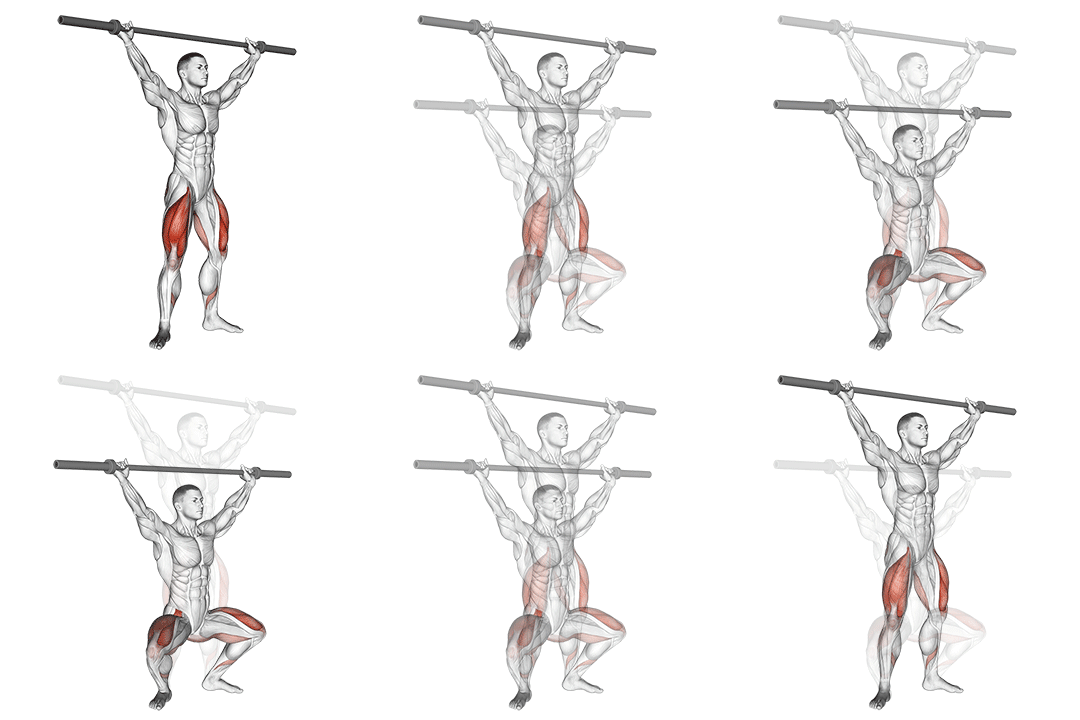
Barbell Overhead Squat demonstration

Barbell Overhead Squat

Target Quads
Equipment Barbell
Body Part Upper-legs
Difficulty Advanced
Movement Compound
Secondary Muscles
Glutes Hamstrings Calves Core

Head-to-Head Comparison

Different values are marked. These are catalogue attributes, not performance scores.

Muscles used

Listed target and secondary muscles, shown on the body. Locations, not activation or strength scores.

  • Target
  • Secondary
  • Not highlighted

Barbell Clean And Press

Front
Barbell Clean And Press: front muscle locationsSolid: listed target. Striped: listed secondary. Grey: not highlighted. Locations, not activation or strength scores. See the muscle names below.
Back
Barbell Clean And Press: back muscle locationsSolid: listed target. Striped: listed secondary. Grey: not highlighted. Locations, not activation or strength scores. See the muscle names below.
Target
Quads
Secondary
Hamstrings, Glutes, Shoulders, Triceps

Not shown on diagram: Shoulders. These labels do not identify a precise region on this map.

Barbell Overhead Squat

Front
Barbell Overhead Squat: front muscle locationsSolid: listed target. Striped: listed secondary. Grey: not highlighted. Locations, not activation or strength scores. See the muscle names below.
Back
Barbell Overhead Squat: back muscle locationsSolid: listed target. Striped: listed secondary. Grey: not highlighted. Locations, not activation or strength scores. See the muscle names below.
Target
Quads
Secondary
Glutes, Hamstrings, Calves, Core

Not shown on diagram: Core. These labels do not identify a precise region on this map.

Grey does not mean a muscle is unused. The diagrams show only the mapped catalogue labels.

Attribute Barbell Clean And Press Barbell Overhead Squat
Target Muscle
Quads
Quads
Body Part
Upper-legs
Upper-legs
Equipment
Barbell
Barbell
Difficulty
Advanced
Advanced
Movement Type
Compound
Compound
Secondary Muscles Different
Hamstrings, Glutes, Shoulders, Triceps
Glutes, Hamstrings, Calves, Core

Visual Comparison

An illustrative 1–10 profile derived from catalog difficulty, equipment, and listed-muscle fields—not measured performance or muscle activation.

Key Differences

  • Both exercises target the Quads using Barbell. The catalogue does not establish which exercise is better for an individual goal.

Muscle comparison

Shared target muscles

Both lifts primarily target the quads through loaded knee extension, with peak quad torque occurring near 0–40° of knee extension from the bottom position. The Clean And Press loads the quads during the catch/front-squat portion and initial drive, while the Overhead Squat keeps the quads under continuous tension through deeper knee flexion (often 90–120°) and a more vertical shin angle.

Secondary muscle differences

The Clean And Press recruits hip extensors (glutes, hamstrings) explosively during the triple-extension and heavily activates shoulders and triceps during the press. The Overhead Squat shifts demand toward the core, calves, and upper-back stabilizers (deltoids and scapular retractors) to maintain an overhead bar path and upright torso through the squat.

Muscle involvement analysis

Clean And Press shows phasic activation: a high-rate hip/knee extension burst (power phase), then concentric shoulder/triceps work in the press. Overhead Squat demonstrates sustained isometric and eccentric control in the shoulders and core while quads perform repeated concentric/eccentric cycles. Force vectors in the clean travel posterior-to-anterior during the pull; in the overhead squat the vertical force vector must remain aligned over midfoot to minimize knee and hip moment arms.

Equipment and setup

Barbell Clean And Press: setup

Barbell Clean And Press requires a full Olympic barbell (20 kg standard), bumper or iron plates, collars, and ideally a lifting platform or flat, non-slip floor. Space to perform an explosive pull and a rack or spotter for heavy sets is recommended.

Barbell Overhead Squat: setup

Barbell Overhead Squat needs an Olympic barbell, bumpers (helpful for dropping or light technique work), collars, and usually a squat rack for safety when loading heavy. A mirror or coach helps check bar path and thoracic extension.

Access and practicality

Barbell Clean And Press — it's slightly more accessible because you can scale by performing power cleans, hang cleans, or push presses, and you can practice components separately. Overhead squats demand long-term shoulder and thoracic mobility that many lifters lack, making it harder to progress safely.

Learning and progression

Learning the movements

Barbell Overhead Squat has a steeper mobility and technique learning curve — you must maintain a vertical torso and locked overhead position through deep knee flexion. The Clean And Press is technical too, but you can break it into more trainable segments (clean, front squat, press), so learners often gain competence faster.

Progression considerations

Barbell Clean And Press offers broader progression: increase load for strength/power, vary the clean (hang, power) and press (push press, strict press), and use cluster sets. Overhead Squat progression focuses on mobility, stability drills, tempo squats, and slow eccentric work; it’s excellent long-term for stability but offers less raw-load progression early on.

Limitations and precautions

Overhead Squat carries higher risk if shoulder or thoracic mobility is limited — excessive lumbar extension or forward torso can increase low-back shear. Clean And Press has injury risk in the lower back and shoulders if technique in the pull or press is poor, but controlled progressions (lighter loads, technique drills) reduce that risk.

Pros & Cons

Barbell Clean And Press

+ Pros

  • Develops explosive hip extension and quad strength via triple-extension
  • Scalable: break into power clean, front squat, and press for skill work
  • High potential for progressive overload with heavy loading
  • Transfers well to sport-specific power and overhead strength

− Cons

  • Technical: requires coordination across pull, catch, and press phases
  • Higher peak loads can stress the lower back if technique fails
  • Needs space and experience to perform safely and efficiently

Barbell Overhead Squat

+ Pros

  • Builds deep-quadriceps strength with strong core and shoulder stability
  • Improves thoracic extension, scapular control, and mobility
  • Hard to cheat — highlights mobility/technique deficits clearly
  • Excellent for developing upright squat mechanics and ankle dorsiflexion

− Cons

  • Requires exceptional shoulder and thoracic mobility to perform safely
  • Limited early-load progression; technique and mobility limit heavy sets
  • Challenging to self-correct without video feedback or coaching

When Each Exercise Wins

1
For muscle hypertrophy: Barbell Clean And Press

Cleaner load progression and the ability to program 6–12 rep sets and component variations mean you can target quad hypertrophy more reliably. The clean/front-squat phase allows heavier absolute loads and greater mechanical tension on quads.

2
For strength gains: Barbell Clean And Press

You can apply higher absolute loads and use heavy singles/doubles for strength and power (3–6 reps), and vary the clean and press to overload specific sticking points. This makes it superior for increasing maximal force output.

3
For beginners: Barbell Clean And Press

Although still advanced, its components can be scaled (deadlift, hang clean, push press) and trained separately. Overhead Squat’s mobility demands make it a tougher first choice for most newcomers.

4
For home workouts: Barbell Clean And Press

You can scale it with lighter bars or dumbbells and remove the need for a full rack; it also requires less ongoing coaching than the overhead squat, which benefits from mirrors or a spotter for safe progression.

Frequently Asked Questions

Can I do both Barbell Clean And Press and Barbell Overhead Squat in the same workout?

Yes — prioritize the movement that matches your session goal. For strength/power days do clean-and-press first (heavy sets), then overhead squat as a technique/mobility accessory with lighter loads or higher reps.

Which exercise is better for beginners?

Barbell Clean And Press is generally better for beginners if you break it into parts (deadlift, hang clean, push press). Overhead Squat requires advanced shoulder and thoracic mobility that many beginners lack.

How do the muscle activation patterns differ?

The Clean And Press features an explosive hip/knee extension burst followed by concentric shoulder/triceps action, so activation is phasic. The Overhead Squat creates continuous quad loading with sustained shoulder and core stabilization, emphasizing eccentric control and isometric overhead stability.

Can Barbell Overhead Squat replace Barbell Clean And Press?

Not fully — the overhead squat builds stability and mobility but doesn’t train the explosive triple-extension and heavy press loading the same way. Use overhead squats to complement technique and stability, but keep clean-and-press variants for strength and power development.

Comparison Summary

Use the Barbell Clean And Press when your goal is raw strength, power, and scalable progression. Its phasic pattern (explosive pull → front-squat → press) lets you overload quads and hips and then develop overhead pressing strength across 3–6 heavy reps or 6–12 hypertrophy ranges. Choose the Barbell Overhead Squat when your priority is mobility, core-to-shoulder stability, and fixing upright squat mechanics — it forces vertical bar alignment and challenges the quads through deeper knee flexion. If you can program both, use overhead squats for technique and mobility work and clean-and-press variations for heavy strength and power blocks.

Exercise instructions

Steps from the exercise catalogue. Read the full sequence before starting.

Barbell Clean And Press

  1. Stand with your feet shoulder-width apart and the barbell on the floor in front of you.
  2. Bend your knees and hinge at the hips to lower down and grip the barbell with an overhand grip, hands slightly wider than shoulder-width apart.
  3. Drive through your heels and extend your hips and knees to lift the barbell off the floor, keeping it close to your body.
Read remaining steps for Barbell Clean And Press
  1. As the barbell reaches your thighs, explosively extend your hips, shrug your shoulders, and pull the barbell up towards your chest.
  2. As the barbell reaches chest height, quickly drop under it and catch it at shoulder level, with your elbows pointing forward and your palms facing up.
  3. From the catch position, press the barbell overhead by extending your arms and pushing the barbell straight up.
  4. Lower the barbell back down to the starting position and repeat for the desired number of repetitions.

Barbell Overhead Squat

  1. Stand with your feet shoulder-width apart and toes slightly turned out.
  2. Hold the barbell with a wide grip, positioning it overhead with your arms fully extended.
  3. Engage your core and lower your body down into a squat position, keeping your chest up and knees tracking over your toes.
Read remaining steps for Barbell Overhead Squat
  1. Pause for a moment at the bottom, then push through your heels to return to the starting position.
  2. Repeat for the desired number of repetitions.

Also Compare

Compare another pair

Choose two exercises to see their differences side by side.

Compare Exercises