

Barbell Clean-grip Front Squat vs Barbell Front Chest Squat: Complete Comparison Guide
Barbell Clean-grip Front Squat vs Barbell Front Chest Squat — two front-loaded barbell variations that both target your glutes and upper-legs but demand different mobility, technique, and loading strategies. In this guide you’ll learn how the exercises compare for muscle activation, equipment needs, difficulty, and programming. I’ll give you clear cues (elbows high, chest up, knees tracking toes), biomechanics context (torque, torso angle, length-tension), rep ranges, and when to use each variation depending on your goals.
Exercise Comparison
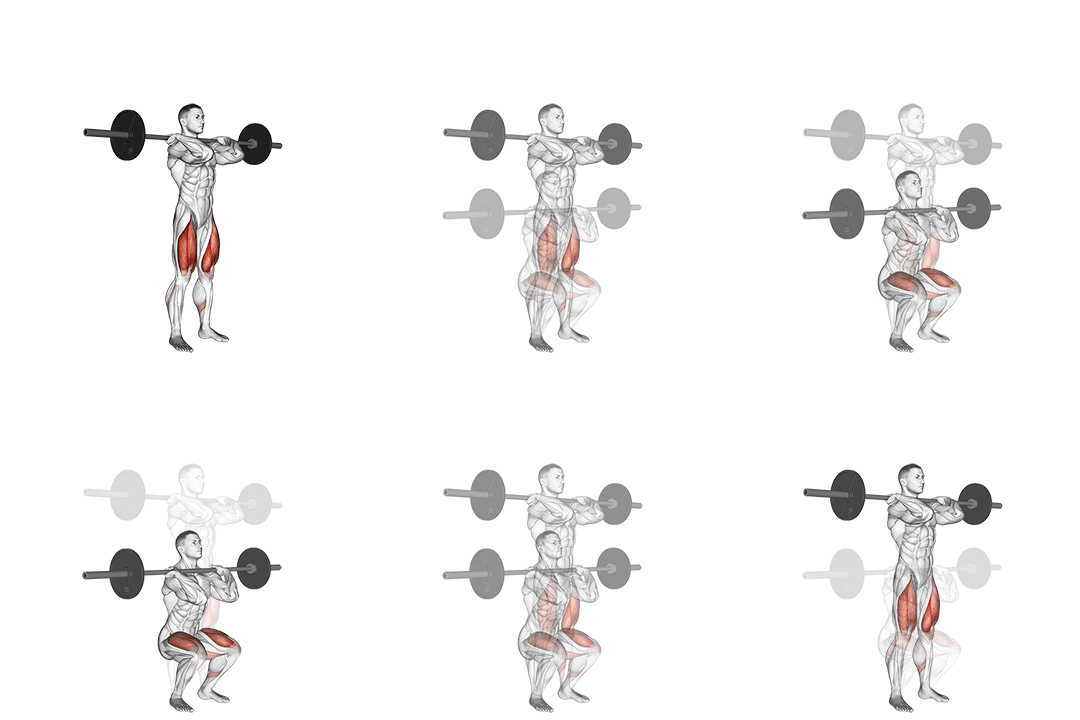
Barbell Clean-grip Front Squat
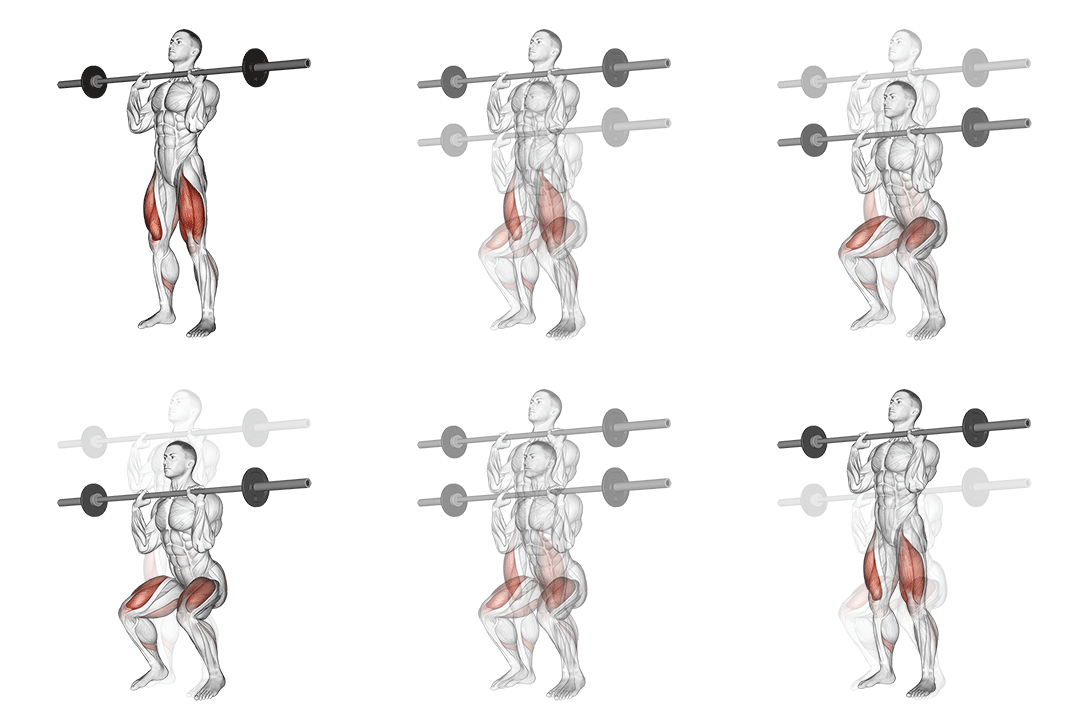
Barbell Front Chest Squat
Head-to-Head Comparison
| Attribute | Barbell Clean-grip Front Squat | Barbell Front Chest Squat |
|---|---|---|
| Target Muscle |
Glutes
|
Glutes
|
| Body Part |
Upper-legs
|
Upper-legs
|
| Equipment |
Barbell
|
Barbell
|
| Difficulty |
Advanced
|
Intermediate
|
| Movement Type |
Compound
|
Compound
|
| Secondary Muscles |
4
|
4
|
Secondary Muscles Activated
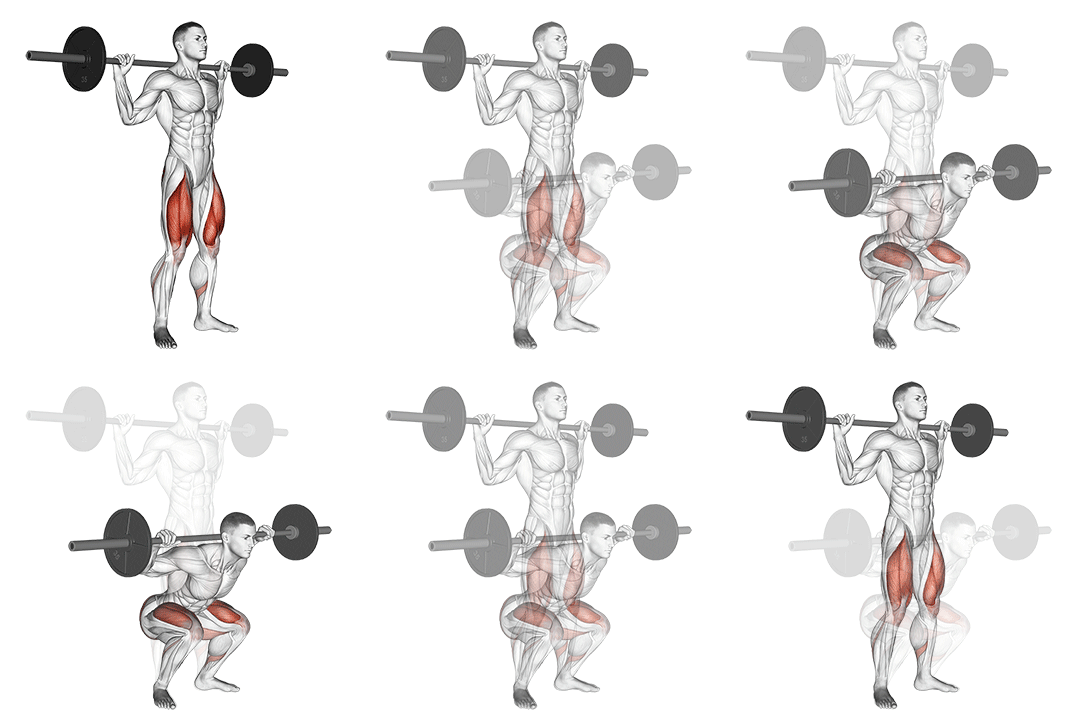
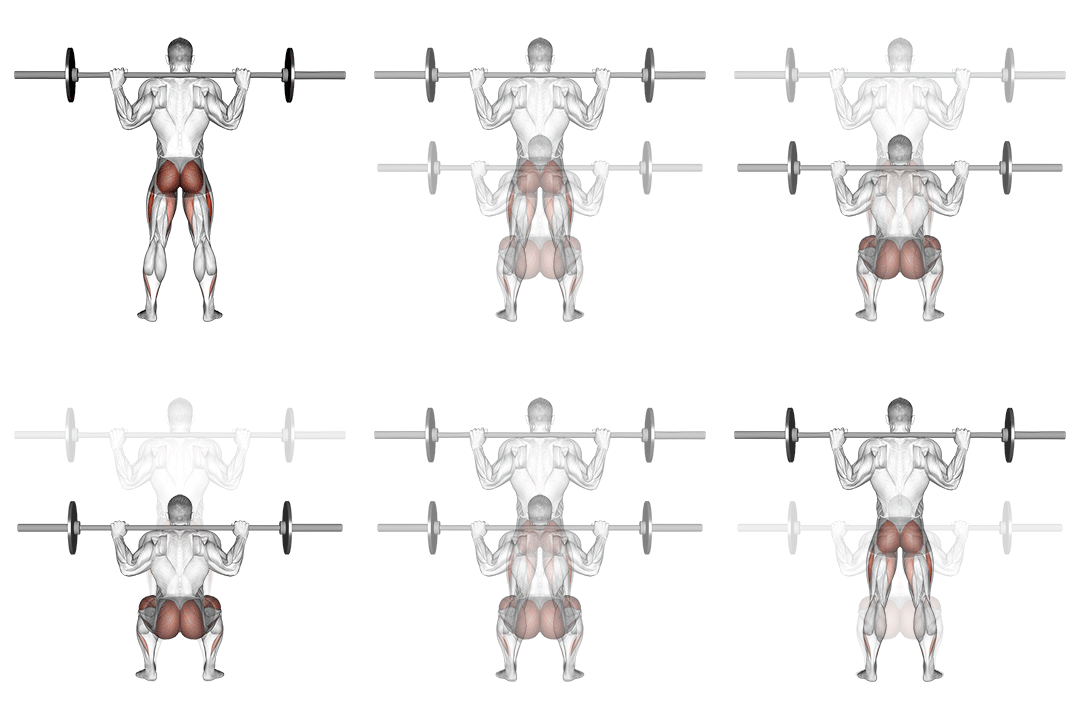
Barbell Clean-grip Front Squat
Barbell Front Chest Squat
Visual Comparison
Overview
Barbell Clean-grip Front Squat vs Barbell Front Chest Squat — two front-loaded barbell variations that both target your glutes and upper-legs but demand different mobility, technique, and loading strategies. In this guide you’ll learn how the exercises compare for muscle activation, equipment needs, difficulty, and programming. I’ll give you clear cues (elbows high, chest up, knees tracking toes), biomechanics context (torque, torso angle, length-tension), rep ranges, and when to use each variation depending on your goals.
Key Differences
- Difficulty levels differ: Barbell Clean-grip Front Squat is advanced, while Barbell Front Chest Squat is intermediate.
- Both exercises target the Glutes using Barbell. The main differences are in their movement patterns and muscle activation angles.
Pros & Cons
Barbell Clean-grip Front Squat
+ Pros
- Stronger carryover to Olympic lifts and cleans
- Allows heavier absolute loading when mobility permits
- Promotes an upright torso and high quad recruitment
- High core anti-flexion demand improves trunk stiffness
− Cons
- Requires high wrist and thoracic mobility
- Uncomfortable for lifters with limited shoulder flexibility
- Higher technical demand and longer learning curve
Barbell Front Chest Squat
+ Pros
- More accessible grips reduce wrist/shoulder strain
- Easier to teach and learn for intermediate lifters
- Slightly greater hip-extensor (glute/hamstring) emphasis
- Good option when training with lighter equipment or at home
− Cons
- May limit absolute loading compared to a clean grip
- Slight forward lean can reduce strict quad emphasis
- Less direct carryover to the clean in Olympic lifting
When Each Exercise Wins
The front chest variant lets you bias the hip extensors and glutes slightly more and offers multiple grip options to keep tension in the target area across sets. Use 8–12 reps, 3–5 sets, with 1–2 second pauses at the bottom to increase time under tension.
Clean-grip supports heavier loading and trains the upright torso and receiving position used in Olympic lifts, improving maximal force production. Program 3–6 reps, 3–6 sets, with heavier loads and longer rest (2–4 minutes) for neural adaptation.
Front chest squats are easier to set up and require less mobility, letting beginners focus on knee tracking, depth, and spine neutrality before advancing. Start with 10–15 reps and lighter loads to build technique and hip/knee control.
Because it tolerates strap or crossed-arm setups, the front chest squat is more practical at home with limited equipment or if you lack a coach to help with clean technique. It still delivers substantial glute and quad stimulus with safer, simpler setup.
Frequently Asked Questions
Can I do both Barbell Clean-grip Front Squat and Barbell Front Chest Squat in the same workout?
Yes — pairing them works well: use the clean-grip as a heavy strength movement (3–6 reps) and the front chest squat as a volume or technique variation (8–12 reps). Sequence clean-grip first when you’re fresh, then use front chest sets for accessory volume or focused glute work.
Which exercise is better for beginners?
Barbell Front Chest Squat is better for beginners because it requires less wrist and thoracic mobility and is easier to cue. Start with light loads, prioritize depth and knee tracking, and progress to clean-grip once mobility and technique are solid.
How do the muscle activation patterns differ?
Clean-grip maintains a more vertical torso, increasing knee moment arm and shifting load toward the quads (roughly a 55–65% quad emphasis). Front chest squats allow slightly more torso lean and longer hip moment arms, increasing glute and hamstring contribution by roughly 8–15% compared with a strict clean grip.
Can Barbell Front Chest Squat replace Barbell Clean-grip Front Squat?
Yes for hypertrophy and accessibility — front chest squats can substitute when mobility or coaching is limited and still produce strong glute/quadriceps stimulation. For maximal strength or Olympic-specific transfer, keep clean-grip work in your program when possible.
Expert Verdict
Choose the Barbell Clean-grip Front Squat when you want maximum strength progression and carryover to Olympic lifting — its upright torso and front-rack position let you load the quads heavily and practice clean receiving. Pick the Barbell Front Chest Squat when you need an approachable, lower‑mobility option that biases the glutes and hamstrings a bit more and reduces wrist/shoulder strain. For hypertrophy use 8–12 reps; for strength use 3–6 reps. Use technique cues: keep elbows high, chest up, neutral spine, and push through the midfoot while knees track over toes to protect joints and maximize force transfer.
Also Compare
More comparisons with Barbell Clean-grip Front Squat
More comparisons with Barbell Front Chest Squat
Compare More Exercises
Use our free comparison tool to analyze any two exercises head-to-head.
Compare Exercises