

Barbell Clean-grip Front Squat vs Barbell Full Squat (back Pov): Complete Comparison Guide
Barbell Clean-grip Front Squat vs Barbell Full Squat (back Pov) — two barbell staples that both target the glutes and upper legs but load the body very differently. You’ll get a straight-up breakdown of muscle activation, biomechanics, required equipment and mobility, technique cues you can use right away, programming rep ranges (strength and hypertrophy), and clear winner scenarios. Read on so you can pick the lift that matches your mobility, training phase, and goals — and use the practical tips to avoid common technical errors.
Exercise Comparison
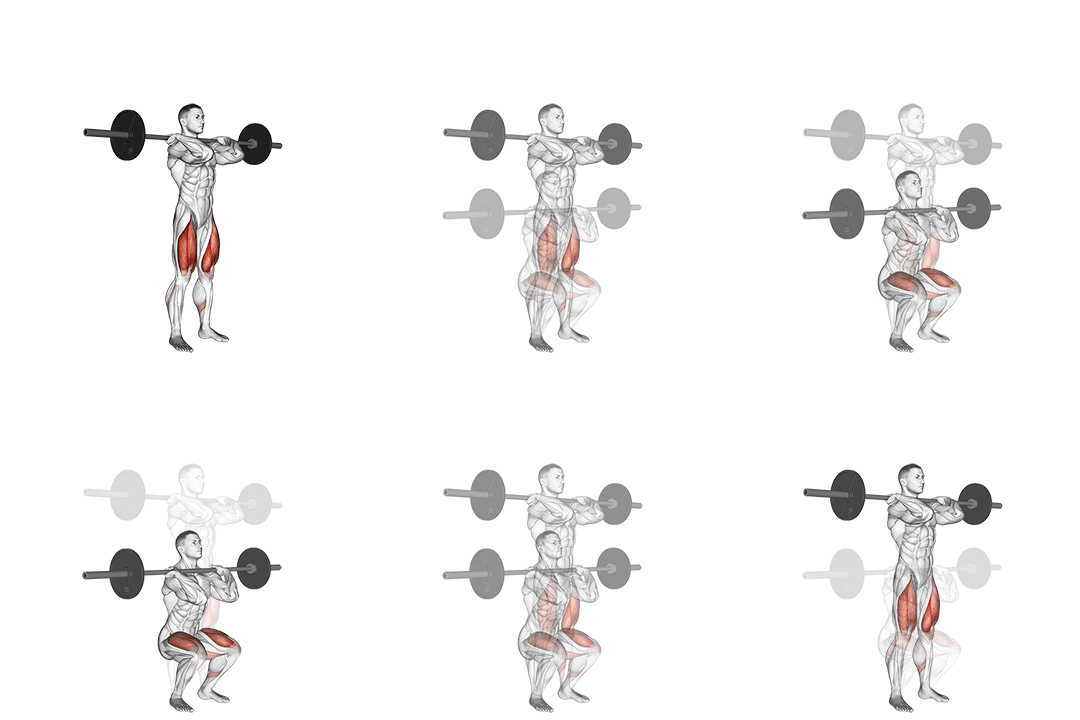
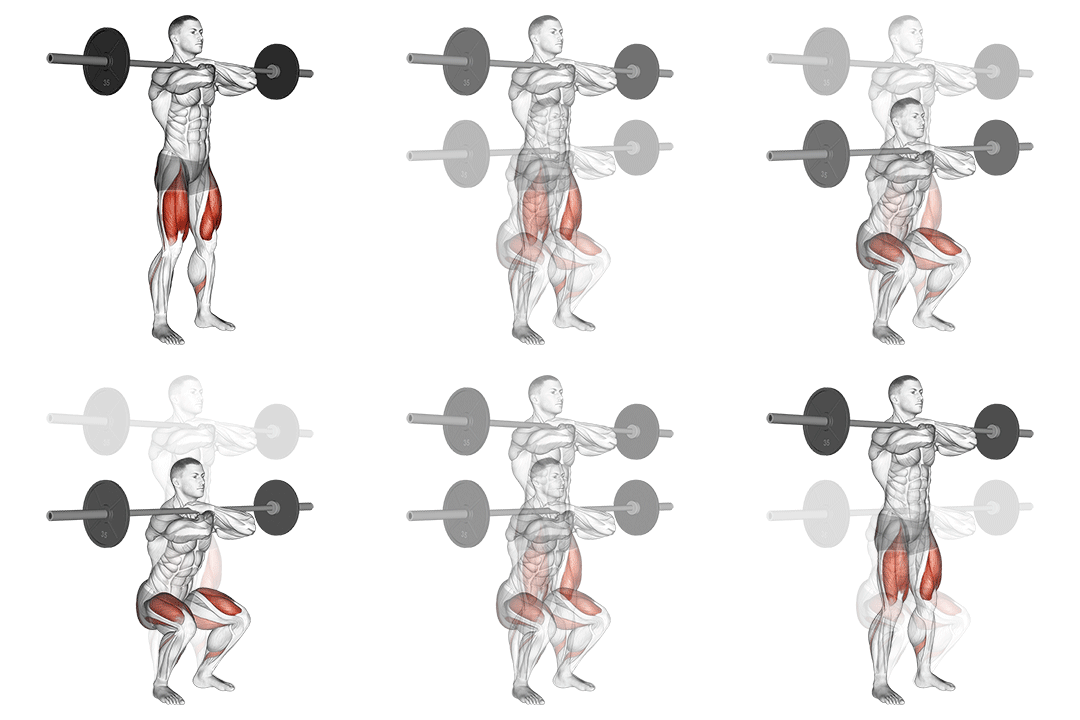
Barbell Clean-grip Front Squat
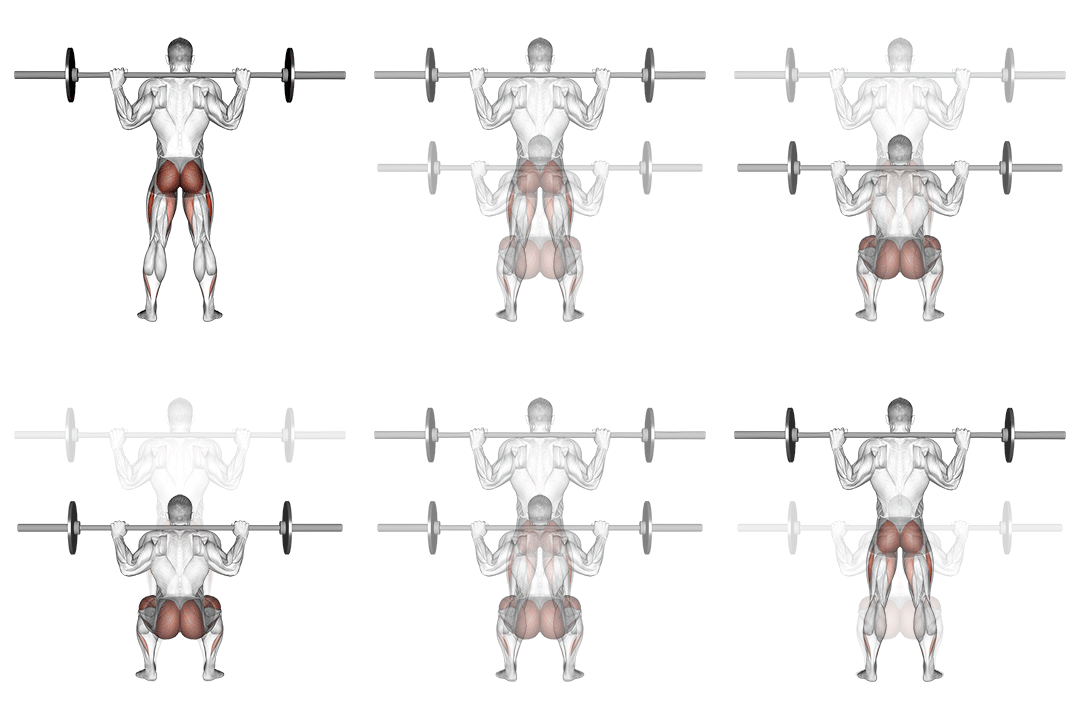
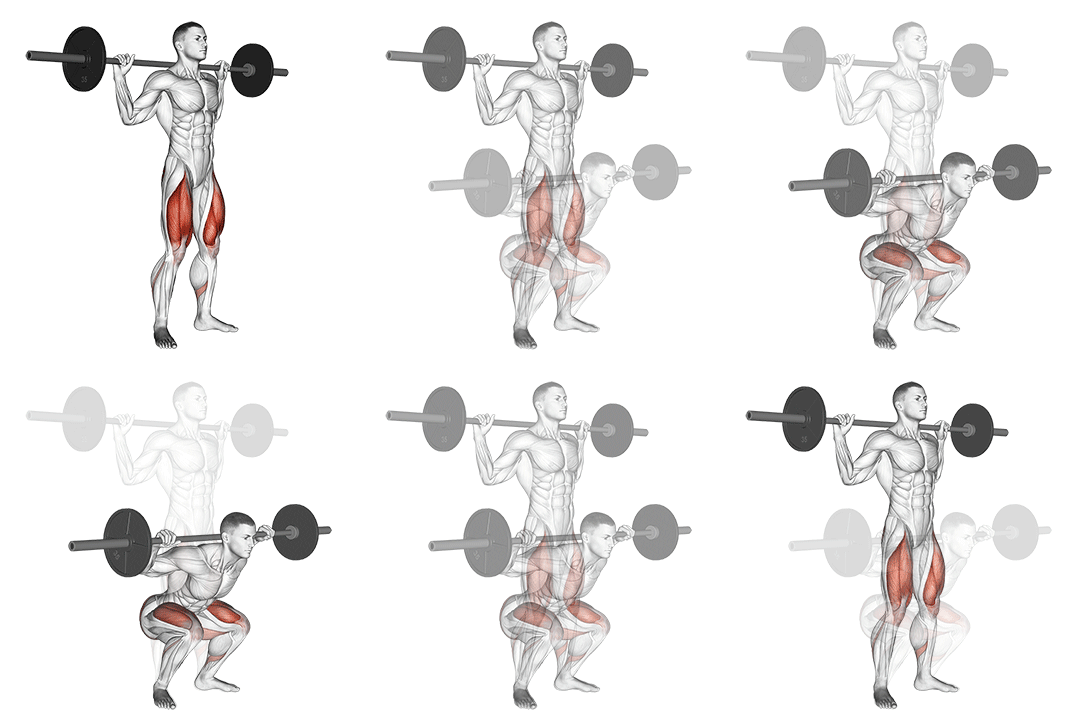
Barbell Full Squat (back Pov)
Head-to-Head Comparison
| Attribute | Barbell Clean-grip Front Squat | Barbell Full Squat (back Pov) |
|---|---|---|
| Target Muscle |
Glutes
|
Glutes
|
| Body Part |
Upper-legs
|
Upper-legs
|
| Equipment |
Barbell
|
Barbell
|
| Difficulty |
Advanced
|
Intermediate
|
| Movement Type |
Compound
|
Compound
|
| Secondary Muscles |
4
|
4
|
Secondary Muscles Activated
Barbell Clean-grip Front Squat
Barbell Full Squat (back Pov)
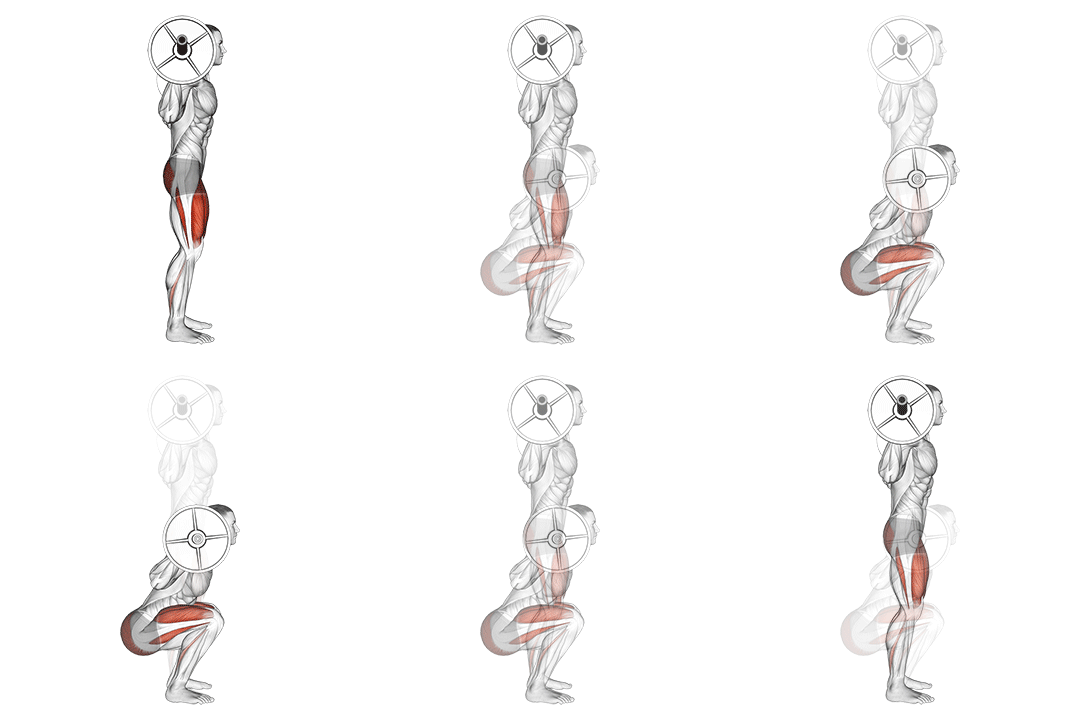
Visual Comparison
Overview
Barbell Clean-grip Front Squat vs Barbell Full Squat (back Pov) — two barbell staples that both target the glutes and upper legs but load the body very differently. You’ll get a straight-up breakdown of muscle activation, biomechanics, required equipment and mobility, technique cues you can use right away, programming rep ranges (strength and hypertrophy), and clear winner scenarios. Read on so you can pick the lift that matches your mobility, training phase, and goals — and use the practical tips to avoid common technical errors.
Key Differences
- Difficulty levels differ: Barbell Clean-grip Front Squat is advanced, while Barbell Full Squat (back Pov) is intermediate.
- Both exercises target the Glutes using Barbell. The main differences are in their movement patterns and muscle activation angles.
Pros & Cons
Barbell Clean-grip Front Squat
+ Pros
- Stronger quad emphasis and superior carryover to upright athletic positions
- Lower lumbar compressive shear at matched relative intensities
- Improves thoracic extension and front-rack mobility
- Cleaner carryover to Olympic lifts and vertical postures
− Cons
- Requires good wrist, elbow, and thoracic mobility for the clean grip
- Typically requires 15–30% less absolute load capacity vs back squat
- Harder to maintain elbow height; small technical faults drop the bar
Barbell Full Squat (back Pov)
+ Pros
- Allows greater absolute loading and better hip-dominant glute stimulus
- More accessible setup for most lifters with limited upper-body mobility
- Multiple bar positions (high-bar/low-bar) let you bias quads or hips
- Simpler to teach and scale for beginners and heavy strength cycles
− Cons
- Higher spinal compressive loads at heavy weights if form breaks down
- Can reinforce poor hip-hinge if lifter lacks ankle/hip mobility
- More technical variation (low-bar vs high-bar) can confuse novices
When Each Exercise Wins
The full back squat allows heavier absolute loads and greater hip extension torque, driving more mechanical tension on the glutes across the range of motion. For hypertrophy, using 6–12 reps with progressive overload and controlled eccentric tempos will yield larger glute stimulus.
Because lifters can typically move 15–30% more load in the back squat, it’s the superior choice for maximizing 1RM strength and neural adaptations; program 3–6 sets of 3–6 reps with 80–95% 1RM for best results.
The back squat is easier to set up and progress, requires less wrist/thoracic mobility, and teaches basic hip and knee coordination faster. Start with goblet squats or bodyweight squat progressions, then move to back-loaded squats with light loads and pins.
If you lack a full squat rack or want a single-standup option, the front squat can be safer since you can bail forward or drop the bar more easily, and it typically uses lighter loads (70–85% of back squat 1RM). However, you still need a barbell and safe landing area.
Frequently Asked Questions
Can I do both Barbell Clean-grip Front Squat and Barbell Full Squat (back Pov) in the same workout?
Yes. Pair heavy back squats early (3–6 reps) and follow with lighter front squats as a secondary movement (6–10 reps) to tax the quads and maintain technique. Monitor volume to avoid excessive fatigue — for example, 3 heavy sets of back squats plus 3 lighter sets of front squats.
Which exercise is better for beginners?
Barbell Full Squat (back Pov) is generally better for beginners because it’s easier to set up and scale and it tolerates limited upper-body mobility. Start with bodyweight and goblet progressions, then build to back squats with proper depth and trunk control.
How do the muscle activation patterns differ?
The front squat produces higher knee extensor torque and relatively greater quadriceps activation due to a more vertical torso and shorter hip moment arm. The back squat increases hip flexion and glute stretch, producing larger hip extensor torque and greater posterior chain recruitment on ascent.
Can Barbell Full Squat (back Pov) replace Barbell Clean-grip Front Squat?
Yes for general glute and strength development — back squats provide more absolute load and hip drive. However, if you need to reduce lumbar compression, emphasize upright posture, or transfer to cleans, keep front squats in your program as a complementary lift.
Expert Verdict
Use the Barbell Full Squat (back Pov) when your primary goal is glute hypertrophy or maximal strength: it permits heavier loading, greater hip extension torque, and straightforward technical progressions. Choose the Barbell Clean-grip Front Squat when you want to bias the quads, limit lumbar shear, or improve upright posture and Olympic lift transfer; program it with 4–8 reps for strength-speed and 6–12 reps for hypertrophy. If mobility allows, include both across a training block — prioritize back squats for heavy strength phases and front squats for accessory quad work, technique emphasis, or when spinal compression needs reducing.
Also Compare
More comparisons with Barbell Clean-grip Front Squat
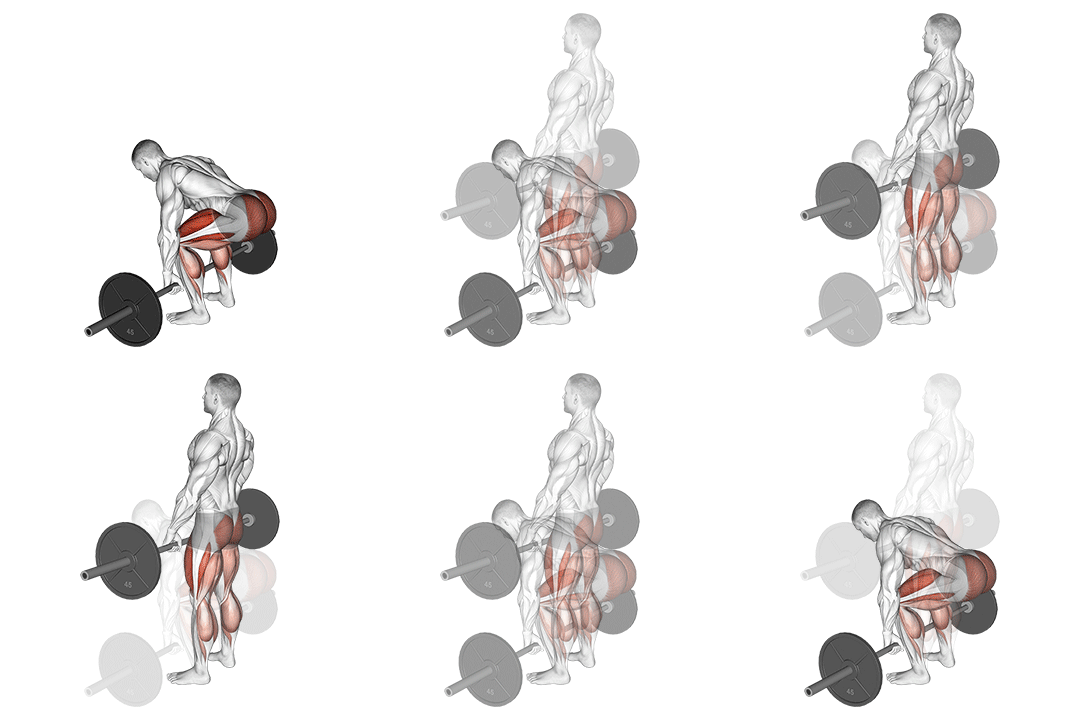
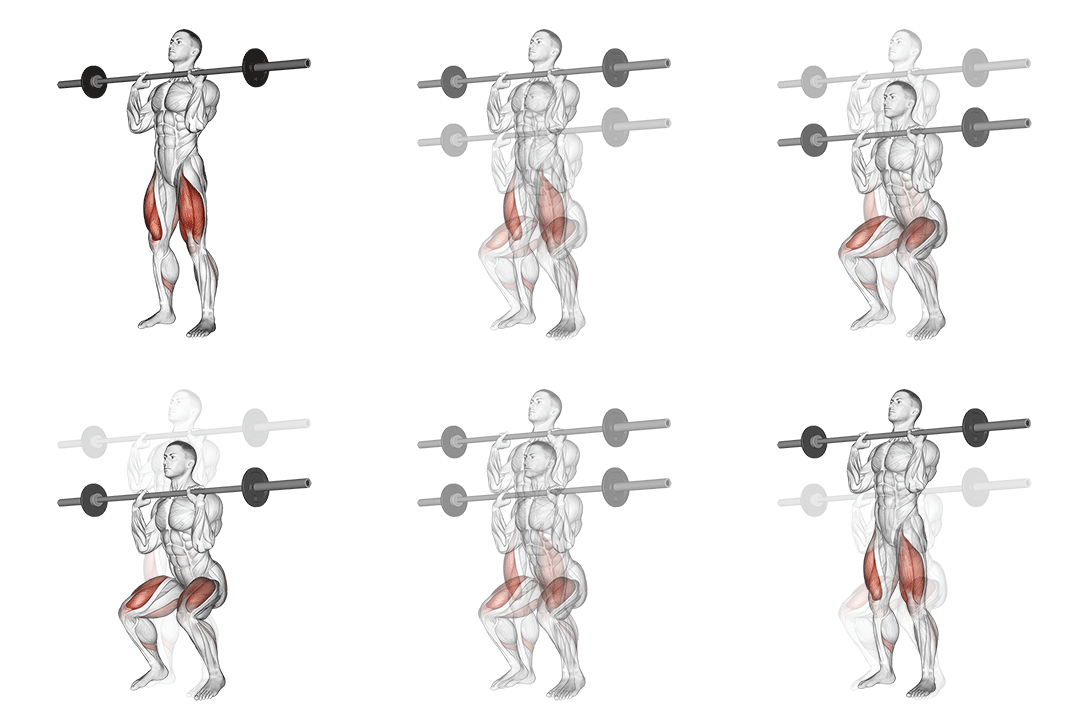
More comparisons with Barbell Full Squat (back Pov)
Compare More Exercises
Use our free comparison tool to analyze any two exercises head-to-head.
Compare Exercises