

Barbell Curl vs Hammer Curls
Compare target muscles, equipment, difficulty, movement type, and secondary muscles for Barbell Curl and Hammer Curls.
Get comparison link
Select the link and use your device's Copy command.
Comparison overview
AI-generatedExercise Comparison
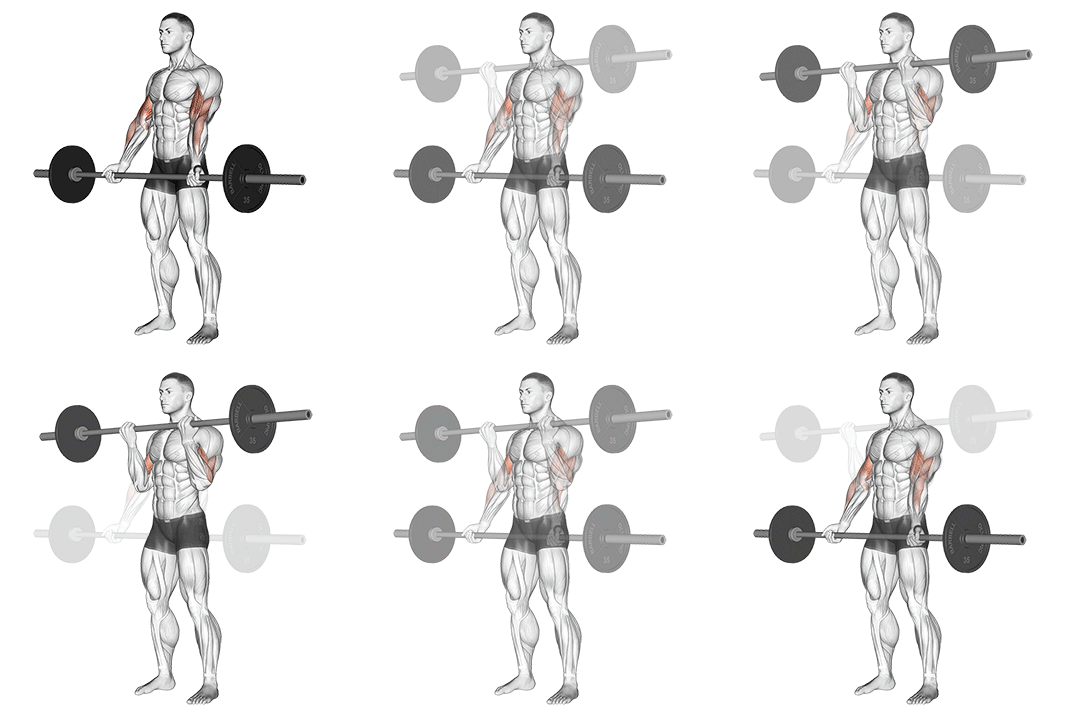
Barbell Curl
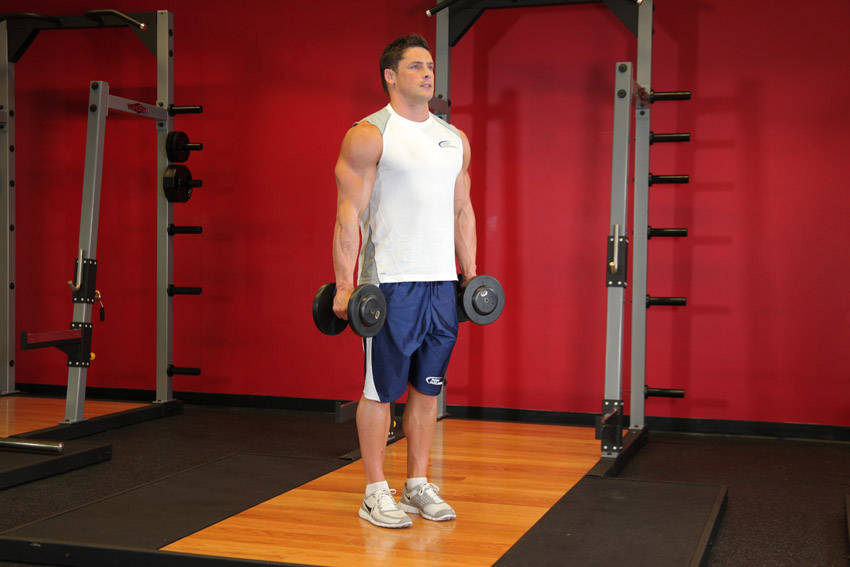
Hammer Curls
Head-to-Head Comparison
Different values are marked. These are catalogue attributes, not performance scores.
Muscles used
Listed target and secondary muscles, shown on the body. Locations, not activation or strength scores.
- Target
- Secondary
- Not highlighted
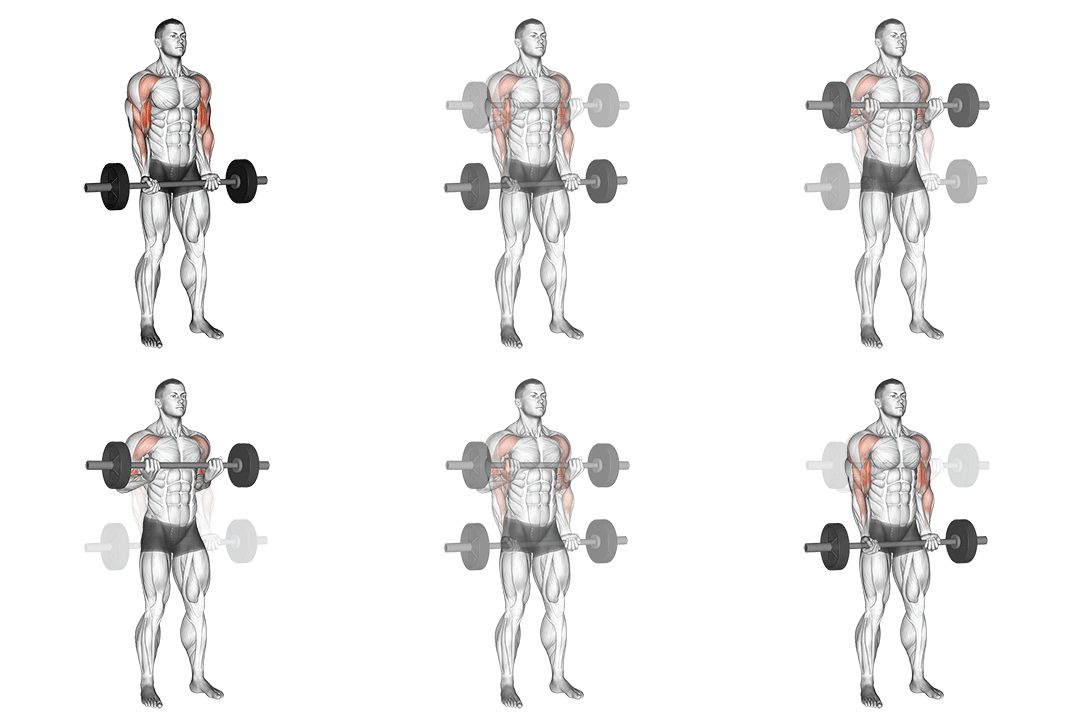
Barbell Curl
- Target
- Biceps
- Secondary
- Forearms
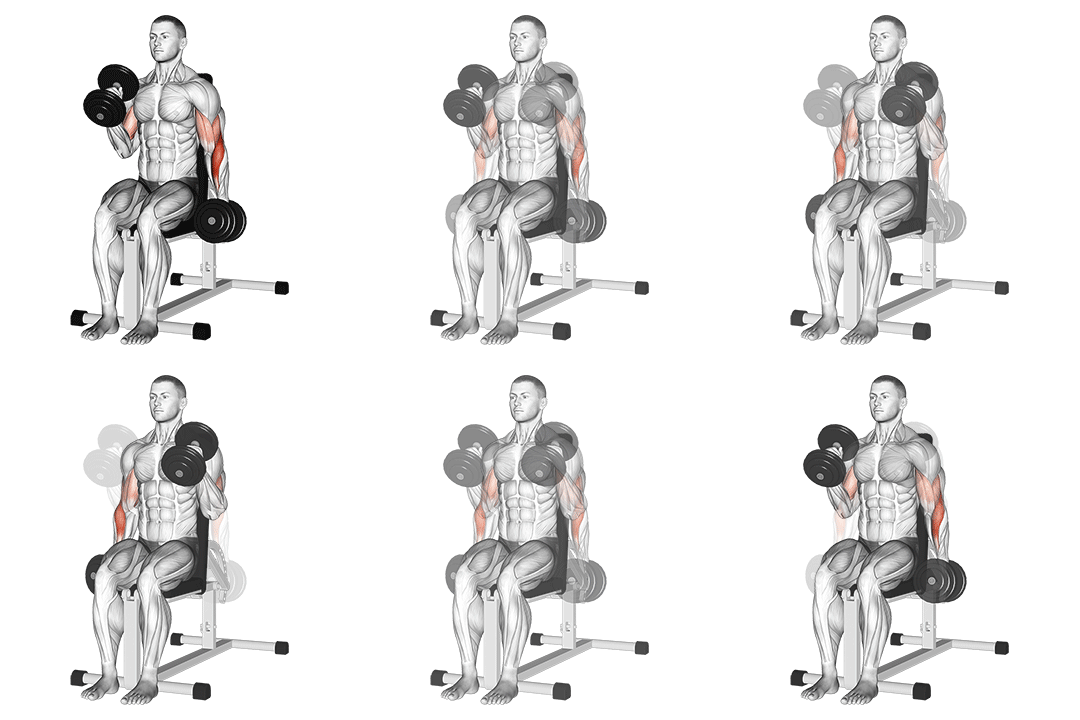
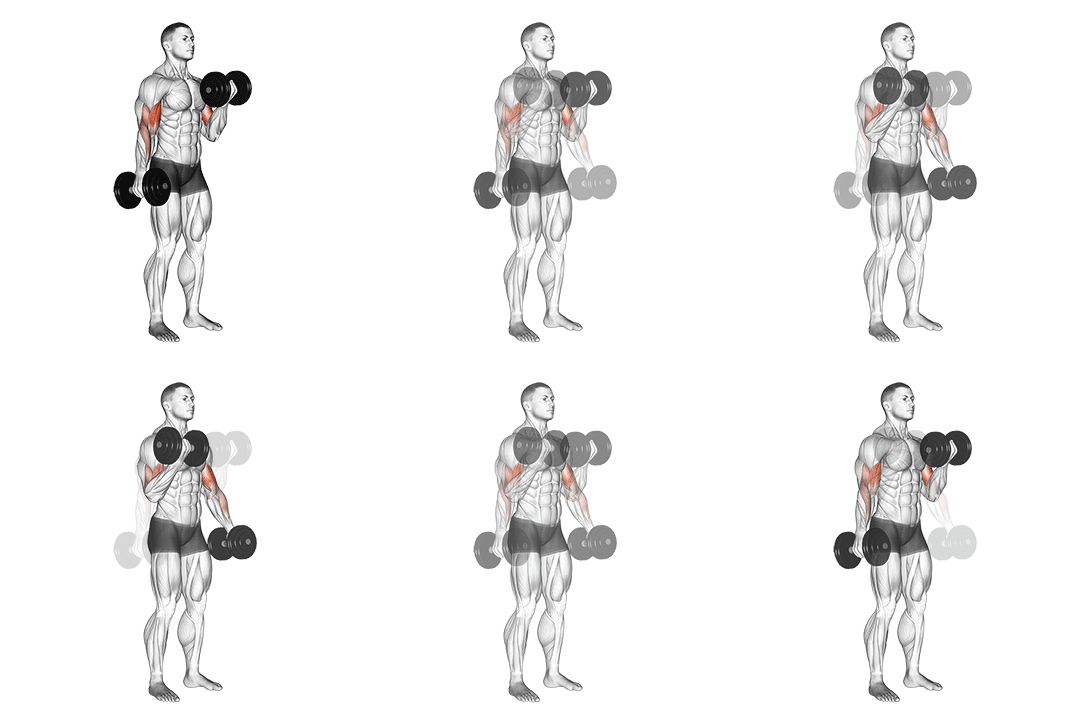
Hammer Curls
- Target
- Biceps
- Secondary
- None listed
Grey does not mean a muscle is unused. The diagrams show only the mapped catalogue labels.
| Attribute | Barbell Curl | Hammer Curls |
|---|---|---|
| Target Muscle | Biceps |
Biceps |
| Body Part | Upper-arms |
Upper-arms |
| Equipment Different | Barbell |
Dumbbell |
| Difficulty | Beginner |
Beginner |
| Movement Type | Isolation |
Isolation |
| Secondary Muscles Different | Forearms |
None listed |
Visual Comparison
An illustrative 1–10 profile derived from catalog difficulty, equipment, and listed-muscle fields—not measured performance or muscle activation.
Key Differences
- Equipment differs: Barbell Curl uses Barbell, while Hammer Curls requires Dumbbell.
Muscle comparison
Shared target muscles
Secondary muscle differences
Muscle involvement analysis
Equipment and setup
Barbell Curl: setup
Hammer Curls: setup
Access and practicality
Learning and progression
Learning the movements
Progression considerations
Limitations and precautions
Pros & Cons
Barbell Curl
+ Pros
- Stronger mechanical advantage for the biceps due to supination and larger moment arm
- Easy to load heavy and apply progressive overload with plates
- Efficient for bilateral volume (both arms at once)
- Clear transfer to barbell-dominant pulling strength
− Cons
- Supinated wrist position can irritate wrists or biceps tendon for some lifters
- Higher temptation to cheat with torso swing when heavy
- Less unilateral work which can hide side-to-side imbalances
Hammer Curls
+ Pros
- Neutral grip emphasizes brachialis and brachioradialis for thicker upper-arms
- Lower wrist and tendon strain for many lifters
- Allows unilateral work to fix asymmetries
- More accessible for home setups with dumbbells
− Cons
- Generally limited in absolute load compared to a barbell
- Slightly less direct biceps brachii supination stimulus
- Requires two dumbbells and coordination for heavy sets
When Each Exercise Wins
Barbell Curls let you load the biceps more bilaterally and use straightforward progressive overload (6–12 reps per set for hypertrophy). The supinated grip increases biceps brachii activation, making it the best primary mass-builder for the biceps.
Barbell Curls allow heavier absolute loads and easier 3–6 rep strength sets. Greater mechanical loading and simpler loading increments make barbell curls the superior choice for raw elbow-flexion strength.
Hammer Curls use a neutral grip that reduces wrist stress and teaches elbow flexion without forcing supination. They’re easier to control, lower risk for tendon irritation, and help establish balanced arm development.
Most home setups include a pair of dumbbells but not a loaded barbell and plates. Hammer Curls let you train unilaterally, use adjustable dumbbells, and still hit the upper-arms effectively.
Frequently Asked Questions
Can I do both Barbell Curl and Hammer Curls in the same workout?
Which exercise is better for beginners?
How do the muscle activation patterns differ?
Can Hammer Curls replace Barbell Curl?
Comparison Summary
Exercise instructions
Steps from the exercise catalogue. Read the full sequence before starting.
Barbell Curl
- Stand up straight with your feet shoulder-width apart and hold a barbell with an underhand grip, palms facing forward.
- Keep your elbows close to your torso and exhale as you curl the weights while contracting your biceps.
- Continue to raise the bar until your biceps are fully contracted and the bar is at shoulder level.
Read remaining steps for Barbell Curl
- Hold the contracted position for a brief pause as you squeeze your biceps.
- Inhale as you slowly begin to lower the bar back to the starting position.
- Repeat for the desired number of repetitions.
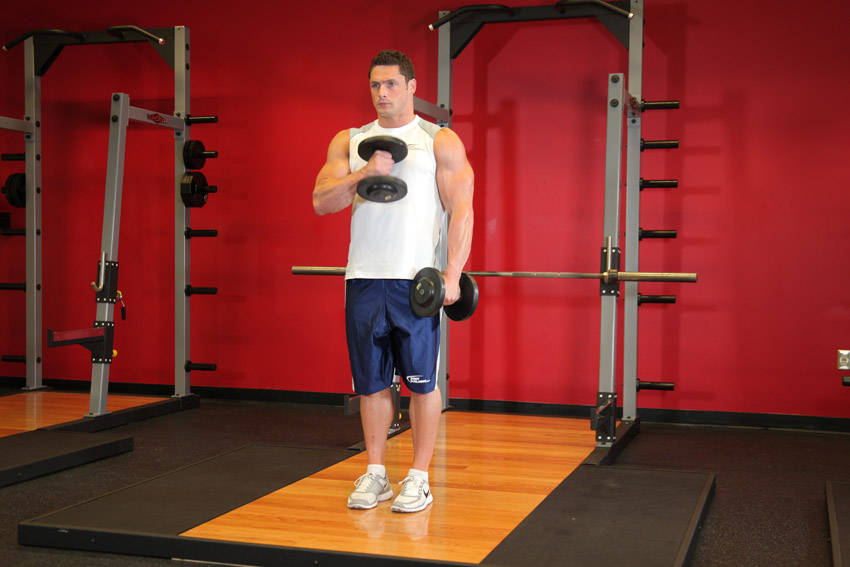
Hammer Curls
- Stand up with your torso upright and a dumbbell on each hand being held at arms length. The elbows should be close to the torso.
- The palms of the hands should be facing your torso. This will be your starting position.
- Now, while holding your upper arm stationary, exhale and curl the weight forward while contracting the biceps. Continue to raise the weight until the biceps are fully contracted and the dumbbell is at shoulder level. Hold the contracted position for a brief moment as you squeeze the biceps. Tip: Focus on keeping the elbow stationary and only moving your forearm.
Read remaining steps for Hammer Curls
- After the brief pause, inhale and slowly begin the lower the dumbbells back down to the starting position.
- Repeat for the recommended amount of repetitions.
Also Compare
More comparisons with Barbell Curl
Compare another pair
Choose two exercises to see their differences side by side.