

Barbell Deadlift vs Barbell Front Chest Squat: Complete Comparison Guide
Barbell Deadlift vs Barbell Front Chest Squat — two compound barbell moves that both target the glutes but load them differently. If you want clear recommendations for strength, hypertrophy, injury risk, and programming, you’re in the right place. I’ll compare primary and secondary muscle activation, show how biomechanics (hip hinge vs upright squat) change force vectors and muscle length-tension, list technique cues, and give rep-range and progression advice so you can pick the lift that matches your goals and training age.
Exercise Comparison
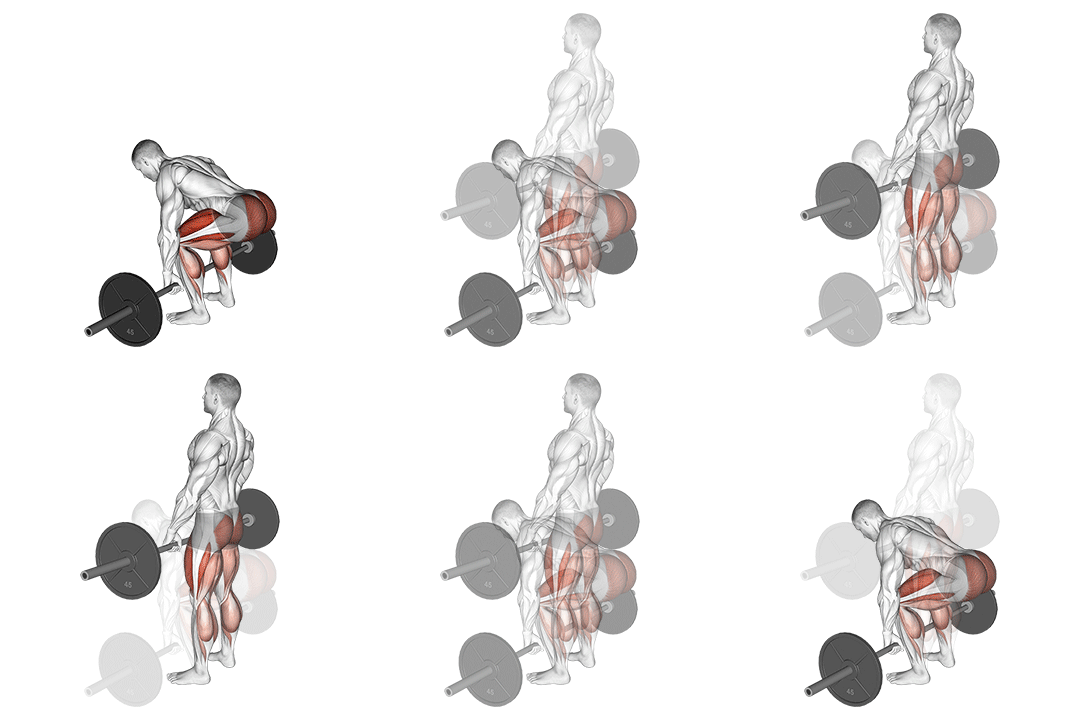
Barbell Deadlift
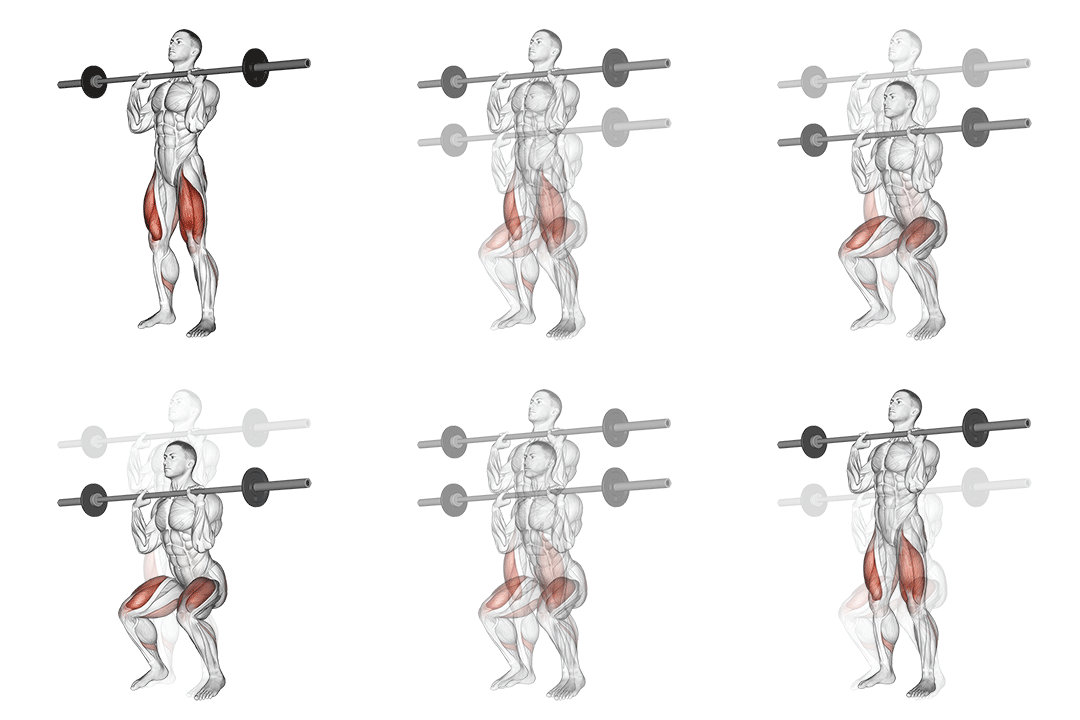
Barbell Front Chest Squat
Head-to-Head Comparison
| Attribute | Barbell Deadlift | Barbell Front Chest Squat |
|---|---|---|
| Target Muscle |
Glutes
|
Glutes
|
| Body Part |
Upper-legs
|
Upper-legs
|
| Equipment |
Barbell
|
Barbell
|
| Difficulty |
Advanced
|
Intermediate
|
| Movement Type |
Compound
|
Compound
|
| Secondary Muscles |
2
|
4
|
Secondary Muscles Activated
Barbell Deadlift
Barbell Front Chest Squat
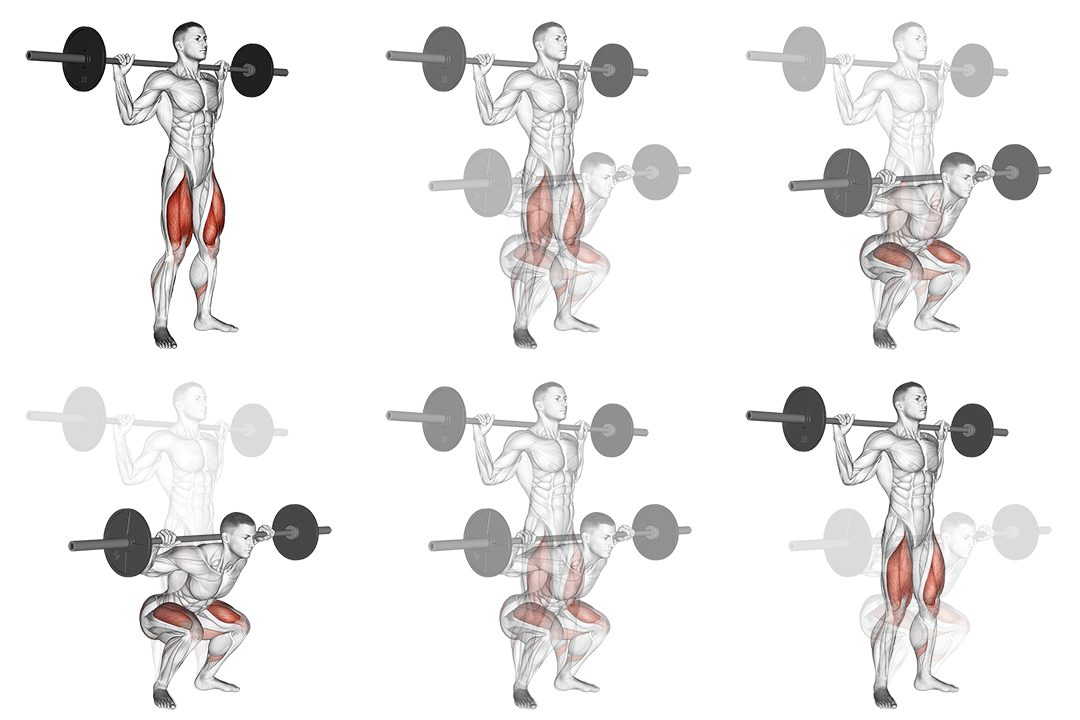
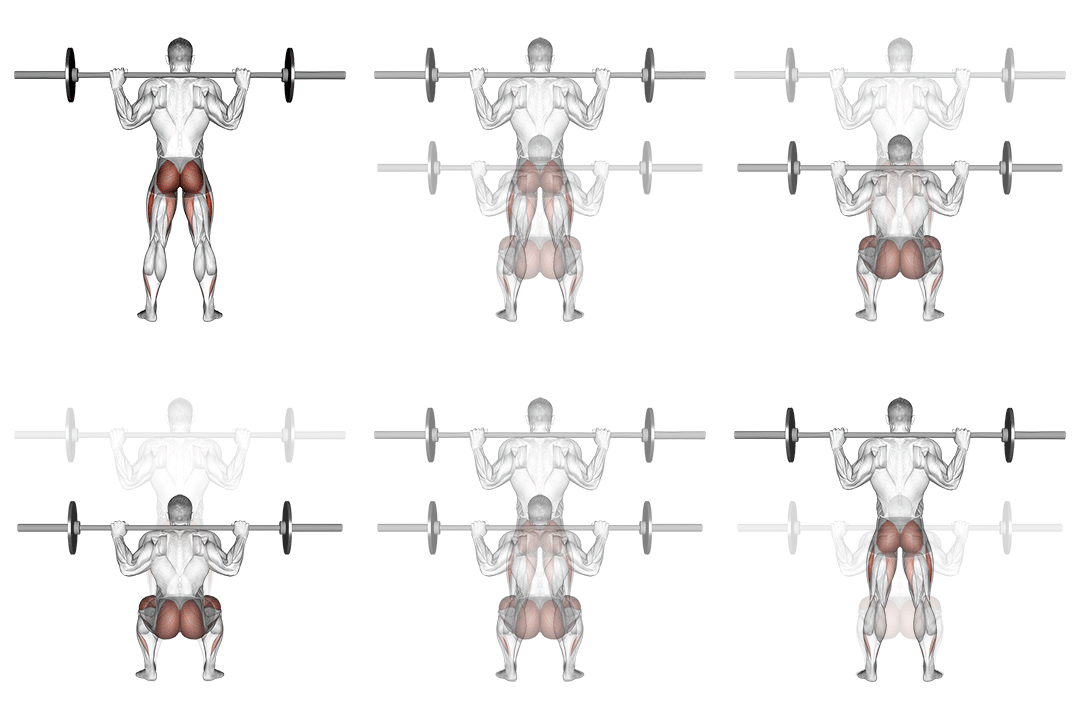
Visual Comparison
Overview
Barbell Deadlift vs Barbell Front Chest Squat — two compound barbell moves that both target the glutes but load them differently. If you want clear recommendations for strength, hypertrophy, injury risk, and programming, you’re in the right place. I’ll compare primary and secondary muscle activation, show how biomechanics (hip hinge vs upright squat) change force vectors and muscle length-tension, list technique cues, and give rep-range and progression advice so you can pick the lift that matches your goals and training age.
Key Differences
- Difficulty levels differ: Barbell Deadlift is advanced, while Barbell Front Chest Squat is intermediate.
- Both exercises target the Glutes using Barbell. The main differences are in their movement patterns and muscle activation angles.
Pros & Cons
Barbell Deadlift
+ Pros
- Maximal posterior chain loading — superior for heavy hip-extension strength
- High transfer to athletic posterior-dominant movements (sprints, pulls)
- Simple setup with minimal equipment
- Large absolute loads allow fast neural strength progress
− Cons
- Higher lumbar stress if hip hinge and bracing are poor
- Greater technical demand for safe heavy loading
- Less targeted quad stimulus compared to front squats
Barbell Front Chest Squat
+ Pros
- Upright torso reduces low-back shear and improves quad development
- Excellent for controlled hypertrophy and positional carryover to cleans
- Safer to manage with pins and moderate loading for reps
- Higher core and upper-back isometric demand improves posture
− Cons
- Requires rack and adequate shoulder/wrist mobility
- Lower absolute loading potential than deadlifts
- Front-rack discomfort can limit load for some lifters
When Each Exercise Wins
The front chest squat places a larger knee extensor moment and keeps the glutes and quads under tension through controlled ROM (6–12 reps). Its vertical load vector and ability to hit strict sets with moderate weight make it ideal for targeted hypertrophy.
Deadlifts allow much higher absolute loads and develop maximal hip-extension torque, which is central to raw strength. Use low-rep heavy sets (3–6 reps) and progressive overload to build neural strength and force output.
Front squats provide clearer feedback on posture and depth, encourage an upright torso, and are easier to scale with pins and rep schemes, reducing low-back injury risk during early skill acquisition.
Deadlifts need only a barbell and plates and can be done without a rack, making them more practical at home. If you have limited equipment or space, deadlifts deliver robust posterior chain stimulus.
Frequently Asked Questions
Can I do both Barbell Deadlift and Barbell Front Chest Squat in the same workout?
Yes. Prioritize the lift aligned to your session goal: perform deadlifts first on strength days (heavy, 3–6 reps), or front squats first on hypertrophy days (6–12 reps). Manage volume to avoid systemic fatigue—limit both heavy efforts in one session unless you’re an advanced lifter.
Which exercise is better for beginners?
Front chest squats are generally better for beginners because they promote an upright trunk and easier depth feedback, reducing lumbar loading. Teach hip hinge patterns separately before heavy deadlifting to build safe deadlift mechanics.
How do the muscle activation patterns differ?
Deadlifts emphasize posterior chain activation with larger hip-extension moments and greater hamstring and lower-back involvement due to a longer hip hinge. Front squats shift load to the quadriceps with a higher knee-extension moment and shorter glute length changes, producing different EMG profiles across the lift.
Can Barbell Front Chest Squat replace Barbell Deadlift?
Not fully. Front squats can replace some glute and quad hypertrophy work and reduce spinal shear, but they won’t match the deadlift’s posterior-chain loading or absolute strength stimulus. Use front squats as a complement or substitute when deadlifting is contraindicated by injury.
Expert Verdict
Choose barbell deadlifts when your priority is raw posterior-chain strength, heavy load capacity, and transfer to pulling and athletic power. Program deadlifts for low-rep strength blocks (3–6 reps) and accessory hamstring/glute work. Choose front chest squats when you want targeted quad and glute hypertrophy, safer low-back loading, and higher-rep control (6–12 reps). If you can, program both: use deadlifts in heavy strength phases and front squats in hypertrophy or technical cycles. Match set/rep schemes, loading and mobility work to your training age and recovery capacity.
Also Compare
More comparisons with Barbell Deadlift
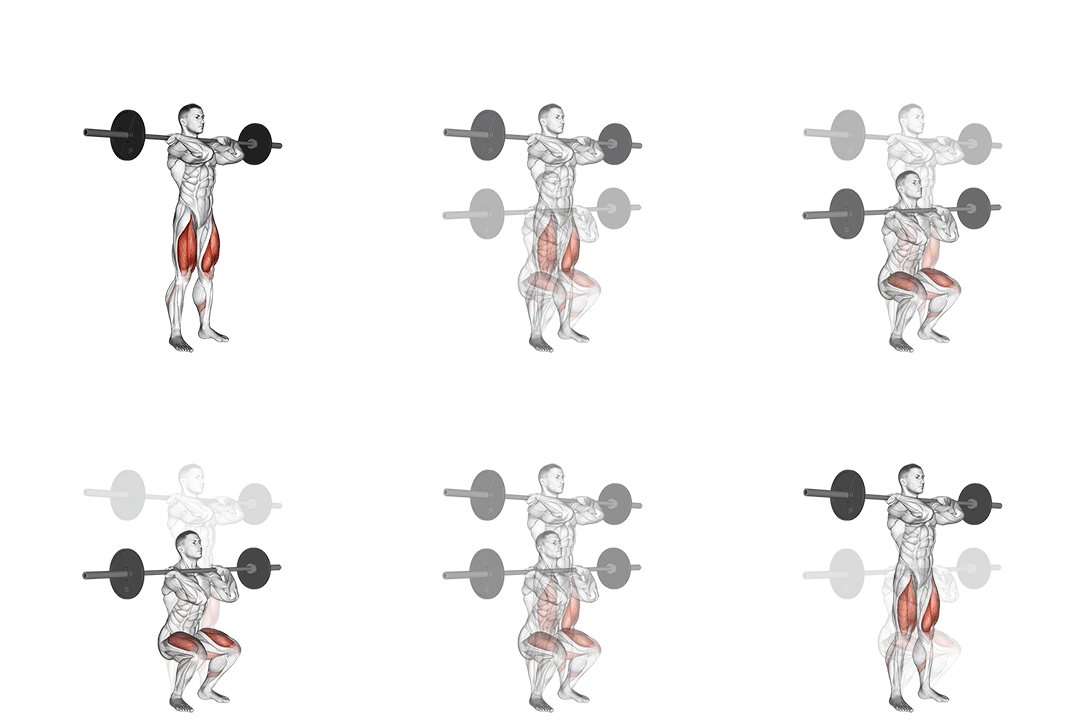
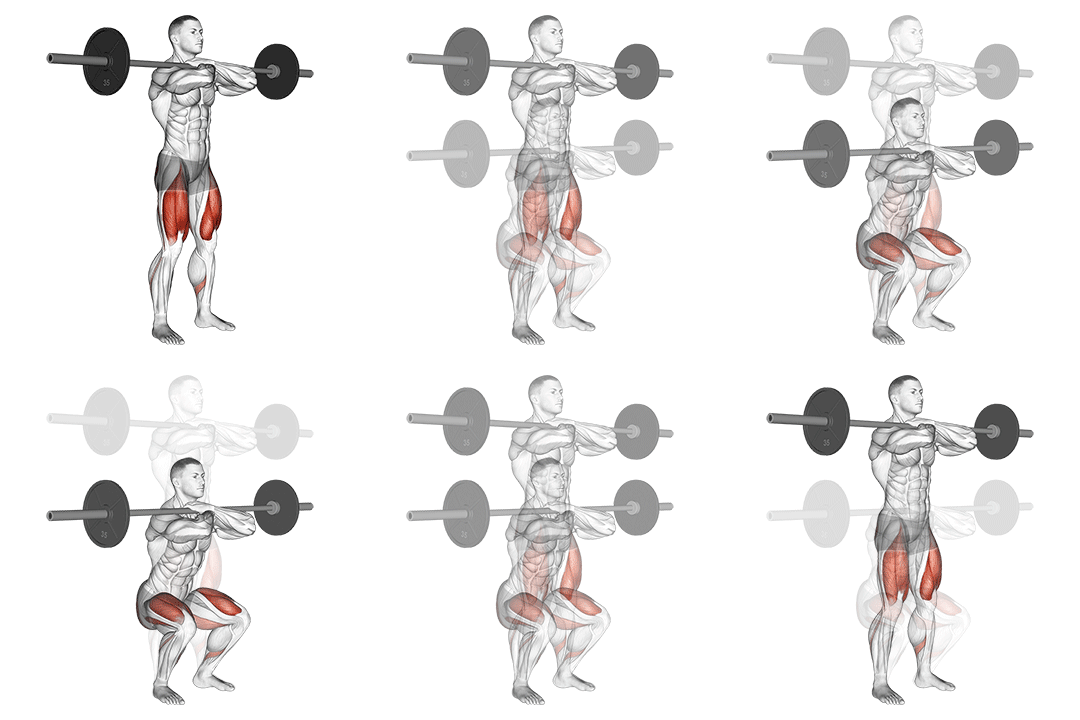
More comparisons with Barbell Front Chest Squat
Compare More Exercises
Use our free comparison tool to analyze any two exercises head-to-head.
Compare Exercises