

Barbell Deadlift vs Barbell Full Squat (back Pov): Complete Comparison Guide
Barbell Deadlift vs Barbell Full Squat (back Pov) — two heavy-hitting compound lifts that both target your glutes and upper-legs but load them differently. If you want clear guidance on which move to prioritize, you’re in the right place. I’ll walk you through muscle activation, biomechanics (hip vs knee torque, length-tension), equipment needs, learning curve, injury risk, and practical programming tips including rep ranges and progression. Read this to decide which exercise fits your goals—strength, muscle growth, or time-efficient training—and how to perform each with safe technique cues.
Exercise Comparison
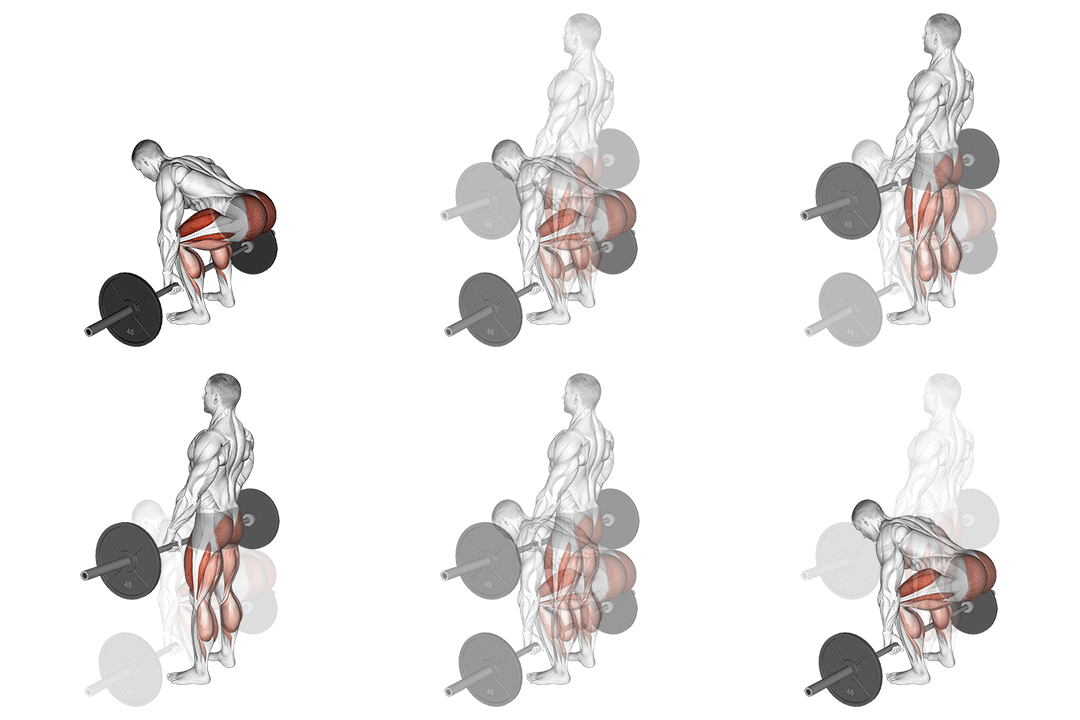
Barbell Deadlift
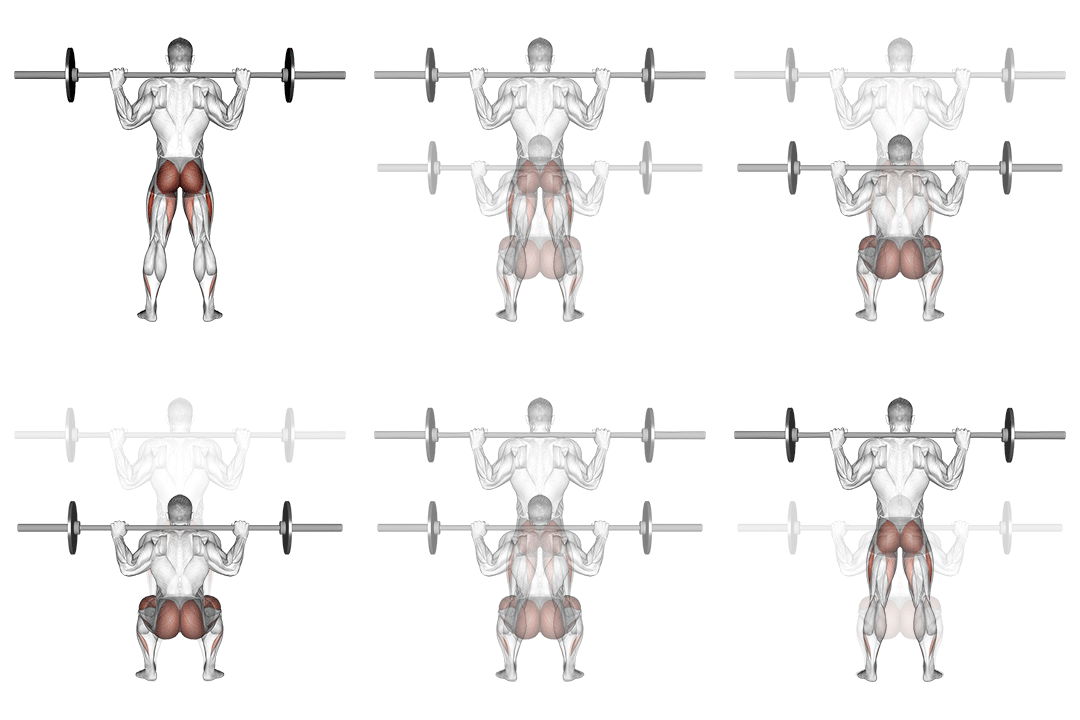
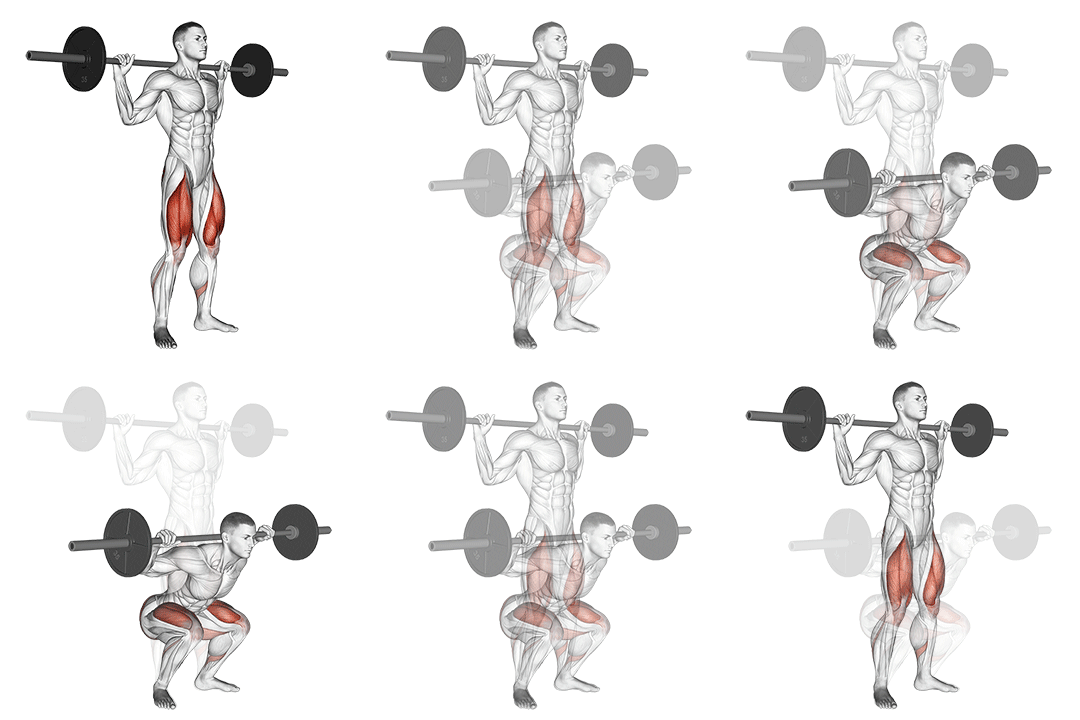
Barbell Full Squat (back Pov)
Head-to-Head Comparison
| Attribute | Barbell Deadlift | Barbell Full Squat (back Pov) |
|---|---|---|
| Target Muscle |
Glutes
|
Glutes
|
| Body Part |
Upper-legs
|
Upper-legs
|
| Equipment |
Barbell
|
Barbell
|
| Difficulty |
Advanced
|
Intermediate
|
| Movement Type |
Compound
|
Compound
|
| Secondary Muscles |
2
|
4
|
Secondary Muscles Activated
Barbell Deadlift
Barbell Full Squat (back Pov)
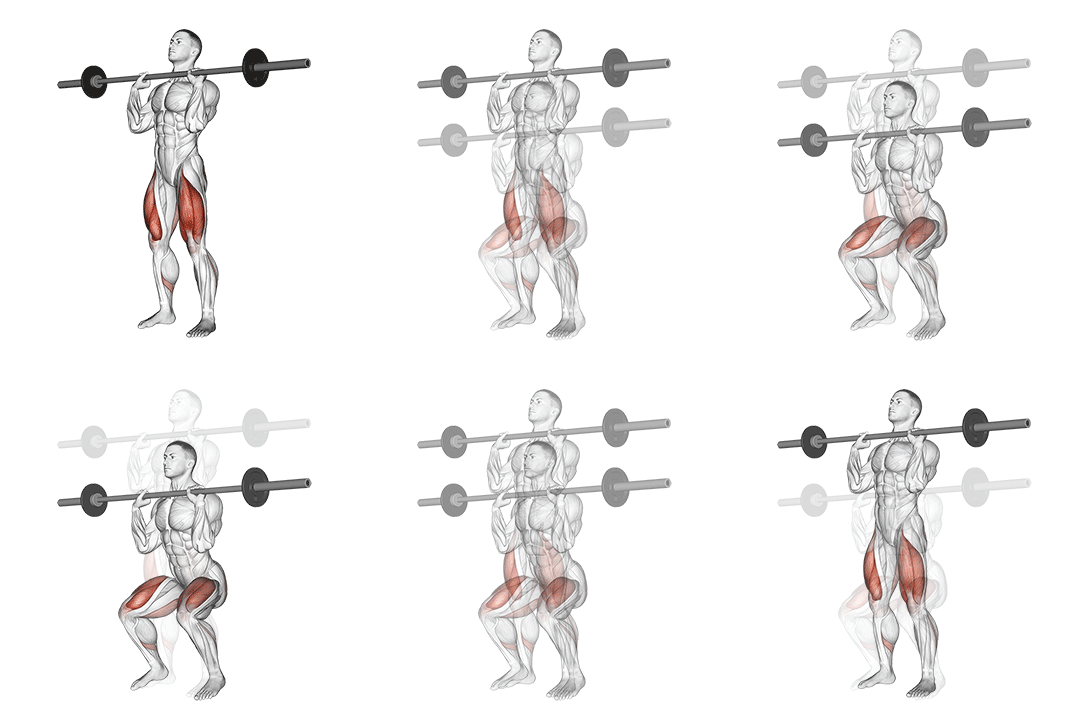
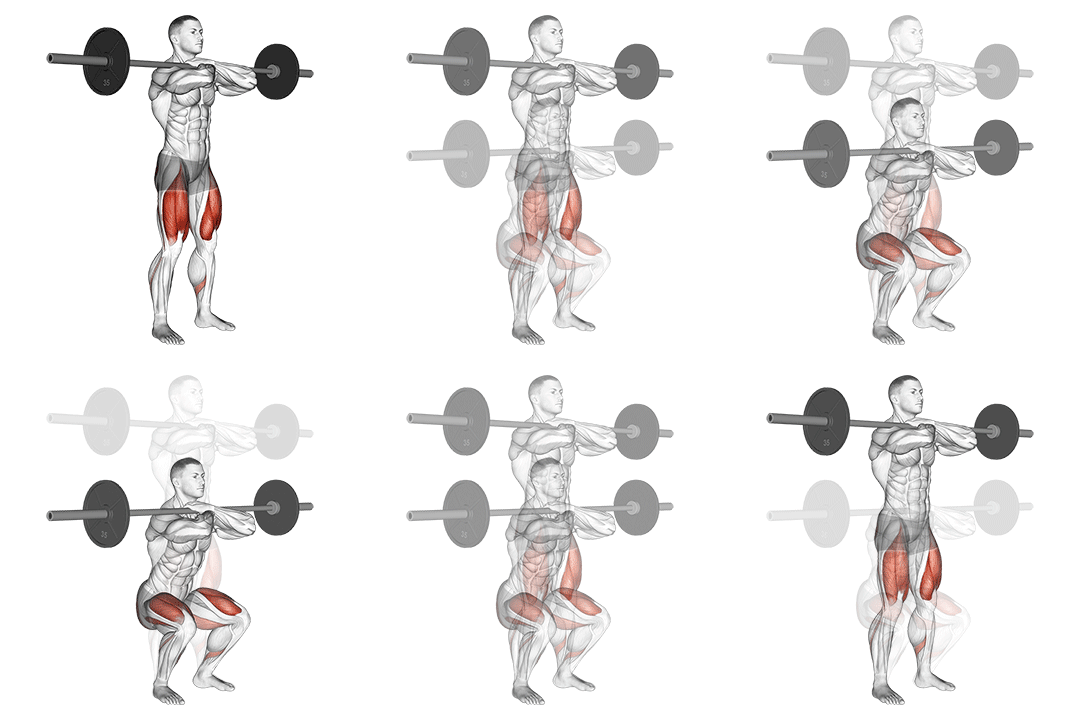
Visual Comparison
Overview
Barbell Deadlift vs Barbell Full Squat (back Pov) — two heavy-hitting compound lifts that both target your glutes and upper-legs but load them differently. If you want clear guidance on which move to prioritize, you’re in the right place. I’ll walk you through muscle activation, biomechanics (hip vs knee torque, length-tension), equipment needs, learning curve, injury risk, and practical programming tips including rep ranges and progression. Read this to decide which exercise fits your goals—strength, muscle growth, or time-efficient training—and how to perform each with safe technique cues.
Key Differences
- Difficulty levels differ: Barbell Deadlift is advanced, while Barbell Full Squat (back Pov) is intermediate.
- Both exercises target the Glutes using Barbell. The main differences are in their movement patterns and muscle activation angles.
Pros & Cons
Barbell Deadlift
+ Pros
- Massive posterior chain recruitment — strong glute and hamstring loading
- High absolute strength ceiling; easy to measure 1RM progress
- Minimal equipment setup; can be done with just a bar and plates
- Teaches powerful hip hinge patterns that transfer to deadlift variations
− Cons
- Higher lumbar loading if technique fails
- Greater technical demand for safe heavy loading
- Less quad and core development compared with full squats
Barbell Full Squat (back Pov)
+ Pros
- Excellent quad and glute stimulus across long ROM (depth >90°)
- Easier to scale and program for hypertrophy with moderate reps (6–12)
- Safer to spot and control using a rack or pins
- Builds core bracing and vertical force production useful for many sports
− Cons
- Requires a squat rack and more setup
- Demands ankle and hip mobility to achieve full depth safely
- Increased knee joint compressive forces at depth
When Each Exercise Wins
Full squats place the knee and hip through a larger range of motion and allow consistent moderate reps (6–12) and tempo work, producing sustained time under tension for quads and glutes. You can vary depth, pause durations, and set/rep schemes to overload muscles with less spinal strain than maximal deadlifts.
Deadlifts have a higher absolute load potential and are ideal for developing maximal posterior chain strength in low rep ranges (1–5). The hinge mechanics and load transfer make deadlift progress straightforward for increasing raw pull numbers and posterior chain force production.
Full squats allow easier regression (box squats, lighter loads) and provide more proprioceptive feedback via the rack, making them simpler to coach. They build core stability and movement patterns that are broadly applicable while limiting spinal shear compared with heavy, uncoached deadlifts.
Deadlifts require minimal gear — just a bar and plates — and can be performed in small spaces without a rack. For home trainers with limited equipment, deadlifts deliver large training stimulus for glutes and hamstrings with straightforward setup.
Frequently Asked Questions
Can I do both Barbell Deadlift and Barbell Full Squat (back Pov) in the same workout?
Yes — but program them carefully. If doing both, prioritize your goal lift first (e.g., heavy deadlifts early for strength) and use lighter accessory sets for the second; keep total weekly volume sensible (e.g., 6–12 hard sets per muscle group) to avoid recovery shortfalls.
Which exercise is better for beginners?
Barbell Full Squat (back Pov) is generally better for beginners because it’s easier to regress and coach in a rack and builds core and quad strength safely. Start with bodyweight and goblet or box squats before adding heavy back-bar loading.
How do the muscle activation patterns differ?
Deadlifts emphasize hip extension with earlier hamstring and lower-back engagement, producing peak glute activity during lockout. Full squats produce more sustained glute and quad activation through deep knee flexion and a longer concentric range of motion, shifting the force vector more vertically and increasing knee extensor torque.
Can Barbell Full Squat (back Pov) replace Barbell Deadlift?
Not completely — full squats can substitute for many training goals like hypertrophy and quad strength, but they don’t replicate the same posterior chain stimulus or maximal pulling demands of deadlifts. If your goal is maximal deadlift strength or hamstring/erector emphasis, keep deadlifts in the program.
Expert Verdict
Choose the deadlift when your priority is maximal posterior chain strength and efficient loading with minimal equipment. Use heavy sets in the 1–5 rep range with strict bracing and hinge mechanics to build pulling power and posterior mass. Choose the full back squat when you want balanced upper-leg development, higher-volume hypertrophy, or safer incremental loading in a rack; program 6–12 rep ranges with controlled tempo and depth to maximize quad and glute stimulus. For most trainees, rotate both across microcycles — emphasize squats for volume blocks and deadlifts for strength blocks — but prioritize the lift that aligns with your primary goal and mobility profile.
Also Compare
More comparisons with Barbell Deadlift
More comparisons with Barbell Full Squat (back Pov)
Compare More Exercises
Use our free comparison tool to analyze any two exercises head-to-head.
Compare Exercises