

Barbell Deadlift vs Sumo Deadlift: Complete Comparison Guide
Barbell Deadlift vs Sumo Deadlift is a classic lift-off that affects your hips, knees, and spine differently. If you want clear guidance, this comparison walks you through which lift better targets the glutes, hamstrings, quads and adductors, key technique cues for each style, the biomechanics behind force vectors and moment arms, plus programming recommendations (rep ranges and progressions). Read on and you’ll get actionable coaching cues, mobility checkpoints, and scenarios so you can choose the lift that matches your goals and limits.
Exercise Comparison
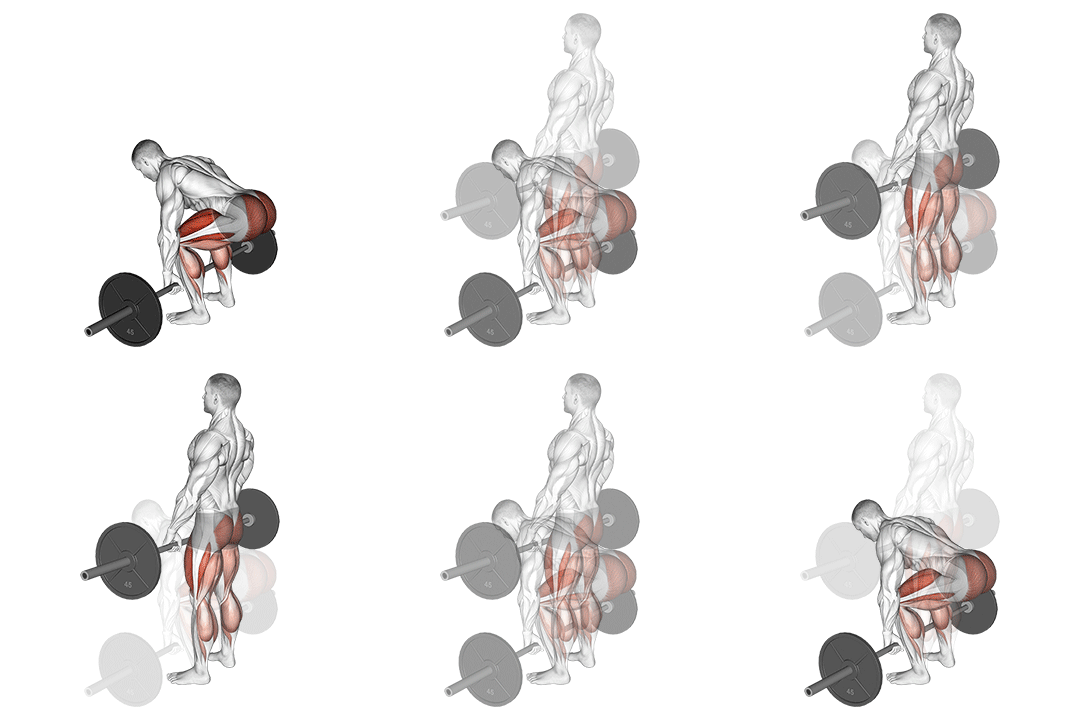
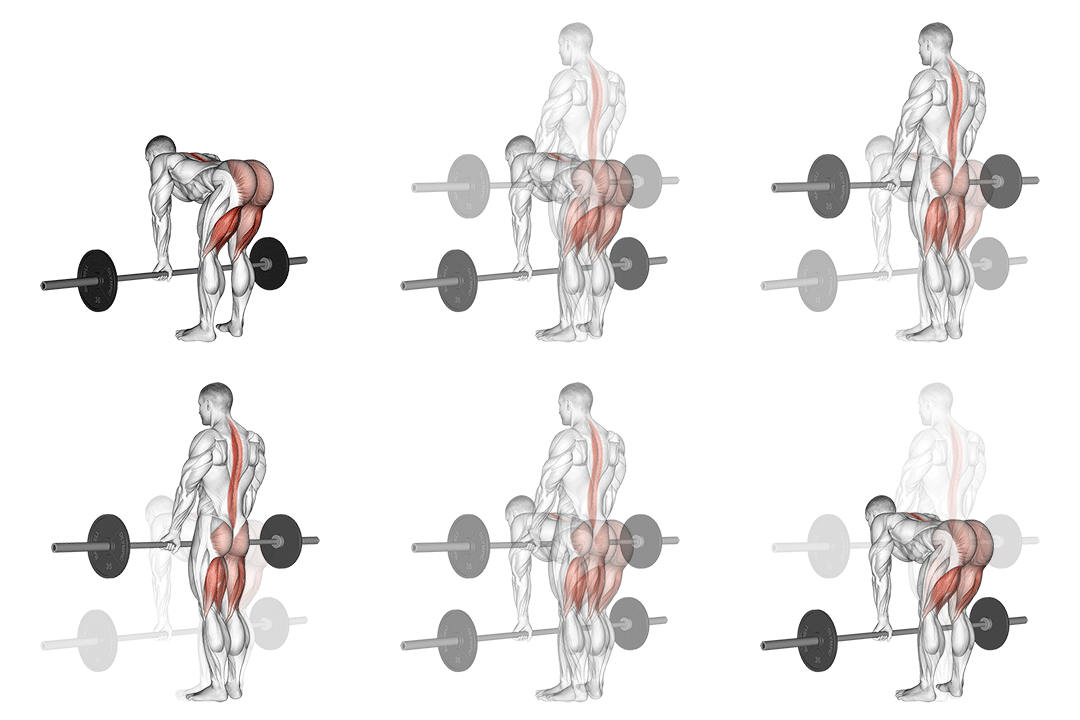
Barbell Deadlift
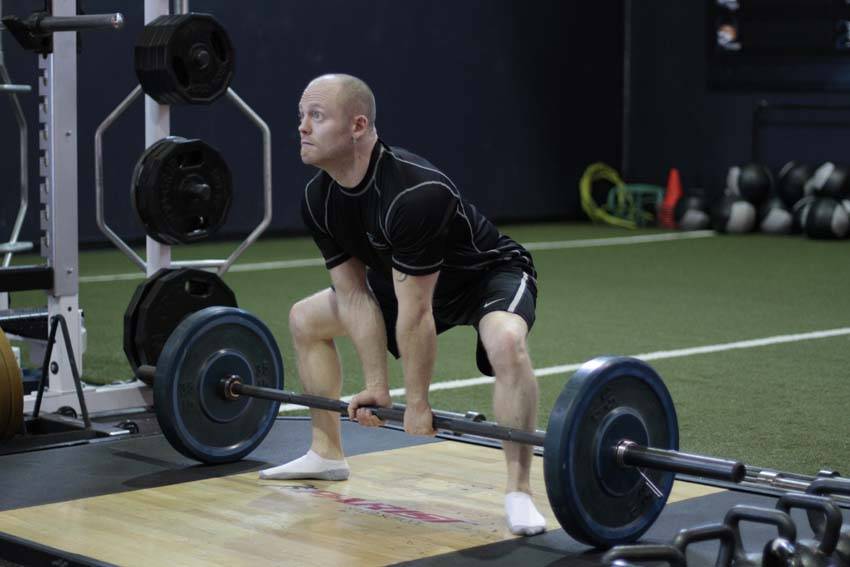
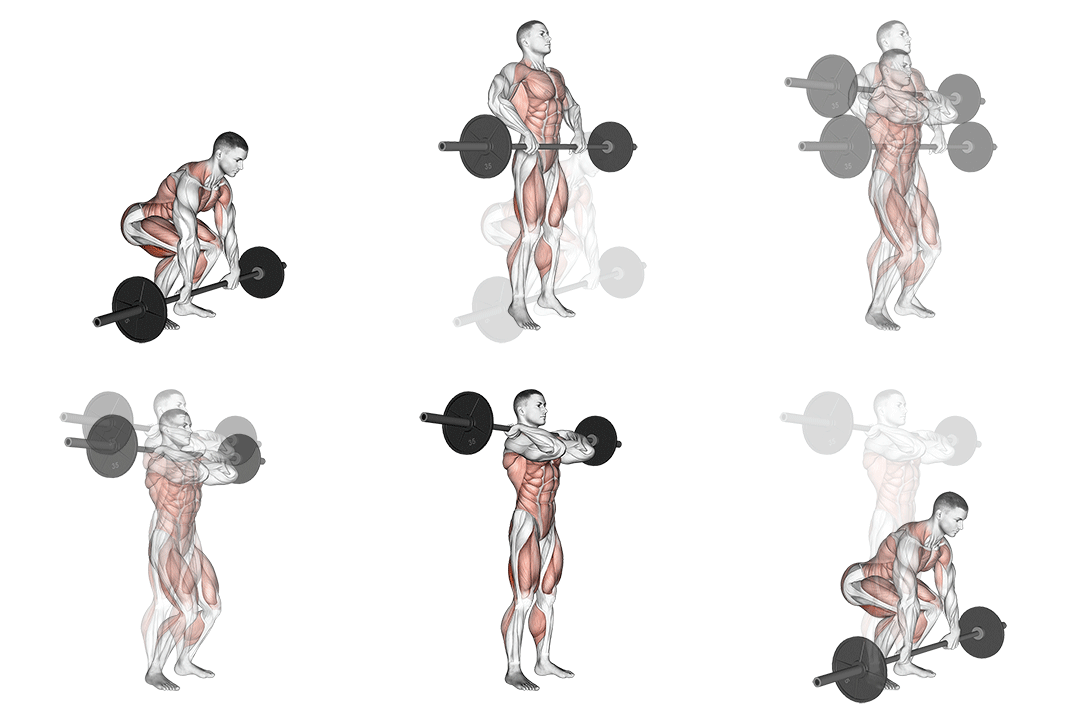
Sumo Deadlift
Head-to-Head Comparison
| Attribute | Barbell Deadlift | Sumo Deadlift |
|---|---|---|
| Target Muscle |
Glutes
|
Hamstrings
|
| Body Part |
Upper-legs
|
Upper-legs
|
| Equipment |
Barbell
|
Barbell
|
| Difficulty |
Advanced
|
Advanced
|
| Movement Type |
Compound
|
Compound
|
| Secondary Muscles |
2
|
7
|
Secondary Muscles Activated
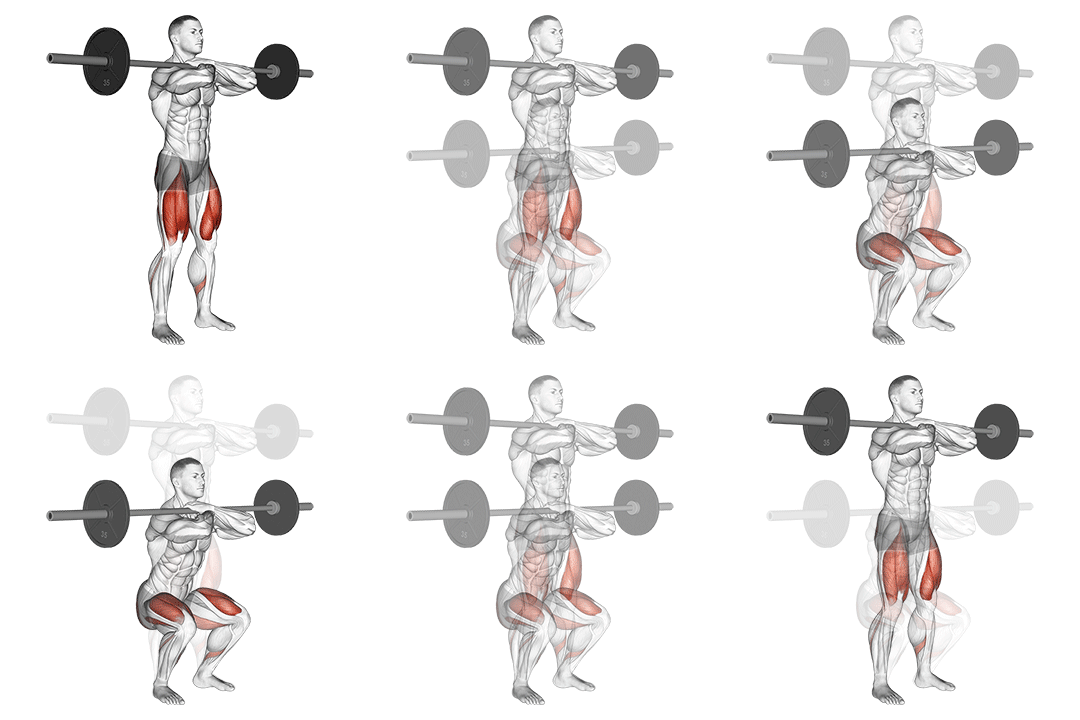
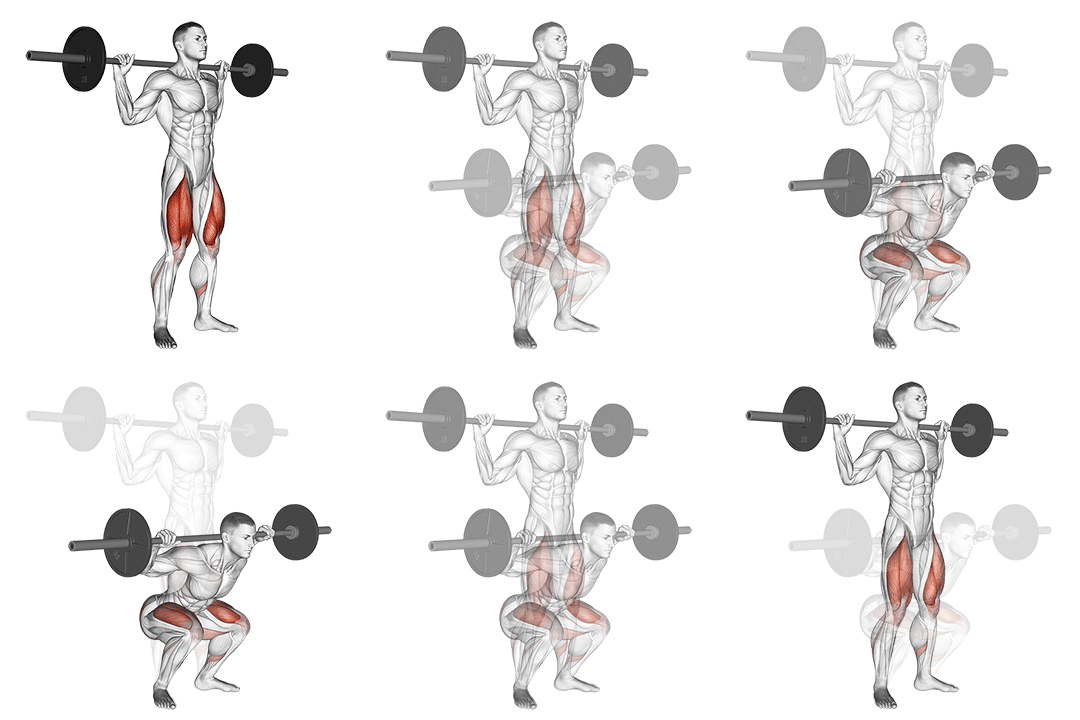
Barbell Deadlift
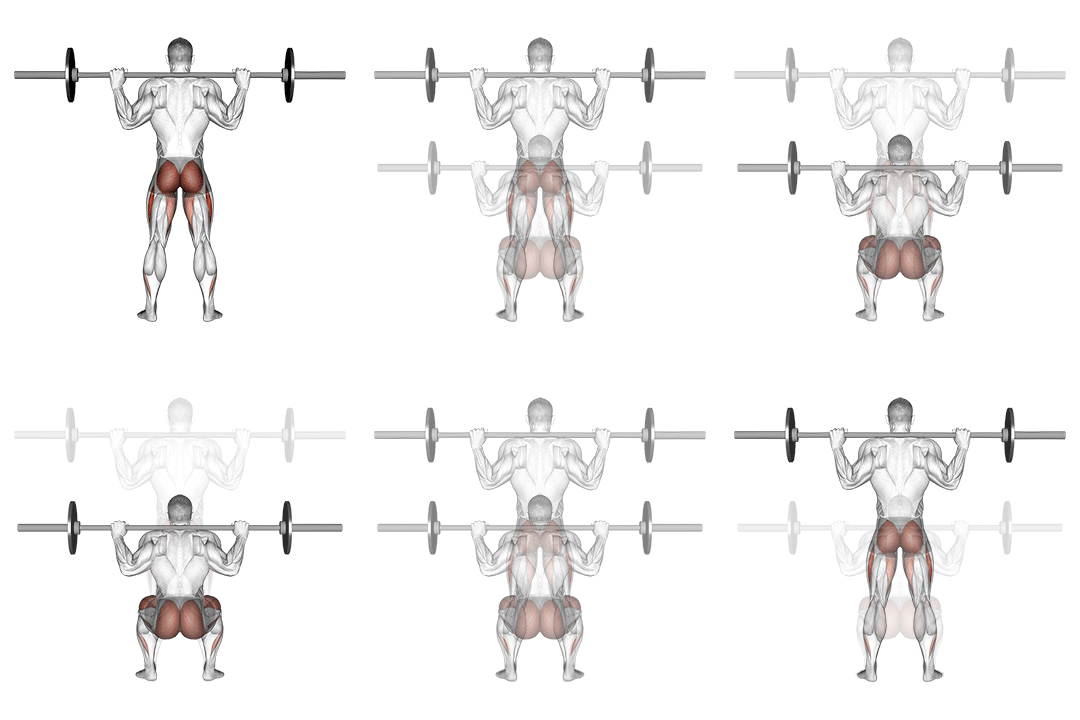
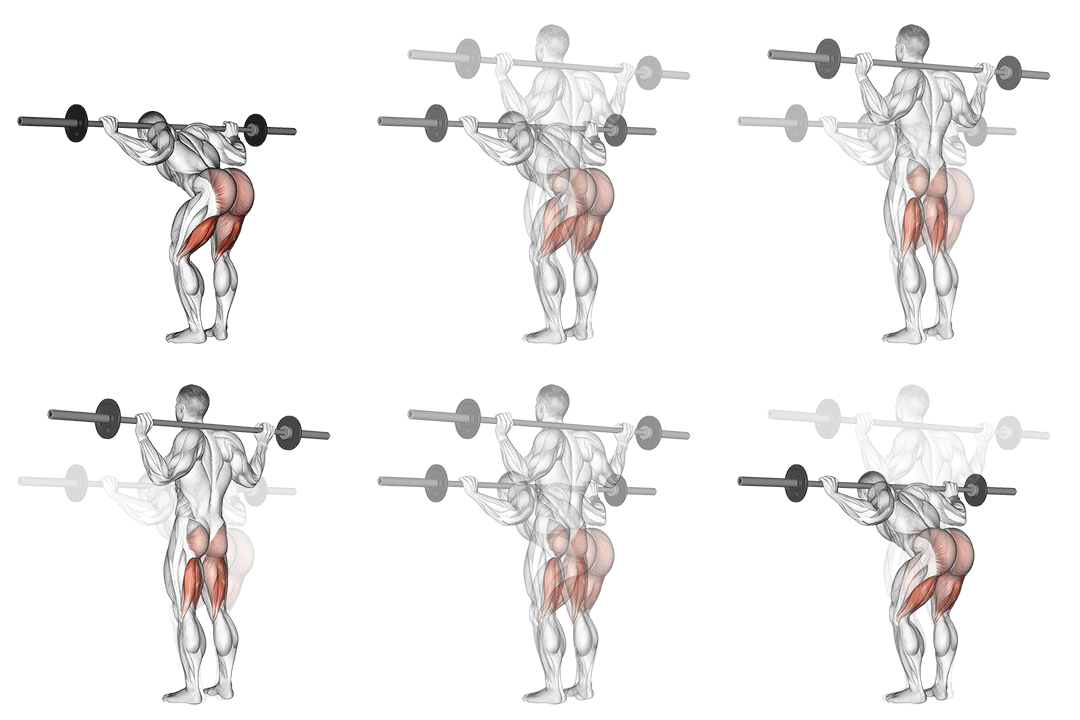
Sumo Deadlift
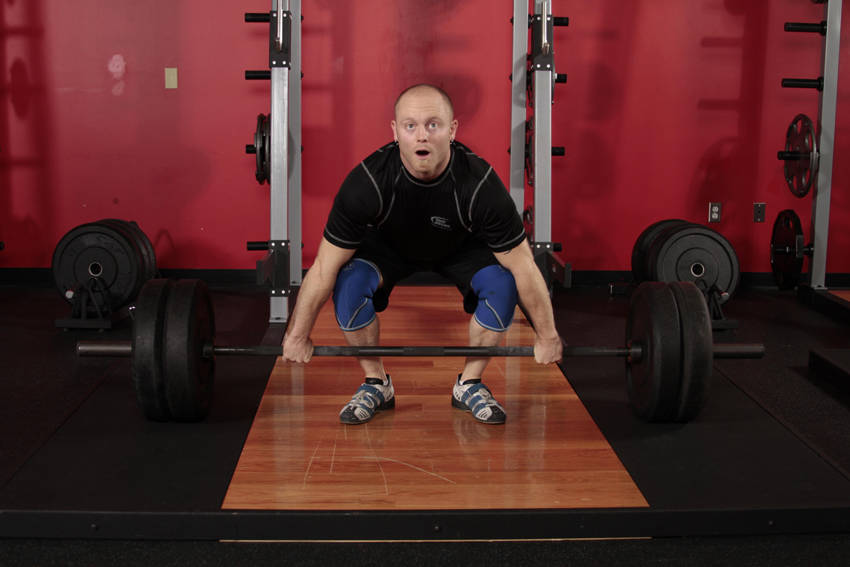
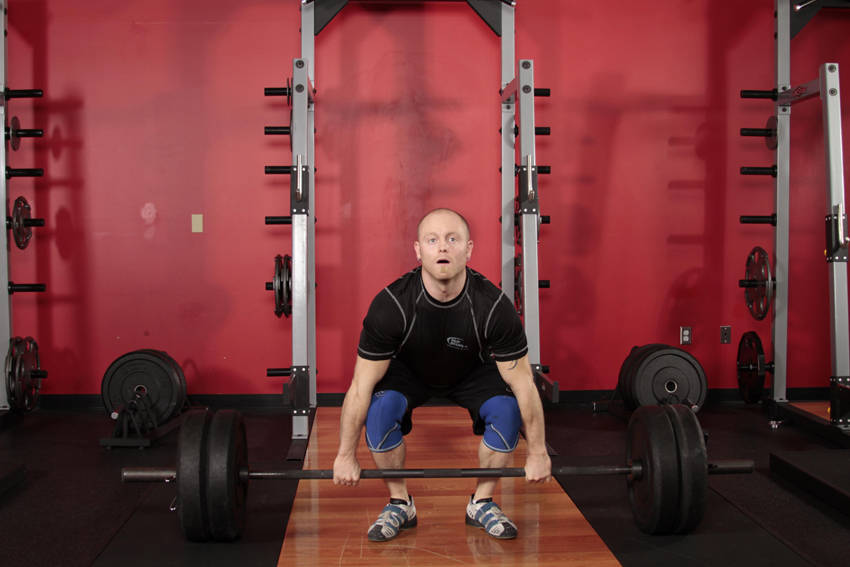
Visual Comparison
Overview
Barbell Deadlift vs Sumo Deadlift is a classic lift-off that affects your hips, knees, and spine differently. If you want clear guidance, this comparison walks you through which lift better targets the glutes, hamstrings, quads and adductors, key technique cues for each style, the biomechanics behind force vectors and moment arms, plus programming recommendations (rep ranges and progressions). Read on and you’ll get actionable coaching cues, mobility checkpoints, and scenarios so you can choose the lift that matches your goals and limits.
Key Differences
- Barbell Deadlift primarily targets the Glutes, while Sumo Deadlift focuses on the Hamstrings.
Pros & Cons
Barbell Deadlift
+ Pros
- Maximizes hip extension torque for stronger glute and hamstring development
- Longer range of motion increases time under tension for posterior chain hypertrophy
- Easier to transfer to accessory hip-hinge movements (RDLs, good mornings)
- Commonly trained and coached in most gyms (more programming templates)
− Cons
- Higher sustained lower-back demand if torso or hinge technique is poor
- Longer range of motion can limit how much load you can lift initially
- Requires good thoracic mobility and hamstring flexibility to maintain neutral spine
Sumo Deadlift
+ Pros
- Shorter ROM and more upright torso often allow higher loads due to improved leverage
- Greater adductor and quadriceps recruitment — useful for balanced upper-leg development
- Lower lumbar moment when performed correctly, which can help lifters with low-back sensitivity
- Grip and trap demand is high, improving upper-back strength and bar control
− Cons
- Requires significant hip abduction and ankle mobility for an effective setup
- Can be harder to teach proper knee tracking and foot placement
- Less carryover to posterior-chain accessory lifts that use a strict hip hinge
When Each Exercise Wins
Barbell Deadlift produces greater hip extension torque and longer hamstring/glute length-tension exposure, which supports hypertrophy when programmed in 6–12 rep ranges and with tempo work to increase time under tension.
Sumo often permits heavier loads due to a shorter ROM and favorable leverages, making it ideal for maximal strength work in the 1–5 rep range and peaking cycles where loading absolute weight matters.
Sumo’s more upright torso reduces lumbar shear and a shorter pull can be easier to groove. With coaching on foot angle (30–45° toe-out) and knees tracking over toes, beginners often learn safe movement patterns faster.
Conventional stance fits tighter spaces and simpler setup; you can also progress with partial ROM, trap-bar or single-leg variations if equipment is limited, and it transfers well to bodyweight posterior-chain work.
Frequently Asked Questions
Can I do both Barbell Deadlift and Sumo Deadlift in the same workout?
Yes — but avoid heavy maximal sets on both the same day. Use one as the primary heavy lift (e.g., heavy sets 1–5 reps) and the other as a volume accessory (3–5 sets of 6–12), or alternate styles across training days to manage fatigue and target different muscle emphases.
Which exercise is better for beginners?
Sumo is often easier for beginners because its upright torso lowers lumbar load and the shorter range of motion is simpler to learn. That said, if a beginner has limited hip-abduction mobility, conventional with coaching on the hip hinge can be safer.
How do the muscle activation patterns differ?
Conventional creates larger hip extension moments, lengthening hamstrings and glutes for peak activation late in the lift; trunk is more horizontal, increasing erector spinae demand. Sumo shortens ROM, increases knee extensor and adductor activation, and produces a more vertical trunk that shifts peak forces earlier to quads and adductors.
Can Sumo Deadlift replace Barbell Deadlift?
Yes, Sumo can replace conventional for many lifters, especially if it reduces low-back pain or allows heavier loading. If your goal is maximal posterior-chain hypertrophy or specific hip-hinge carryover, keep conventional or include both styles periodically.
Expert Verdict
Choose Barbell Deadlift when your priority is posterior-chain hypertrophy, teaching a strict hip hinge, or building carryover to Romanian deadlifts and other hip-dominant lifts. Use 6–12 reps for hypertrophy and 3–6 for strength phases. Pick Sumo Deadlift when you want to move maximal loads, protect the lower back, or emphasize quads and adductors; work sets of 1–5 for peaking and 4–8 for mixed strength–size blocks. Both are advanced compound movements; rotate or include both in a program if you need balanced upper-leg development or to work around mobility and back issues. Always prioritize neutral spine, bar close to shins, and progressive overload within safe technique limits.
Also Compare
More comparisons with Barbell Deadlift
Compare More Exercises
Use our free comparison tool to analyze any two exercises head-to-head.
Compare Exercises