

Barbell Decline Bench Press vs Barbell Incline Bench Press: Complete Comparison Guide
Barbell Decline Bench Press vs Barbell Incline Bench Press — you’ve picked two classic compound chest moves. If you want clearer chest shape, more strength, or to balance upper and lower pec development, this comparison walks you through biomechanics, muscle activation, setup cues, and programming. I’ll show how angle, bar path, and shoulder position change which part of the pectoralis major works hardest, give rep and load ranges for hypertrophy and strength, and point out injury risks and progression options so you can pick the right press for your goals.
Exercise Comparison
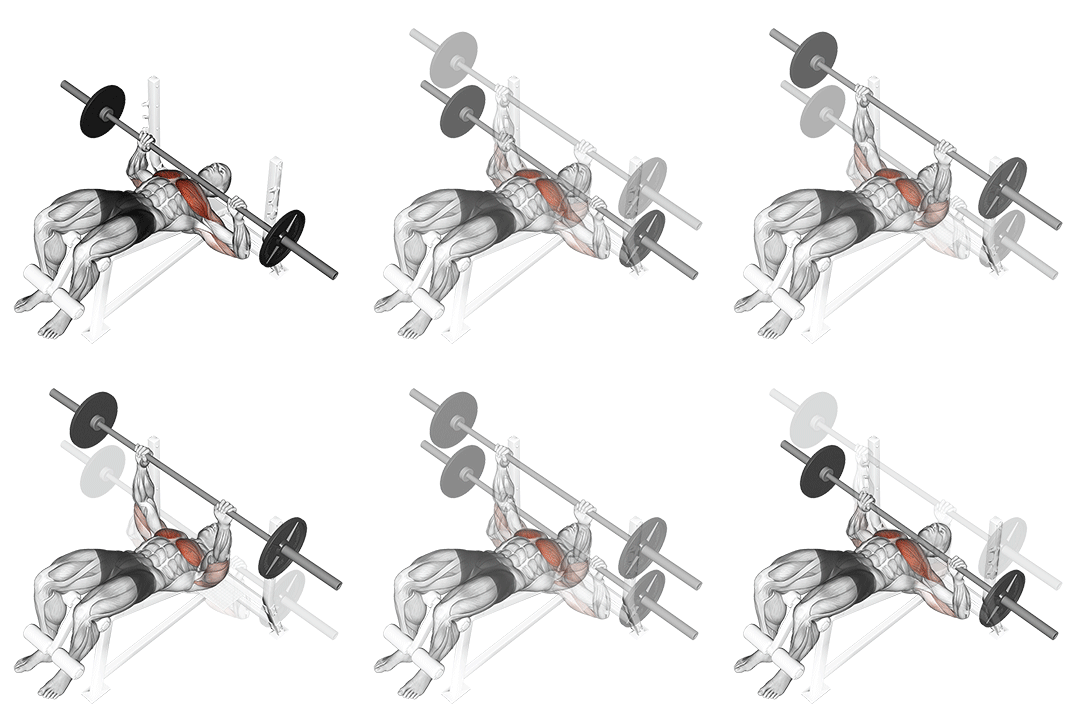
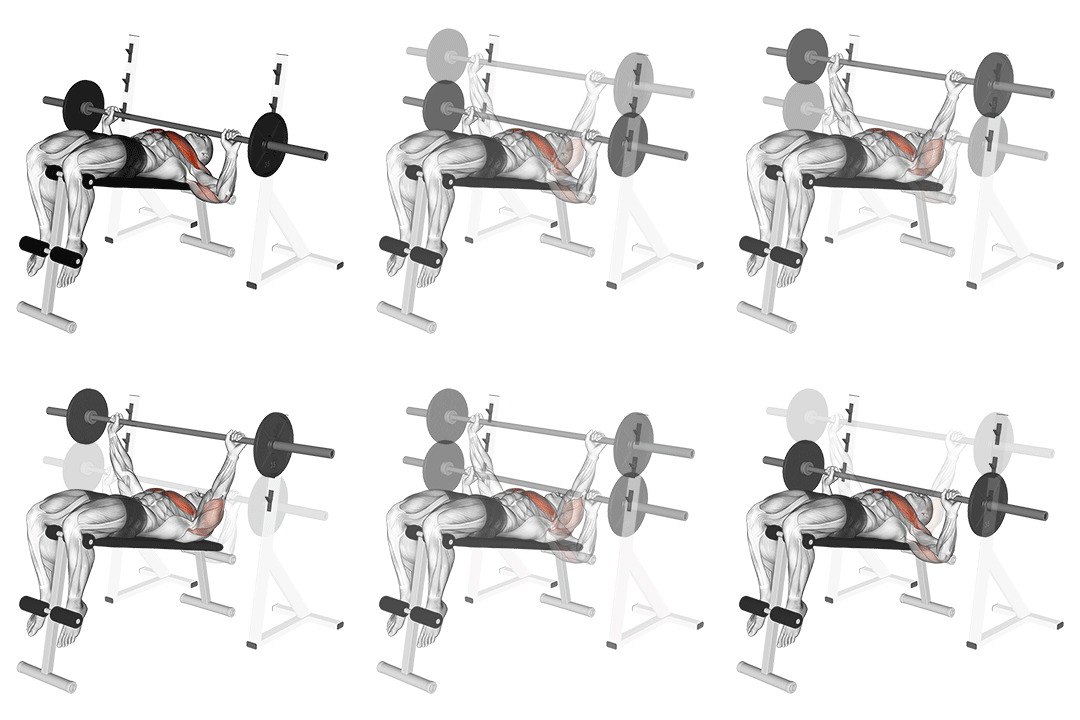
Barbell Decline Bench Press
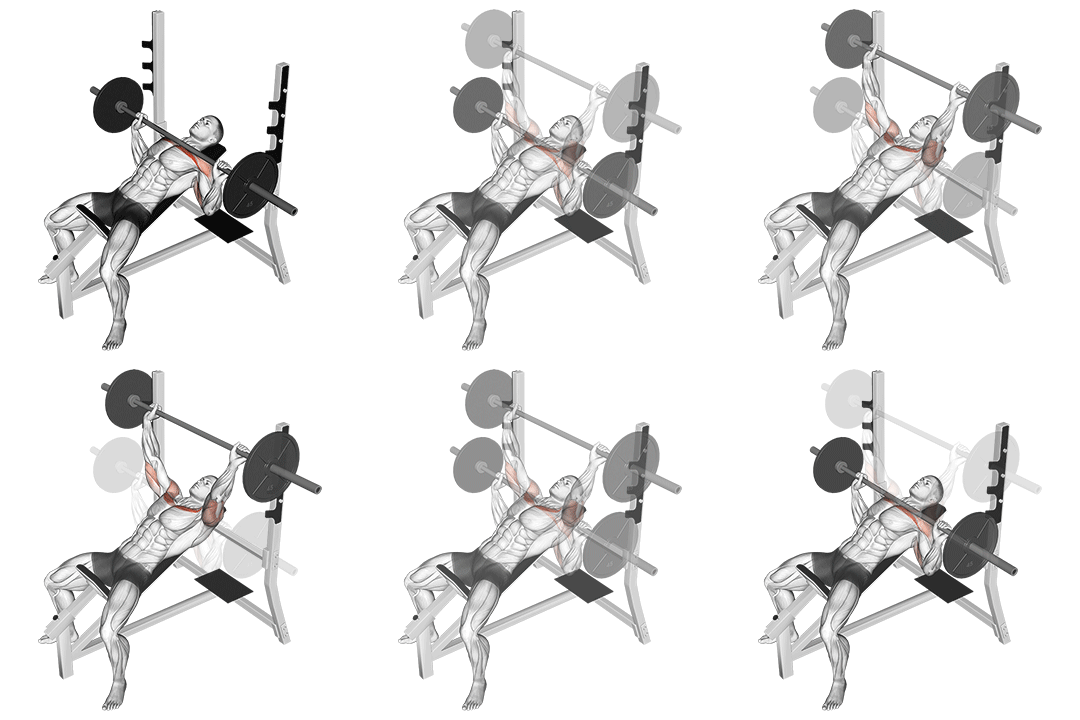
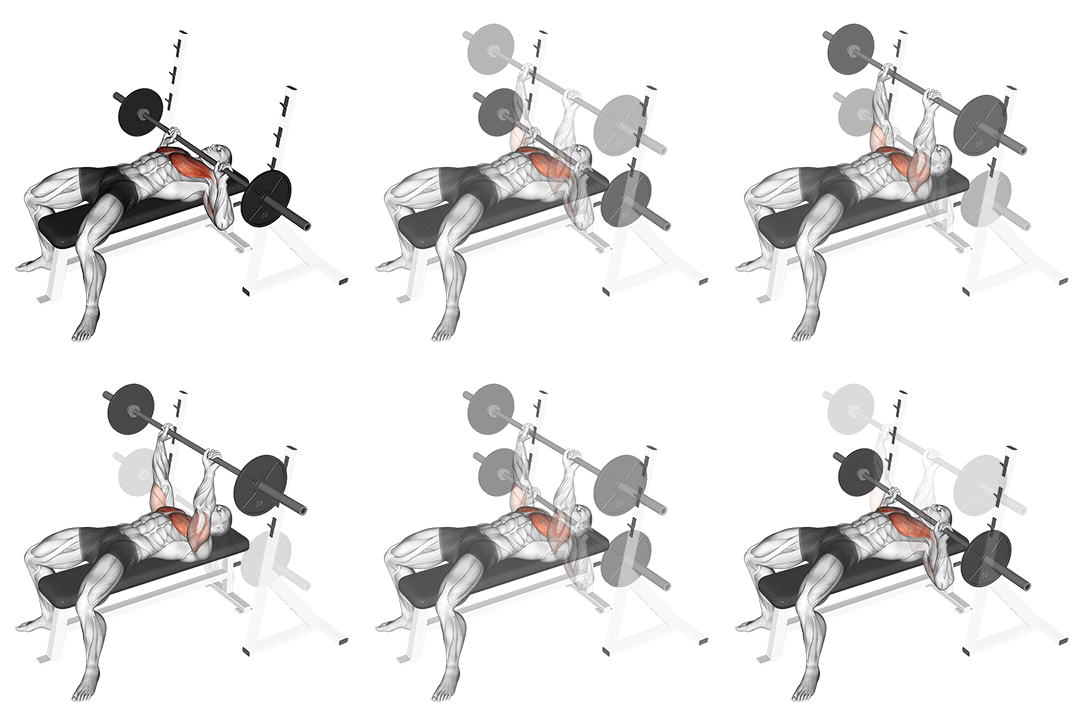
Barbell Incline Bench Press
Head-to-Head Comparison
| Attribute | Barbell Decline Bench Press | Barbell Incline Bench Press |
|---|---|---|
| Target Muscle |
Pectorals
|
Pectorals
|
| Body Part |
Chest
|
Chest
|
| Equipment |
Barbell
|
Barbell
|
| Difficulty |
Intermediate
|
Intermediate
|
| Movement Type |
Compound
|
Compound
|
| Secondary Muscles |
2
|
2
|
Secondary Muscles Activated
Barbell Decline Bench Press
Barbell Incline Bench Press
Visual Comparison
Overview
Barbell Decline Bench Press vs Barbell Incline Bench Press — you’ve picked two classic compound chest moves. If you want clearer chest shape, more strength, or to balance upper and lower pec development, this comparison walks you through biomechanics, muscle activation, setup cues, and programming. I’ll show how angle, bar path, and shoulder position change which part of the pectoralis major works hardest, give rep and load ranges for hypertrophy and strength, and point out injury risks and progression options so you can pick the right press for your goals.
Key Differences
- Both exercises target the Pectorals using Barbell. The main differences are in their movement patterns and muscle activation angles.
Pros & Cons
Barbell Decline Bench Press
+ Pros
- Greater absolute loading potential—many lifters can press heavier on decline
- Stronger emphasis on lower/ sternal pec fibers for chest thickness
- Reduced anterior deltoid stress compared with steep incline
- Shorter ROM can help target heavy, low-rep strength work (3–6 reps)
− Cons
- Requires a decline bench and secure foot hooks or spotters
- Uncommon in many gyms and awkward for some lifters to set up
- Less clavicular (upper chest) development compared with incline
Barbell Incline Bench Press
+ Pros
- Better for upper-clavicular pec development and aesthetic balance
- More accessible—adjustable incline benches are common
- Easier sight line and breathing; simpler unrack for beginners
- Versatile angle (25°–35°) to fine-tune deltoid vs pec emphasis
− Cons
- Higher anterior deltoid involvement can limit pec loading
- Steeper angles (>40°) reduce chest stimulus and increase shoulder strain
- Generally lower absolute loads compared with decline for many lifters
When Each Exercise Wins
Decline allows heavier loading and a favorable length-tension position for the sternal pec, supporting mechanical tension—key for hypertrophy. Use 6–12 reps with controlled eccentric tempo and 60–90 seconds rest to maximize time under tension.
Because lifters often handle higher absolute loads and a slightly shorter ROM on decline, it’s the better pick for pure 1RM strength work. Program 3–6 rep sets with progressive overload and frequent heavy triples.
Incline is easier to set up, teaches pressing with an upright torso, and places less awkward stabilization demand than decline. Start with 8–12 reps focusing on scapular retraction and groove before adding heavy load.
Adjustable benches that incline are common in home gyms while decline benches are rare. An incline bench and a rack give versatile pressing options without the specialized decline hardware.
Frequently Asked Questions
Can I do both Barbell Decline Bench Press and Barbell Incline Bench Press in the same workout?
Yes. Pairing both works well if you control volume—use one as the heavy primary movement (e.g., decline 3–5 sets at 3–6 reps) and the other as a secondary hypertrophy-focused lift (e.g., incline 3–4 sets at 8–12 reps). Monitor total shoulder and triceps fatigue to avoid overreach.
Which exercise is better for beginners?
Barbell Incline Bench Press is generally better for beginners because it’s easier to set up, places less awkward stabilization demand on the spine and legs, and helps teach pressing mechanics while protecting the shoulder if you keep the angle near 30°.
How do the muscle activation patterns differ?
Activation shifts with bench angle: decline biases the sternal (lower) pec and allows stronger horizontal adduction torque, while incline increases clavicular (upper) pec and anterior deltoid activity. These changes arise from different force vectors and altered muscle length-tension across the ROM.
Can Barbell Incline Bench Press replace Barbell Decline Bench Press?
It can replace decline if your goal is upper chest development or if you lack decline equipment, but it won’t replicate the exact lower-pectoral loading or the same absolute load potential. For complete chest development, include both across training cycles.
Expert Verdict
Use decline bench presses when you want heavy, chest-dominant loading—they’re ideal for lower-pectoral thickness and raw pressing strength because the force vector and shorter ROM allow higher absolute loads. Choose incline presses when you need to build the upper clavicular head, balance chest shape, or if you’re a beginner or training at home—set the bench around 25°–35° to keep the pecs primary. Best practice: rotate both into your program across microcycles—heavy decline blocks (3–6 reps) for strength and sternal thickness, paired with incline work (6–12 reps) for upper chest hypertrophy and shoulder-friendly variety.
Also Compare
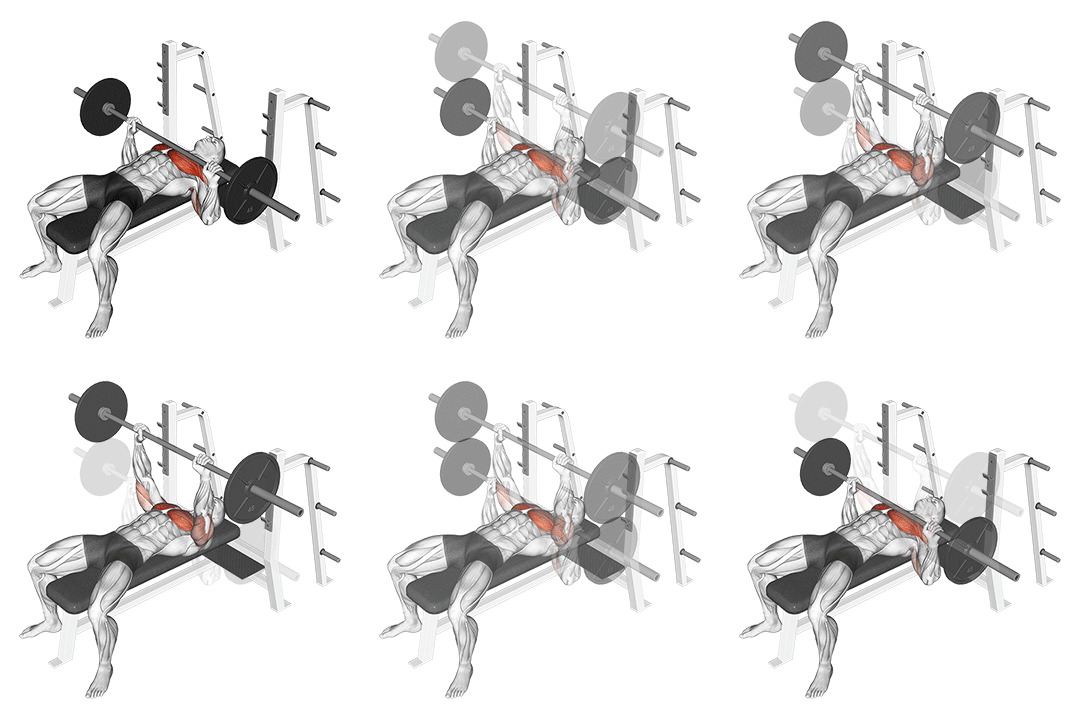
More comparisons with Barbell Decline Bench Press
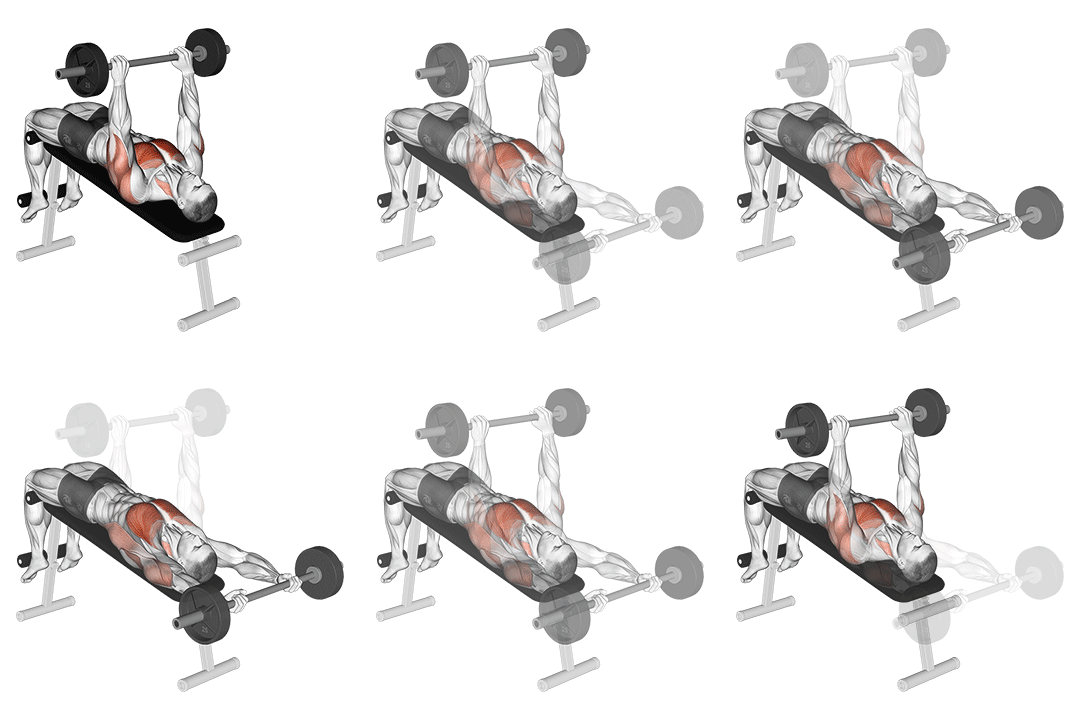
More comparisons with Barbell Incline Bench Press
Compare More Exercises
Use our free comparison tool to analyze any two exercises head-to-head.
Compare Exercises