

Barbell Decline Bench Press vs Bench Press - Powerlifting: Complete Comparison Guide
Barbell Decline Bench Press vs Bench Press - Powerlifting puts two barbell chest staples next to each other so you can pick the best tool for your goals. You’ll get clear comparisons of primary and secondary muscle activation, equipment needs, technique cues (including decline angle and powerlifting arch), rep-range recommendations for hypertrophy and strength, and specific progression advice. Read on to learn when to use a -15° to -30° decline and when the powerlifting-style flat bench with an intentional arch and leg drive is the superior choice for 1–5RM strength work.
Exercise Comparison
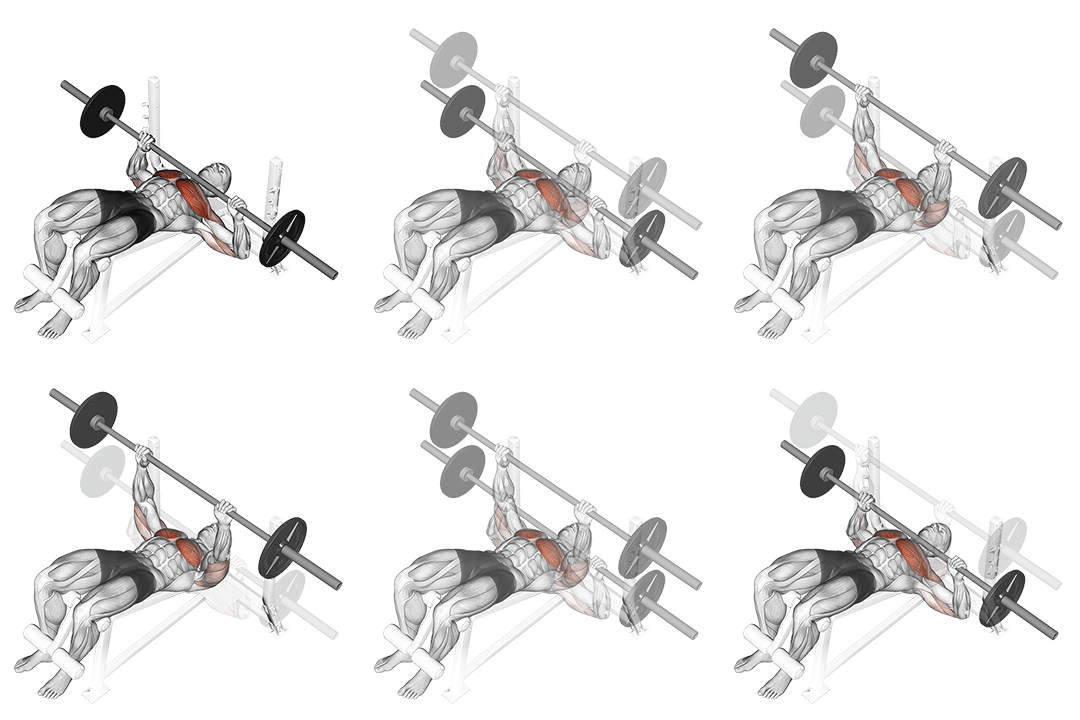
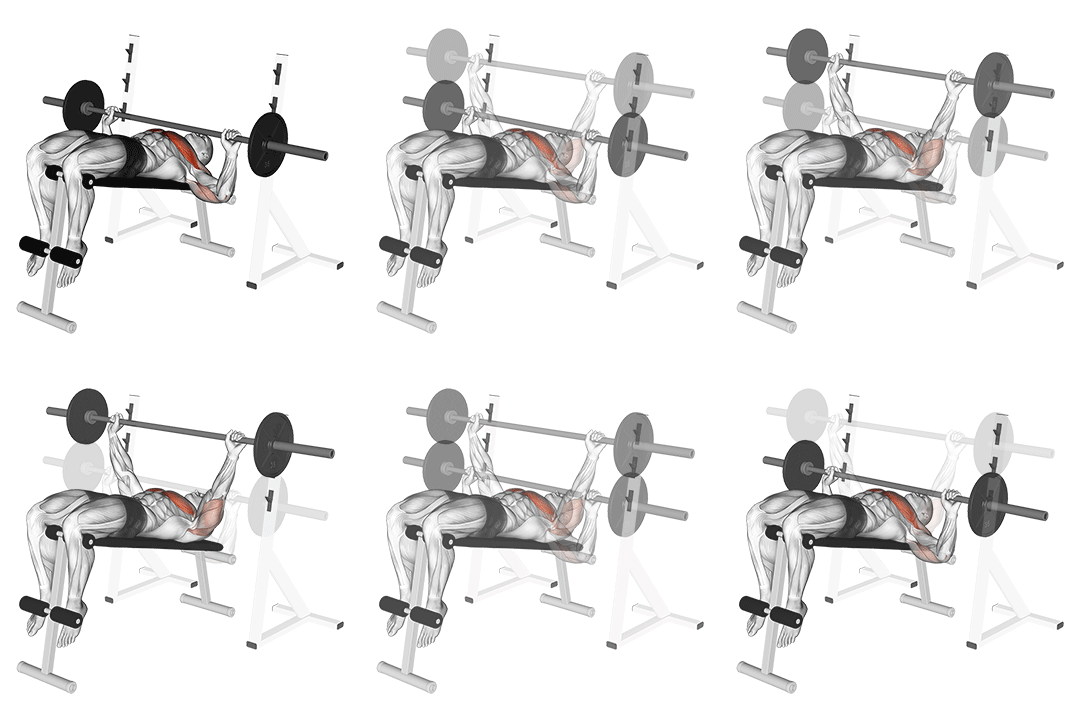
Barbell Decline Bench Press
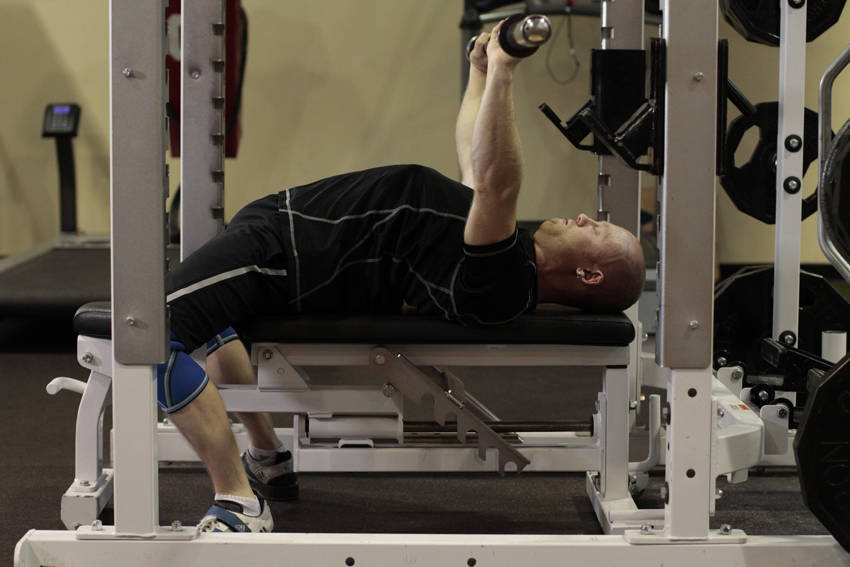
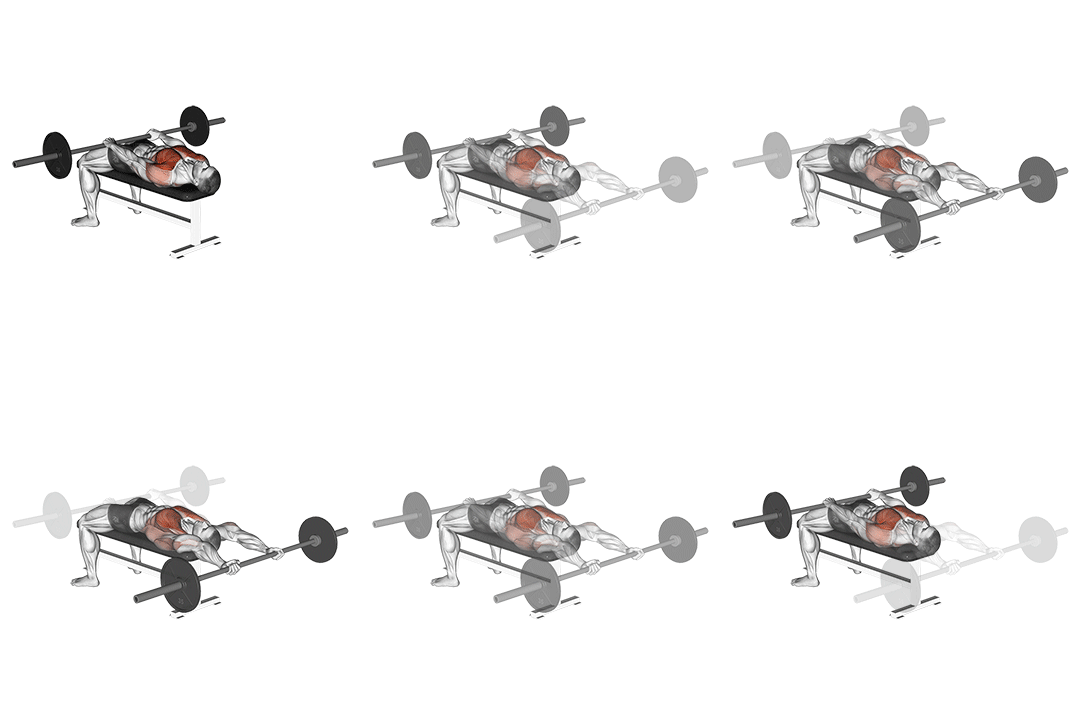
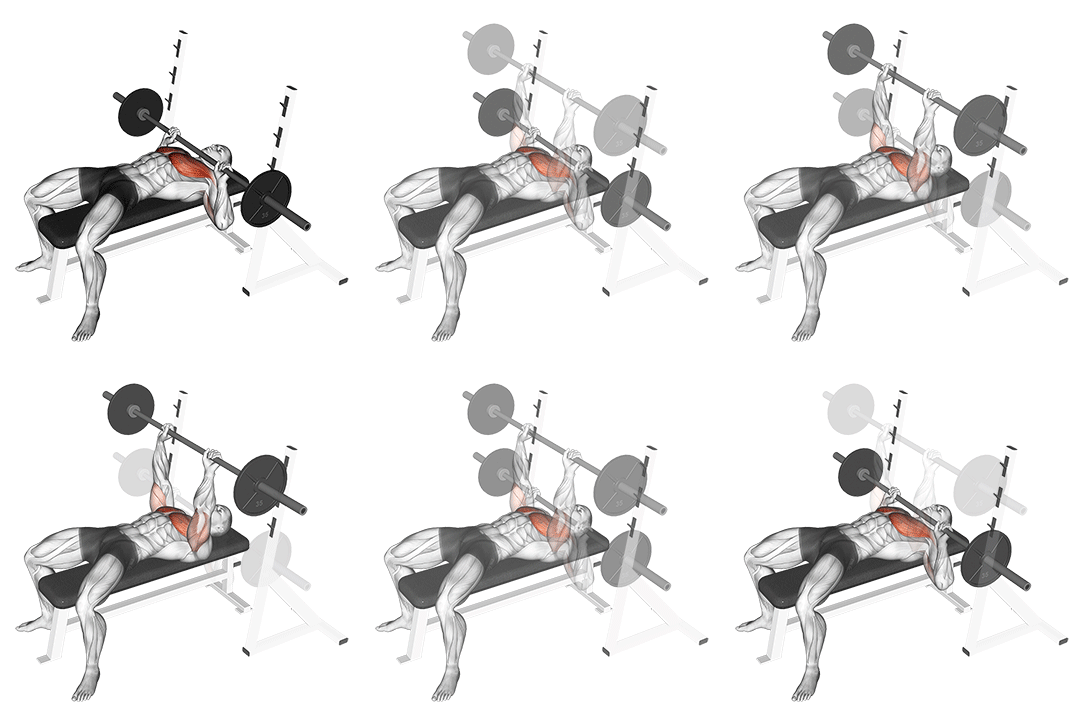
Bench Press - Powerlifting
Head-to-Head Comparison
| Attribute | Barbell Decline Bench Press | Bench Press - Powerlifting |
|---|---|---|
| Target Muscle |
Pectorals
|
Pectorals
|
| Body Part |
Chest
|
Chest
|
| Equipment |
Barbell
|
Barbell
|
| Difficulty |
Intermediate
|
Advanced
|
| Movement Type |
Compound
|
Compound
|
| Secondary Muscles |
2
|
4
|
Secondary Muscles Activated
Barbell Decline Bench Press
Bench Press - Powerlifting
Visual Comparison
Overview
Barbell Decline Bench Press vs Bench Press - Powerlifting puts two barbell chest staples next to each other so you can pick the best tool for your goals. You’ll get clear comparisons of primary and secondary muscle activation, equipment needs, technique cues (including decline angle and powerlifting arch), rep-range recommendations for hypertrophy and strength, and specific progression advice. Read on to learn when to use a -15° to -30° decline and when the powerlifting-style flat bench with an intentional arch and leg drive is the superior choice for 1–5RM strength work.
Key Differences
- Difficulty levels differ: Barbell Decline Bench Press is intermediate, while Bench Press - Powerlifting is advanced.
- Both exercises target the Pectorals using Barbell. The main differences are in their movement patterns and muscle activation angles.
Pros & Cons
Barbell Decline Bench Press
+ Pros
- Targets lower sternal pec fibers for balanced chest development
- Reduces anterior deltoid involvement and shoulder flexion torque
- Often allows slightly heavier loads due to shorter ROM (-15° to -30°)
- Great for hypertrophy with 6–12 rep ranges and controlled eccentrics
− Cons
- Decline benches are less common in commercial gyms
- Requires a spotter or safety setup for heavy loads
- Can under-recruit lats and forearms compared to powerlifting bench
Bench Press - Powerlifting
+ Pros
- Maximizes 1RM potential through arch, leg drive and optimized bar path
- Stronger recruitment of lats, triceps and forearms for total pressing strength
- Highly accessible—flat benches and power racks are widespread
- Transfers directly to competitive bench press performance
− Cons
- Advanced technique with a steeper learning curve (arch, leg drive)
- Higher shoulder and joint stress under maximal loads
- Longer ROM can limit volume for hypertrophy unless program is adjusted
When Each Exercise Wins
Decline presses place more emphasis on the lower sternal pecs and let you use controlled 6–12 rep sets with a slightly shorter ROM, increasing time under tension for targeted chest hypertrophy.
The powerlifting-style bench allows arch, leg drive and grip manipulation to improve 1RM strength and neuromuscular efficiency; target 1–5 rep ranges with progressive overload for maximal strength.
Decline bench technique is simpler to learn and reduces anterior deltoid torque; beginners can use moderate loads and 8–12 rep ranges to build chest thickness before learning advanced powerlifting mechanics.
A flat bench and rack are more commonly replicated at home than a dedicated decline bench; you can also modify flat presses (incline/decline angles) using adjustable benches and still train strength effectively.
Frequently Asked Questions
Can I do both Barbell Decline Bench Press and Bench Press - Powerlifting in the same workout?
Yes. Sequence matters: perform the lift tied to your primary goal first. For strength focus, do powerlifting-style top sets first (1–5 reps), then use decline bench as an accessory for 3–4 sets of 6–12 reps to add volume and isolate the lower pecs.
Which exercise is better for beginners?
Barbell Decline Bench Press is generally better for beginners because it has an easier technique and reduces anterior deltoid torque. Start with moderate loads and 8–12 reps to build chest thickness before learning the more technical powerlifting setup.
How do the muscle activation patterns differ?
Decline pressing shifts the force vector to favor lower sternal pec fibers and lowers anterior deltoid contribution, often increasing peak pec activation by about 5–15% versus flat bench. Powerlifting-style flat bench produces greater lat co-contraction and triceps demand due to the arch and leg drive, and a larger eccentric stretch across the pecs.
Can Bench Press - Powerlifting replace Barbell Decline Bench Press?
For pure strength goals, yes—the powerlifting bench can functionally replace decline work and improve 1RM. For targeted lower-pec hypertrophy, keep decline presses in rotation because the altered angle and shortened ROM emphasize different muscle fibers.
Expert Verdict
Choose the Barbell Decline Bench Press when your priority is targeted chest hypertrophy, lower-pec development, or reducing anterior deltoid stress—use a -15° to -30° decline, controlled 6–12 rep sets, and paused eccentrics to maximize muscle tension. Choose the Bench Press - Powerlifting when your goal is raw pressing strength or competition specificity—focus on 1–5RM progressions, a reliable arch, leg drive and a tight scapular set to manage force transfer. For most lifters, rotate both: use decline phases for 4–8 weeks of hypertrophy, then return to powerlifting-focused cycles for strength gains and 1RM testing.
Also Compare
More comparisons with Barbell Decline Bench Press
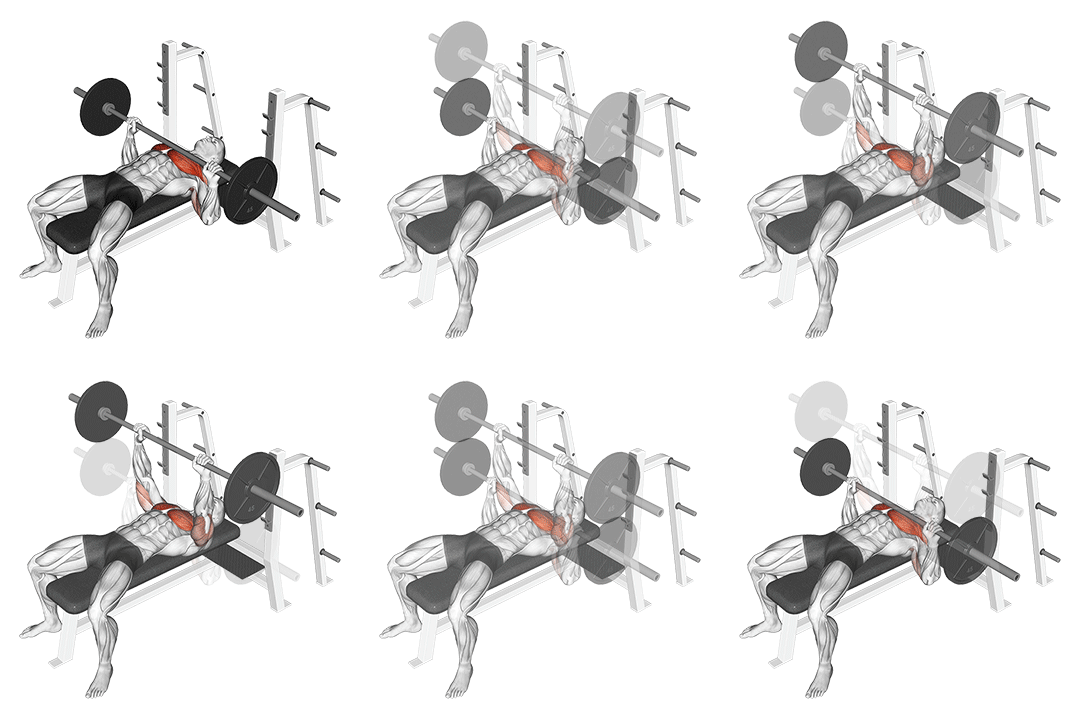
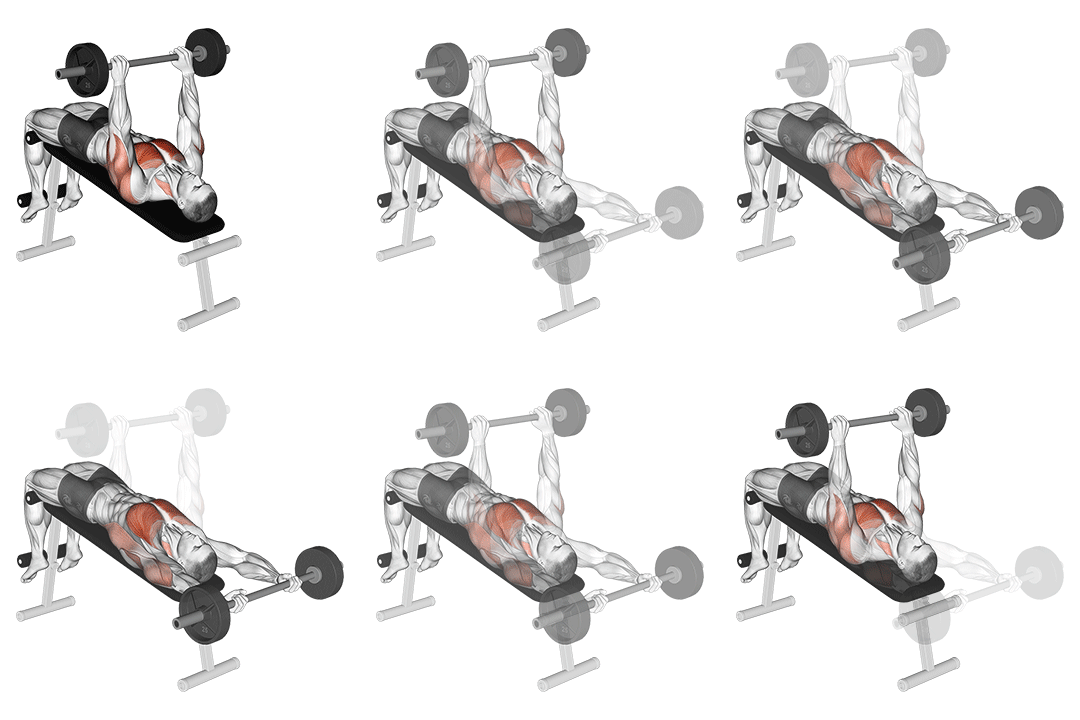
More comparisons with Bench Press - Powerlifting
Compare More Exercises
Use our free comparison tool to analyze any two exercises head-to-head.
Compare Exercises