

Barbell Decline Pullover vs Barbell Front Raise And Pullover: Complete Comparison Guide
Barbell Decline Pullover vs Barbell Front Raise And Pullover — if you want denser chest development, these two compound barbell moves often get mixed up. You’ll get a clear breakdown of how each move loads the pectorals, which secondary muscles pick up the work, and practical cues so you can perform each safely. I’ll cover biomechanics (length-tension, force vectors), exact setup and angles, rep-range recommendations for hypertrophy and strength, and when to pick one over the other based on your goals and equipment.
Exercise Comparison
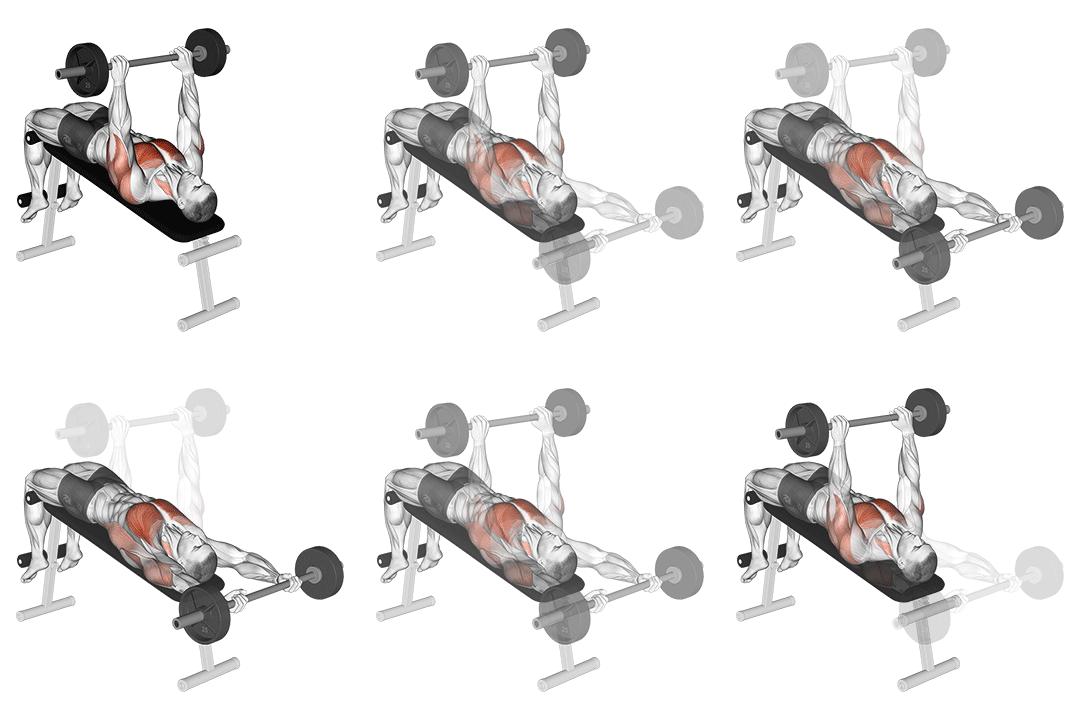
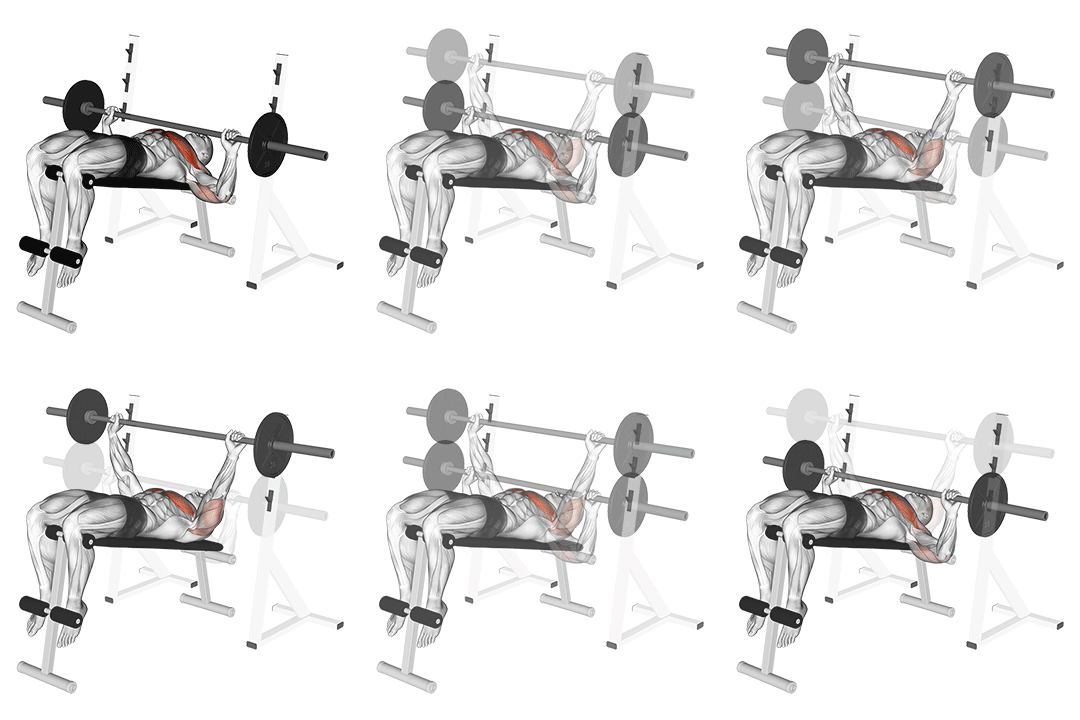
Barbell Decline Pullover
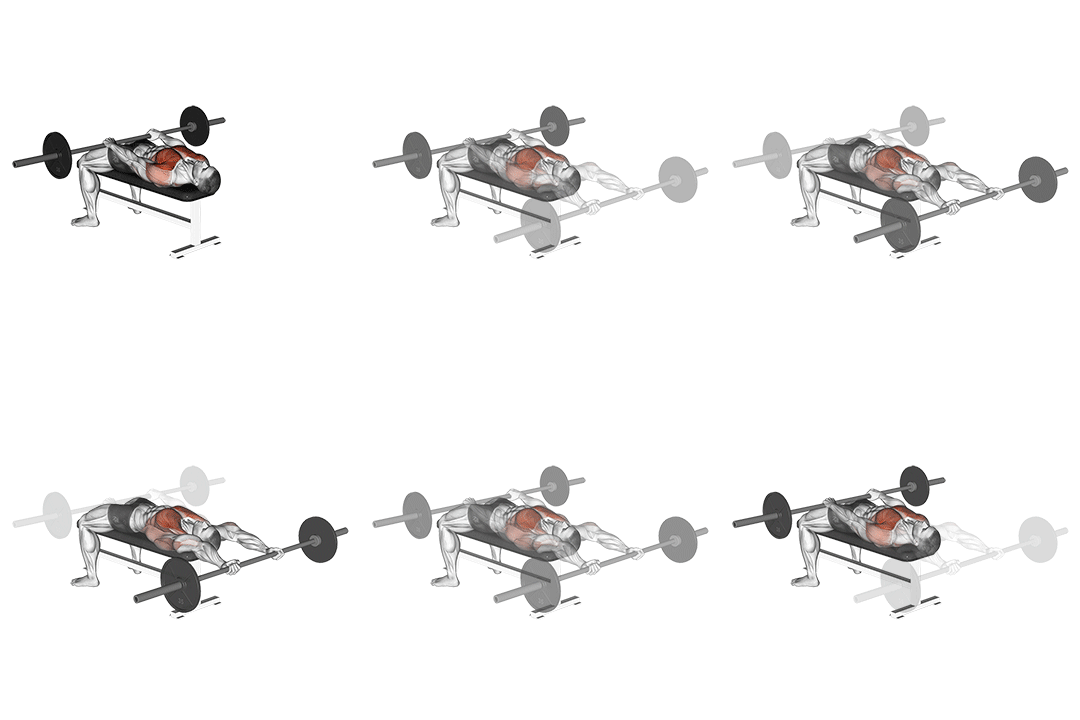
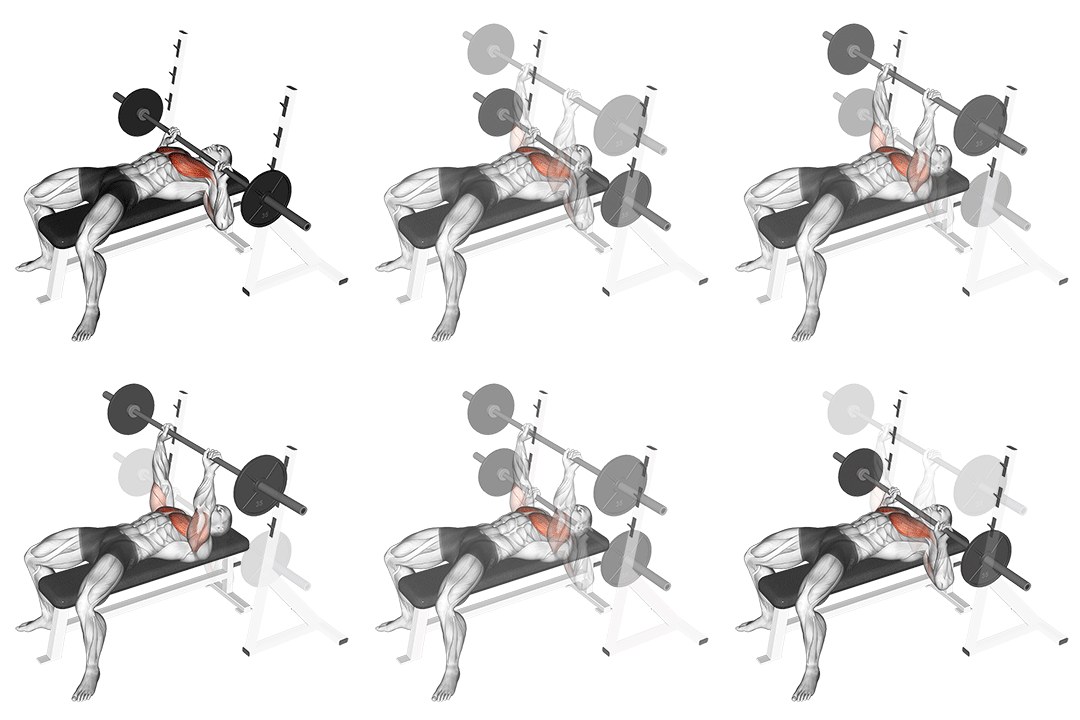
Barbell Front Raise And Pullover
Head-to-Head Comparison
| Attribute | Barbell Decline Pullover | Barbell Front Raise And Pullover |
|---|---|---|
| Target Muscle |
Pectorals
|
Pectorals
|
| Body Part |
Chest
|
Chest
|
| Equipment |
Barbell
|
Barbell
|
| Difficulty |
Intermediate
|
Intermediate
|
| Movement Type |
Compound
|
Compound
|
| Secondary Muscles |
2
|
2
|
Secondary Muscles Activated
Barbell Decline Pullover
Barbell Front Raise And Pullover
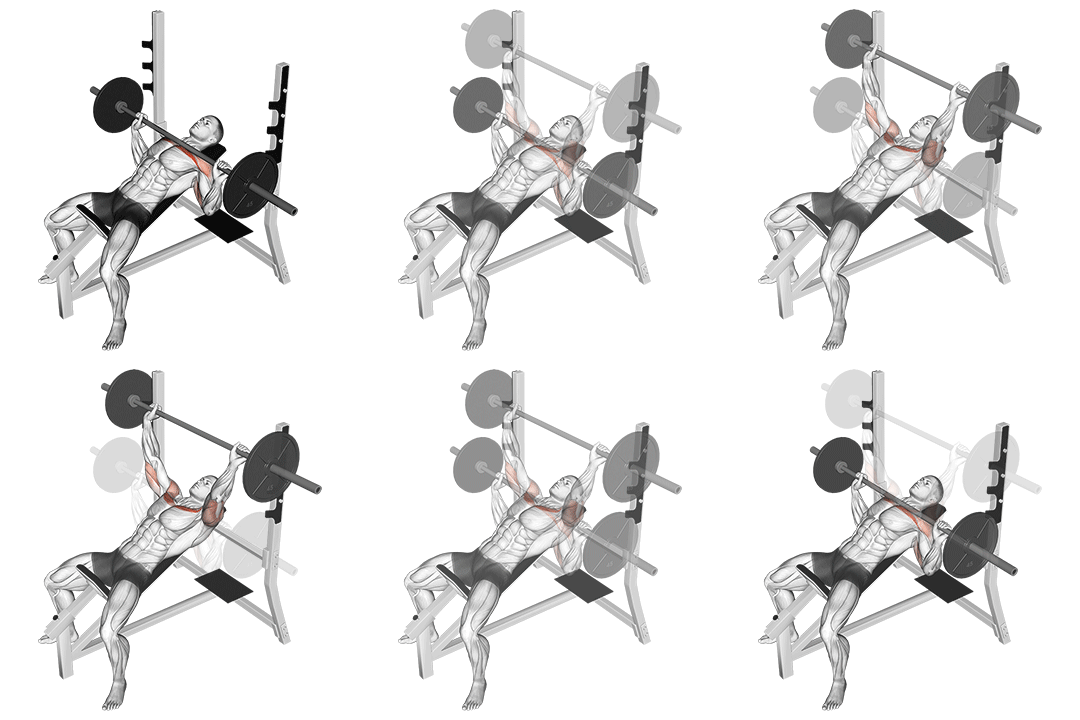
Visual Comparison
Overview
Barbell Decline Pullover vs Barbell Front Raise And Pullover — if you want denser chest development, these two compound barbell moves often get mixed up. You’ll get a clear breakdown of how each move loads the pectorals, which secondary muscles pick up the work, and practical cues so you can perform each safely. I’ll cover biomechanics (length-tension, force vectors), exact setup and angles, rep-range recommendations for hypertrophy and strength, and when to pick one over the other based on your goals and equipment.
Key Differences
- Both exercises target the Pectorals using Barbell. The main differences are in their movement patterns and muscle activation angles.
Pros & Cons
Barbell Decline Pullover
+ Pros
- Creates sustained pectoral stretch and tension—good for hypertrophy
- Easier to progressively overload with heavier plates and angle adjustments
- Simpler motor pattern—faster to learn and cue
- Strong mechanical advantage for the chest when bench is declined 30°–45°
− Cons
- Requires a decline bench, limiting home use
- Can stress the shoulder capsule if taken too far behind the head
- Lower back can compensate if torso and ribcage aren’t braced
Barbell Front Raise And Pullover
+ Pros
- More accessible—can be performed standing or with a flat bench
- Combines shoulder and chest work for time-efficient layering
- Places extra emphasis on anterior deltoid strength and stability
- Easier to use lighter tools or substitute with a single implement
− Cons
- Splits tension between deltoids and pecs, reducing pure chest overload
- Higher coordination demand and technique sensitivity
- Front-raise phase can create shoulder impingement if overloaded
When Each Exercise Wins
The decline pullover produces sustained pectoral stretch and places the chest in a stronger length-tension position, making 6–12 reps at moderate load more effective for targeted hypertrophy.
Decline pullover allows heavier progressive loading and consistent moment arms; use 3–6 rep sets while keeping the decline angle and strict form to build force capacity for the chest.
Its single, repeatable pattern and direct pectoral focus make it easier to coach. Learn scapular control and a stable ribcage on a decline bench before adding multi-phase combos.
You can perform the front-raise part standing and adapt the pullover to a flat bench or floor, avoiding the need for a decline bench and making it more practical at home.
Frequently Asked Questions
Can I do both Barbell Decline Pullover and Barbell Front Raise And Pullover in the same workout?
Yes—sequence them carefully. Do the front-raise-and-pullover as a lighter activation or warm-up (8–15 reps) to prime deltoids and serratus, then perform decline pullovers as your main chest overload sets with heavier weight and lower reps.
Which exercise is better for beginners?
Barbell Decline Pullover is better for beginners because of its simpler, single-plane motor pattern and clearer progression path. Start light, master scapular stability and ribcage position before increasing load.
How do the muscle activation patterns differ?
Decline pullover maintains continuous pectoral tension through a long muscle-length stretch and back to adduction, while the front-raise-and-pullover shifts peak activation to the anterior deltoid during shoulder flexion then partially returns load to the pecs during the pullover portion.
Can Barbell Front Raise And Pullover replace Barbell Decline Pullover?
It can substitute when you lack a decline bench or need more anterior deltoid emphasis, but it won’t match the decline pullover for pure chest overload. Use it for variety or limited equipment, but return to decline pullovers for focused pectoral progression.
Expert Verdict
Use the Barbell Decline Pullover when your priority is pure pectoral overload, measurable progression, and maximizing stretch-mediated muscle growth—keep the bench at 30°–45°, elbows slightly bent (≈10°–20°), and aim for 6–12 reps for hypertrophy or 3–6 for strength. Choose the Barbell Front Raise And Pullover when you need a more accessible option that also develops anterior deltoids and offers variety; perform the front raise with strict tempo (1–2 s up, 1–2 s down) then transition into a controlled pullover, staying conservative with load to protect the shoulder. Both have a place: pick the decline pullover for chest-focused phases and the combo for conditioning or limited-equipment training.
Also Compare
More comparisons with Barbell Decline Pullover
More comparisons with Barbell Front Raise And Pullover
Compare More Exercises
Use our free comparison tool to analyze any two exercises head-to-head.
Compare Exercises