

Barbell Decline Pullover vs Barbell Guillotine Bench Press: Complete Comparison Guide
Barbell Decline Pullover vs Barbell Guillotine Bench Press — two chest-focused barbell moves that look similar on paper but load your pecs very differently. If you want clear guidance on which one to program, you’re in the right place. I’ll walk you through primary and secondary muscle activation, joint mechanics and length-tension differences, equipment and setup, risk factors, and exact rep and angle cues so you can pick the best movement for hypertrophy, strength, or safety.
Exercise Comparison
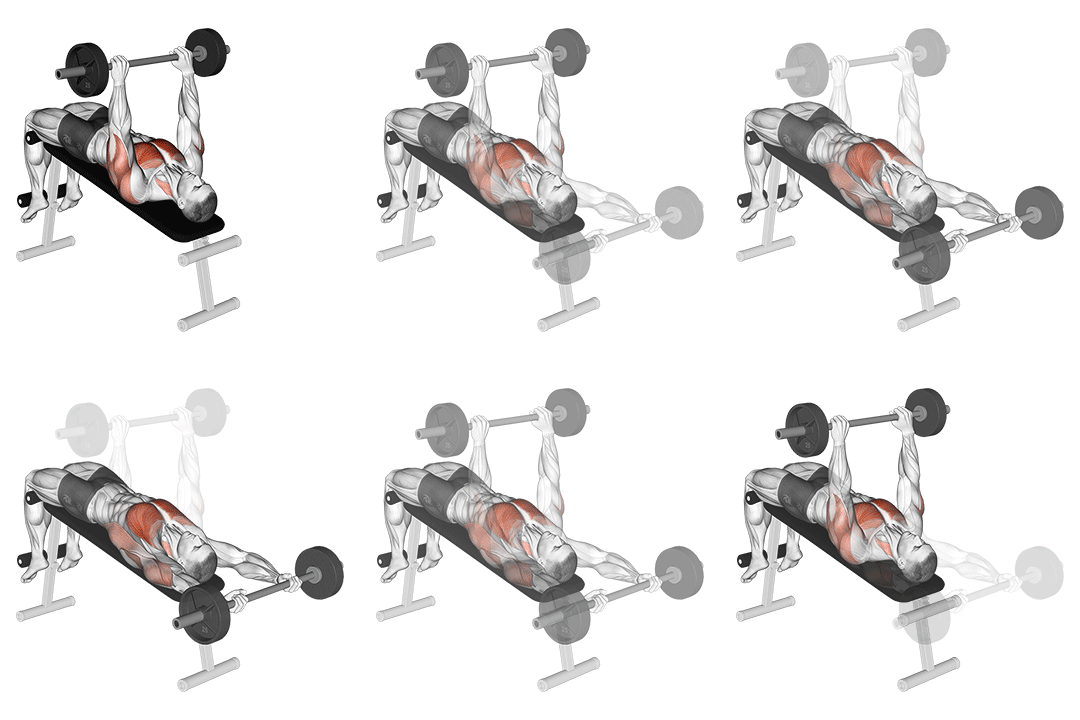
Barbell Decline Pullover
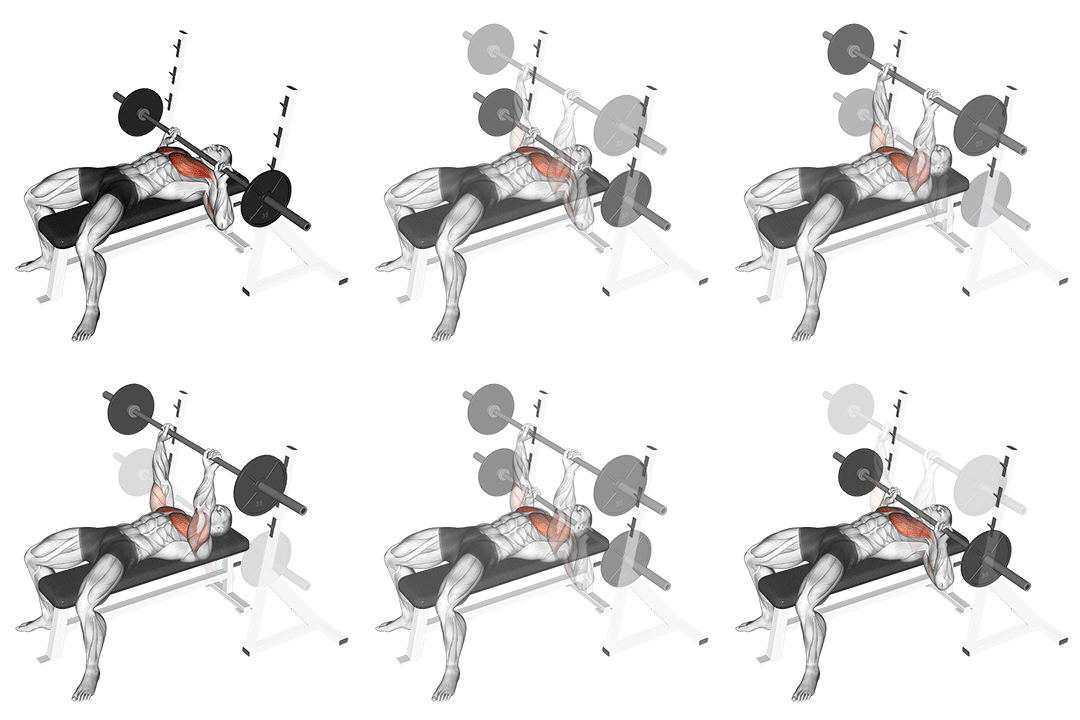
Barbell Guillotine Bench Press
Head-to-Head Comparison
| Attribute | Barbell Decline Pullover | Barbell Guillotine Bench Press |
|---|---|---|
| Target Muscle |
Pectorals
|
Pectorals
|
| Body Part |
Chest
|
Chest
|
| Equipment |
Barbell
|
Barbell
|
| Difficulty |
Intermediate
|
Advanced
|
| Movement Type |
Compound
|
Compound
|
| Secondary Muscles |
2
|
2
|
Secondary Muscles Activated
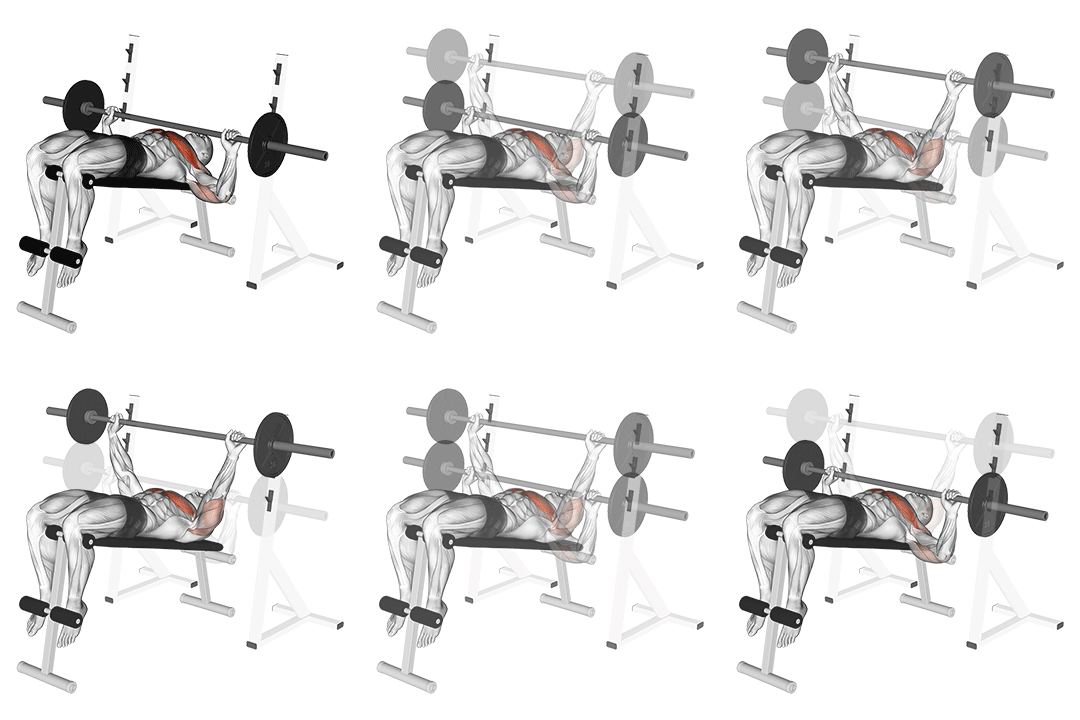
Barbell Decline Pullover
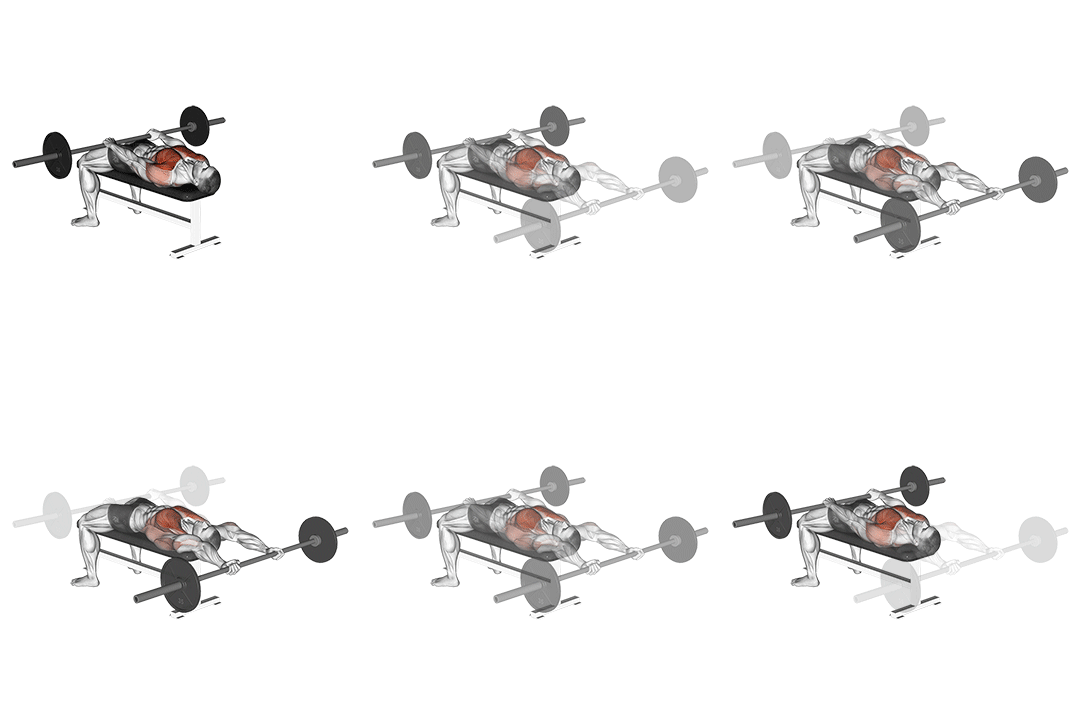
Barbell Guillotine Bench Press
Visual Comparison
Overview
Barbell Decline Pullover vs Barbell Guillotine Bench Press — two chest-focused barbell moves that look similar on paper but load your pecs very differently. If you want clear guidance on which one to program, you’re in the right place. I’ll walk you through primary and secondary muscle activation, joint mechanics and length-tension differences, equipment and setup, risk factors, and exact rep and angle cues so you can pick the best movement for hypertrophy, strength, or safety.
Key Differences
- Difficulty levels differ: Barbell Decline Pullover is intermediate, while Barbell Guillotine Bench Press is advanced.
- Both exercises target the Pectorals using Barbell. The main differences are in their movement patterns and muscle activation angles.
Pros & Cons
Barbell Decline Pullover
+ Pros
- Deep pec stretch increases time-under-tension for hypertrophy
- Places load across a long ROM, enhancing length-tension stimulus
- Lower peak joint shear compared with guillotine press when performed correctly
- Easier to manage load without heavy spotter reliance
− Cons
- Requires a decline bench which isn’t always available
- Can pull lats and alter targeting if shoulder extension is excessive
- Less absolute loading potential for maximal strength compared to guillotine press
Barbell Guillotine Bench Press
+ Pros
- High peak pectoral loading; effective for upper-body strength
- Shorter ROM allows heavier loading and clear progressive overload
- Strong suit for targeting sternal pecs and upper chest when performed with proper bar path
- Works well in low-rep strength blocks (3–6 reps)
− Cons
- Greater shoulder impingement and labrum risk with poor mobility or technique
- Requires a spotter or safety rack setup for safe loading
- Advanced skill and strict elbow/shoulder positioning needed to avoid injury
When Each Exercise Wins
The decline pullover delivers a larger eccentric stretch and longer ROM, increasing time under tension and favorable length-tension overlap for the sternal pecs. Use 8–15 reps, 2–4 sets, and controlled 3–4 second eccentrics to maximize hypertrophy.
Guillotine press allows heavier loading and recruits high-threshold motor units with a more direct horizontal adduction vector. Program it for 3–6 heavy reps and progressive loading to increase maximal chest pressing strength.
Pullover has a gentler peak joint shear and lower external loads, making it easier to learn scapular and shoulder control. Start with light weight and focus on full ROM and stable scapular positioning.
Most home setups include a flat bench and rack, making the guillotine more accessible equipment-wise. That said, ensure you use safety pins and moderate loads unless you have a trained spotter.
Frequently Asked Questions
Can I do both Barbell Decline Pullover and Barbell Guillotine Bench Press in the same workout?
Yes — sequence matters. Start with the guillotine press if you’re training heavy for strength (3–6 reps) and follow with decline pullovers for hypertrophy (8–15 reps) to capitalize on fresh neural drive then add time-under-tension volume.
Which exercise is better for beginners?
Barbell Decline Pullover is generally better for beginners because it uses lighter loads and emphasizes controlled ROM and scapular control. Beginners should master shoulder stability and muscle sequencing before attempting the guillotine press.
How do the muscle activation patterns differ?
Pullover emphasizes eccentric stretch and sustained tension through shoulder extension, favoring lengthened pec fibers. Guillotine press produces a sharper concentric force peak with higher triceps and anterior deltoid recruitment due to a more vertical force vector and bar path to the neck.
Can Barbell Guillotine Bench Press replace Barbell Decline Pullover?
Not fully. Guillotine press can replace some pressing volume for strength, but it lacks the long eccentric stretch that makes decline pullovers effective for stretch-mediated hypertrophy. Use both across a training block if your goal is balanced size and strength.
Expert Verdict
Choose Barbell Decline Pullover when your priority is pec hypertrophy through a long eccentric stretch and controlled ROM — it enhances length-tension stimulus for the sternal fibers and is easier to manage without maximal loads. Choose Barbell Guillotine Bench Press when you want to prioritize raw pressing strength and high peak pectoral loading; load it heavy for low-rep strength cycles but only if you have solid shoulder mobility, a spotter or safety rack, and strict technique. Program pullover variations during accumulation phases (8–15 reps) and guillotine presses during intensification (3–6 reps) to use each exercise strategically.
Also Compare
More comparisons with Barbell Decline Pullover
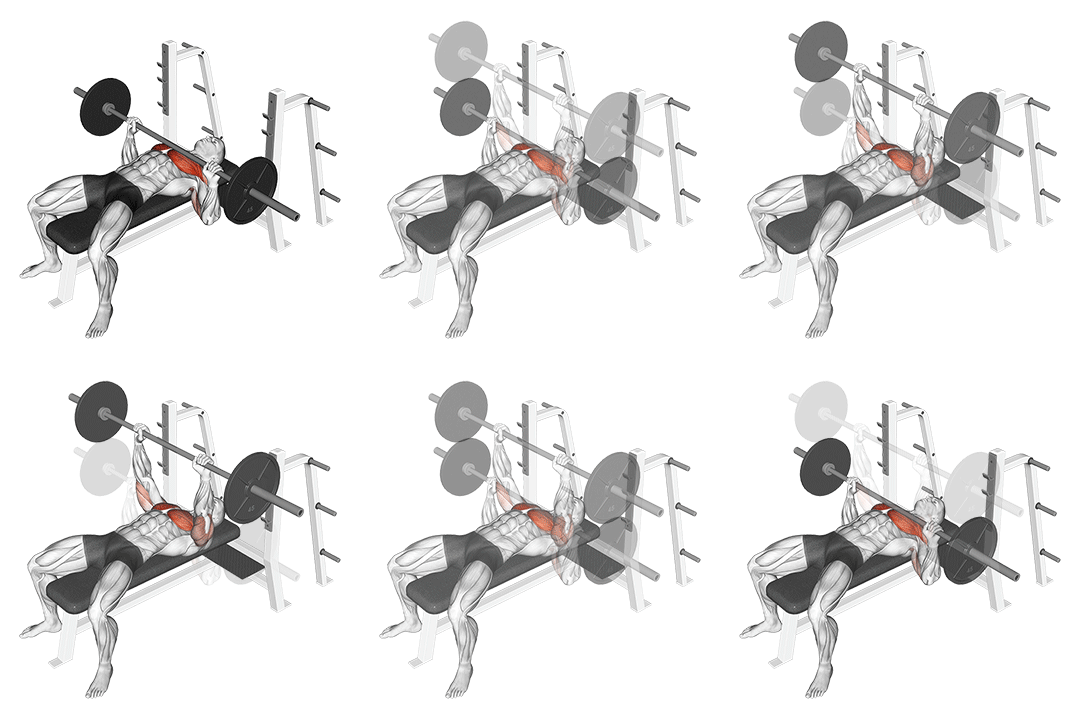
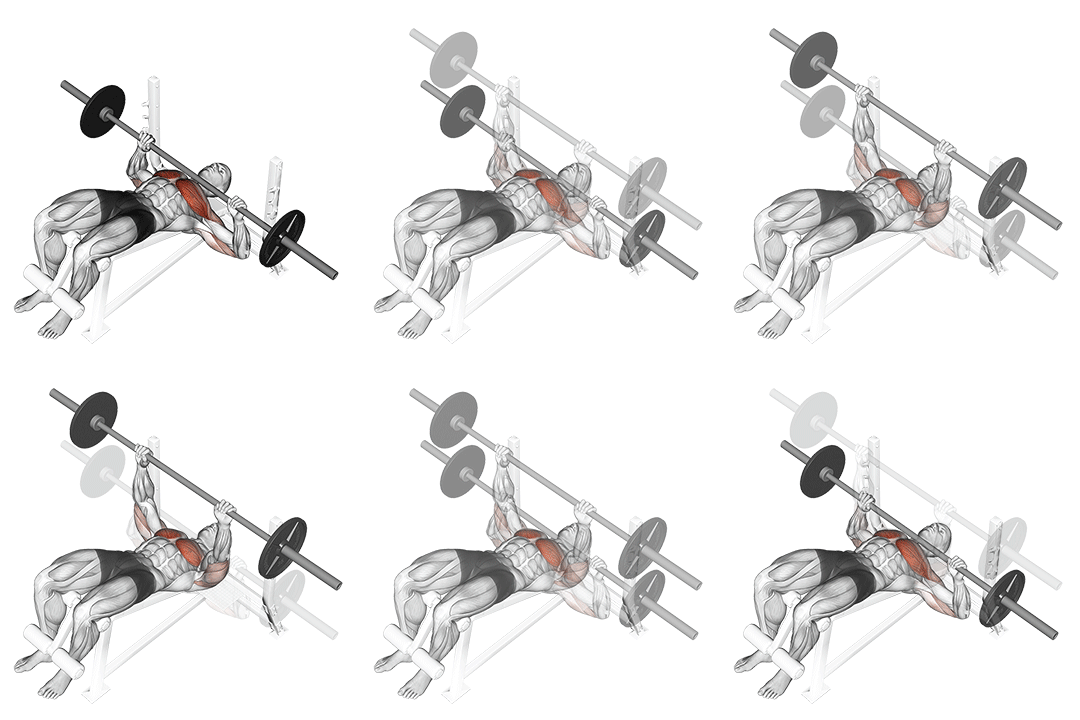
More comparisons with Barbell Guillotine Bench Press
Compare More Exercises
Use our free comparison tool to analyze any two exercises head-to-head.
Compare Exercises