

Barbell Decline Pullover vs Bench Press - Powerlifting: Complete Comparison Guide
Barbell Decline Pullover vs Bench Press - Powerlifting pits a stretch-dominant chest accessary against the sport-specific heavy press. You’ll get direct guidance on how each movement loads the pectorals, which secondary muscles take the strain, the equipment and setup you need, and clear programming recommendations (rep ranges, progressions, and frequency). I’ll compare biomechanics—length-tension, force vectors, and ROM—offer technique cues you can use immediately, and give decisive scenarios showing when to prioritize the pullover or the powerlifting bench depending on your goals.
Exercise Comparison
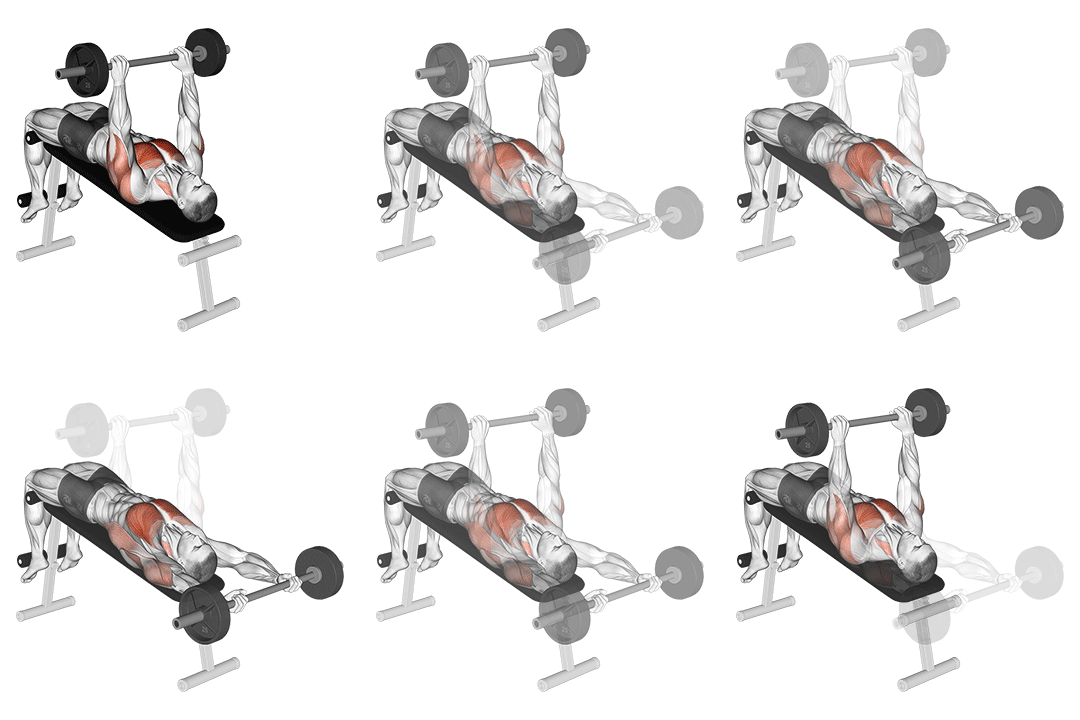
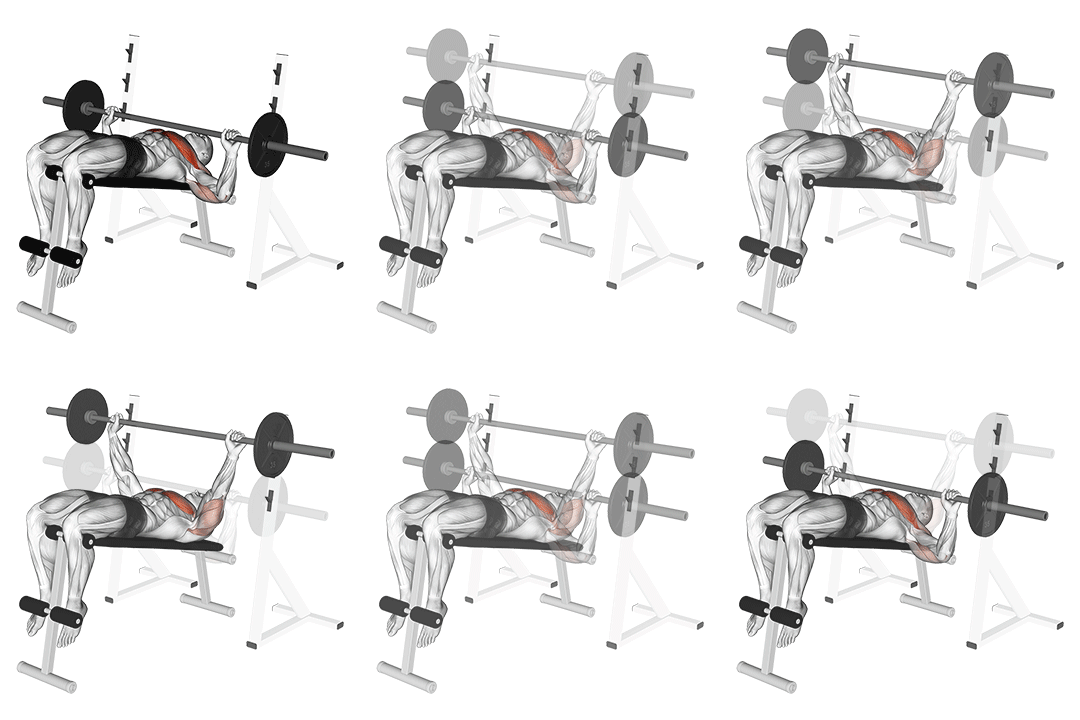
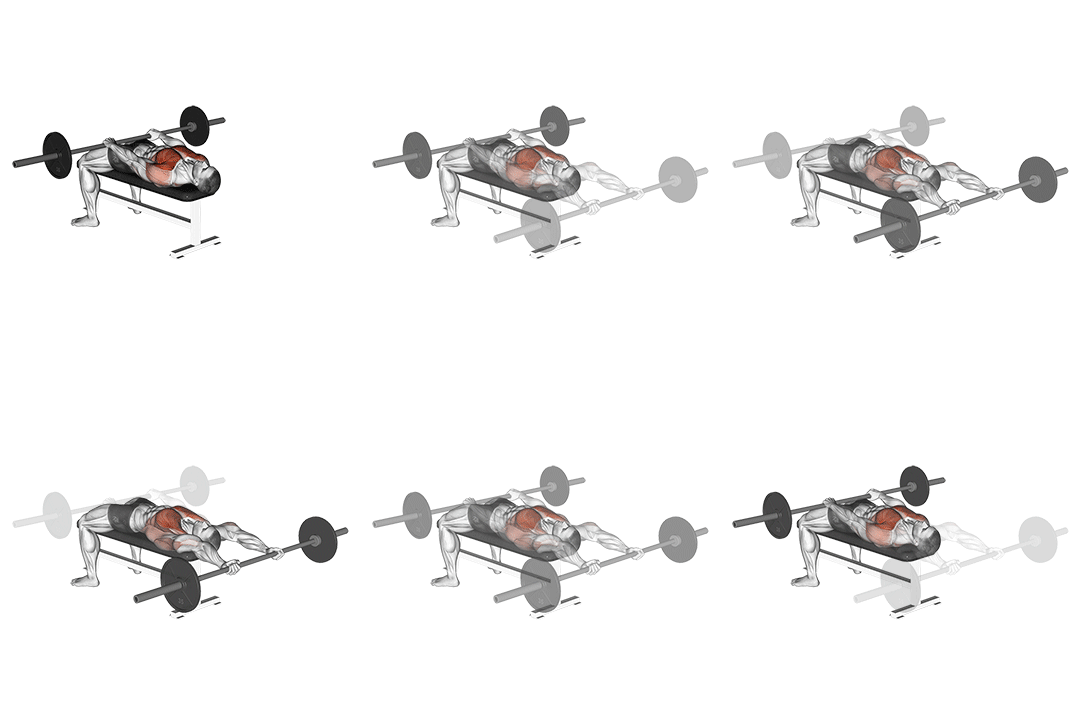
Barbell Decline Pullover
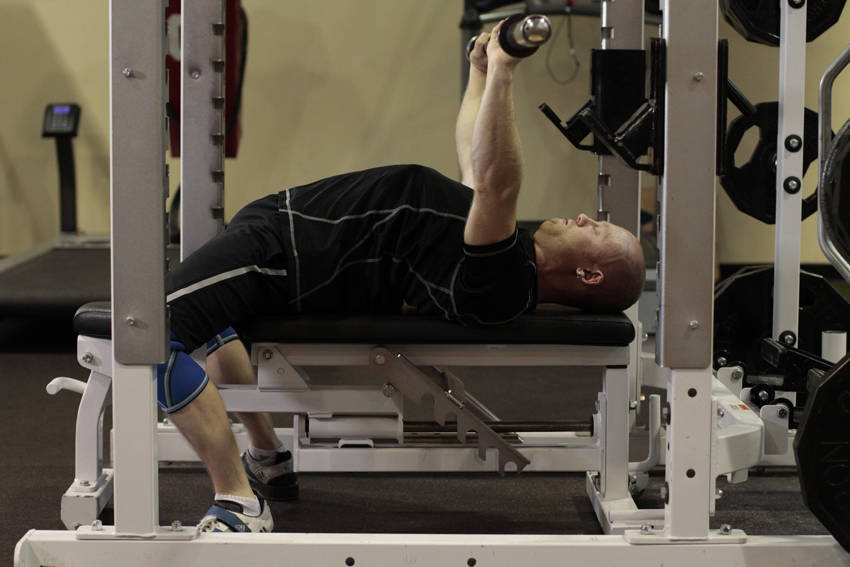
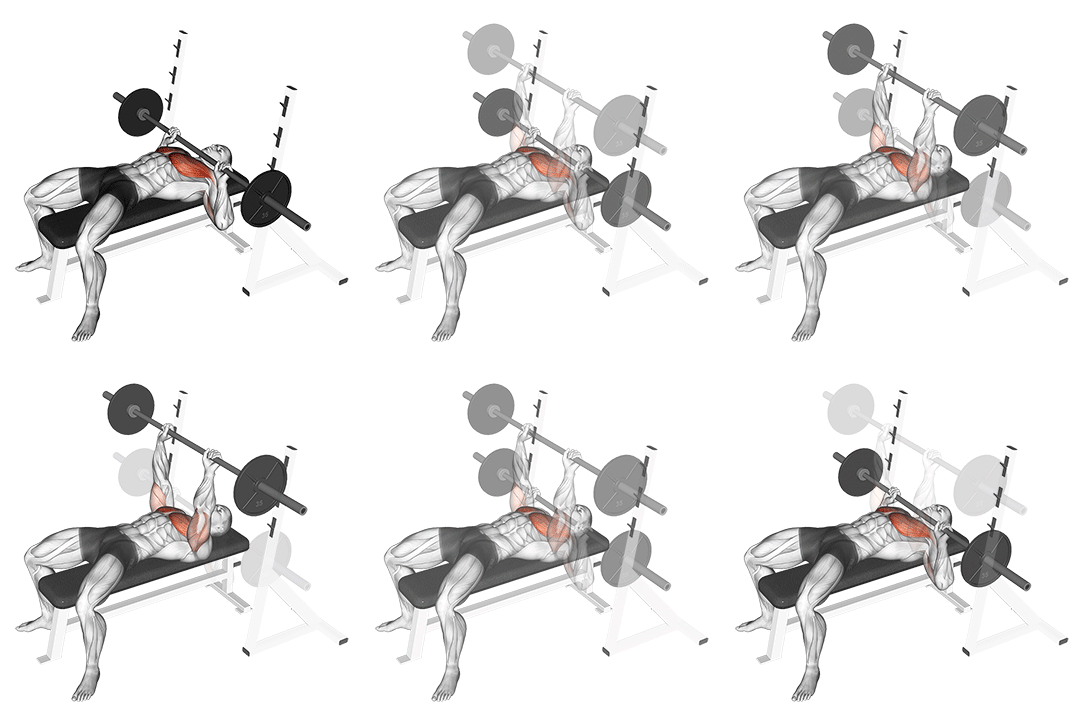
Bench Press - Powerlifting
Head-to-Head Comparison
| Attribute | Barbell Decline Pullover | Bench Press - Powerlifting |
|---|---|---|
| Target Muscle |
Pectorals
|
Pectorals
|
| Body Part |
Chest
|
Chest
|
| Equipment |
Barbell
|
Barbell
|
| Difficulty |
Intermediate
|
Advanced
|
| Movement Type |
Compound
|
Compound
|
| Secondary Muscles |
2
|
4
|
Secondary Muscles Activated
Barbell Decline Pullover
Bench Press - Powerlifting
Visual Comparison
Overview
Barbell Decline Pullover vs Bench Press - Powerlifting pits a stretch-dominant chest accessary against the sport-specific heavy press. You’ll get direct guidance on how each movement loads the pectorals, which secondary muscles take the strain, the equipment and setup you need, and clear programming recommendations (rep ranges, progressions, and frequency). I’ll compare biomechanics—length-tension, force vectors, and ROM—offer technique cues you can use immediately, and give decisive scenarios showing when to prioritize the pullover or the powerlifting bench depending on your goals.
Key Differences
- Difficulty levels differ: Barbell Decline Pullover is intermediate, while Bench Press - Powerlifting is advanced.
- Both exercises target the Pectorals using Barbell. The main differences are in their movement patterns and muscle activation angles.
Pros & Cons
Barbell Decline Pullover
+ Pros
- Stretches pectorals under tension, enhancing long-muscle-length hypertrophy stimulus
- Accessible hypertrophy rep ranges (8–15+ reps) and tempo work
- Improves thoracic extension control and serratus activation
- Requires minimal rack setup—decline bench and barbell only
− Cons
- Limited absolute overload compared to heavy presses
- Places the shoulder in a vulnerable end-range if overloaded
- Less carryover to maximal pressing strength and competition benching
Bench Press - Powerlifting
+ Pros
- Highest potential for maximal chest strength and neural adaptation
- Directly transferable to powerlifting performance and competitive lifts
- Allows heavy progressive overload (1–5 rep focus) and periodization
- Strong secondary recruitment of triceps, lats, and stabilizers for total upper-body strength
− Cons
- Steeper technical demand (arch, leg drive, bar path) and higher learning curve
- Greater joint stress at maximal loads, increasing injury risk without proper setup
- Requires rack, spotter, and more gym space for safe heavy training
When Each Exercise Wins
The pullover keeps the pecs under tension at long muscle lengths and allows higher time-under-tension with moderate loads (8–15+ reps). Use controlled eccentrics and longer ROM to stimulate sarcoplasmic and myofibrillar adaptation.
Powerlifting benching enables maximal loading, neural adaptation, and specific technique work in the 1–5 rep range. Its force-vector matches competition demands and lets you progressively overload with heavy sets and peaking cycles.
A beginner can learn posture, breathing, and controlled ROM more quickly with the pullover while building chest and scapular stability. The bench press requires coordinated arch, foot positioning, and heavier loading that increase technical complexity.
If you have only a barbell and an adjustable bench, the pullover needs less specialized rack equipment and is safer at moderate loads. Most home setups lack a dedicated powerlifting rack and spotter needed for maximal benching.
Frequently Asked Questions
Can I do both Barbell Decline Pullover and Bench Press - Powerlifting in the same workout?
Yes. Place Bench Press - Powerlifting early when you’re fresh for heavy triples or singles, then use Barbell Decline Pullover as an accessory for 8–15 reps to increase time-under-tension and address ROM. Monitor fatigue—avoid going to technical failure on the bench before heavy singles.
Which exercise is better for beginners?
Barbell Decline Pullover is generally better for beginners because it teaches controlled ROM, scapular stability, and chest tension with lower absolute loads. Bench Press - Powerlifting demands technique and heavy loading that benefit from coaching and gradual progression.
How do the muscle activation patterns differ?
Pullover produces prolonged pectoral tension through shoulder extension-to-flexion, emphasizing long muscle lengths and serratus/lats involvement. Bench Press - Powerlifting creates peak pectoral force in the mid-ROM with high motor unit recruitment during concentric push and greater triceps activation for lockout.
Can Bench Press - Powerlifting replace Barbell Decline Pullover?
Not fully. Bench Press - Powerlifting builds maximal pressing strength and mid-range pectoral force, but it doesn’t provide the same long-length stretch stimulus or serratus/lat engagement as the pullover. Use the bench as your primary strength lift and the pullover as an accessory for hypertrophy and ROM improvements.
Expert Verdict
Use Barbell Decline Pullover when your priority is chest hypertrophy, ROM, and accessory work—program it in 8–15+ rep ranges with slow eccentrics and a 15–30° decline to emphasize sternal fibers. Choose Bench Press - Powerlifting when your goal is maximal strength, competitive performance, or heavy compound overload; train in 1–5 rep blocks, practice arch and leg drive mechanics, and cycle intensity. Both lifts complement each other: treat the pullover as a high-tension accessory to improve stretch and upper-range control, and use the powerlifting bench as the primary heavy press for strength development.
Also Compare
More comparisons with Barbell Decline Pullover
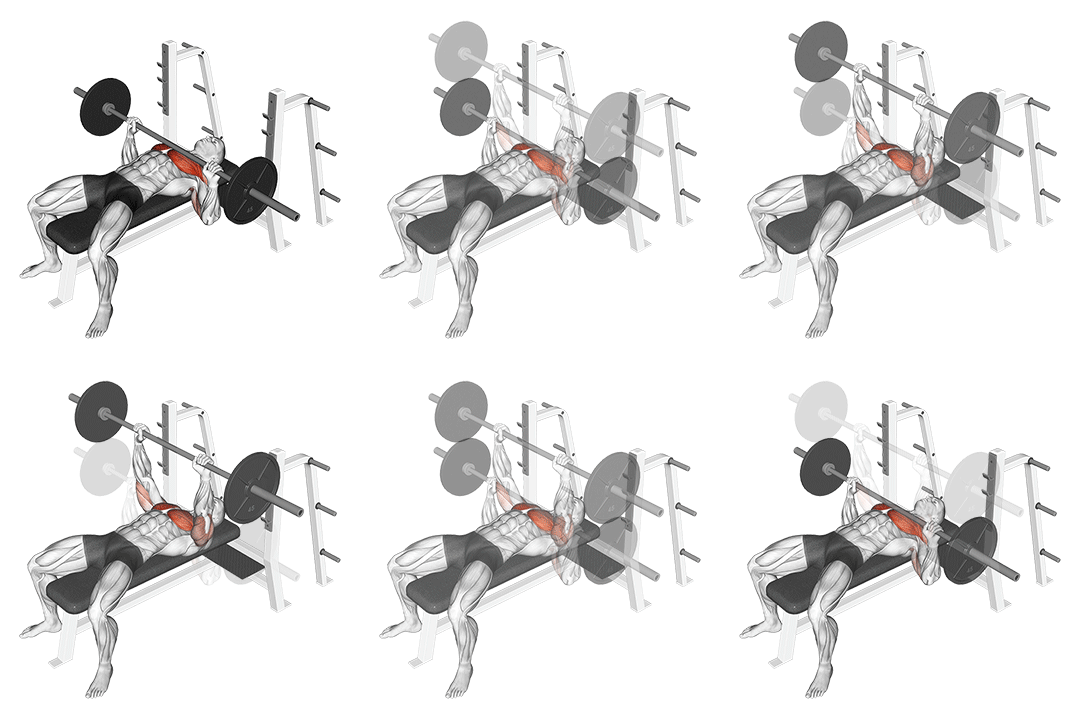
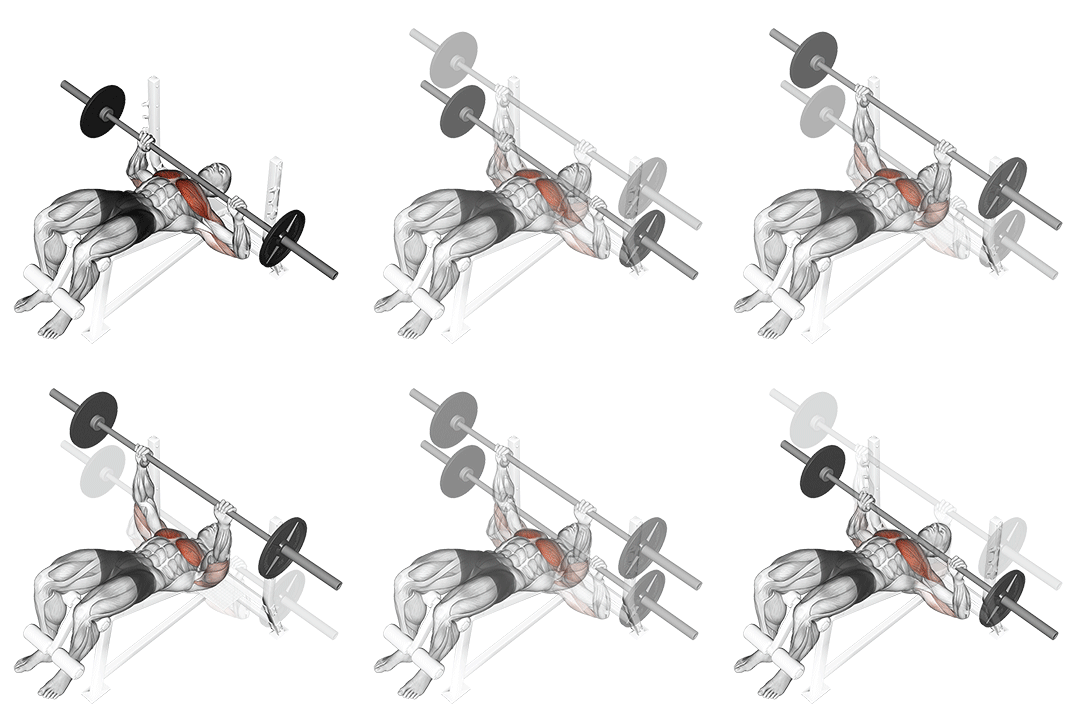
More comparisons with Bench Press - Powerlifting
Compare More Exercises
Use our free comparison tool to analyze any two exercises head-to-head.
Compare Exercises