

Barbell Floor Calf Raise vs Calf Raises - With Bands: Complete Comparison Guide
Barbell Floor Calf Raise vs Calf Raises - With Bands puts two beginner-friendly calf isolation exercises head-to-head so you can pick the right tool for your goals. You’ll get clear comparisons of muscle activation, equipment needs, technique cues, and risk factors. I’ll show you how force vectors and length-tension relationships change between a loaded vertical barbell and elastic-band resistance, give rep and set ranges for hypertrophy and endurance (8–12 vs 12–25), and offer practical recommendations for gym and home settings.
Exercise Comparison
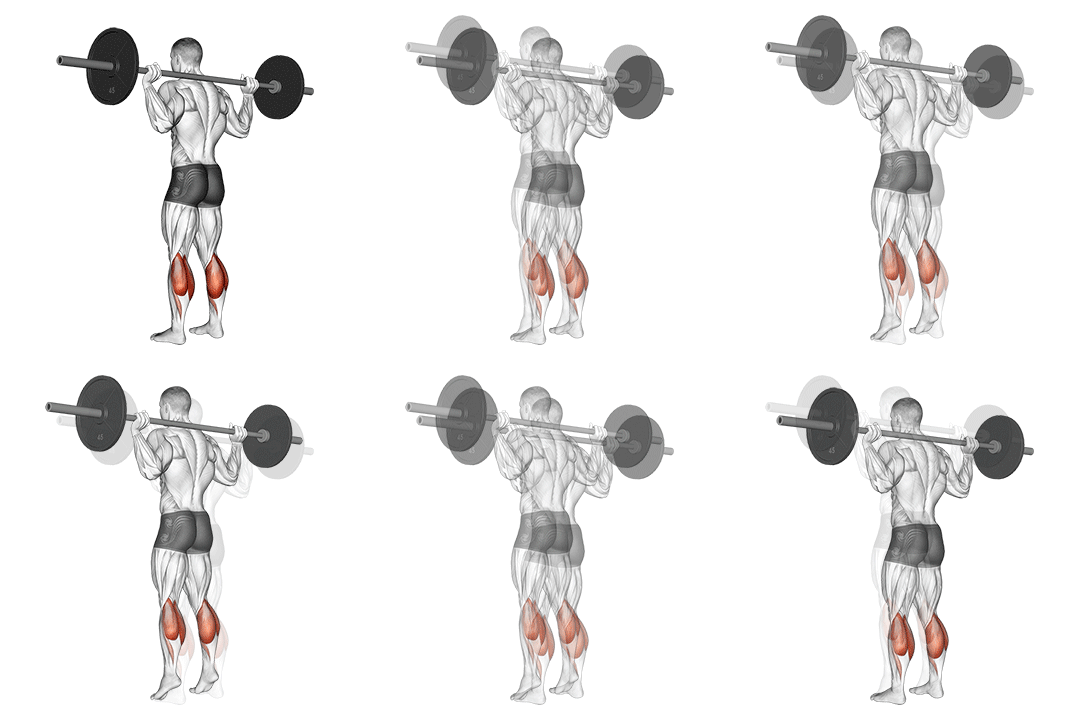
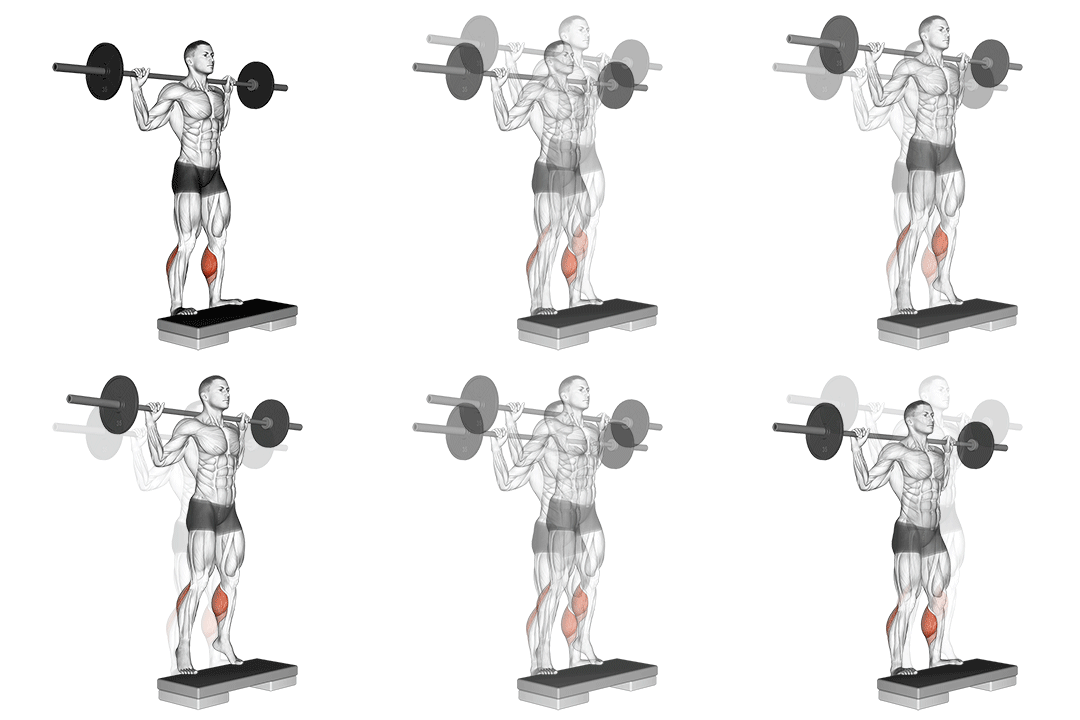
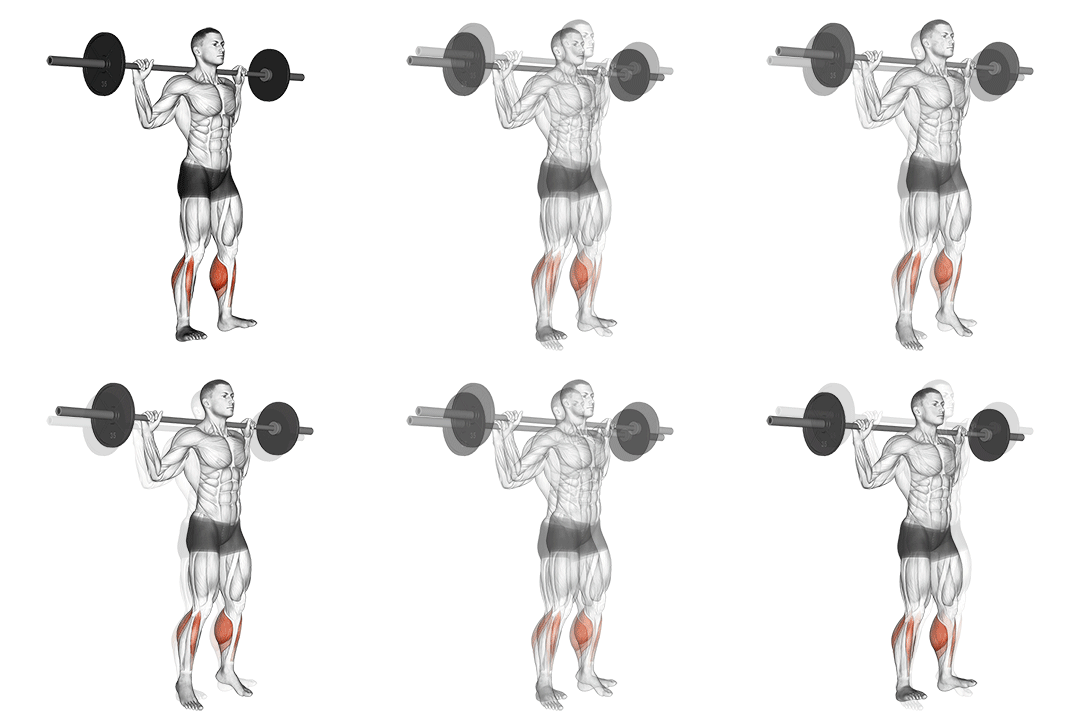
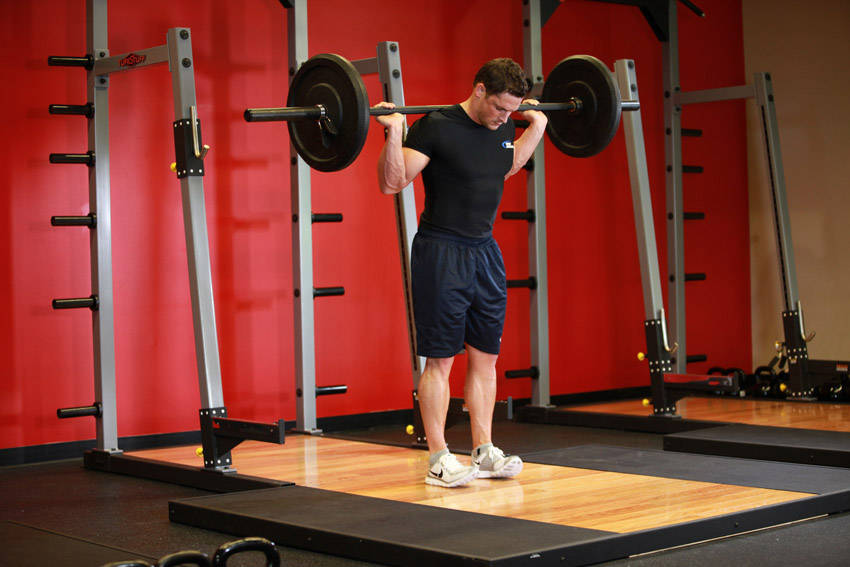
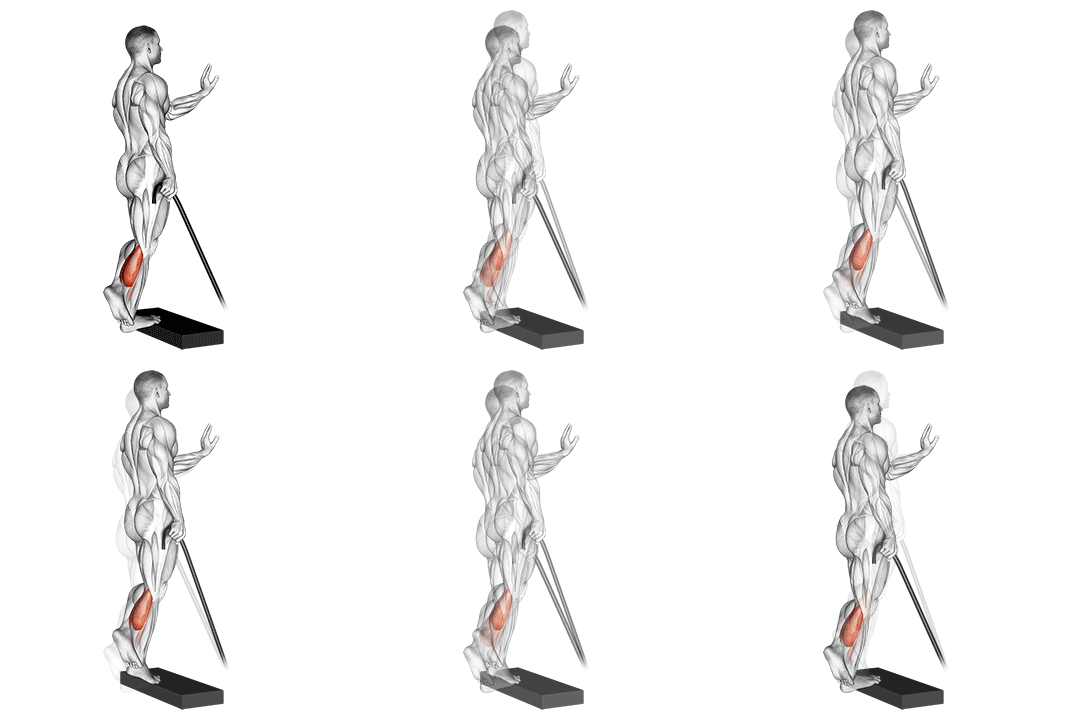
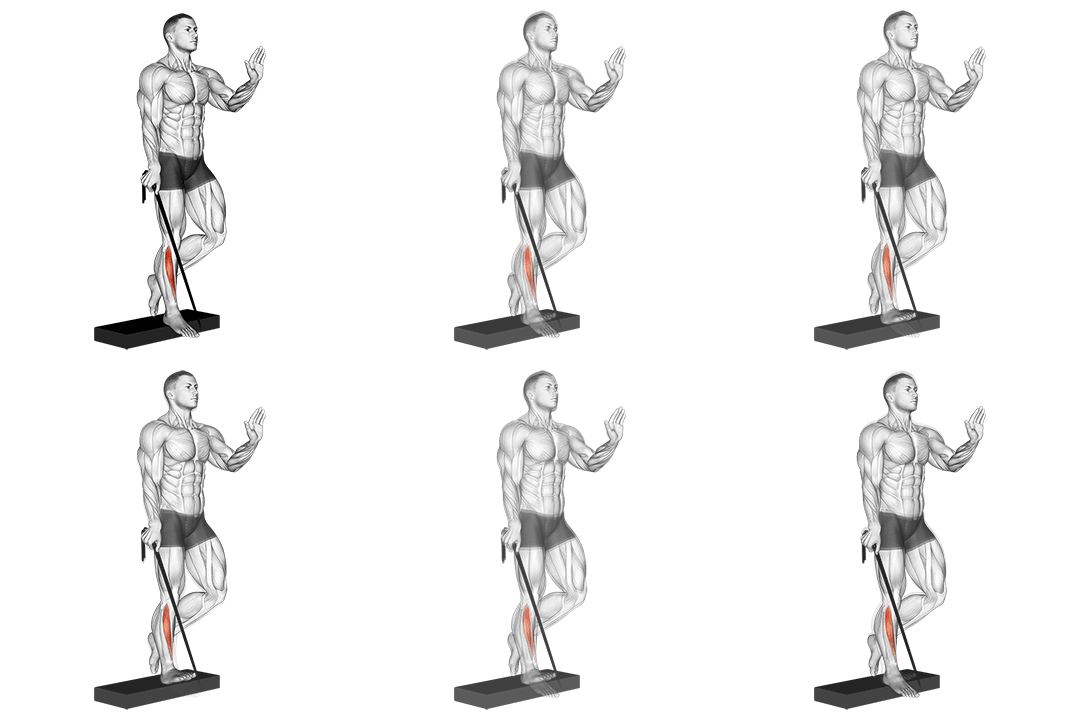
Barbell Floor Calf Raise
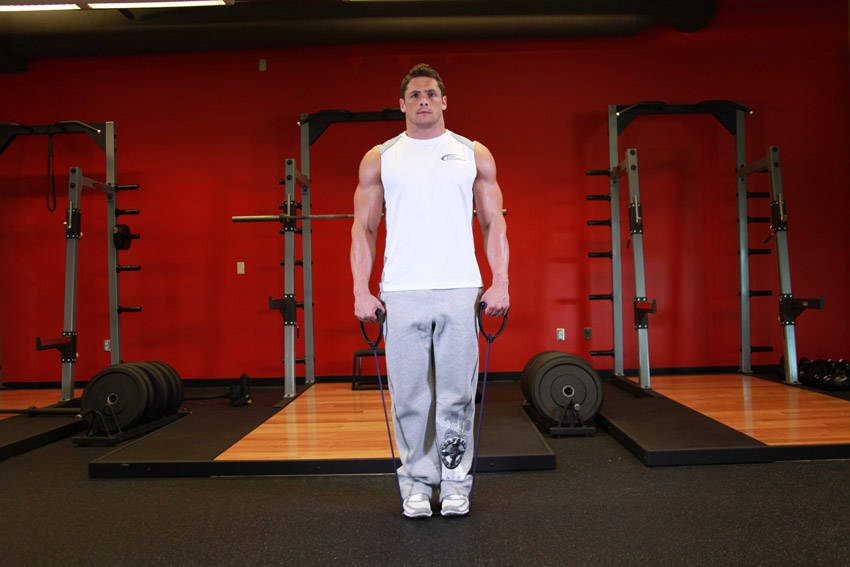
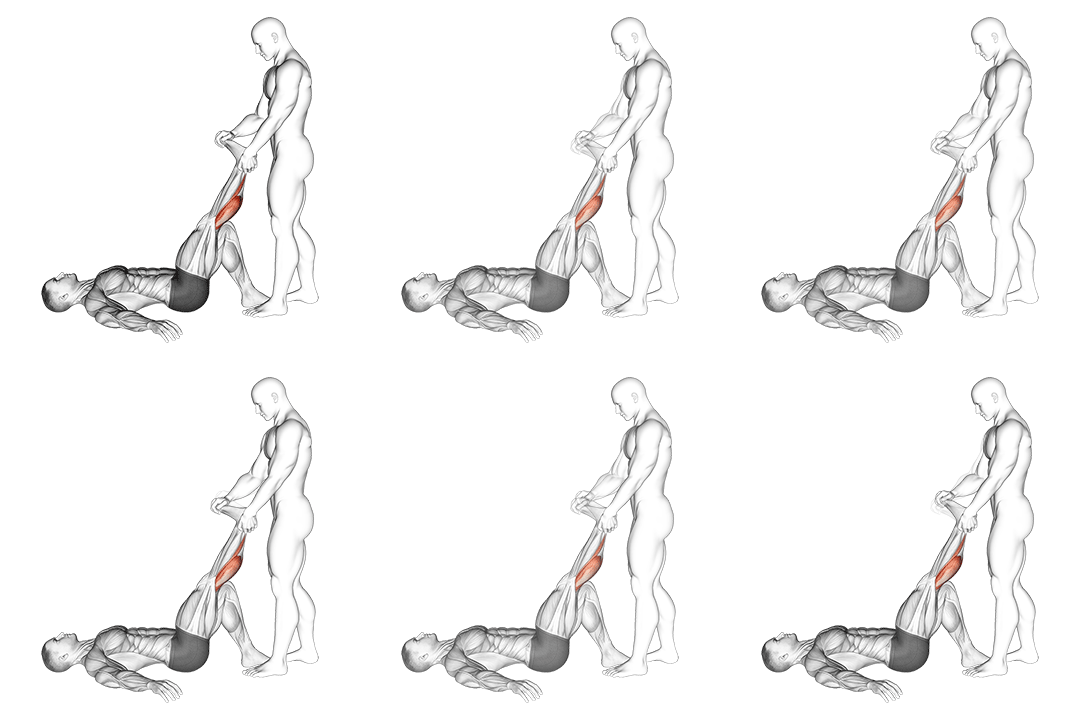
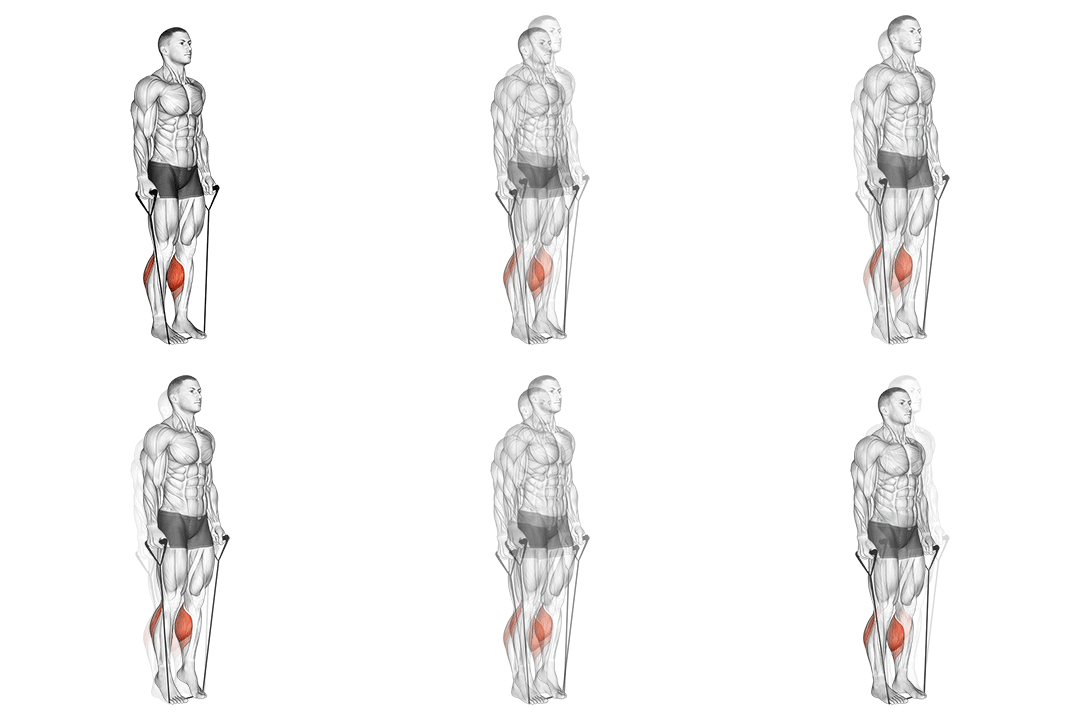
Calf Raises - With Bands
Head-to-Head Comparison
| Attribute | Barbell Floor Calf Raise | Calf Raises - With Bands |
|---|---|---|
| Target Muscle |
Calves
|
Calves
|
| Body Part |
Lower-legs
|
Lower-legs
|
| Equipment |
Barbell
|
Band
|
| Difficulty |
Beginner
|
Beginner
|
| Movement Type |
Isolation
|
Isolation
|
| Secondary Muscles |
1
|
0
|
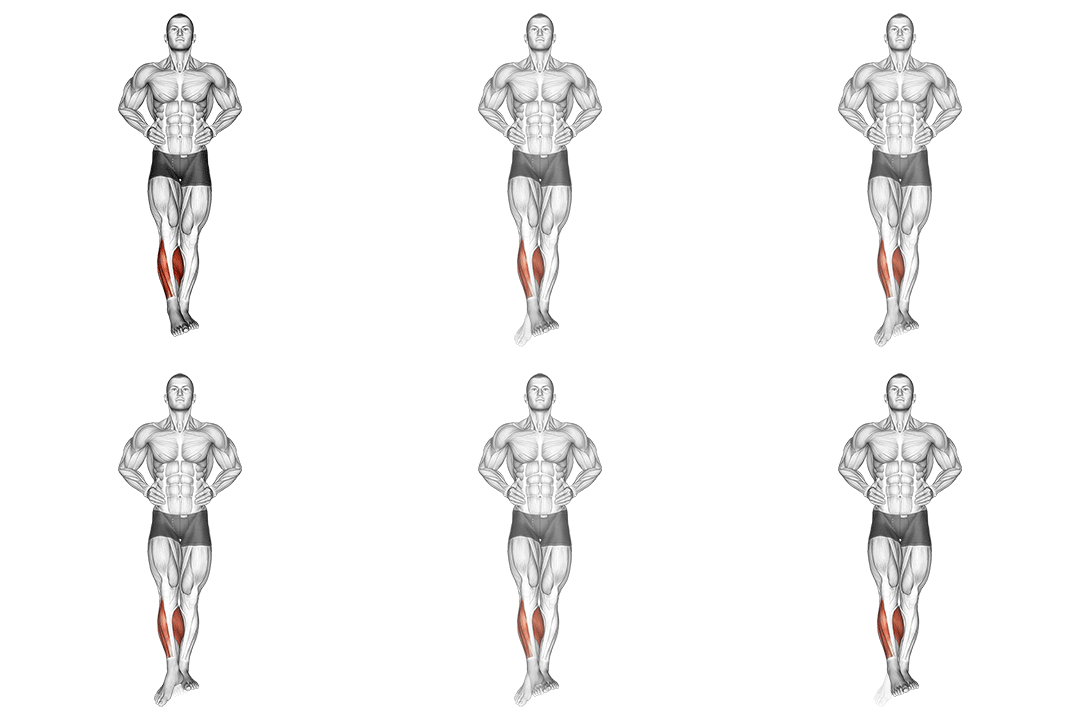
Secondary Muscles Activated
Barbell Floor Calf Raise
Calf Raises - With Bands
Visual Comparison
Overview
Barbell Floor Calf Raise vs Calf Raises - With Bands puts two beginner-friendly calf isolation exercises head-to-head so you can pick the right tool for your goals. You’ll get clear comparisons of muscle activation, equipment needs, technique cues, and risk factors. I’ll show you how force vectors and length-tension relationships change between a loaded vertical barbell and elastic-band resistance, give rep and set ranges for hypertrophy and endurance (8–12 vs 12–25), and offer practical recommendations for gym and home settings.
Key Differences
- Equipment differs: Barbell Floor Calf Raise uses Barbell, while Calf Raises - With Bands requires Band.
Pros & Cons
Barbell Floor Calf Raise
+ Pros
- High absolute loading for progressive overload and strength
- Stable vertical force vector gives consistent muscle tension
- Easy to manipulate sets/reps for hypertrophy (3–5 sets of 8–12)
- Engages posterior chain stabilizers, improving whole-leg coordination
− Cons
- Shorter ankle ROM on floor limits stretch-mediated hypertrophy compared with step variations
- Requires barbell and plates—less accessible for home-only trainees
- Greater spinal and hamstring stabilization demands can increase form breakdown under heavy load
Calf Raises - With Bands
+ Pros
- Portable, low-cost, and ideal for home or travel
- Provides continuous, progressive tension that accentuates end-range contraction
- Lower axial load on spine—friendlier for those with back issues
- Easy to vary tempo and do high-rep metabolic work (12–25+ reps)
− Cons
- Limited maximum resistance for advanced strength work
- Band tension curve may underload the bottom range of motion
- Requires secure anchoring or correct band placement to maintain consistent tension
When Each Exercise Wins
Barbells allow higher absolute loads and more precise progressive overload (add 5–20 lbs). Use 3–5 sets of 8–12 with controlled 2–3 s eccentrics to maximize mechanical tension and muscle growth via the length-tension relationship.
Barbell loading provides the constant vertical force vector needed for high-force outputs and neuromuscular adaptation. Heavier sets in the 4–6 rep range with full control build maximal plantarflexor strength more effectively than most bands.
Bands are simpler to set up, put less axial load on the spine, and let you learn the plantarflexion pattern safely. Start with 2–3 sets of 12–20 and focus on full range and tempo before adding external barbell load.
Bands are portable and inexpensive, so you can perform progressive, high-volume calf work without plates or racks. They let you maintain continuous tension and train either single- or double-leg variations in small spaces.
Frequently Asked Questions
Can I do both Barbell Floor Calf Raise and Calf Raises - With Bands in the same workout?
Yes. Use bands as a warm-up and activation tool (2–3 sets of 12–15) to prime the calves, then follow with heavier barbell sets for 3–5 sets of 6–12. Alternatively, finish a barbell session with banded high-rep dropsets to expand time under tension.
Which exercise is better for beginners?
Calf Raises - With Bands are better for most beginners because they’re easier to learn, lower risk for the spine, and allow you to practice full plantarflexion with controlled tension. Once you can maintain posture and ankle range, introduce barbell raises for heavier loading.
How do the muscle activation patterns differ?
Barbells give a constant external load with peak mid-range activation, stressing eccentrics at longer muscle lengths. Bands produce increasing tension through plantarflexion, shifting activation toward stronger end-range concentric contractions and providing continuous load throughout the movement.
Can Calf Raises - With Bands replace Barbell Floor Calf Raise?
Bands can replace barbell raises for maintenance, hypertrophy via high volume, or when equipment is limited, but they generally won’t match barbell potential for long-term maximal strength. If your goal is progressive strength, incorporate barbell loading when possible.
Expert Verdict
Choose the Barbell Floor Calf Raise when your priority is building absolute strength and maximizing mechanical tension with progressive loading. Its vertical force vector and plate increments make it the right primary exercise for gym-based strength and size programs. Pick Calf Raises - With Bands when you need accessibility, lower spinal load, or continuous end-range tension—ideal for beginners, rehab, travel, or high-rep endurance phases. For a rounded program, start with banded work to ingrain movement and then add barbell raises for heavy loading once technique and ankle mobility (roughly 10–20° dorsiflexion) are solid.
Also Compare
More comparisons with Barbell Floor Calf Raise
More comparisons with Calf Raises - With Bands
Compare More Exercises
Use our free comparison tool to analyze any two exercises head-to-head.
Compare Exercises