

Barbell Front Chest Squat vs Barbell Front Squat: Complete Comparison Guide
Barbell Front Chest Squat vs Barbell Front Squat — both are front-loaded, compound lifts that hit your glutes and upper-legs hard. You’ll get clear, actionable guidance here: how each exercise loads the hips and knees, which secondary muscles take the strain, what equipment and mobility you need, plus technique cues and programming tips (rep ranges like 4–6 for strength, 8–12 for hypertrophy). Read on and you’ll know which variation to use for glute-focused muscle growth, strength cycles, or simple, safe practice in the gym.
Exercise Comparison
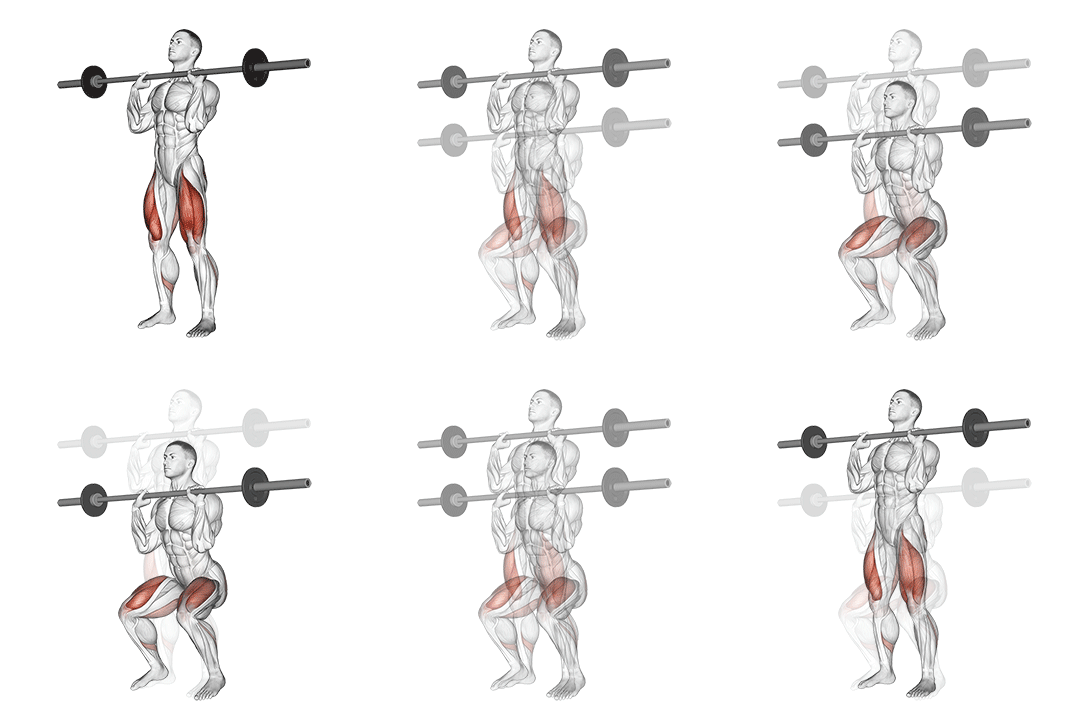
Barbell Front Chest Squat
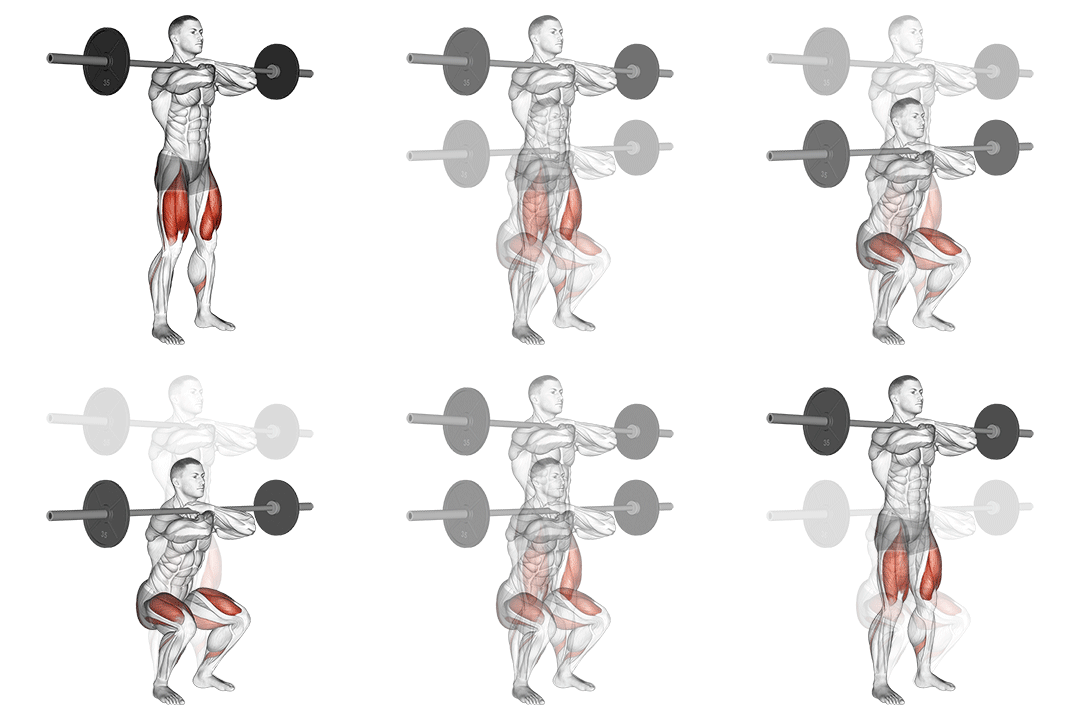
Barbell Front Squat
Head-to-Head Comparison
| Attribute | Barbell Front Chest Squat | Barbell Front Squat |
|---|---|---|
| Target Muscle |
Glutes
|
Glutes
|
| Body Part |
Upper-legs
|
Upper-legs
|
| Equipment |
Barbell
|
Barbell
|
| Difficulty |
Intermediate
|
Intermediate
|
| Movement Type |
Compound
|
Compound
|
| Secondary Muscles |
4
|
4
|
Secondary Muscles Activated
Barbell Front Chest Squat
Barbell Front Squat
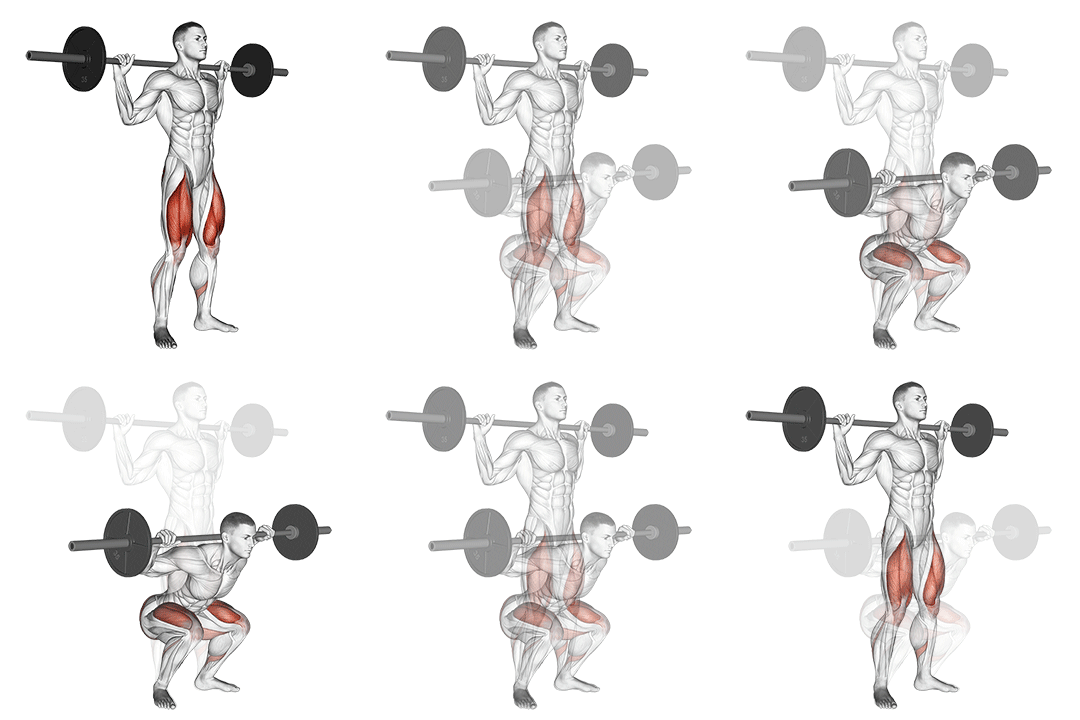
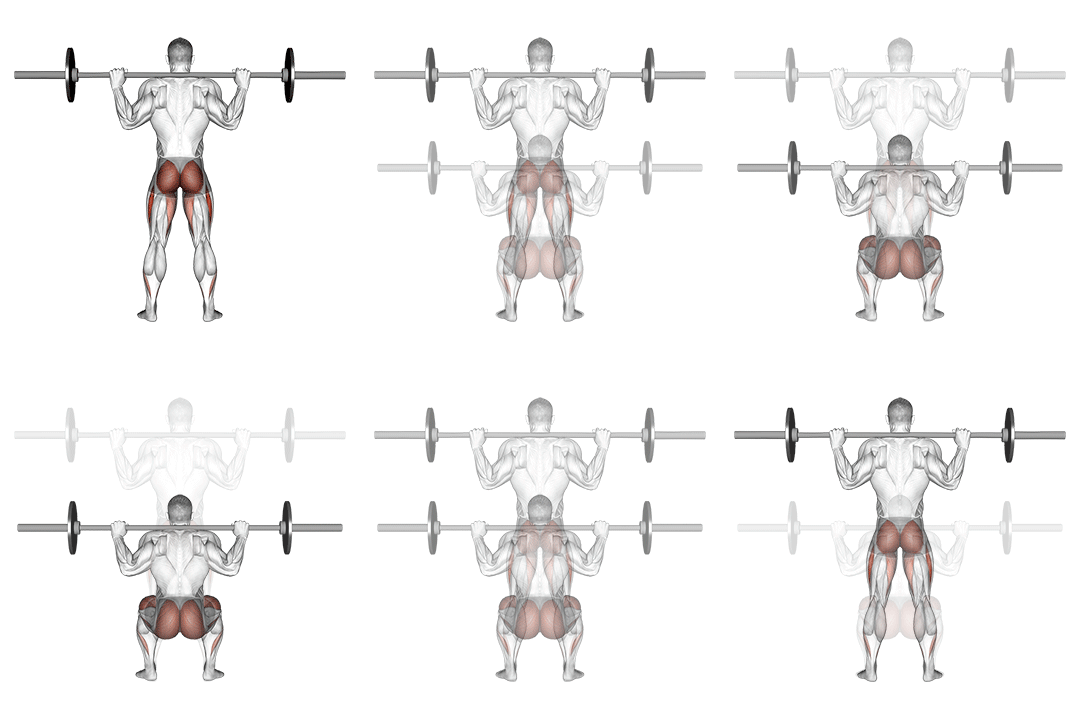
Visual Comparison
Overview
Barbell Front Chest Squat vs Barbell Front Squat — both are front-loaded, compound lifts that hit your glutes and upper-legs hard. You’ll get clear, actionable guidance here: how each exercise loads the hips and knees, which secondary muscles take the strain, what equipment and mobility you need, plus technique cues and programming tips (rep ranges like 4–6 for strength, 8–12 for hypertrophy). Read on and you’ll know which variation to use for glute-focused muscle growth, strength cycles, or simple, safe practice in the gym.
Key Differences
- Both exercises target the Glutes using Barbell. The main differences are in their movement patterns and muscle activation angles.
Pros & Cons
Barbell Front Chest Squat
+ Pros
- Keeps the torso very upright, reducing lumbar shear and promoting vertical force through the hips
- Places the bar lower on the chest for some lifters who struggle with front-rack mobility
- Strong glute stretch at the bottom if you reach full depth, aiding muscle growth through length-tension
- Good for cueing strict vertical bar path and improving quad–glute coordination
− Cons
- Requires precise bar placement and strong thoracic extension
- Can irritate the clavicle/upper chest area under load
- Harder to load very heavy for lifters without elite upper-body stability
Barbell Front Squat
+ Pros
- Widely practiced and easy to modify (crossed-arm, straps) for mobility limits
- Excellent carryover to Olympic lifts and squat strength cycles
- Allows consistent progressive overload and multiple accessory variations
- Directly trains anterior core and quadriceps with a clear coaching pathway
− Cons
- Front-rack position can be uncomfortable for wrists and shoulders
- Requires strong knee and ankle mobility to reach full depth
- Heavier knee loading may aggravate pre-existing patellofemoral issues
When Each Exercise Wins
The more upright torso and deeper hip flexion increase glute length-tension and stretch under load, which supports hypertrophy when programmed for 8–12 reps and controlled tempo (2–3 sec eccentric). This variation emphasizes direct glute recruitment late in the concentric phase.
The front-rack front squat is easier to progress with heavier sets, variations (paused, tempo, cluster), and translates strongly to overall squat strength; use 3–6 reps per set with progressive overload to maximize neural and strength adaptations.
Simpler coaching cues (chest up, elbows high, knees out) and readily available regressions (Goblet or crossed-arm) make the front squat faster to learn safely while still building quad and glute strength.
If you have a compact rack and limited space, placing the bar lower on the chest reduces need for full front-rack wrist mobility and can feel more stable for single-operator setups, letting you focus on 8–15 rep sets for hypertrophy.
Frequently Asked Questions
Can I do both Barbell Front Chest Squat and Barbell Front Squat in the same workout?
Yes — pair them intelligently. Use the front squat as a heavy strength movement (3–6 reps) and the front chest squat as a higher-volume finisher (8–12 reps) to target glutes, or separate them across days to avoid compounding fatigue on the same movement pattern.
Which exercise is better for beginners?
Barbell Front Squat is better for beginners due to easier regressions (goblet, crossed-arm) and straightforward coaching cues. It builds foundational quad and core strength while letting you practice upright posture safely.
How do the muscle activation patterns differ?
The chest-loaded variation keeps the torso more vertical, increasing knee extensor demand early and emphasizing glute activation in the final 20–30° of hip extension via length-tension; the standard front squat leans slightly more forward, shifting a larger share of load to the quads through mid-range.
Can Barbell Front Squat replace Barbell Front Chest Squat?
Yes, for many athletes the front squat can replace the chest variation and still develop glutes and quads, but you may lose some of the specific glute stretch stimulus the chest-loaded position provides. Choose based on mobility, comfort, and your primary goal (hypertrophy vs strength).
Expert Verdict
Use the Barbell Front Chest Squat when your goal is targeted glute development and you can control thoracic position — aim for 8–12 reps, slow eccentrics, and full depth to exploit glute length-tension. Choose the Barbell Front Squat for strength-focused cycles and easier progressions; program 3–6 heavy sets, paused reps, and accessories to build raw force. If you’re new, start with front-squat regressions (goblet, crossed-arm) to ingrain upright posture and knee tracking. Alternate both across training cycles — one cycle emphasizing hypertrophy (front chest) and the next focusing on strength (front squat) — to balance muscle growth and maximal strength.
Also Compare
More comparisons with Barbell Front Chest Squat
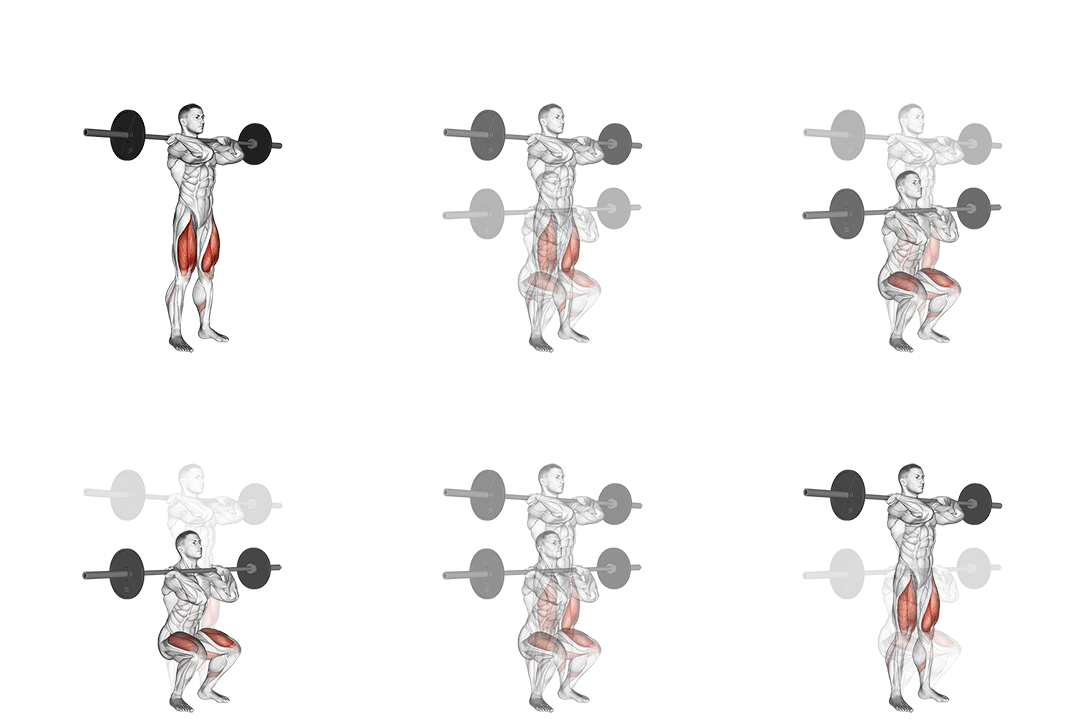
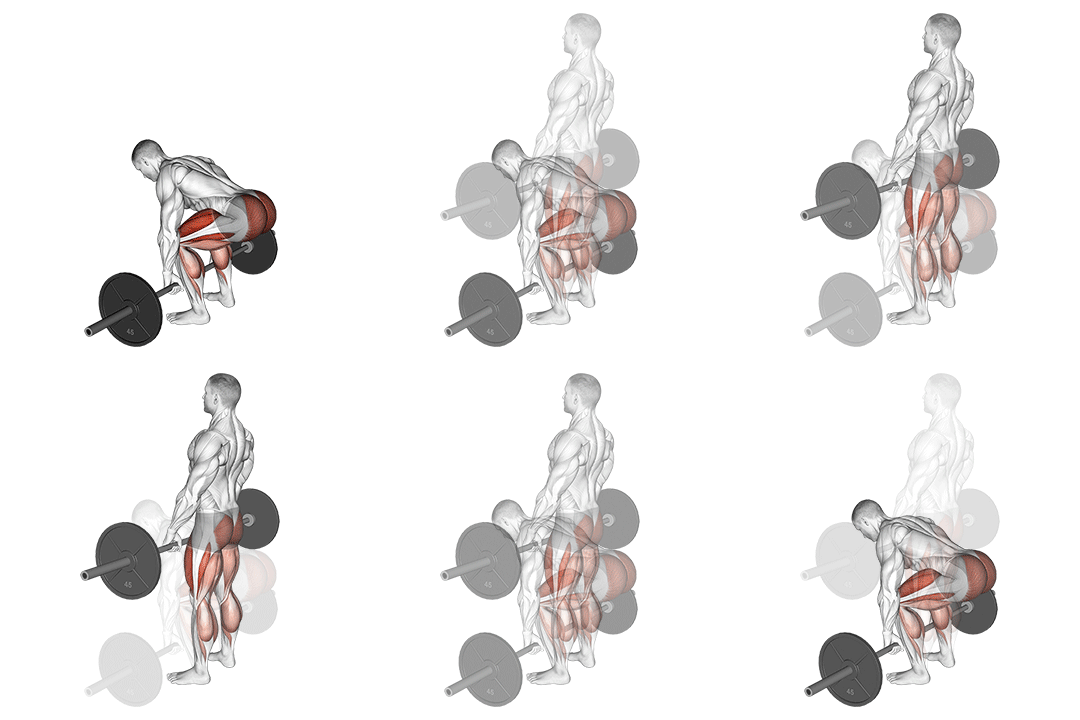
More comparisons with Barbell Front Squat
Compare More Exercises
Use our free comparison tool to analyze any two exercises head-to-head.
Compare Exercises