

Barbell Front Chest Squat vs Barbell Full Squat (side Pov): Complete Comparison Guide
Barbell Front Chest Squat vs Barbell Full Squat (side Pov) — both are compound, barbell-driven ways to train your upper legs and glutes, but they load your joints differently. You’ll get a side-by-side look at primary and secondary muscle recruitment, specific technique cues, the biomechanics behind each lift (torso angle, knee vs hip moments), equipment needs, and clear recommendations for hypertrophy, strength, beginners, and home workouts. Read on so you can pick the movement that fits your mobility, loading goals, and program structure.
Exercise Comparison
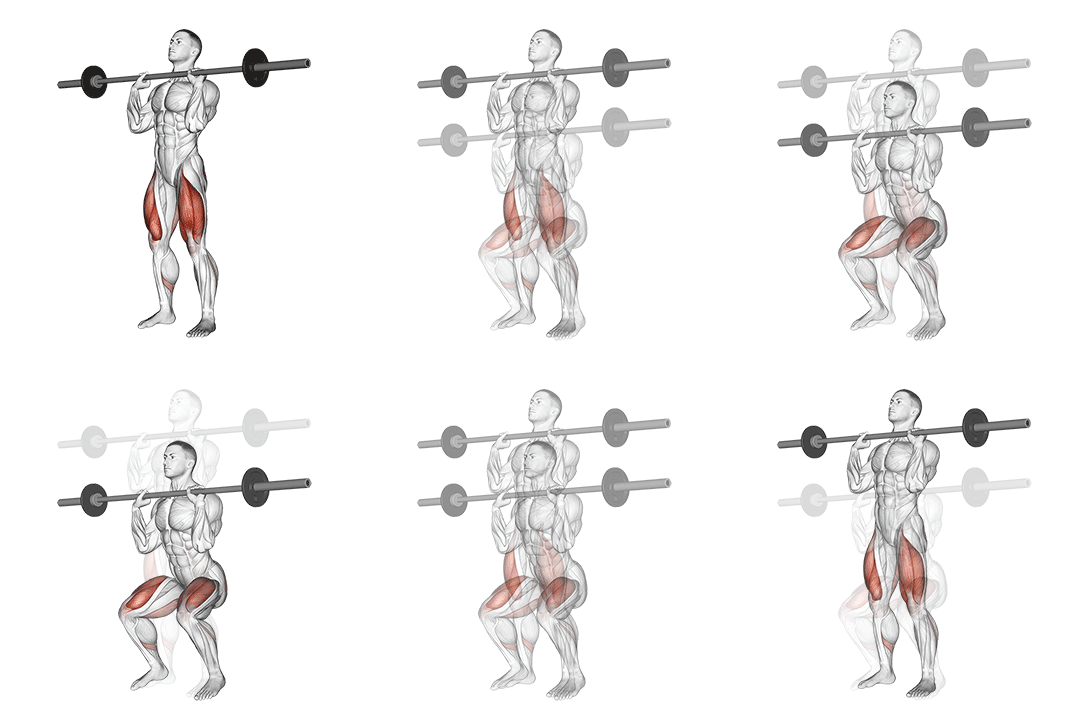
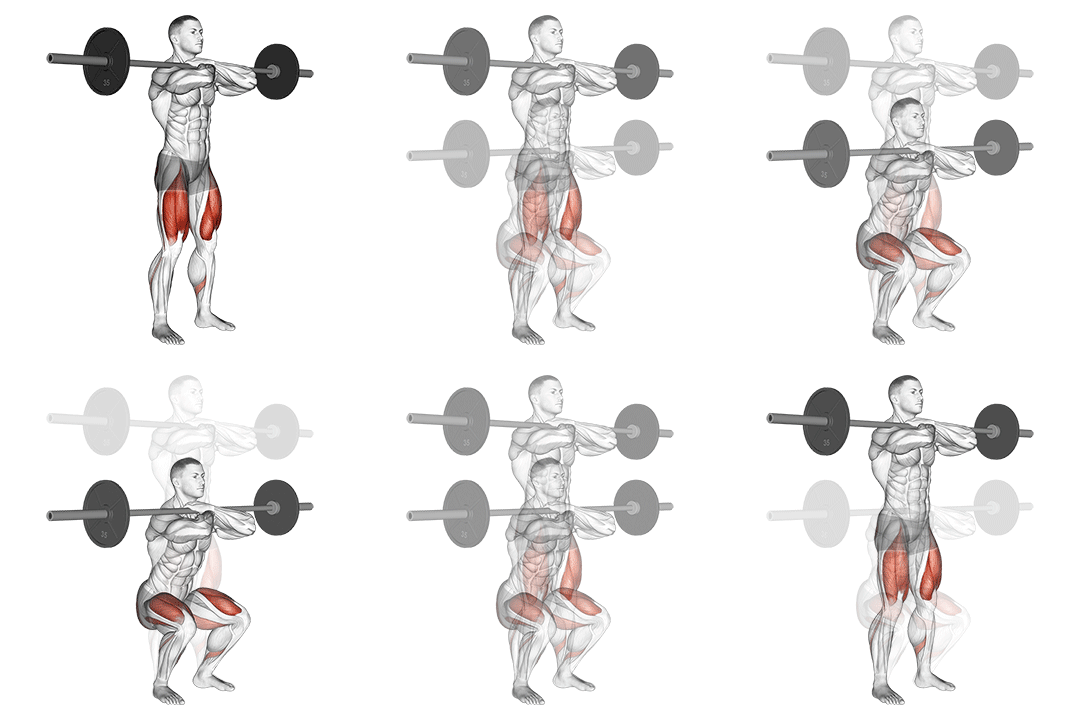
Barbell Front Chest Squat
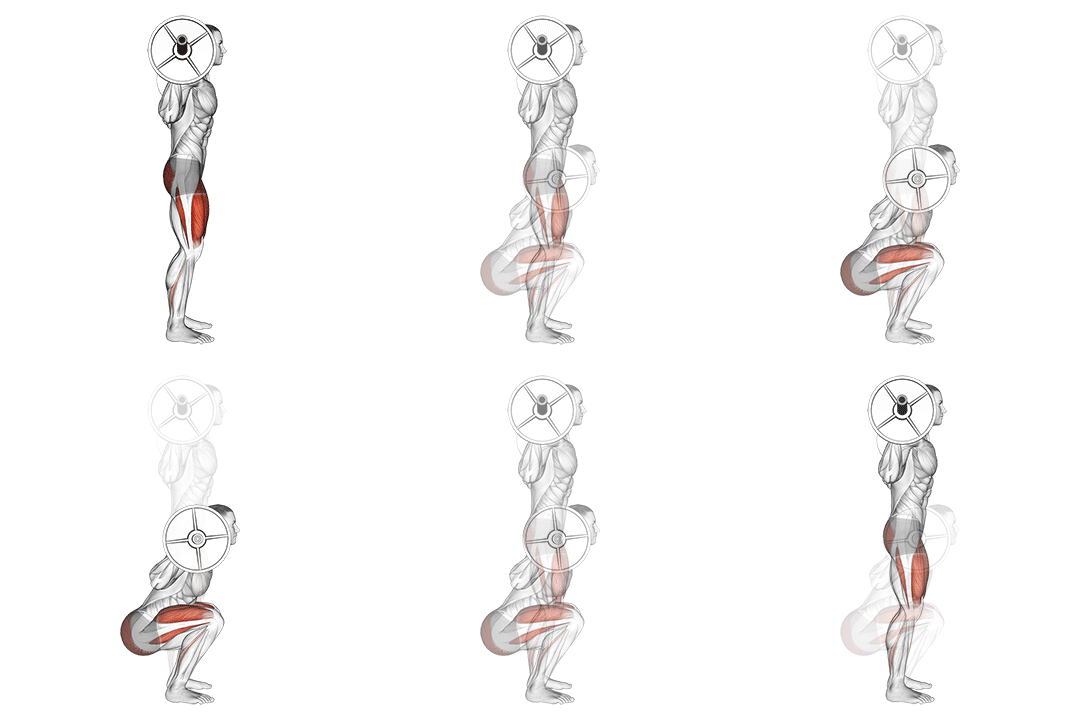
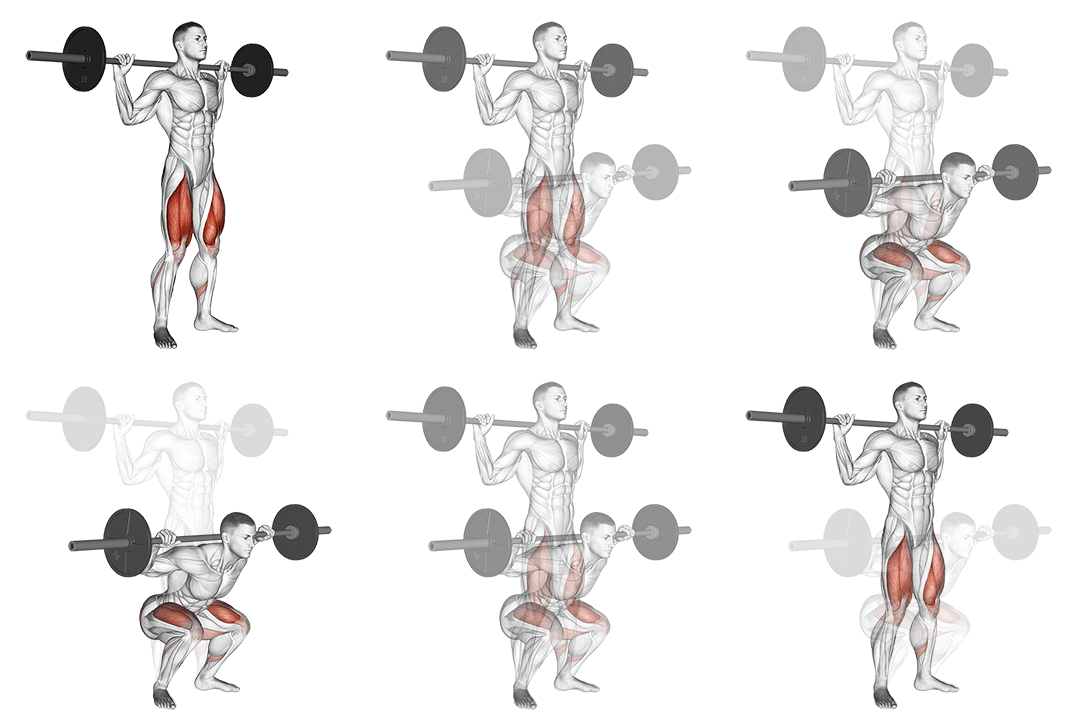
Barbell Full Squat (side Pov)
Head-to-Head Comparison
| Attribute | Barbell Front Chest Squat | Barbell Full Squat (side Pov) |
|---|---|---|
| Target Muscle |
Glutes
|
Glutes
|
| Body Part |
Upper-legs
|
Upper-legs
|
| Equipment |
Barbell
|
Barbell
|
| Difficulty |
Intermediate
|
Intermediate
|
| Movement Type |
Compound
|
Compound
|
| Secondary Muscles |
4
|
4
|
Secondary Muscles Activated
Barbell Front Chest Squat
Barbell Full Squat (side Pov)
Visual Comparison
Overview
Barbell Front Chest Squat vs Barbell Full Squat (side Pov) — both are compound, barbell-driven ways to train your upper legs and glutes, but they load your joints differently. You’ll get a side-by-side look at primary and secondary muscle recruitment, specific technique cues, the biomechanics behind each lift (torso angle, knee vs hip moments), equipment needs, and clear recommendations for hypertrophy, strength, beginners, and home workouts. Read on so you can pick the movement that fits your mobility, loading goals, and program structure.
Key Differences
- Both exercises target the Glutes using Barbell. The main differences are in their movement patterns and muscle activation angles.
Pros & Cons
Barbell Front Chest Squat
+ Pros
- Greater quad emphasis due to anterior bar placement and larger knee-extensor moment
- Lower shear and net compressive load on the lumbar spine compared with heavy back squats
- Stronger core anti-flexion demand improves posture and upright torso strength
- Easier to bail forward safely if mobility fails
− Cons
- Requires good wrist, shoulder, and thoracic mobility for a stable front rack
- Upper back fatigue and grip limit working loads sooner than back squats
- Less absolute loading potential for maximal strength compared with back/full squats
Barbell Full Squat (side Pov)
+ Pros
- Higher absolute loading potential for strength and progressive overload
- Greater hip moment when reaching deep depth—more posterior-chain and glute stimulus
- More forgiving for lifters with limited front-rack mobility
- Easier to implement safety regressions (boxes, pins) and barbell variations
− Cons
- Typically produces more trunk lean and higher spinal compressive forces with very heavy loads
- Quads may be relatively less emphasized if you adopt a strong hip-hinge pattern
- Greater need for careful technique at depth to protect knees and lower back
When Each Exercise Wins
Full squats allow heavier loading and a larger hip-extension moment at depth, stimulating glute and hamstring hypertrophy through longer muscle lengths and higher mechanical tension. Use 6–12 reps with controlled eccentrics and full depth.
You can load full squats 10–30% heavier and train 3–5 rep ranges more effectively, so they produce superior max-strength adaptations in the lower body and posterior chain.
Back/full squats are easier to set up and teach basic squat mechanics (hip hinge, depth control). They allow safer, gradual load increases and use more natural bar positioning for novices.
If you’ve limited equipment or no spotter, front squats let you train hard with lighter loads and a safer forward bail. They also demand less absolute weight to produce muscle stimulus, making them practical for compact setups.
Frequently Asked Questions
Can I do both Barbell Front Chest Squat and Barbell Full Squat (side Pov) in the same workout?
Yes. Use one as the primary heavy movement and the other as an accessory. For example, do full squats for heavy sets (3–6 reps) and follow with front squats for 3–4 sets of 6–10 reps focusing on tempo and core control.
Which exercise is better for beginners?
Barbell Full Squat (side Pov) is generally better for beginners because the back-rack position is easier to set and teaches the hip hinge and depth control. Start light, prioritize form, and progress load gradually.
How do the muscle activation patterns differ?
Front squats increase knee-extensor moments, elevating quadriceps activation earlier in the descent, while full squats increase hip-extension moment at depth, ramping glute and hamstring activation in the final 20–30° of ascent due to longer muscle lengths and different force vectors.
Can Barbell Full Squat (side Pov) replace Barbell Front Chest Squat?
Yes, for many lifters full squats can replace front squats if your goal is glute and strength development. Keep in mind you’ll lose some quad- and core-specific carryover—the two are complementary rather than identical.
Expert Verdict
Use the Barbell Front Chest Squat when you want to bias quads, reinforce an upright torso, or you need a safer anterior-bailed option for home or high-frequency cycling. Prioritize 4–8 rep ranges, keep elbows high, and cue chest up and knees out. Choose the Barbell Full Squat (side Pov) when your goal is maximal glute and posterior-chain development or raw lower-body strength—train heavier sets (3–6 reps) and focus on controlled depth and hip-drive. Both have a place: program front squats for technique, core stiffness, and quad balance; use full squats for heavy loading and glute-dominant work.
Also Compare
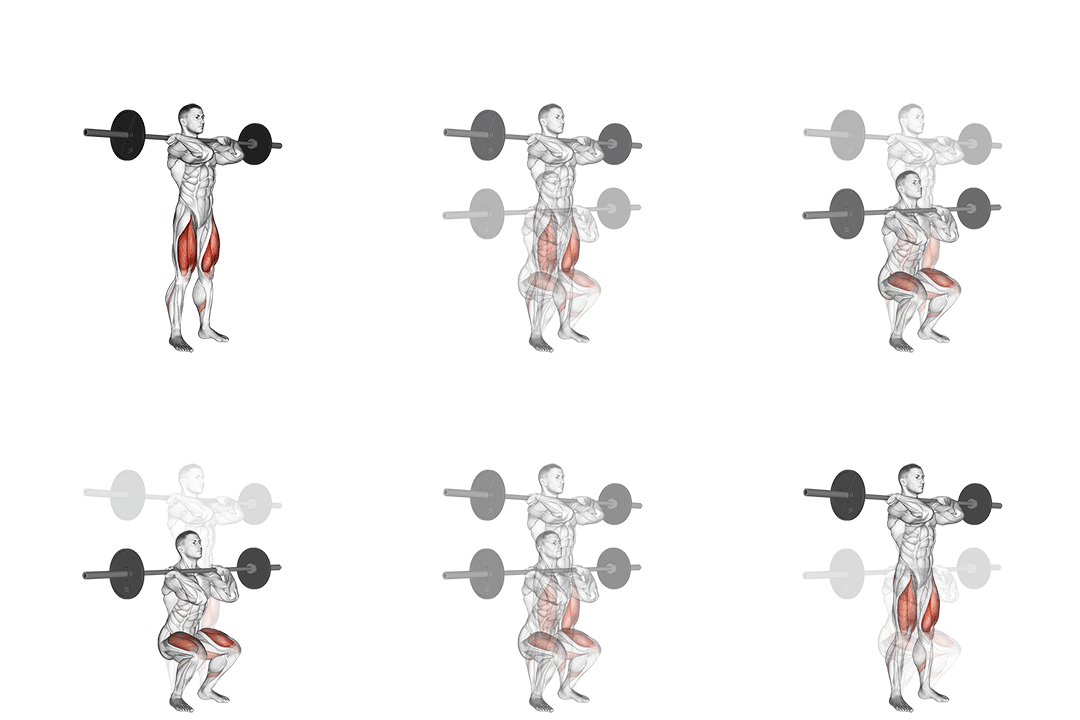
More comparisons with Barbell Front Chest Squat
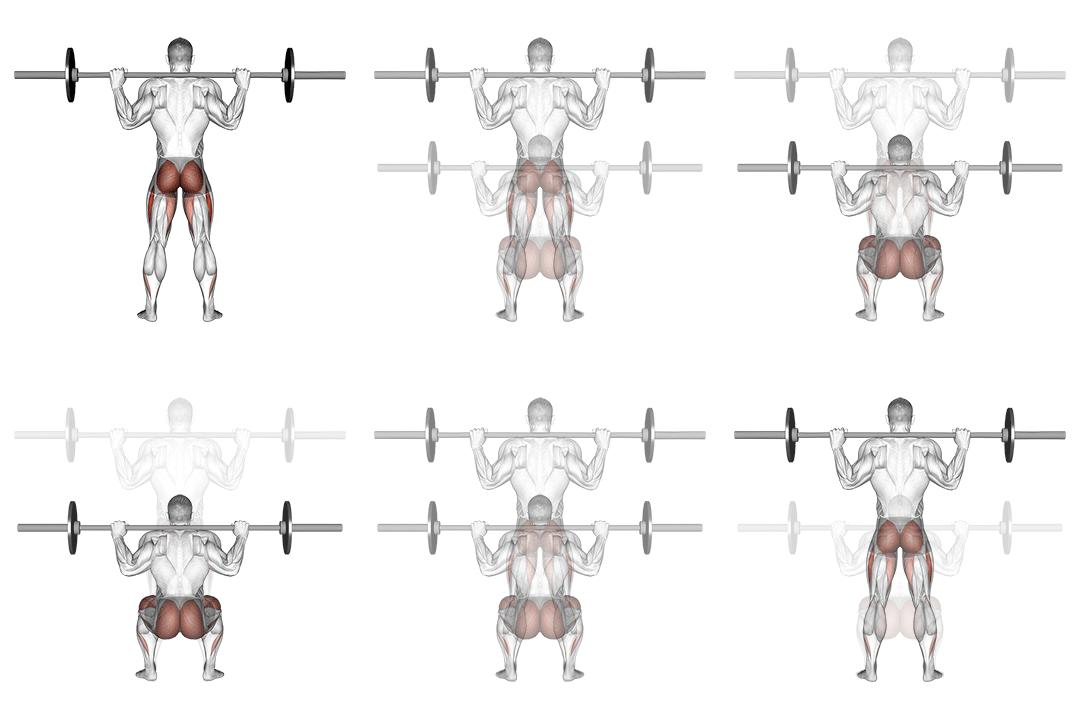
More comparisons with Barbell Full Squat (side Pov)
Compare More Exercises
Use our free comparison tool to analyze any two exercises head-to-head.
Compare Exercises