

Barbell Front Squat vs Barbell Full Squat (back Pov): Complete Comparison Guide
Barbell Front Squat vs Barbell Full Squat (back Pov) — two compound squats that both target your glutes and upper-legs but load the body differently. You'll get clear comparisons of primary and secondary muscle activation, equipment and setup differences, learning curves, rep ranges (6–12 for hypertrophy, 1–5 for max strength), and concrete technique cues (torso angle, knee travel, and bar placement). Read on to decide which to program based on your goals and movement limitations.
Exercise Comparison
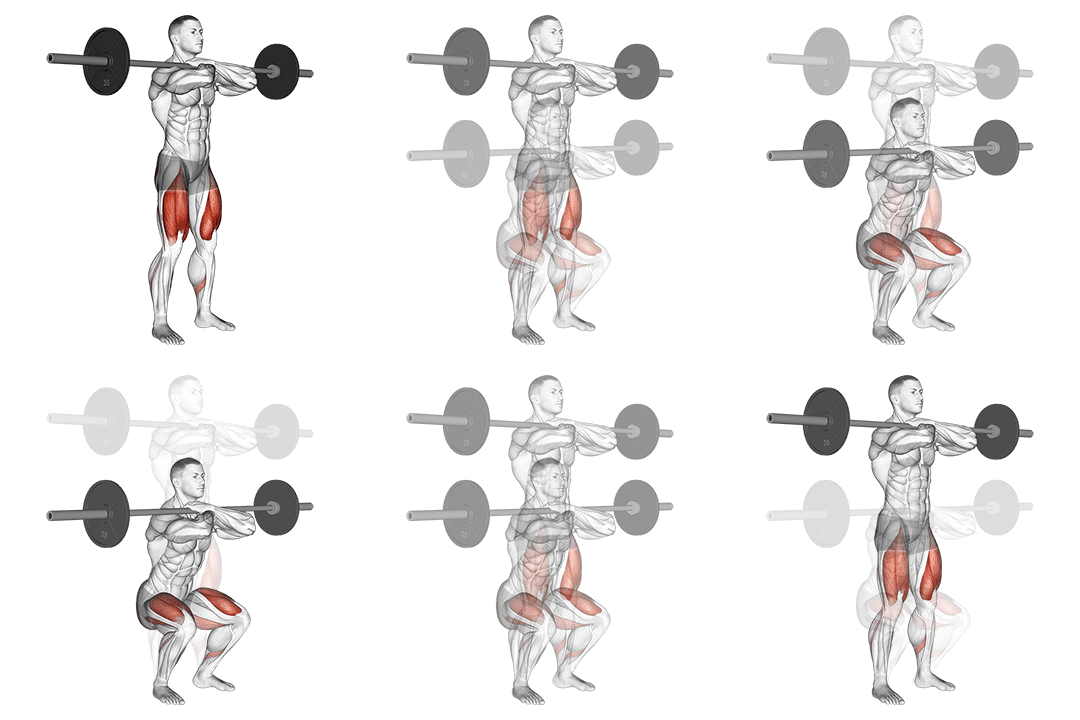
Barbell Front Squat
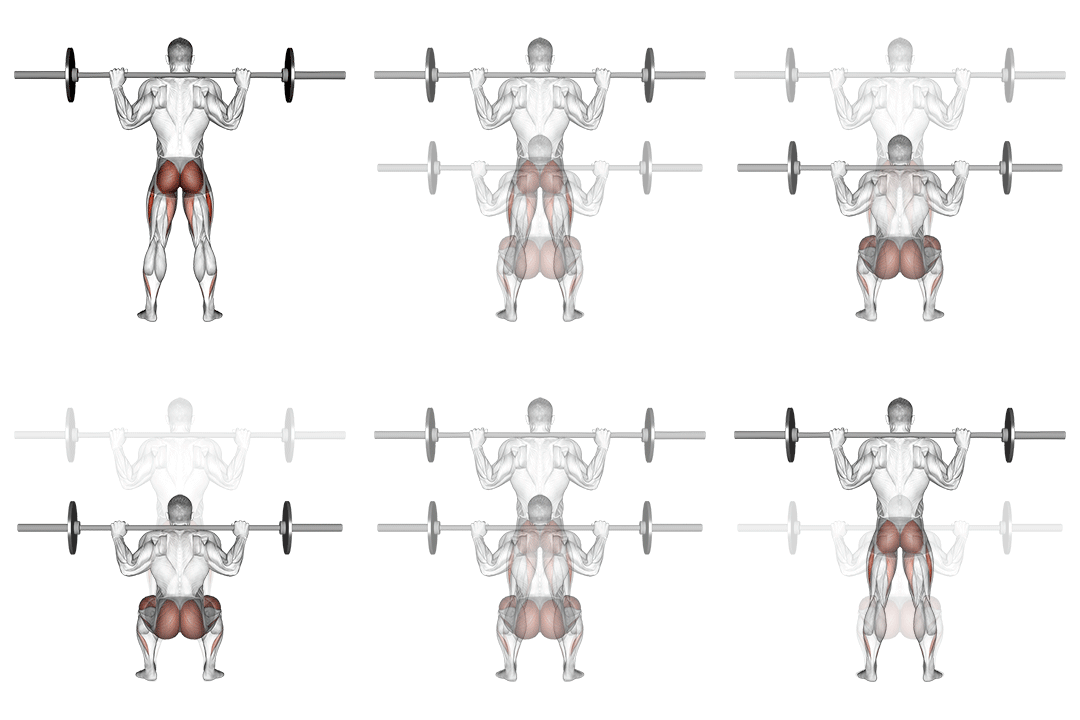
Barbell Full Squat (back Pov)
Head-to-Head Comparison
| Attribute | Barbell Front Squat | Barbell Full Squat (back Pov) |
|---|---|---|
| Target Muscle |
Glutes
|
Glutes
|
| Body Part |
Upper-legs
|
Upper-legs
|
| Equipment |
Barbell
|
Barbell
|
| Difficulty |
Intermediate
|
Intermediate
|
| Movement Type |
Compound
|
Compound
|
| Secondary Muscles |
4
|
4
|
Secondary Muscles Activated
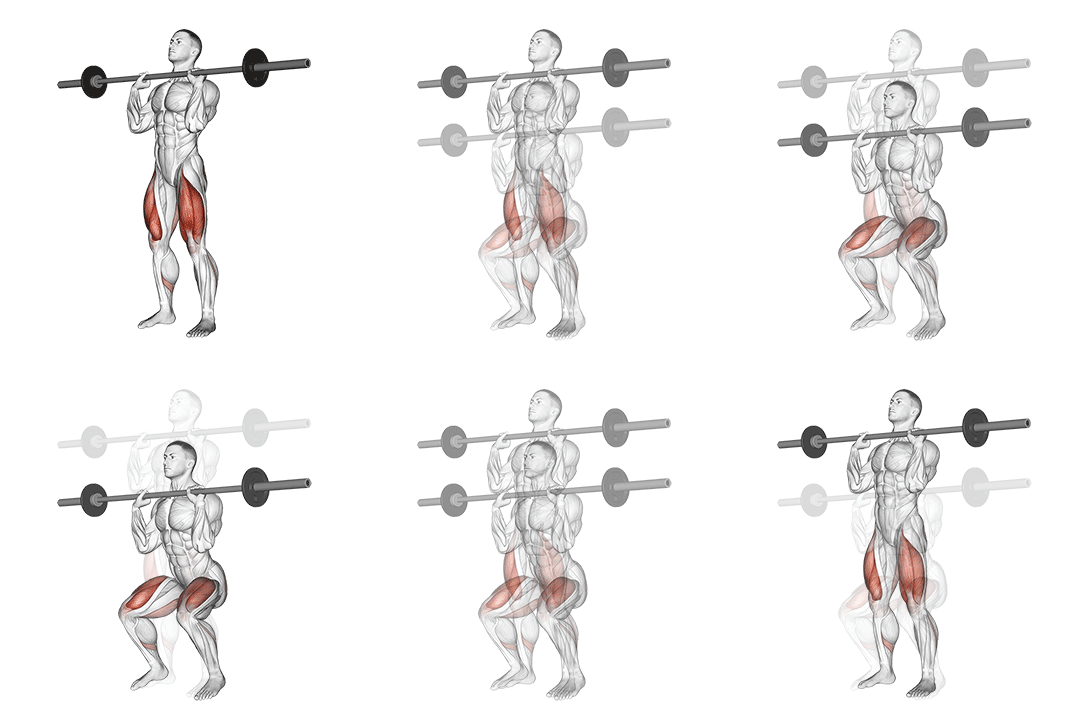
Barbell Front Squat
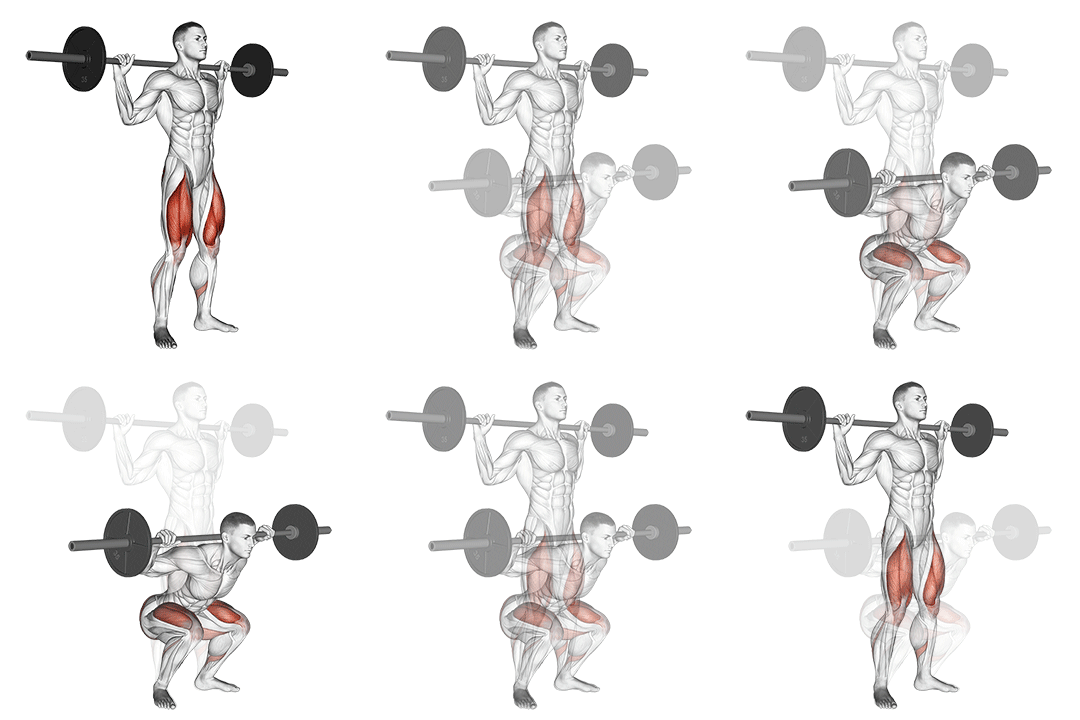
Barbell Full Squat (back Pov)
Visual Comparison
Overview
Barbell Front Squat vs Barbell Full Squat (back Pov) — two compound squats that both target your glutes and upper-legs but load the body differently. You'll get clear comparisons of primary and secondary muscle activation, equipment and setup differences, learning curves, rep ranges (6–12 for hypertrophy, 1–5 for max strength), and concrete technique cues (torso angle, knee travel, and bar placement). Read on to decide which to program based on your goals and movement limitations.
Key Differences
- Both exercises target the Glutes using Barbell. The main differences are in their movement patterns and muscle activation angles.
Pros & Cons
Barbell Front Squat
+ Pros
- Promotes an upright torso, reducing lumbar shear and favoring quad development
- Places high anterior core demand for trunk stiffness and posture
- Easier to maintain vertical shin, improving knee tracking and quadriceps stimulus
- Adaptable to dumbbells/kettlebells for limited equipment
− Cons
- Requires good wrist and thoracic mobility for a secure rack
- Typically loaded at ~70–80% of back squat 1RM, limiting absolute strength overload
- Can be uncomfortable on the anterior shoulders without proper technique
Barbell Full Squat (back Pov)
+ Pros
- Allows higher absolute loads, maximizing mechanical tension for strength and hypertrophy
- Greater hip hinge increases hamstring and glute stretch under load
- Straightforward bar placement and easier setup in a power rack
- Wide variation potential (low-bar, high-bar, box squat) for specific emphasis
− Cons
- More forward torso lean increases spinal compressive forces if technique breaks down
- Can place more shear on the knees at very deep ranges without posterior chain strength
- Requires a rack or spotter for very heavy singles to train safely
When Each Exercise Wins
Full squats allow heavier loading and greater hip flexion at the bottom, increasing glute length-tension and time under tension. Use 6–12 reps and controlled 2–3 second eccentrics to maximize mechanical tension for muscle growth.
You can typically handle 15–30% more load on back full squats, which better drives neural adaptation and max strength in the squat pattern. Program heavy singles and doubles at 85–100% 1RM with adequate recovery.
The back-oriented squat follows a more natural hip-hinge and is easier to cue for consistent depth and drive. Start with bodyweight and goblet progressions, then add barbell work to build baseline mobility and strength.
Front squats translate well to dumbbells or kettlebells, letting you train similar movement patterns without a rack. Use 8–15 rep sets and single-arm variations if a full barbell setup isn’t available.
Frequently Asked Questions
Can I do both Barbell Front Squat and Barbell Full Squat (back Pov) in the same workout?
Yes. Put the heavier, more technical lift first—usually back full squats for strength—or start with front squats if you target quad-focused hypertrophy. Use sets of 3–5 for strength and 6–12 for hypertrophy, and manage volume to avoid excessive CNS fatigue.
Which exercise is better for beginners?
Barbell Full Squat (back Pov) is generally easier for beginners because it aligns with the natural hinge and can be taught with box or goblet progressions. Gradually add front squats once thoracic extension and wrist mobility improve.
How do the muscle activation patterns differ?
Front squats bias knee-extension torque, increasing quadriceps activation due to a shorter moment arm at the hip and a more vertical torso. Back full squats increase hip-extension torque, producing greater posterior chain and glute stretch under load as the torso leans forward.
Can Barbell Full Squat (back Pov) replace Barbell Front Squat?
It can replace front squats for strength and glute-focused phases because you can load heavier and target hip extension. Keep front squats in rotation when you need quad emphasis, core anti-extension work, or when training with limited equipment.
Expert Verdict
Both front and full back squats deserve spots in a balanced program, but choose based on your priorities. Pick barbell full squats when your aim is maximal load, glute hypertrophy, and strength progression — they allow heavier weights and greater posterior chain stretch. Choose front squats when you want more quad emphasis, reduced spinal compression, or need a pattern that scales well with limited equipment. Program front squats for 6–12 reps to target hypertrophy with tempo, and use full back squats for heavy 1–5 rep strength phases. Rotate both across mesocycles to cover movement patterns and reduce overuse.
Also Compare
More comparisons with Barbell Front Squat
More comparisons with Barbell Full Squat (back Pov)
Compare More Exercises
Use our free comparison tool to analyze any two exercises head-to-head.
Compare Exercises