

Barbell Front Squat vs Barbell Full Squat (side Pov): Complete Comparison Guide
Barbell Front Squat vs Barbell Full Squat (side Pov) — you’ve likely seen both in the gym and wondered which one deserves more of your reps. I’ll walk you through how each move loads the glutes and upper-legs, the key biomechanics that change muscle emphasis, and practical cues so you can perform them safely. You’ll get technique pointers (elbow position, bar placement, depth), clear comparisons of muscle activation and equipment needs, and direct recommendations for hypertrophy, strength, beginners, and home training.
Exercise Comparison
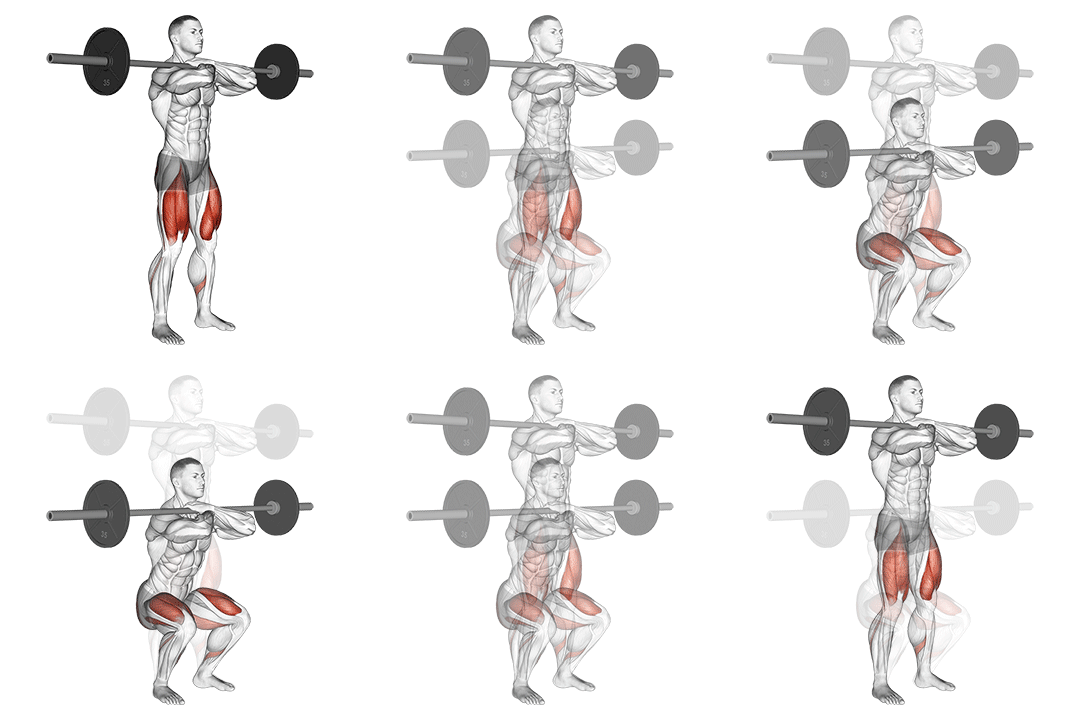
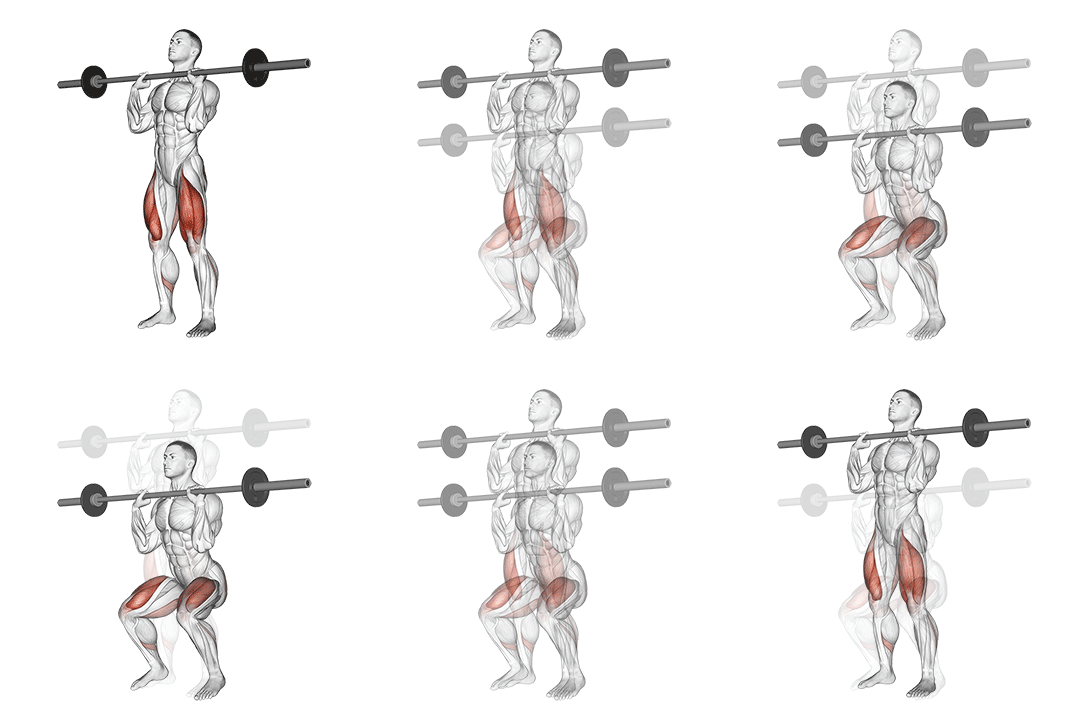
Barbell Front Squat
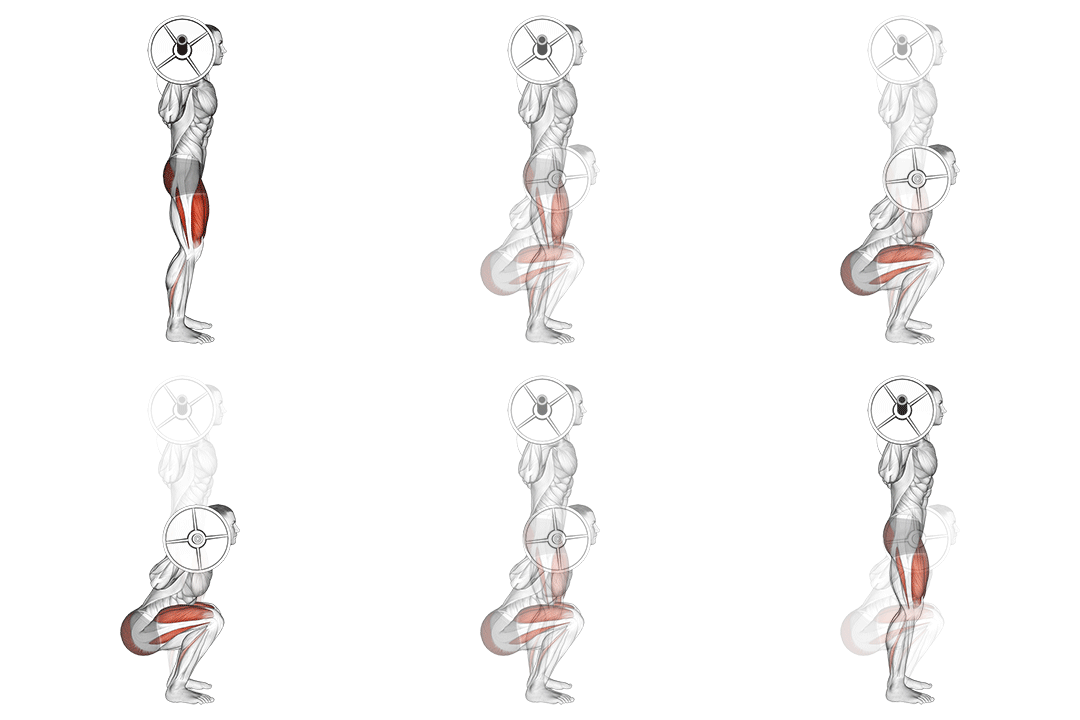
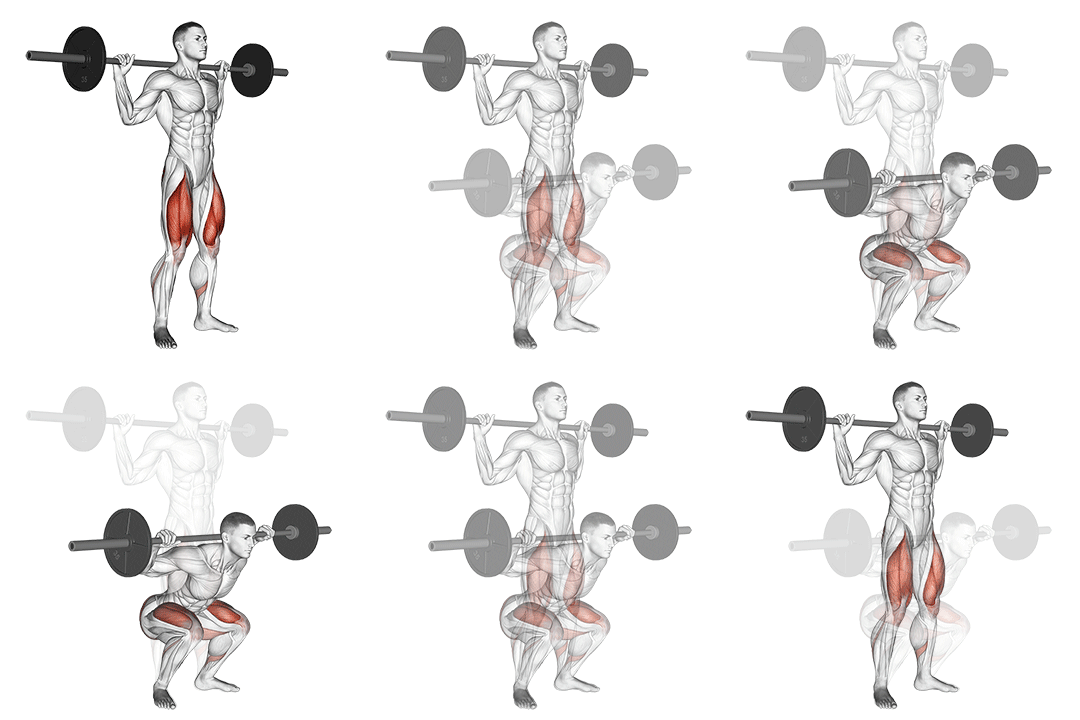
Barbell Full Squat (side Pov)
Head-to-Head Comparison
| Attribute | Barbell Front Squat | Barbell Full Squat (side Pov) |
|---|---|---|
| Target Muscle |
Glutes
|
Glutes
|
| Body Part |
Upper-legs
|
Upper-legs
|
| Equipment |
Barbell
|
Barbell
|
| Difficulty |
Intermediate
|
Intermediate
|
| Movement Type |
Compound
|
Compound
|
| Secondary Muscles |
4
|
4
|
Secondary Muscles Activated
Barbell Front Squat
Barbell Full Squat (side Pov)
Visual Comparison
Overview
Barbell Front Squat vs Barbell Full Squat (side Pov) — you’ve likely seen both in the gym and wondered which one deserves more of your reps. I’ll walk you through how each move loads the glutes and upper-legs, the key biomechanics that change muscle emphasis, and practical cues so you can perform them safely. You’ll get technique pointers (elbow position, bar placement, depth), clear comparisons of muscle activation and equipment needs, and direct recommendations for hypertrophy, strength, beginners, and home training.
Key Differences
- Both exercises target the Glutes using Barbell. The main differences are in their movement patterns and muscle activation angles.
Pros & Cons
Barbell Front Squat
+ Pros
- Greater quadriceps emphasis due to forward bar position and larger knee moment arm
- More upright torso decreases lumbar shear, reducing low-back stress
- High elbow and chest-up position improves thoracic extension and posture
- Strong carryover to front-loaded lifts and improved core anti-extension strength
− Cons
- Requires good wrist/thoracic mobility or alternative grips
- Typically lower absolute loading capacity than back squats
- Elbows must stay high—failure to do so collapses the upper back and ruins the lift
Barbell Full Squat (side Pov)
+ Pros
- Allows heavier loading and greater overall strength progression
- Stronger posterior-chain recruitment (glutes, hamstrings) at full depth
- More forgiving grip and upper-back mobility requirements
- Easier to set up with safety pins—practical for heavy singles and triples
− Cons
- Greater lumbar compressive loads when using maximal weights
- Deeper hip flexion can stress hips and knees if mobility is limited
- May bias posterior chain at expense of quadriceps unless stance/technique adjusted
When Each Exercise Wins
Front squats increase knee extensor torque and place quads under longer tension through the bottom-to-mid range; use 6–12 rep sets and maintain a high-elbow, chest-up posture to maximize quad and glute hypertrophy.
Full squats let you handle heavier absolute loads and recruit the posterior chain strongly at deep hip angles, making them superior for raw strength when training in the 1–6 rep range with progressive overload.
The back-loaded full squat is more intuitive, tolerates minor mobility issues, and allows safer incremental loading—making it easier to learn basic squatting mechanics and build foundational strength.
If you have a squat rack, full squats require no special grips or mobility tools and allow efficient use of limited equipment; front squats can be hampered by wrist and grip limitations at home.
Frequently Asked Questions
Can I do both Barbell Front Squat and Barbell Full Squat (side Pov) in the same workout?
Yes. Pair heavy full squats early in the session for 1–6 reps, then use front squats as a secondary movement for 6–12 reps to target quads and core. Keep volume and intensity managed—avoid maximal attempts on both in one session.
Which exercise is better for beginners?
Barbell Full Squat (side Pov) is generally better for beginners because it’s more forgiving and easier to learn basic hinge-and-knee mechanics. Teach upright posture and knee tracking, then introduce front squats as mobility and bracing improve.
How do the muscle activation patterns differ?
Front squats shift the center of mass forward, increasing knee moment arms and quadriceps activation while requiring greater anti-extension from the core. Full squats increase hip moment arms and posterior-chain torque, recruiting glutes and hamstrings more at deep hip angles.
Can Barbell Full Squat (side Pov) replace Barbell Front Squat?
You can substitute full squats if your goal is overall strength and posterior-chain development, but you’ll lose some quad-specific stimulus and the upright torso training that front squats provide. For balanced leg development, keep at least one front-squat variant in your program periodically.
Expert Verdict
Use front squats when your priority is quad-dominant hypertrophy, upright posture, and reduced lumbar shear—they load the knee extensors more and demand strict core control. Choose full (back) squats when you want maximum load, posterior-chain development, and straightforward progression for strength. For programming: include front squats for 3–5 sets of 6–12 reps to build leg muscle and core stiffness; use full squats for heavier 3–6 sets of 1–6 reps to develop maximal force and posterior-chain power. If you train three times weekly, rotate both: two full-squat-focused sessions for strength and one front-squat accessory day for quad balance and posture work.
Also Compare
More comparisons with Barbell Front Squat
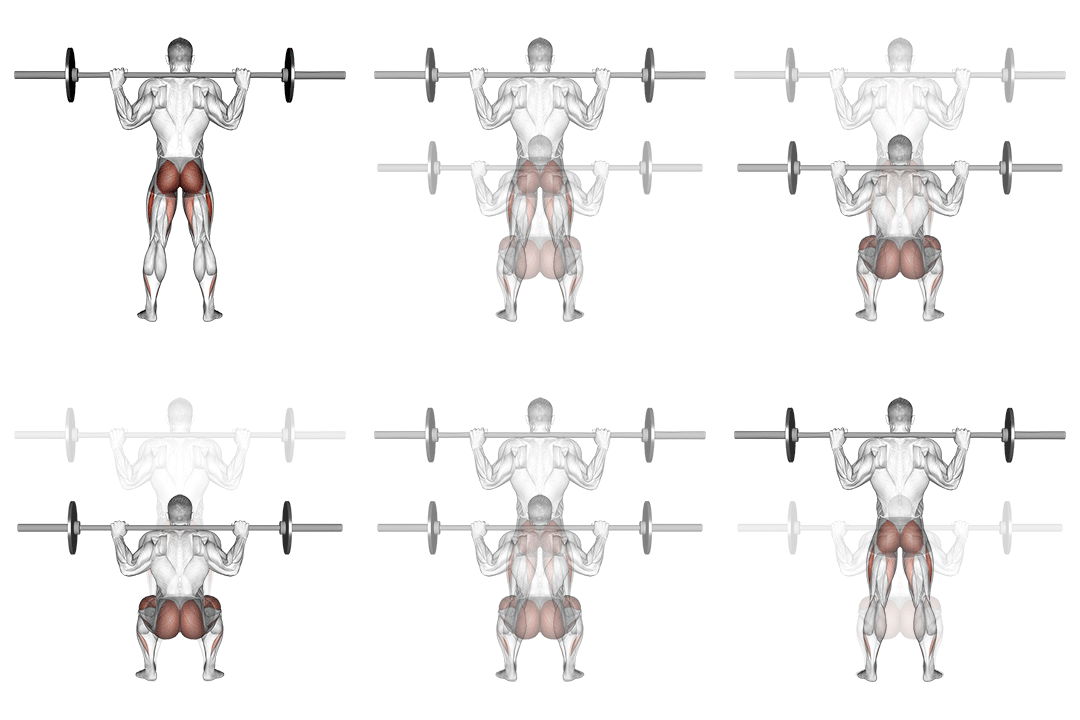
More comparisons with Barbell Full Squat (side Pov)
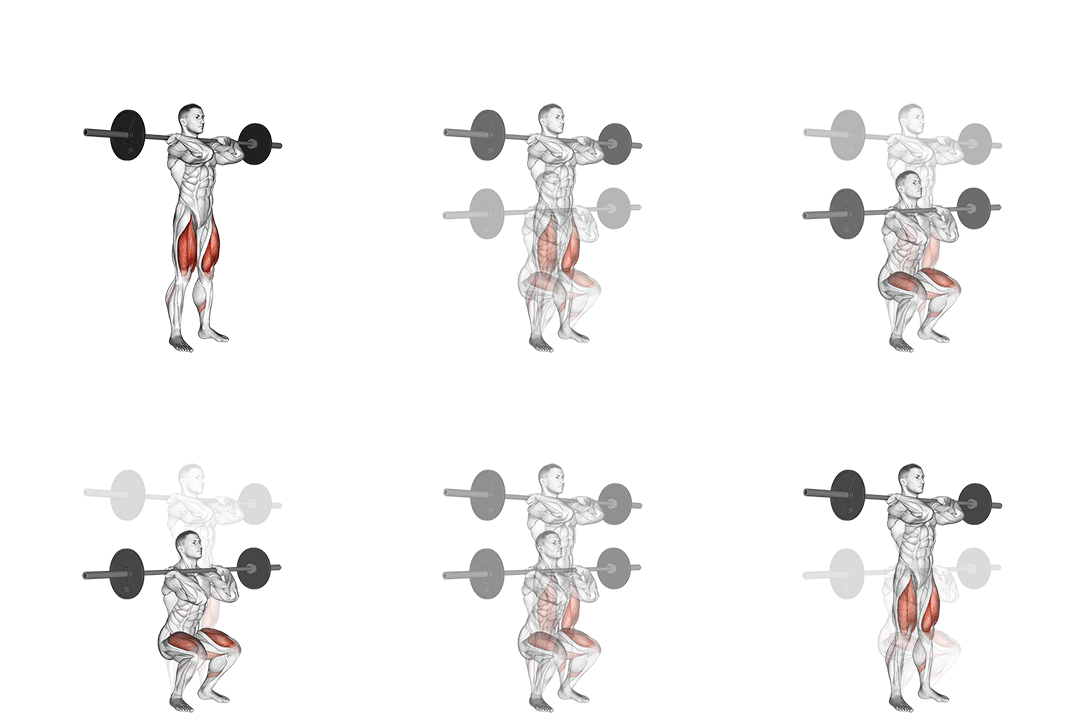
Compare More Exercises
Use our free comparison tool to analyze any two exercises head-to-head.
Compare Exercises