

Barbell Front Squat vs Barbell Squat: Complete Comparison Guide
Barbell Front Squat vs Barbell Squat — you’ll use both to build stronger upper-legs, but they load those muscles differently. This guide gives you clear comparisons of primary and secondary muscle activation, technique cues, equipment needs, injury risk, and when to pick each for hypertrophy, strength, or home training. I’ll show the specific movement mechanics (torso angle, knee vs hip moment arms), give rep ranges (4–6 for strength, 6–12 for hypertrophy), and include actionable setup and descent cues so you can choose the right squat for your goals.
Exercise Comparison
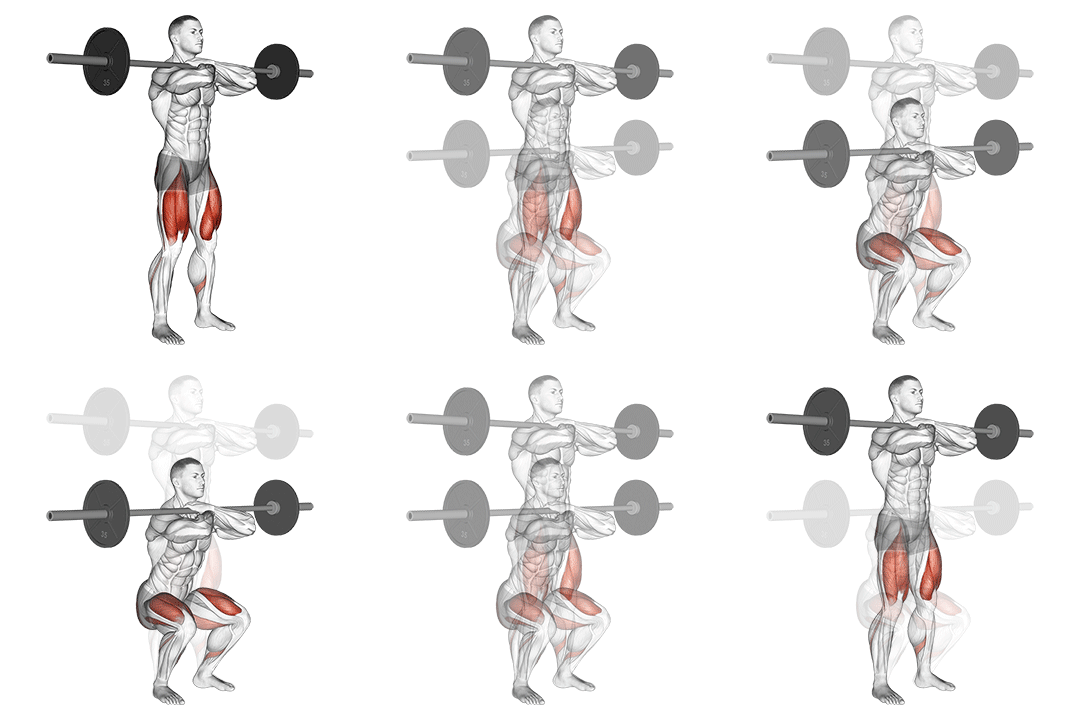
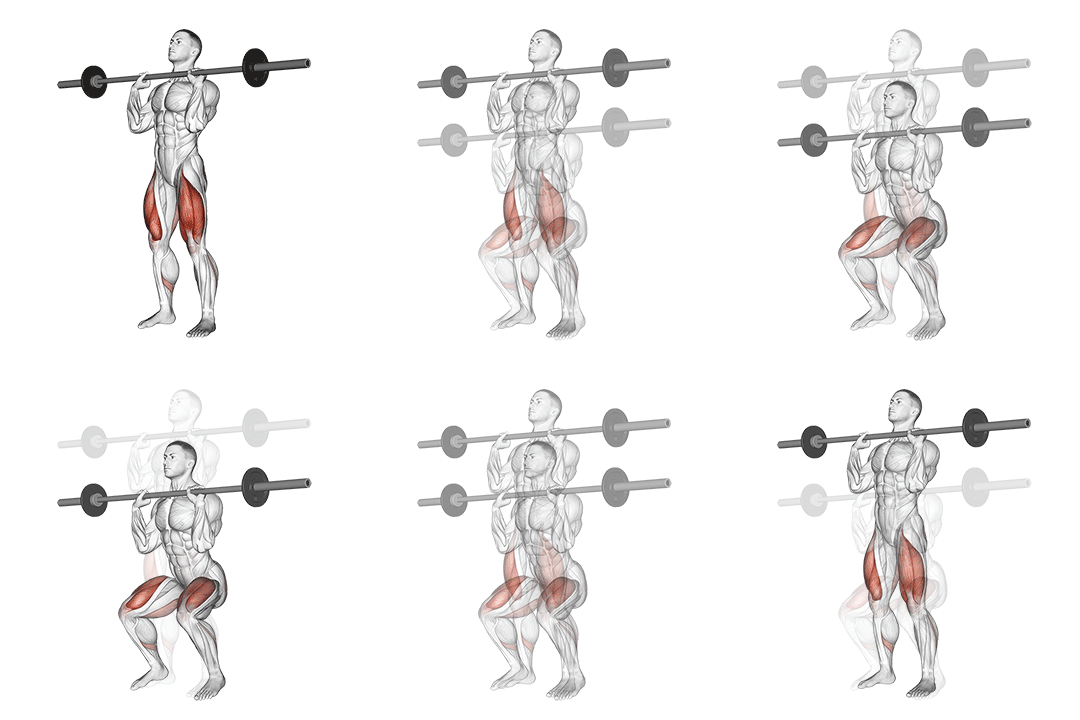
Barbell Front Squat
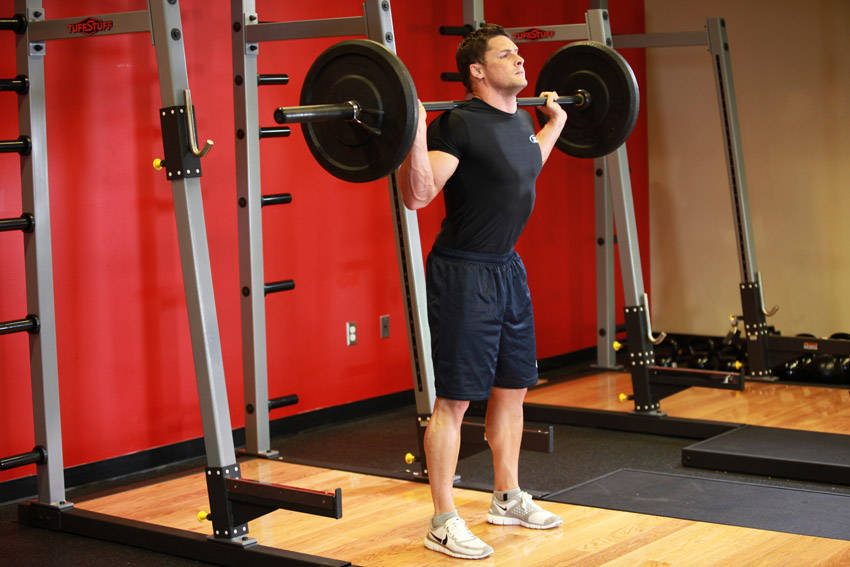
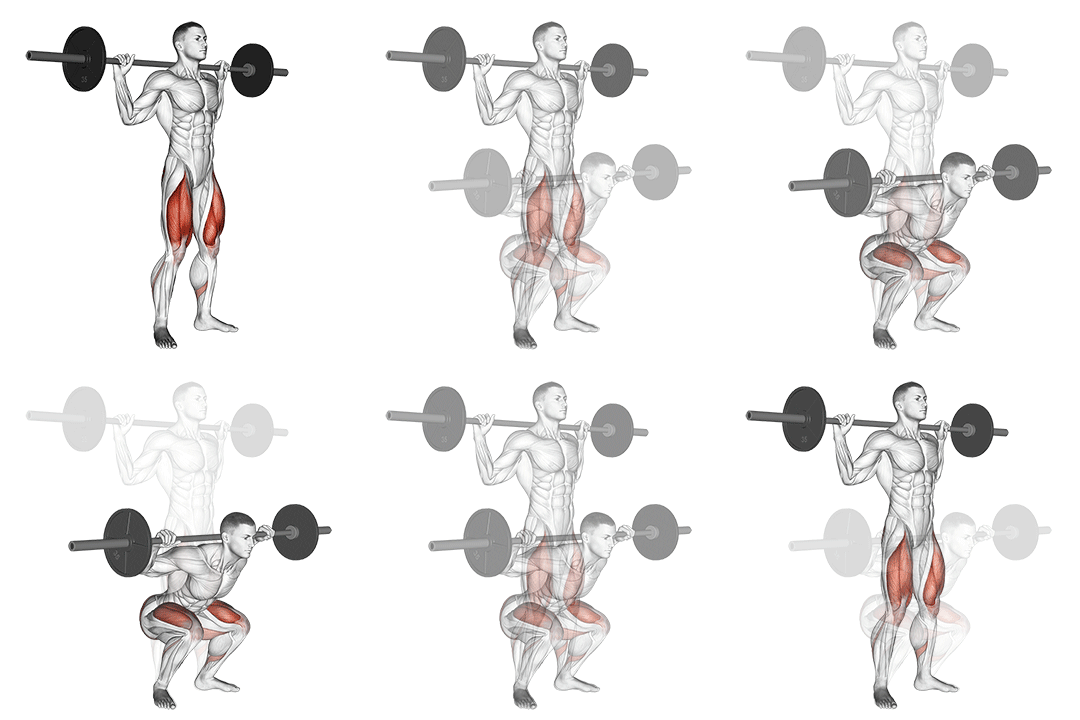
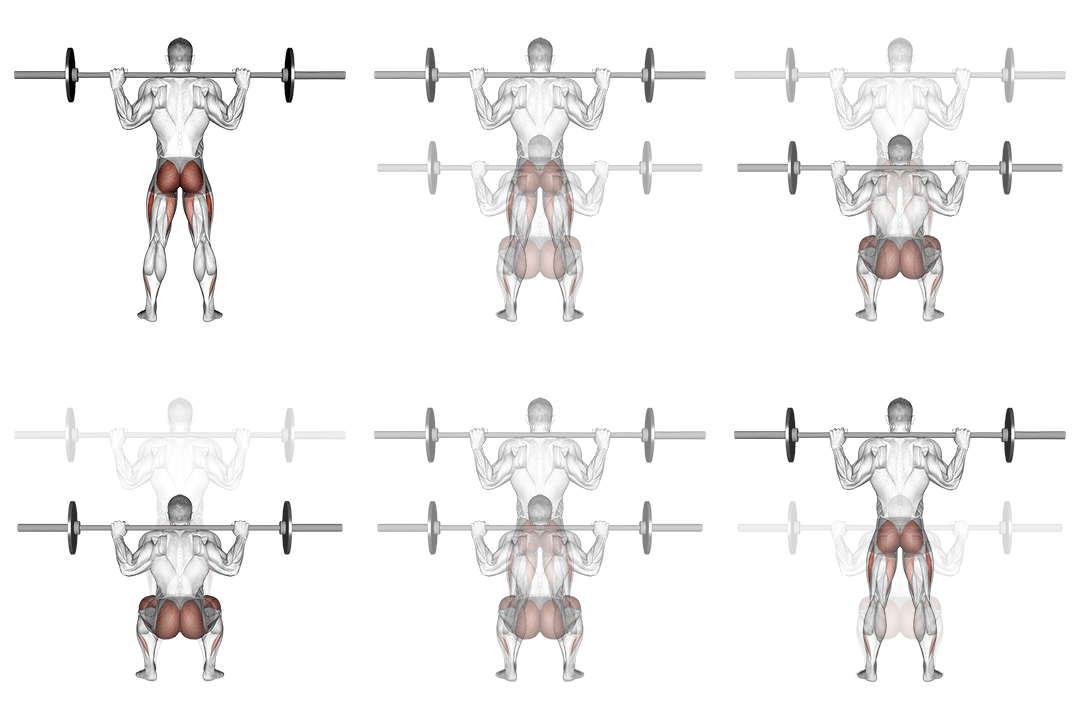
Barbell Squat
Head-to-Head Comparison
| Attribute | Barbell Front Squat | Barbell Squat |
|---|---|---|
| Target Muscle |
Glutes
|
Quads
|
| Body Part |
Upper-legs
|
Upper-legs
|
| Equipment |
Barbell
|
Barbell
|
| Difficulty |
Intermediate
|
Intermediate
|
| Movement Type |
Compound
|
Compound
|
| Secondary Muscles |
4
|
4
|
Secondary Muscles Activated
Barbell Front Squat
Barbell Squat
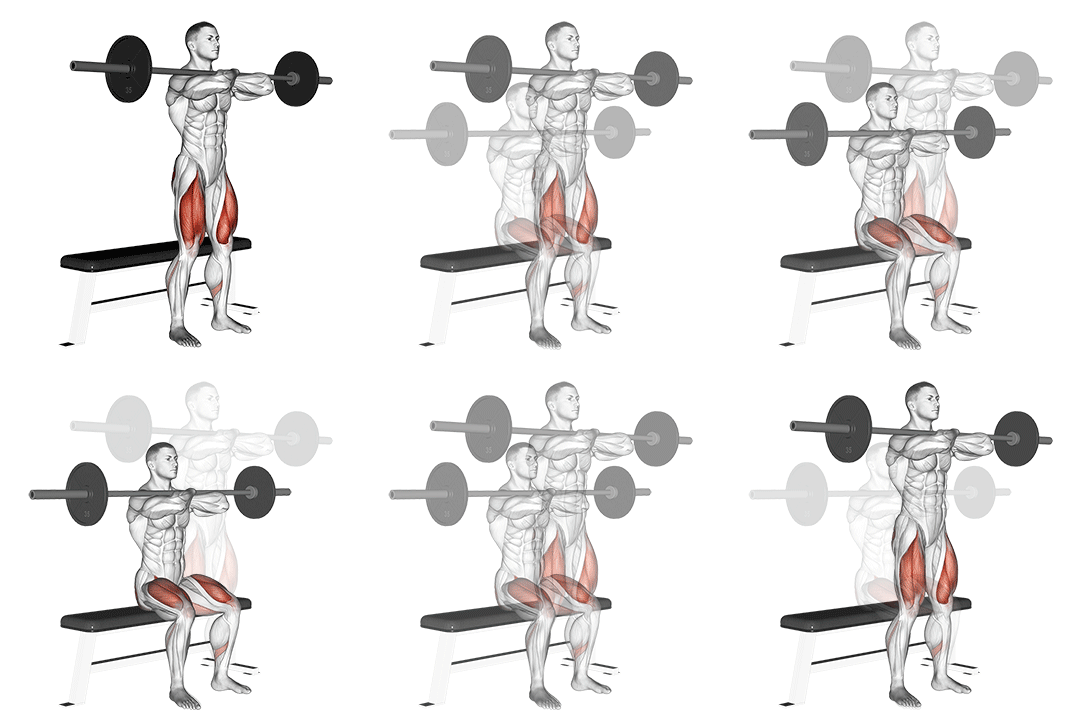
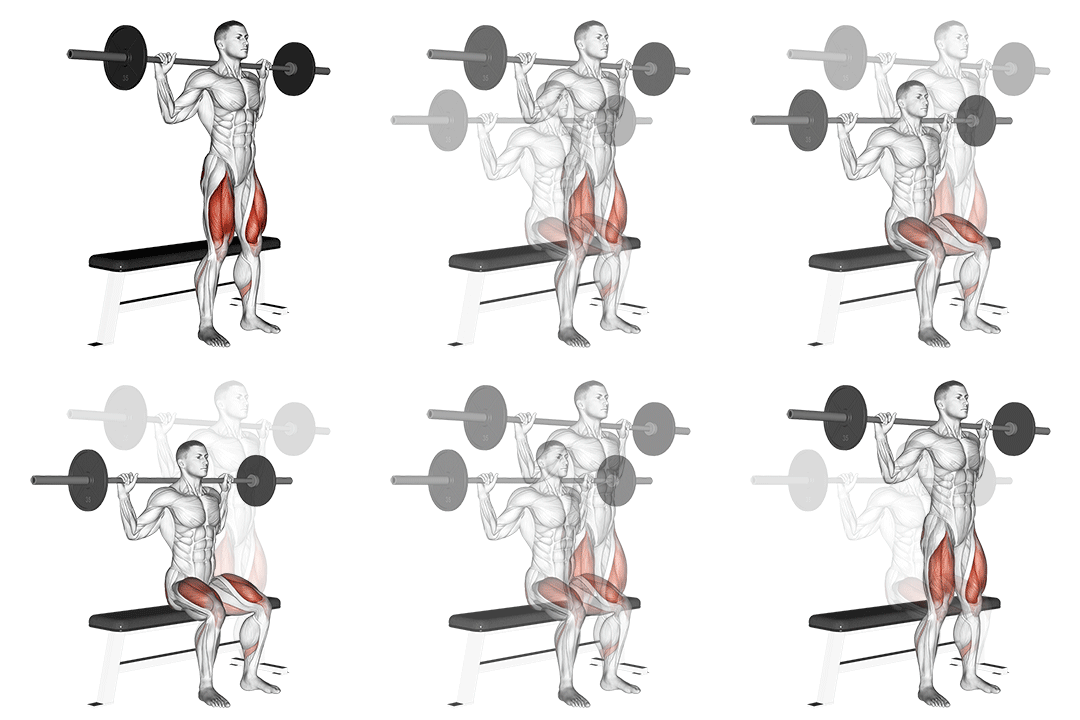
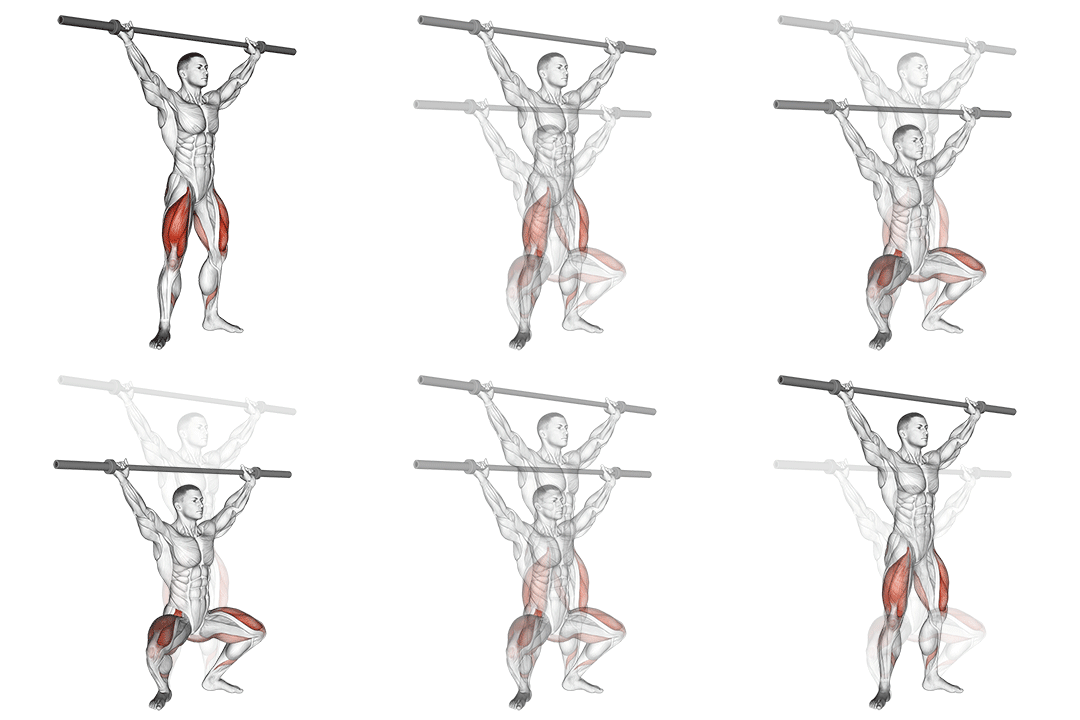
Visual Comparison
Overview
Barbell Front Squat vs Barbell Squat — you’ll use both to build stronger upper-legs, but they load those muscles differently. This guide gives you clear comparisons of primary and secondary muscle activation, technique cues, equipment needs, injury risk, and when to pick each for hypertrophy, strength, or home training. I’ll show the specific movement mechanics (torso angle, knee vs hip moment arms), give rep ranges (4–6 for strength, 6–12 for hypertrophy), and include actionable setup and descent cues so you can choose the right squat for your goals.
Key Differences
- Barbell Front Squat primarily targets the Glutes, while Barbell Squat focuses on the Quads.
Pros & Cons
Barbell Front Squat
+ Pros
- Upright torso reduces lumbar shear; safer for aggressive spinal flexion under load
- Higher quad and core demand helps transfer to Olympic lifts and vertical strength
- Cleaner carries to front rack variations and unilateral progressions (split front squat)
- Often easier to assess depth visually and maintain consistent mechanics
− Cons
- Requires wrist and thoracic mobility for a clean front-rack hold
- Limits maximal load versus back squat (often ~60–85% of back-squat 1RM)
- Higher anterior knee moment can stress the patellofemoral joint if technique is poor
Barbell Squat
+ Pros
- Allows heavier loading and greater absolute strength and muscle growth potential
- Versatile: high-bar or low-bar variants alter muscle emphasis (quads vs posterior chain)
- Easier to learn basic position for many lifters with progressive depth and box use
- Wide range of accessory options and periodization models for strength phases
− Cons
- Greater compressive and shear loads on the lumbar spine under heavy loads
- Can reinforce poor hip hinge patterns if technique is neglected
- Low-bar variation may reduce knee extensor emphasis if your goal is quad isolation
When Each Exercise Wins
The back squat lets you load heavier absolute weight and recruit larger muscle volumes across the posterior chain and quads. Heavier loading and longer time under tension (6–12 rep ranges with progressive overload) produce superior overall muscle growth.
Back squats allow the highest 1RM and most variations for strength cycles (low-bar, paused, accommodating resistance). Stronger hip-extension torque and higher loading capacity translate directly to maximal lower-body strength.
High-bar back squats are easier to teach, require less wrist mobility, and can be scaled with boxes and partial ROM. Beginners can safely build technique and load-capacity before adding front-rack demands.
Front squats reduce axial compression on the spine and feel safer when you don’t have advanced rack safety options. You can also perform them with lighter, manageable loads and maintain vertical posture in tighter spaces.
Frequently Asked Questions
Can I do both Barbell Front Squat and Barbell Squat in the same workout?
Yes—you can pair them but sequence matters. Do the heavier back squats first for maximal strength sets (4–6 reps), then use front squats for volume or technique (6–12 reps). Limit total weekly high-intensity sets to avoid CNS and joint overload.
Which exercise is better for beginners?
Barbell Squat is generally better for beginners because high-bar variations are easier to learn and scale with boxes and lighter loads. Once basic movement patterns and mobility are established, add front squats to challenge the core and upright posture.
How do the muscle activation patterns differ?
Front squats increase knee extensor torque via a longer knee moment arm and a more vertical torso, raising quad and core demand. Back squats increase hip extensor torque as hip flexion increases, shifting load toward glutes and hamstrings and increasing lumbar compressive forces.
Can Barbell Squat replace Barbell Front Squat?
For general strength and mass, yes—the back squat can replace the front squat. But if your goal is to train an upright torso, clean pattern transfer, or reduce spinal shear, keep front squats in your program as a complementary lift.
Expert Verdict
Use the Barbell Squat when your primary goal is maximal strength or broad muscle growth: it supports heavier loads, more variation, and superior posterior chain recruitment. Choose the Barbell Front Squat when you need a spine-friendly quad-focused lift, want to improve core and upper-back stability, or are training movements that require an upright torso (Olympic lifts, clean assistance). Program both: build heavy back-squat strength in 4–8 week blocks (4–6 reps) and use front squats for targeted quad overload and technique work in 6–12 rep ranges. Prioritize mobility, cue knee tracking over toes, hips back, and maintain a neutral spine to reduce risk.
Also Compare
More comparisons with Barbell Front Squat
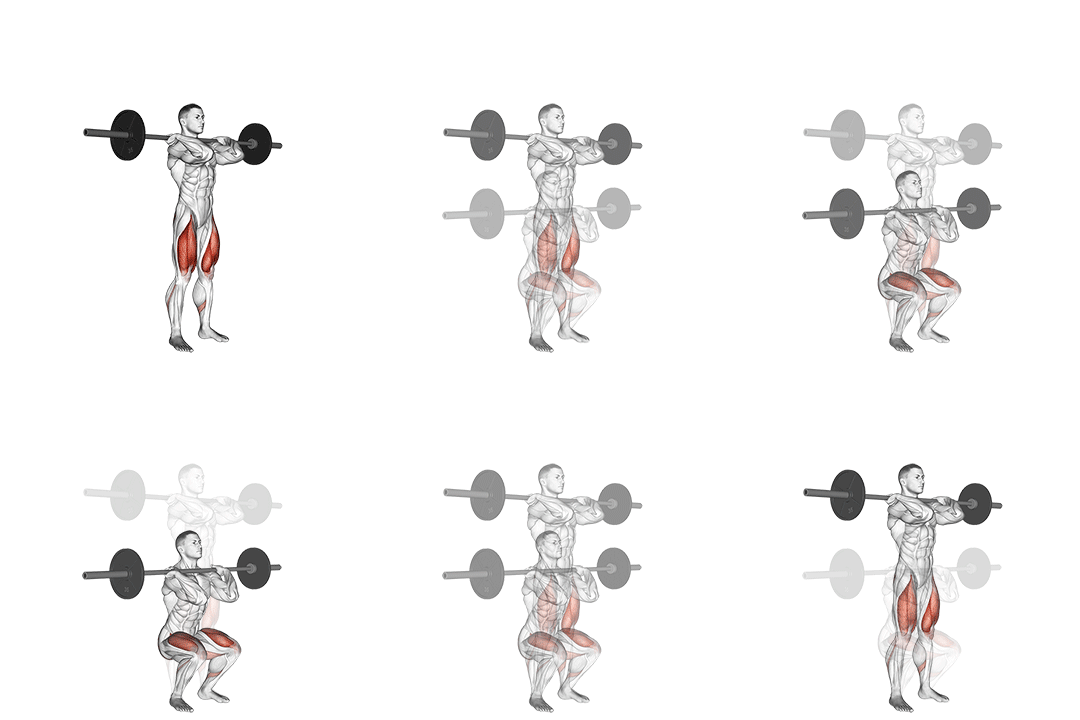
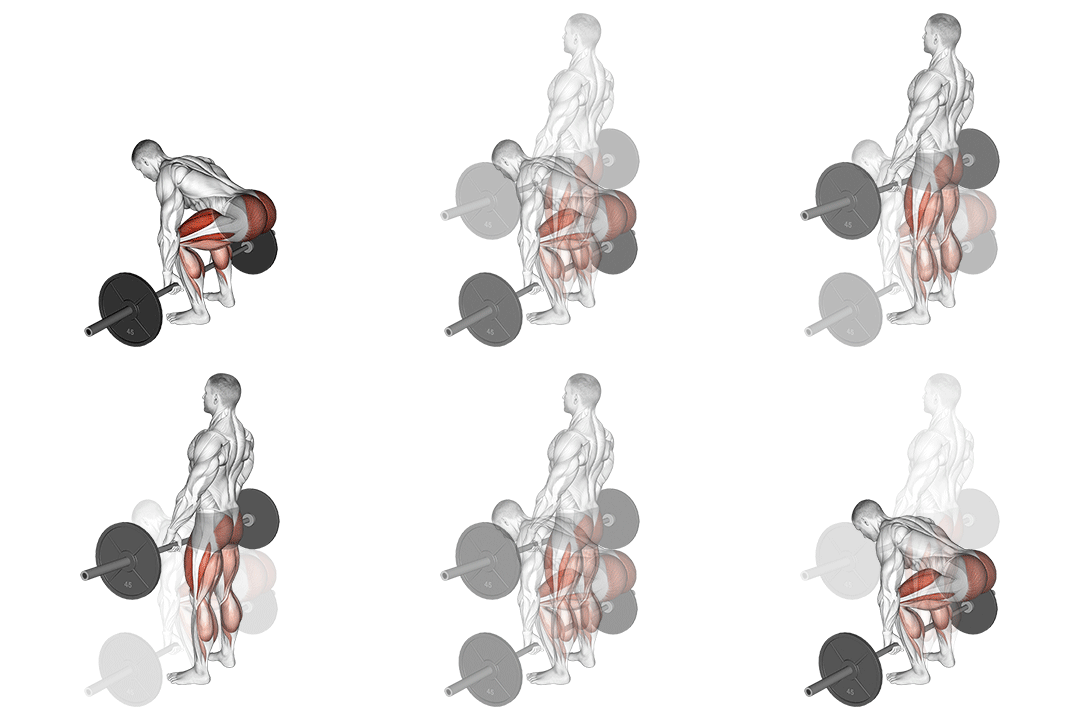
Compare More Exercises
Use our free comparison tool to analyze any two exercises head-to-head.
Compare Exercises