

Barbell Full Squat vs Barbell Full Squat (back Pov): Complete Comparison Guide
Barbell Full Squat vs Barbell Full Squat (back Pov) — you’re comparing the same compound move from two perspectives to decide how depth, bar path, and feedback affect your results. I’ll walk you through primary and secondary muscle activation, biomechanics (hip vs knee moment arms, length-tension), equipment needs, learning curve, and practical programming cues. You’ll get specific technique tips (stance, torso angle, depth targets like 90–120° knee flexion), recommended rep ranges for hypertrophy (6–12) and strength (3–6), and clear scenarios that favor one approach over the other so you can pick what fits your goals.
Exercise Comparison
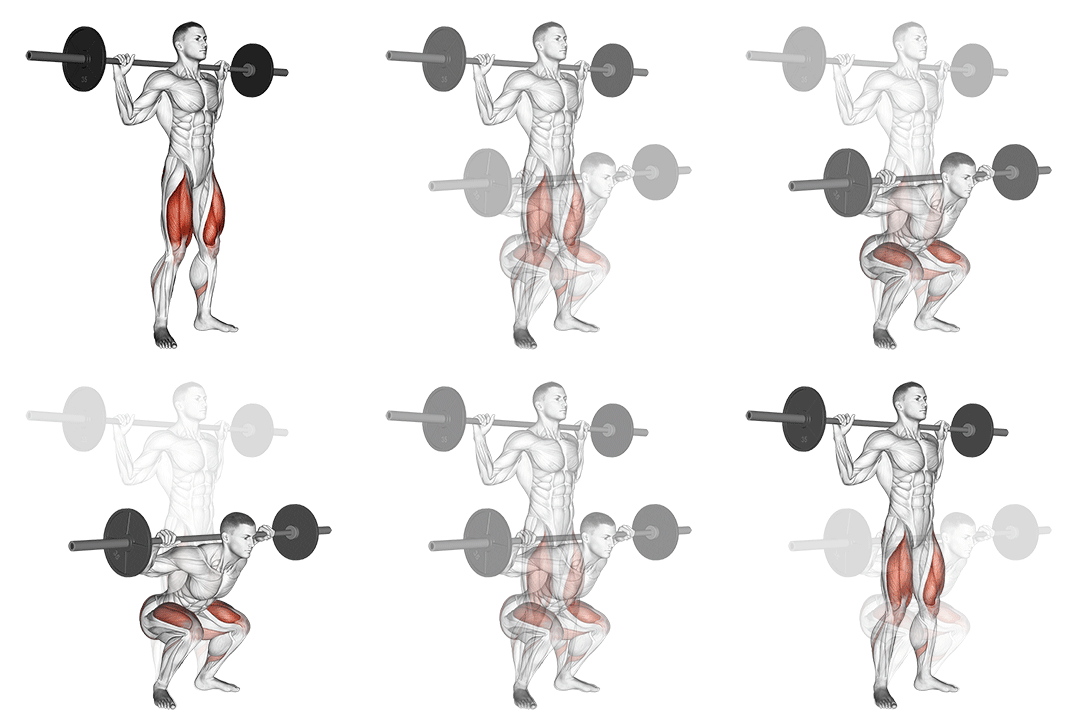
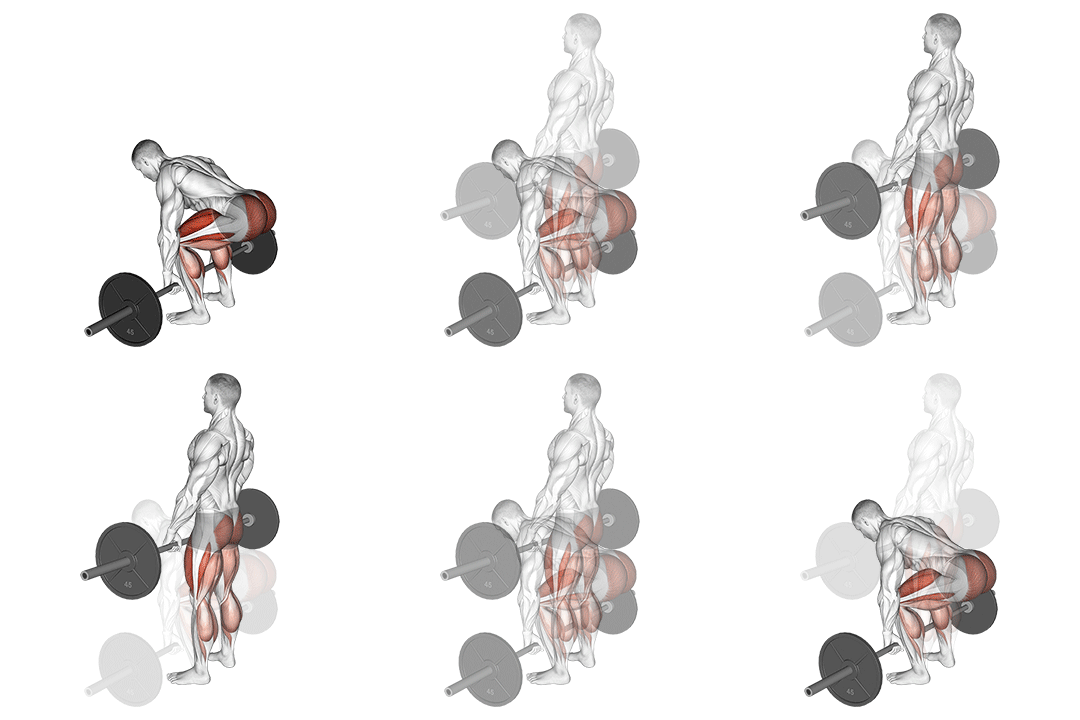
Barbell Full Squat
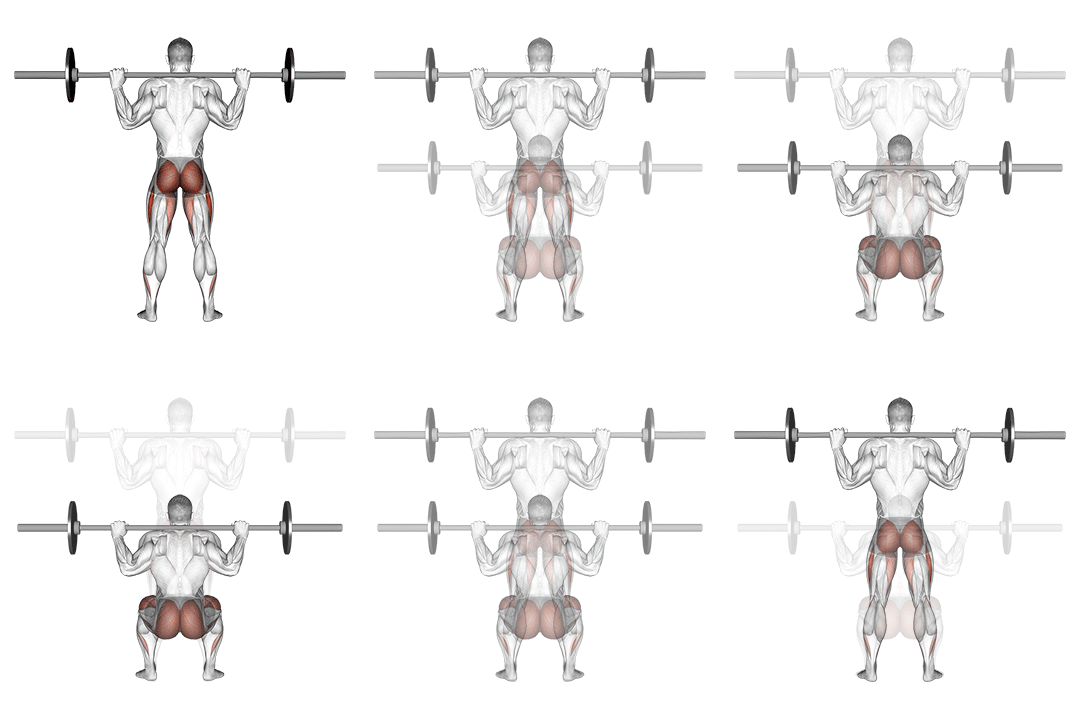
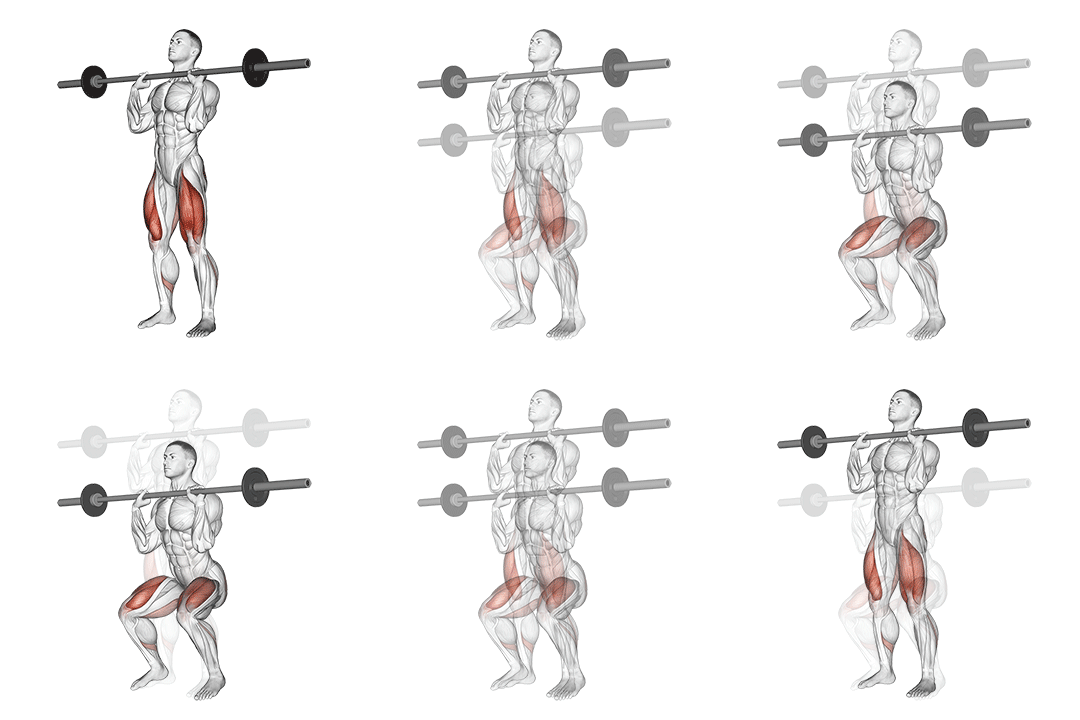
Barbell Full Squat (back Pov)
Head-to-Head Comparison
| Attribute | Barbell Full Squat | Barbell Full Squat (back Pov) |
|---|---|---|
| Target Muscle |
Glutes
|
Glutes
|
| Body Part |
Upper-legs
|
Upper-legs
|
| Equipment |
Barbell
|
Barbell
|
| Difficulty |
Intermediate
|
Intermediate
|
| Movement Type |
Compound
|
Compound
|
| Secondary Muscles |
4
|
4
|
Secondary Muscles Activated
Barbell Full Squat
Barbell Full Squat (back Pov)
Visual Comparison
Overview
Barbell Full Squat vs Barbell Full Squat (back Pov) — you’re comparing the same compound move from two perspectives to decide how depth, bar path, and feedback affect your results. I’ll walk you through primary and secondary muscle activation, biomechanics (hip vs knee moment arms, length-tension), equipment needs, learning curve, and practical programming cues. You’ll get specific technique tips (stance, torso angle, depth targets like 90–120° knee flexion), recommended rep ranges for hypertrophy (6–12) and strength (3–6), and clear scenarios that favor one approach over the other so you can pick what fits your goals.
Key Differences
- Both exercises target the Glutes using Barbell. The main differences are in their movement patterns and muscle activation angles.
Pros & Cons
Barbell Full Squat
+ Pros
- Direct heavy loading — ideal for progressive overload and strength (3–6 RM)
- Clear force vector over mid-foot when coached properly
- Easily loaded with plates, chains, or bands for advanced variations
- Strong carryover to athletic and daily lifting tasks due to full hip extension
− Cons
- Requires good ankle and hip mobility to reach full depth safely
- Higher technical demand on trunk stability under heavy loads
- Less immediate self-feedback without video or mirror
Barbell Full Squat (back Pov)
+ Pros
- Same mechanical benefits as the standard full squat with added visual feedback when recorded
- Easier to self-correct bar path and knee tracking using back-facing video
- Good for coaches and lifters who want to analyze symmetry and foot contact
- Allows focus on cues like vertical shin and bar over mid-foot
− Cons
- Still requires a rack and barbell — not suitable for true home-only setups
- Recording setup may add friction to a normal session
- Perspective can give false confidence if you misinterpret depth or trunk angle
When Each Exercise Wins
Use heavier sets in the 6–12 rep range and controlled eccentrics (2–4s) to maximize time under tension. Standard back squat loading produces consistent mechanical tension across glutes and quads, which drives muscle growth through progressive overload.
The conventional back-loaded full squat allows you to handle maximal loads and manipulate intensity with percentages and intensity techniques (3–6 RM, heavy doubles/singles). That direct loading and stronger spinal loading translates to greater neural and maximal strength adaptations.
Recording yourself from the back or using a coach’s back-facing cue helps you correct valgus collapse, knee tracking, and bar path early. The visual feedback speeds up motor learning and reduces common technical errors.
If you have a barbell setup at home, using a back-facing camera lets you self-coach without a spotter or coach. The recorded view helps you check form and keep sessions safer and more productive on limited equipment.
Frequently Asked Questions
Can I do both Barbell Full Squat and Barbell Full Squat (back Pov) in the same workout?
Yes — you can train heavy working sets with the standard setup and use a back-facing video for technical sets or warmups. For example, perform 3–5 heavy sets at 3–6 reps, then record lighter sets at 6–10 reps to analyze and reinforce form.
Which exercise is better for beginners?
Barbell Full Squat (back Pov) is better for beginners because visual feedback speeds motor learning and reduces common errors like knee valgus and forward lean. Pair recordings with cues (knees out, bar over mid-foot, neutral spine) and practice with light loads before progressing.
How do the muscle activation patterns differ?
They don’t differ in muscle recruitment; differences come from technique. Greater trunk forward lean increases hip extensor (glute/hamstring) loading, while a more upright torso and forward knee travel increase quadriceps torque. Depth beyond 90° hip flexion boosts glute activation due to favorable length-tension.
Can Barbell Full Squat (back Pov) replace Barbell Full Squat?
If by 'back POV' you mean recording your back-facing set, it can complement or temporarily replace standard training for technique work, but it doesn’t replace heavy loading needed for maximal strength. Use recordings to refine form, then apply that technique under heavier loads in your main sets.
Expert Verdict
Both variations are mechanically the same movement and will recruit the glutes as the primary hip extensors when you reach true full depth (≈90–120° knee flexion). Choose the standard Barbell Full Squat when your priority is heavy progressive overload and maximal strength — load the bar, push sets in the 3–6 rep range, and use pause or tempo work to overload weak points. Use Barbell Full Squat (back Pov) when you’re refining technique, rehabbing asymmetry, or coaching yourself — recording the back view helps you correct knee valgus, bar tracking, and foot contact. For hypertrophy aim for 6–12 reps, keep the bar over mid-foot, chest up, drive through heels, and prioritize consistent depth.
Also Compare
More comparisons with Barbell Full Squat
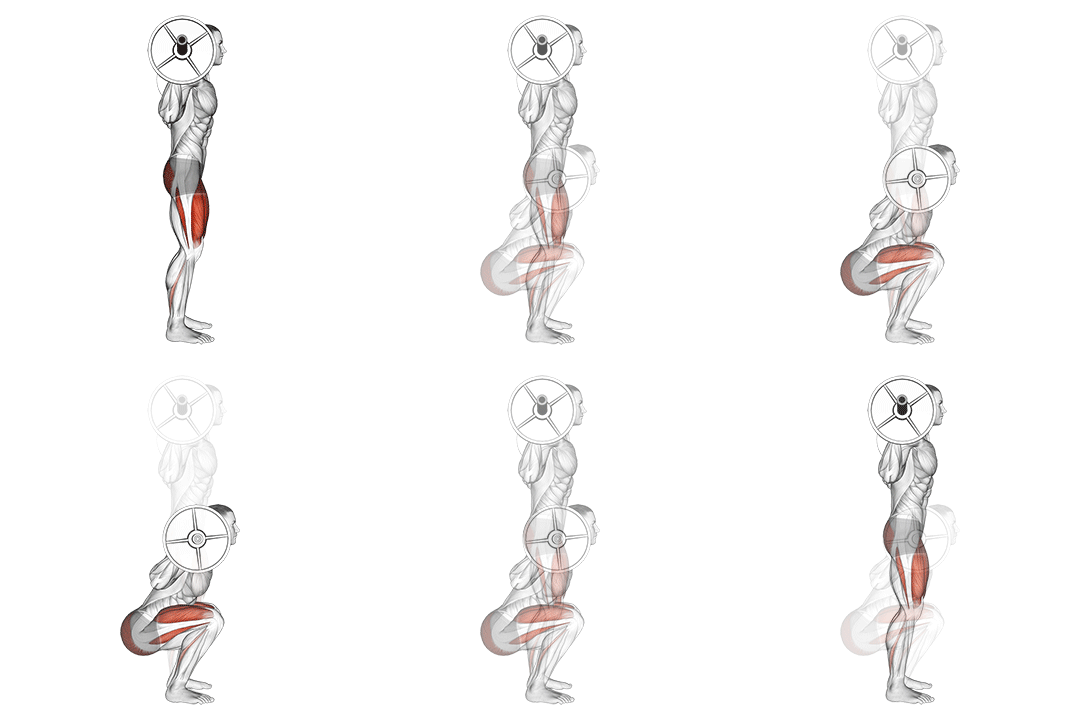
More comparisons with Barbell Full Squat (back Pov)
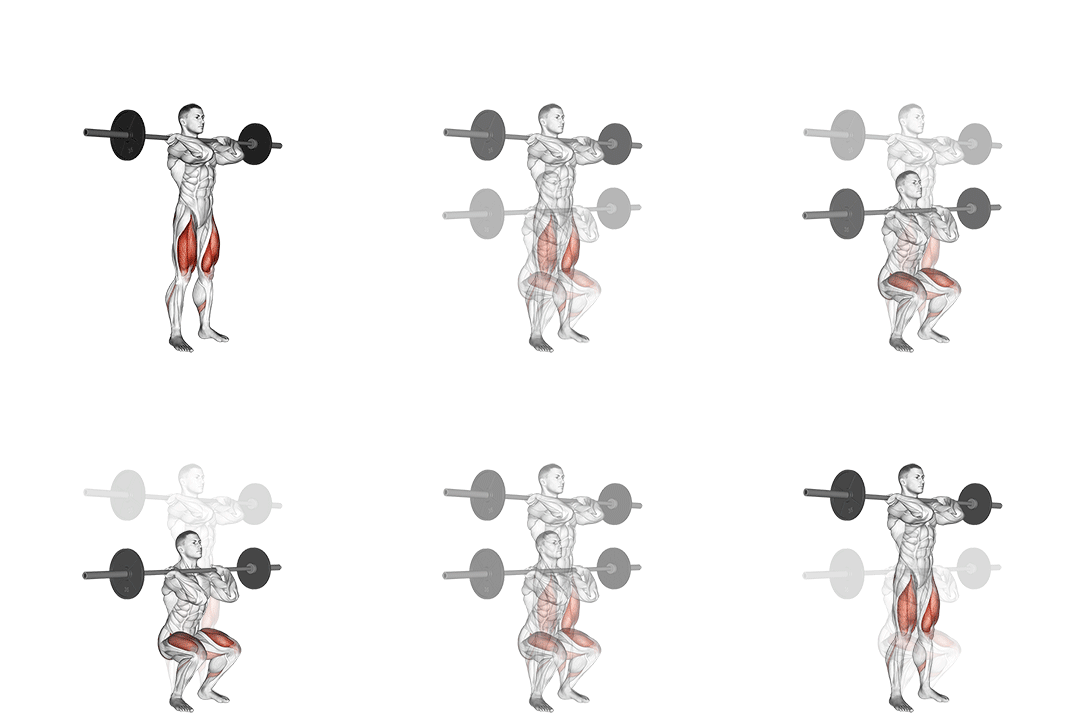
Compare More Exercises
Use our free comparison tool to analyze any two exercises head-to-head.
Compare Exercises