

Barbell Full Squat vs Barbell Full Squat (side Pov): Complete Comparison Guide
Barbell Full Squat vs Barbell Full Squat (side Pov) — you’re looking at the same compound movement from two perspectives. I’ll walk you through how each setup and visual cue affects glute and upper-leg recruitment, technique fixes you can use, and practical programming for strength or muscle growth. You’ll get concrete technique cues (foot width, bar position, torso angle), biomechanical reasons (hip vs knee force vectors, length-tension effects), and clear recommendations for who should prioritize which version based on goals and skill level.
Exercise Comparison
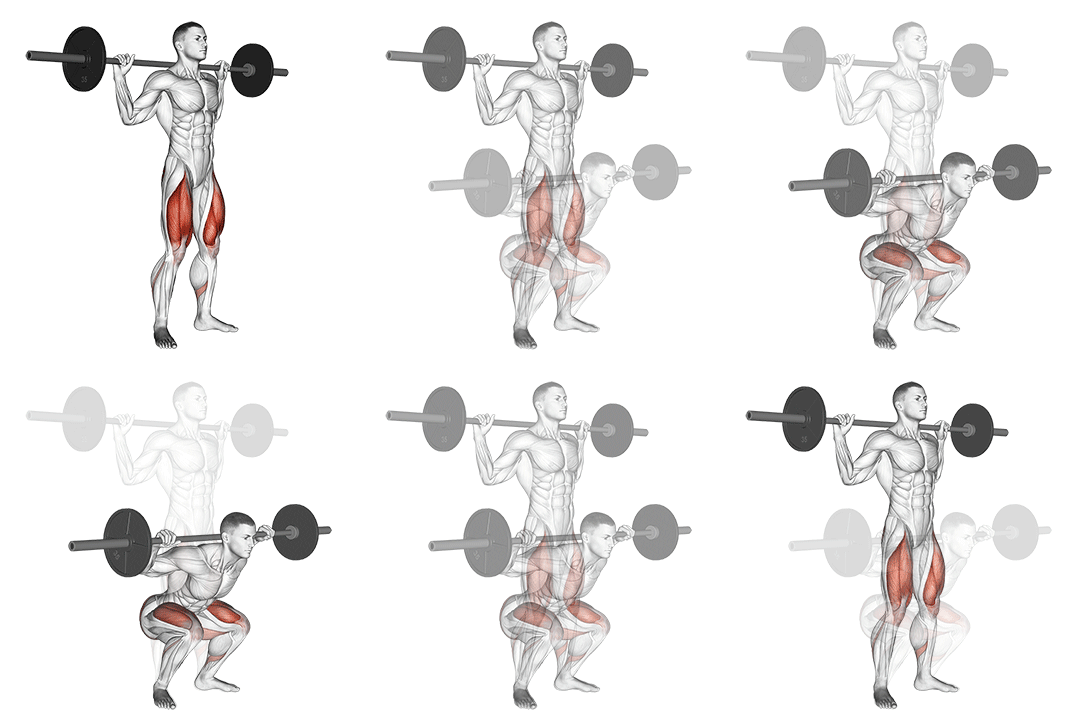
Barbell Full Squat
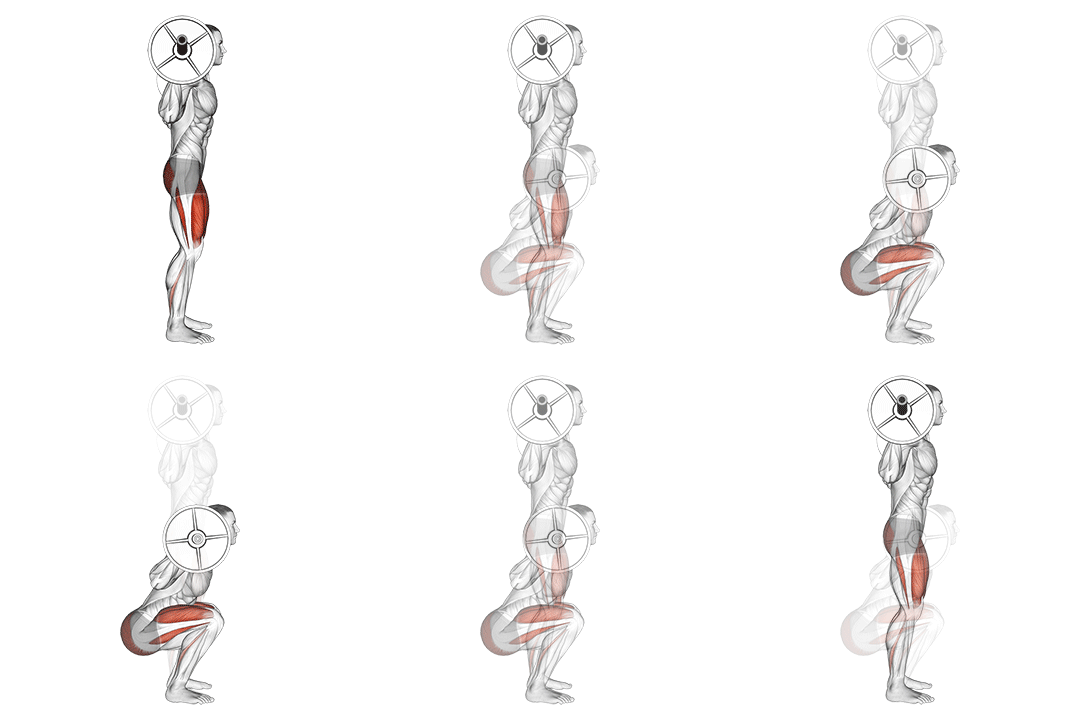
Barbell Full Squat (side Pov)
Head-to-Head Comparison
| Attribute | Barbell Full Squat | Barbell Full Squat (side Pov) |
|---|---|---|
| Target Muscle |
Glutes
|
Glutes
|
| Body Part |
Upper-legs
|
Upper-legs
|
| Equipment |
Barbell
|
Barbell
|
| Difficulty |
Intermediate
|
Intermediate
|
| Movement Type |
Compound
|
Compound
|
| Secondary Muscles |
4
|
4
|
Secondary Muscles Activated
Barbell Full Squat
Barbell Full Squat (side Pov)
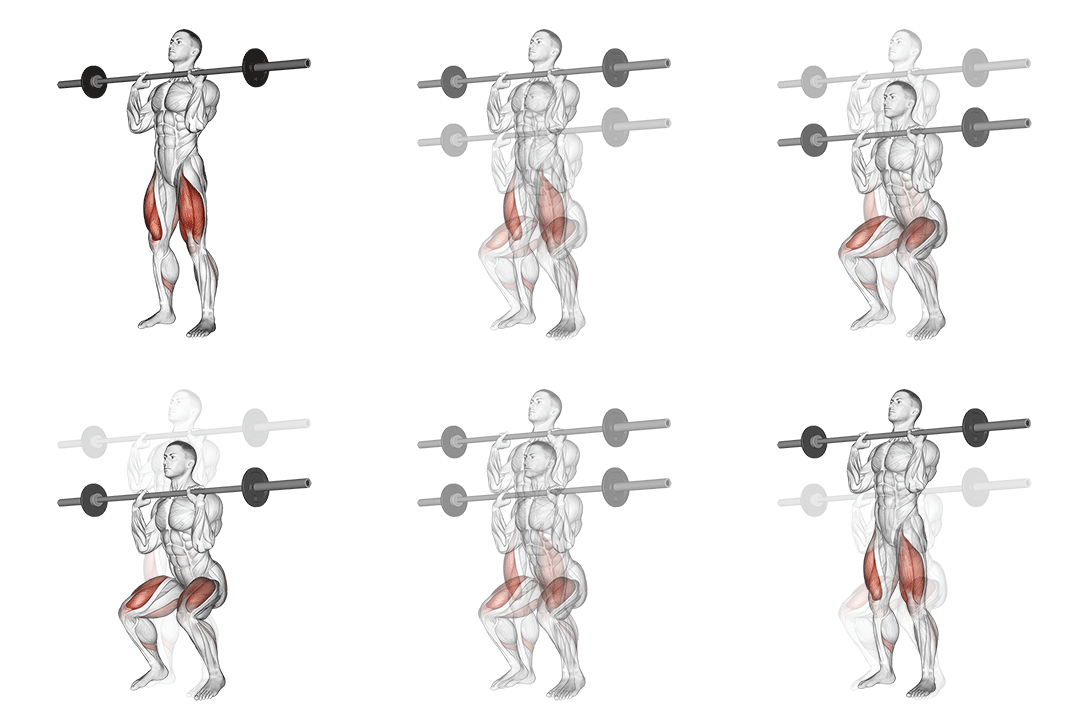
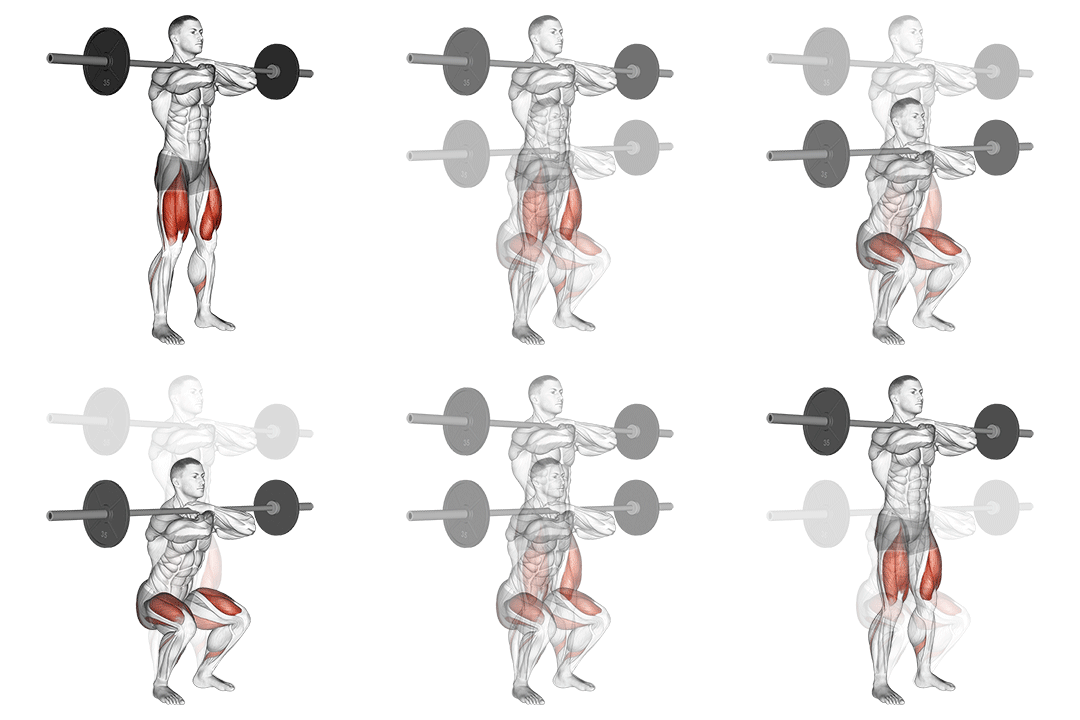
Visual Comparison
Overview
Barbell Full Squat vs Barbell Full Squat (side Pov) — you’re looking at the same compound movement from two perspectives. I’ll walk you through how each setup and visual cue affects glute and upper-leg recruitment, technique fixes you can use, and practical programming for strength or muscle growth. You’ll get concrete technique cues (foot width, bar position, torso angle), biomechanical reasons (hip vs knee force vectors, length-tension effects), and clear recommendations for who should prioritize which version based on goals and skill level.
Key Differences
- Both exercises target the Glutes using Barbell. The main differences are in their movement patterns and muscle activation angles.
Pros & Cons
Barbell Full Squat
+ Pros
- Heavily loads glutes and quads for maximal strength when performed to full depth
- Clear barbell setup and standard rack progression for incremental loading
- Easy to overload with sets of 3–5 reps for strength and 6–12 for hypertrophy
- Multiple accessory and variation options (paused, tempo, belt, safety pins)
− Cons
- Technique flaws (torso collapse, forward knee drift) are harder to self-spot without side feedback
- Requires a squat rack and safety equipment, limiting home use for some
- Deeper ranges demand adequate ankle dorsiflexion and hip mobility
Barbell Full Squat (side Pov)
+ Pros
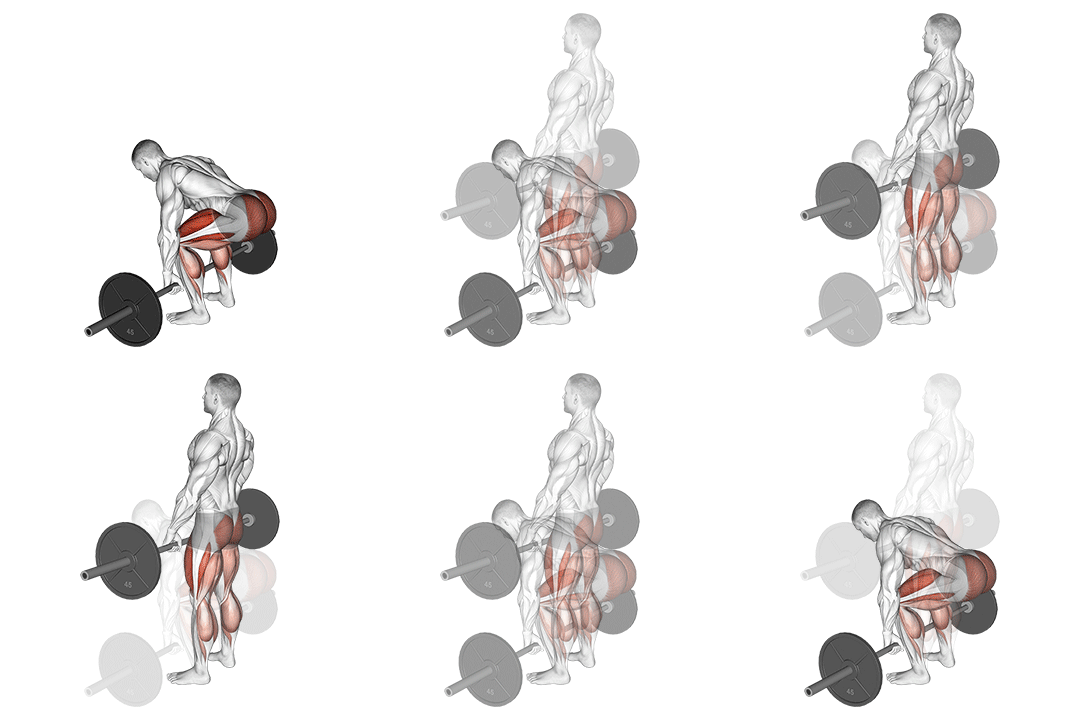
- Side-point-of-view makes spine angle, hip crease and knee travel visually obvious for cueing
- Helps fix depth and torso collapse by providing immediate visual feedback
- Same loading and progression potential as the standard version
- Useful for remote coaching or self-correction with video
− Cons
- Not a distinct exercise—improvements come from better coaching rather than a different stimulus
- Still requires rack and barbell; camera or mirror recommended to gain benefits
- May overemphasize visual form fixes and neglect load progression if relied on solely
When Each Exercise Wins
Both versions target the glutes strongly, but the traditional Barbell Full Squat is the clearer choice for progressive overload. Use 6–12 reps and 3–5 working sets, focusing on full depth (hip crease below parallel) to maximize time under tension and mechanical tension on the glutes.
Strength protocols (3–5 reps, 3–6 sets) rely on stable, repeatable loading and rack setups. The conventional back-squat setup supports heavier absolute loads and consistent bar placement, which improves neural adaptation and maximal force output.
Beginners benefit from side-plane feedback to learn hip hinge, spinal neutrality, and depth. Recording a side view or training beside a mirror reduces common form errors and shortens the skill acquisition phase.
If you have a home rack and barbell, the standard Barbell Full Squat is easier to set up and program. The side-Pov helps technique, but both demand similar equipment; pick the one you can load safely with pins or spotters.
Frequently Asked Questions
Can I do both Barbell Full Squat and Barbell Full Squat (side Pov) in the same workout?
Yes. Use side-Pov video or a few single sets early in the session to tune depth and posture, then perform heavier working sets with the standard setup. Keep volume in check—total weekly squat volume matters more than mixing views.
Which exercise is better for beginners?
Barbell Full Squat (side Pov) is better initially because visual feedback speeds learning of hip hinge, spinal alignment and depth. Once form is reliable, progress to heavier standard back-squat sets for strength and hypertrophy.
How do the muscle activation patterns differ?
They don’t differ substantially if depth and bar position are the same. Small shifts occur when torso angle or knee travel changes: a more vertical torso or forward knee travel increases quadriceps torque, while greater hip hinge increases glute and hamstring moments due to changed force vectors and length-tension conditions.
Can Barbell Full Squat (side Pov) replace Barbell Full Squat?
Not exactly — the side-Pov is a coaching perspective, not a distinct stimulus. Use side-Pov feedback to improve technique, then perform the standard loaded sets for progressive overload and structured programming.
Expert Verdict
Use the Barbell Full Squat as your primary strength and hypertrophy driver when you can access a rack and want straightforward progressive overload. Aim for deep ranges (hip crease below parallel) and program 3–5 sets of 6–12 reps for muscle growth or 3–6 sets of 3–5 reps for strength. Use the Barbell Full Squat (side Pov) as a coaching tool: film or view the lift from the lateral plane to nail torso angle, knee tracking and depth. For beginners, start with side-Pov feedback to ingrain safe movement mechanics, then transfer those cues to heavier loading.
Also Compare
More comparisons with Barbell Full Squat
More comparisons with Barbell Full Squat (side Pov)
Compare More Exercises
Use our free comparison tool to analyze any two exercises head-to-head.
Compare Exercises