

Barbell Guillotine Bench Press vs Bench Press - Powerlifting: Complete Comparison Guide
Barbell Guillotine Bench Press vs Bench Press - Powerlifting is a useful head-to-head to help you choose the right heavy-bar chest lift. You’ll get clear comparisons of primary and secondary muscle use, movement mechanics, injury risk, and which one to prioritize for strength or hypertrophy. I’ll cover technique cues, rep ranges (1–5 for strength, 6–12 for hypertrophy), grip and bar path differences, and practical progressions so you can pick the lift that matches your goals and shoulder health.
Exercise Comparison
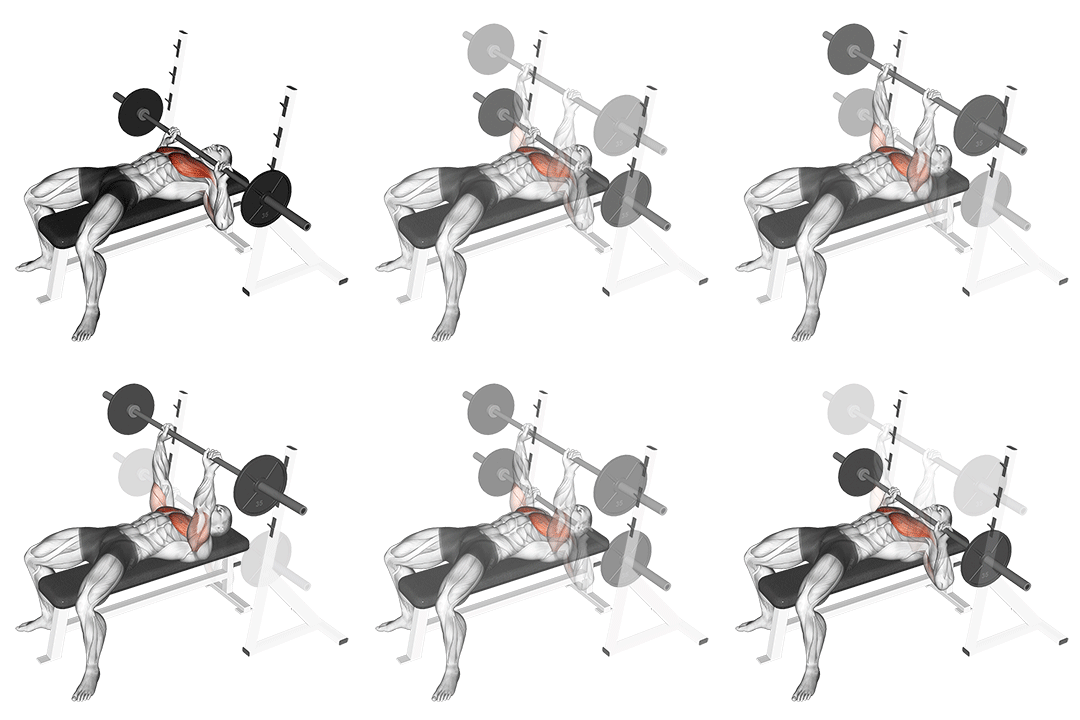
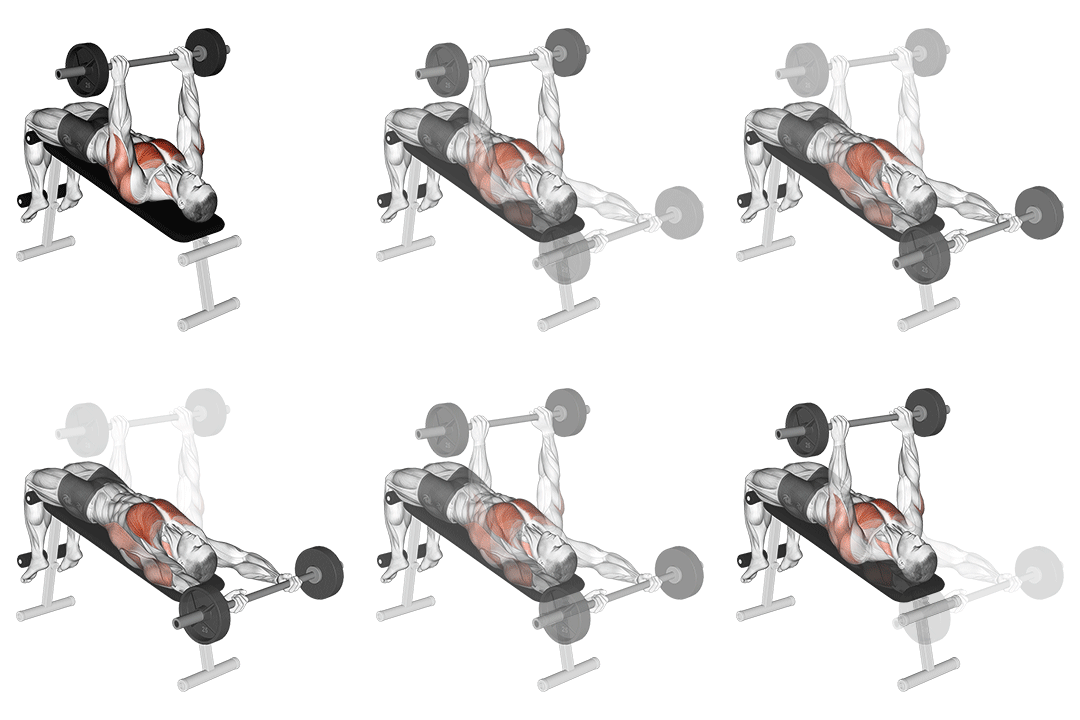
Barbell Guillotine Bench Press
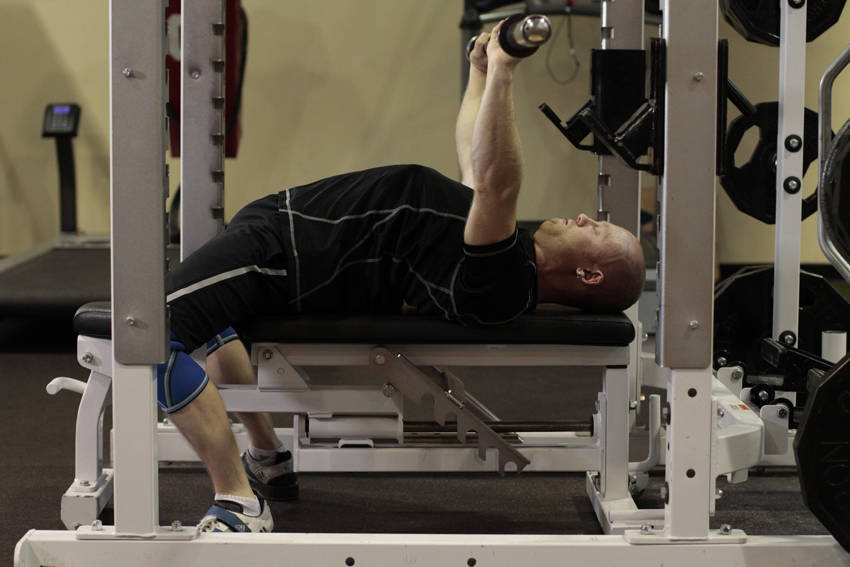
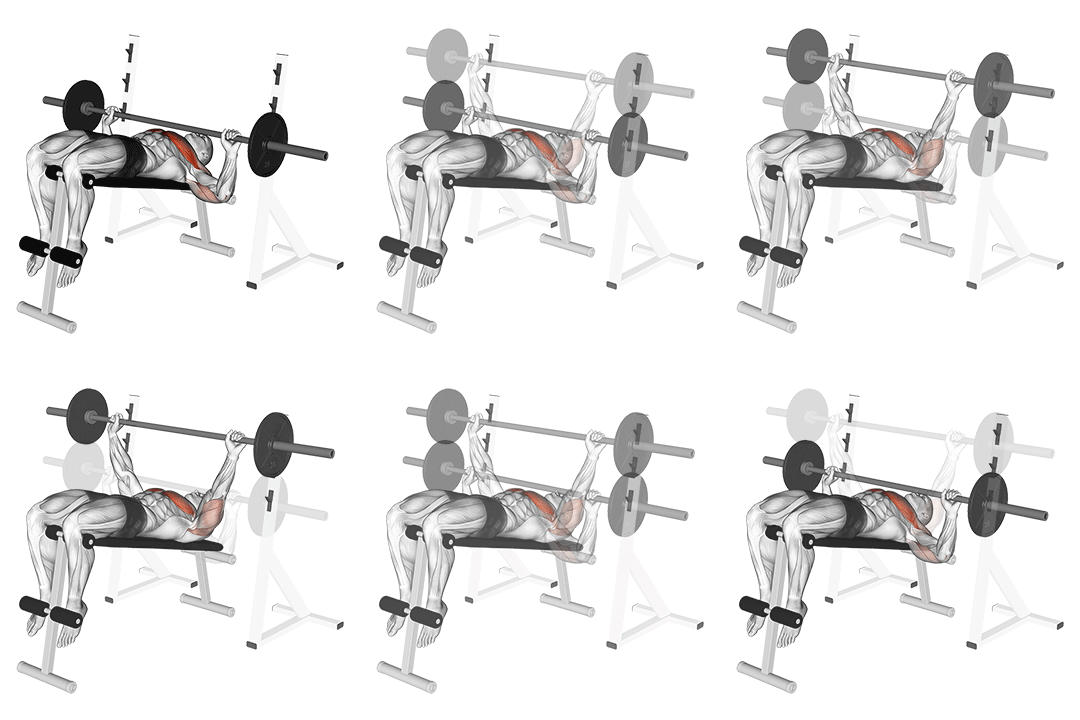
Bench Press - Powerlifting
Head-to-Head Comparison
| Attribute | Barbell Guillotine Bench Press | Bench Press - Powerlifting |
|---|---|---|
| Target Muscle |
Pectorals
|
Pectorals
|
| Body Part |
Chest
|
Chest
|
| Equipment |
Barbell
|
Barbell
|
| Difficulty |
Advanced
|
Advanced
|
| Movement Type |
Compound
|
Compound
|
| Secondary Muscles |
2
|
4
|
Secondary Muscles Activated
Barbell Guillotine Bench Press
Bench Press - Powerlifting
Visual Comparison
Overview
Barbell Guillotine Bench Press vs Bench Press - Powerlifting is a useful head-to-head to help you choose the right heavy-bar chest lift. You’ll get clear comparisons of primary and secondary muscle use, movement mechanics, injury risk, and which one to prioritize for strength or hypertrophy. I’ll cover technique cues, rep ranges (1–5 for strength, 6–12 for hypertrophy), grip and bar path differences, and practical progressions so you can pick the lift that matches your goals and shoulder health.
Key Differences
- Both exercises target the Pectorals using Barbell. The main differences are in their movement patterns and muscle activation angles.
Pros & Cons
Barbell Guillotine Bench Press
+ Pros
- Loads the pectorals at a longer muscle length to enhance stretch-mediated hypertrophy
- Strong stimulus for clavicular and sternal pec fibers due to high horizontal abduction
- Useful as an accessory to isolate chest and create a deep eccentric tension
- Can be used with moderate weight and higher reps (6–12) for focused hypertrophy
− Cons
- Higher shoulder stress and elevated risk of impingement or labral strain
- Not suitable for maximal 1RM strength practice or heavy singles
- Requires careful setup and spotters; poor form can be dangerous
Bench Press - Powerlifting
+ Pros
- Ideal for developing absolute pressing strength and improving 1RM
- Better joint loading distribution using elbow tuck and arch to protect shoulders
- Engages lats and forearms for a full-body tension strategy and stable lockout
- Easily programmed with percentage-based training and peaking cycles
− Cons
- Less stretch at the bottom reduces direct long-length pec stimulus
- Can encourage excessive triceps dominance if grip is too narrow
- Technique demands (arch, bar path) can be hard to master for some lifters
When Each Exercise Wins
The guillotine puts the pecs under greater stretch and longer time under tension at the bottom phase, which enhances stretch-mediated hypertrophy. Use controlled eccentrics, 6–12 reps, and 2–4 sets to exploit this length-tension stimulus.
Powerlifting bench emphasizes force production across the entire range and lockout strength; it scales with heavy singles and percentage-based cycles (85–100% 1RM). The elbow tuck and arch create safer leverage for maximal lifts.
Beginners benefit from the standard bench’s simpler bar path and lower shoulder mobility demands. Learn scapular retraction, tight setup, and basic loading before attempting the guillotine.
Most home setups support the conventional bench with a rack and safety arms, and it’s safer for heavy work. The guillotine’s neck-bar path and need for spotters make it less practical at home.
Frequently Asked Questions
Can I do both Barbell Guillotine Bench Press and Bench Press - Powerlifting in the same workout?
Yes. Start with the powerlifting bench when you’re fresh to prioritize strength (1–5 reps), then use the guillotine as an accessory for hypertrophy (6–12 reps) at lighter loads. Keep total volume in check and monitor shoulder fatigue.
Which exercise is better for beginners?
The Bench Press - Powerlifting is better for beginners because it teaches a safer bar path, scapular setup, and tension strategies. Build strength and shoulder stability with this lift before adding guillotine variations.
How do the muscle activation patterns differ?
Guillotine bench shifts peak pec activation toward end-range stretch, increasing length-tension stimulus, while powerlifting bench balances pec and triceps activation with peak force at mid-range and higher triceps demand near lockout. Bar path and elbow angle drive these differences.
Can Bench Press - Powerlifting replace Barbell Guillotine Bench Press?
For strength-focused lifters, the powerlifting bench can replace the guillotine because it builds 1RM and overall pressing capacity. If your goal is targeted chest hypertrophy, the guillotine provides a distinct stretch stimulus that the powerlifting bench does not fully replicate.
Expert Verdict
Use the Barbell Guillotine Bench Press as a targeted accessory when your goal is chest hypertrophy and you have healthy shoulders and good mobility. Program it for 3–4 sets of 6–12 reps with controlled eccentrics to exploit the long-length pec stimulus. Use the Bench Press - Powerlifting as your primary strength lift if you want to raise your 1RM, improve lockout, and build total-body tension; train it with heavy singles, doubles, and percentage blocks (80–95% 1RM). If you must choose one, prioritize the powerlifting bench for overall strength and gym accessibility, and add the guillotine selectively when your shoulders tolerate the range.
Also Compare
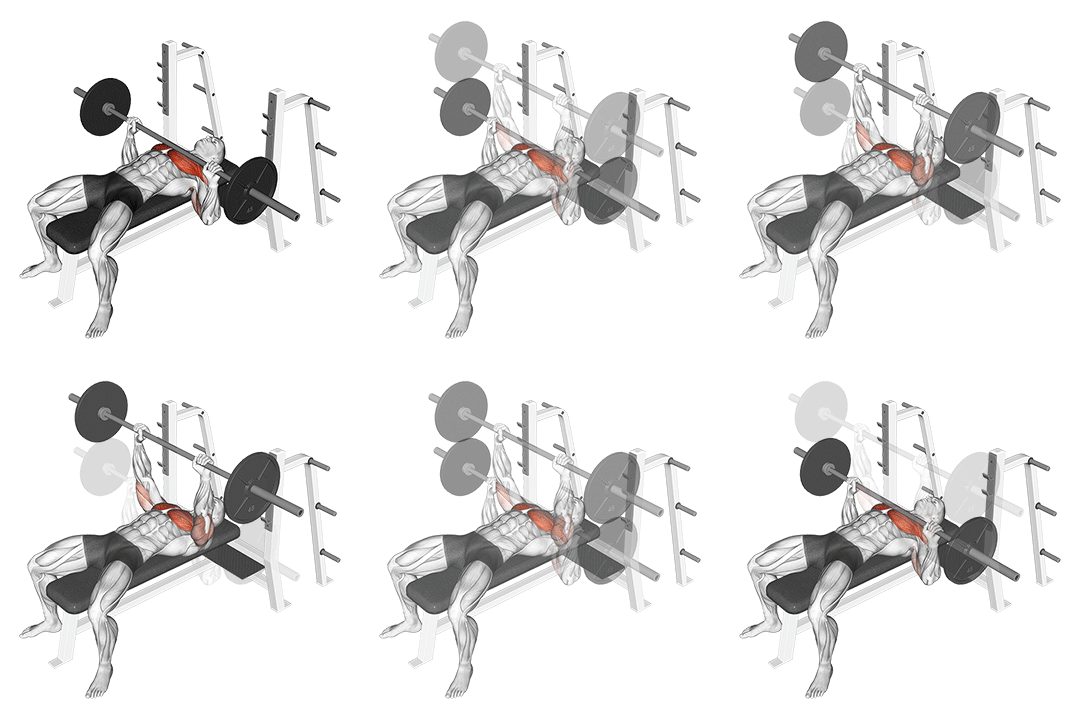
More comparisons with Barbell Guillotine Bench Press
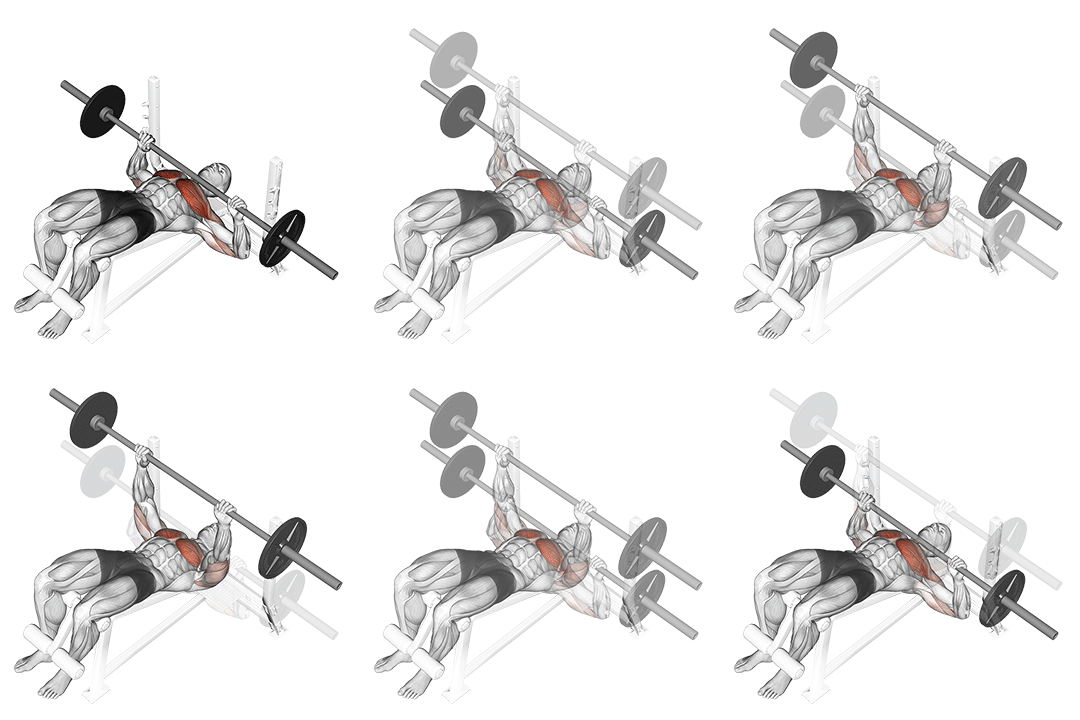
More comparisons with Bench Press - Powerlifting
Compare More Exercises
Use our free comparison tool to analyze any two exercises head-to-head.
Compare Exercises