

Barbell Incline Reverse-grip Press vs Barbell Jm Bench Press: Complete Comparison Guide
Barbell Incline Reverse-grip Press vs Barbell Jm Bench Press — both target the triceps but load the joint angles and force vectors differently. You’ll learn how each movement stresses the long, lateral, and medial heads of the triceps, how secondary chest and shoulder recruitment changes with bench angle and bar path, and which exercise to pick for hypertrophy, strength, or programming simplicity. Expect specific technique cues, recommended rep ranges (3–6 for strength, 6–12 for hypertrophy), suggested progression steps, and practical safety notes so you can choose the right press for your goals.
Exercise Comparison
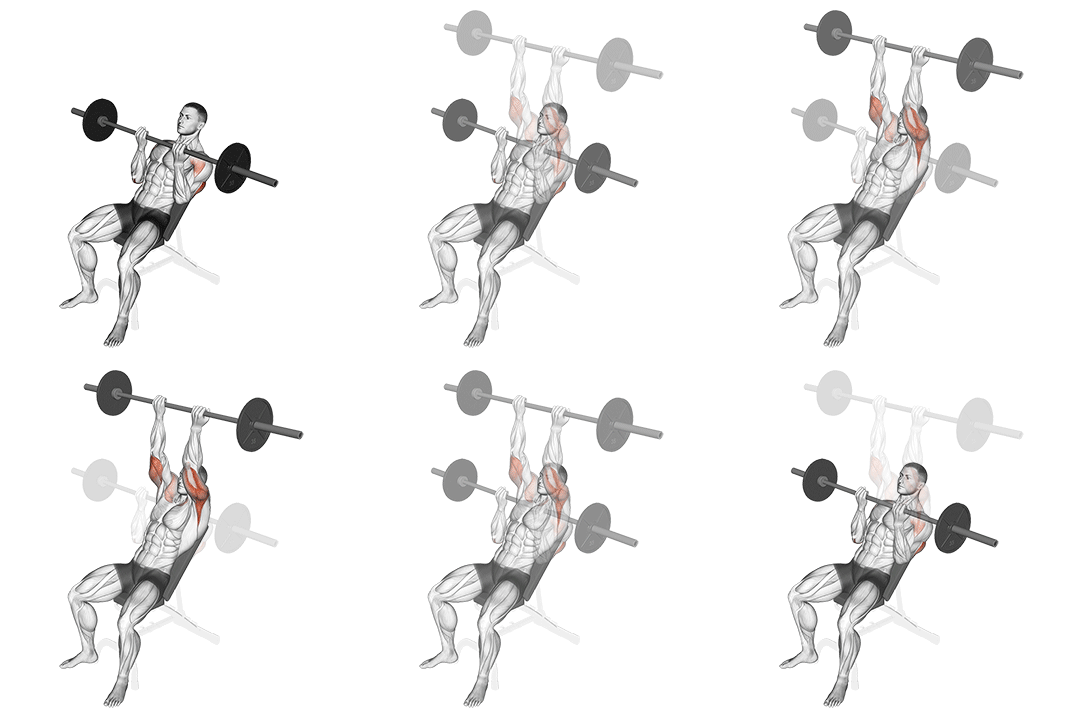
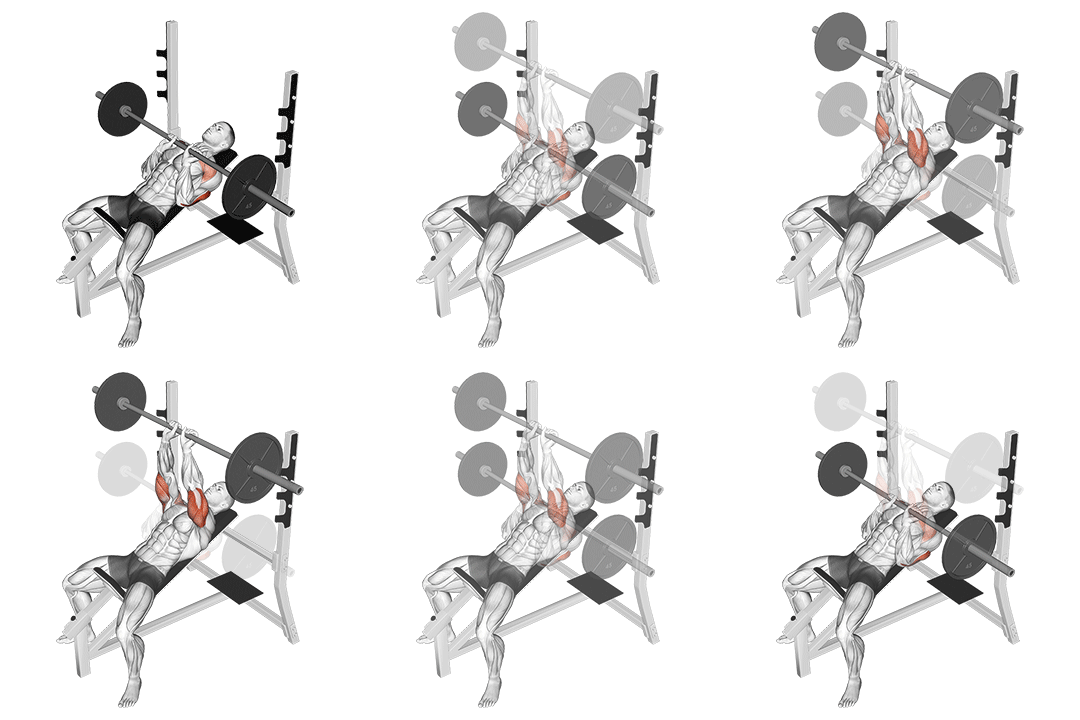
Barbell Incline Reverse-grip Press
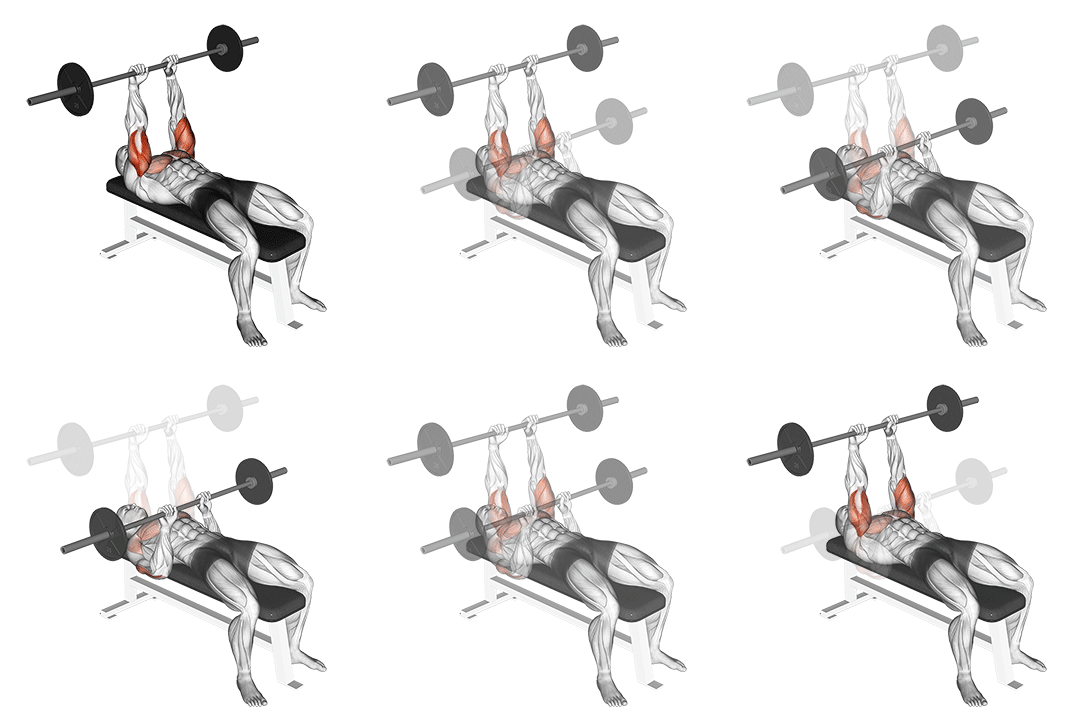
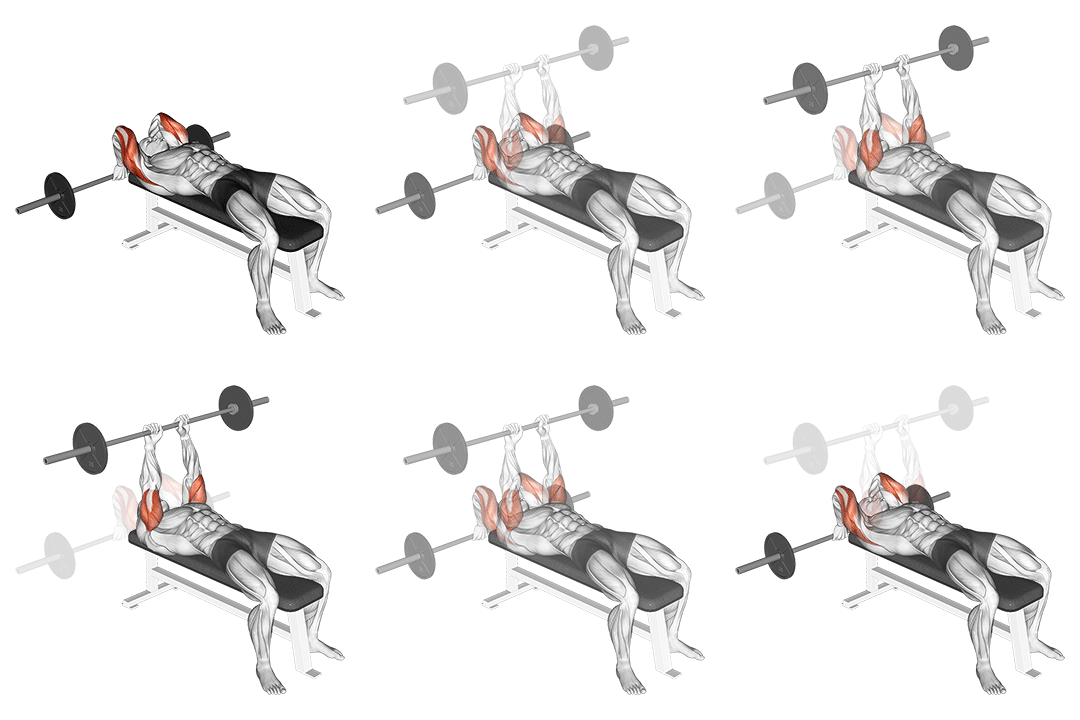
Barbell JM Bench Press
Head-to-Head Comparison
| Attribute | Barbell Incline Reverse-grip Press | Barbell JM Bench Press |
|---|---|---|
| Target Muscle |
Triceps
|
Triceps
|
| Body Part |
Upper-arms
|
Upper-arms
|
| Equipment |
Barbell
|
Barbell
|
| Difficulty |
Intermediate
|
Intermediate
|
| Movement Type |
Compound
|
Compound
|
| Secondary Muscles |
2
|
2
|
Secondary Muscles Activated
Barbell Incline Reverse-grip Press
Barbell JM Bench Press
Visual Comparison
Overview
Barbell Incline Reverse-grip Press vs Barbell Jm Bench Press — both target the triceps but load the joint angles and force vectors differently. You’ll learn how each movement stresses the long, lateral, and medial heads of the triceps, how secondary chest and shoulder recruitment changes with bench angle and bar path, and which exercise to pick for hypertrophy, strength, or programming simplicity. Expect specific technique cues, recommended rep ranges (3–6 for strength, 6–12 for hypertrophy), suggested progression steps, and practical safety notes so you can choose the right press for your goals.
Key Differences
- Both exercises target the Triceps using Barbell. The main differences are in their movement patterns and muscle activation angles.
Pros & Cons
Barbell Incline Reverse-grip Press
+ Pros
- Greater upper-chest and anterior deltoid involvement due to 20–45° bench angle
- Reverse grip shifts load medially, increasing triceps emphasis while keeping elbows tucked
- Good option to vary force vector and reduce direct axial shoulder loading
- Useful for lifters who need a triceps variant that still trains pressing strength at an incline
− Cons
- Requires strong wrist mobility and can be uncomfortable under heavy load
- Limited loading compared with flat variations due to grip and shoulder constraints
- Higher chance of anterior shoulder/biceps tendon irritation for some lifters
Barbell JM Bench Press
+ Pros
- Directly targets triceps with heavy load potential and clear elbow-extension bias
- Easier to load with progressive overload for strength and muscle growth
- Uses flat bench equipment common in most gyms and home setups
- Blends close-grip bench stability with skull-crusher-style elbow mechanics for targeted stimulus
− Cons
- Higher shear and compressive stress at the elbow; risk of tendon irritation if technique slips
- Bar path requires practice to avoid scraping the wrist/face and to protect shoulders
- Less upper-chest stimulation compared with incline variations
When Each Exercise Wins
JM bench allows heavier, more isolated triceps loading and better progressive overload in the 6–12 rep range. Its steep elbow moment arm produces strong mechanical tension on the triceps, which is key for muscle growth.
JM bench supports heavier loading and low-rep strength work (3–6 reps) with a stable flat bench setup. The exercise’s vertical triceps moment at lockout translates well to increasing elbow-extension strength.
Flat-bench variations are more intuitive and easier to spot; JM bench’s technique is simpler to scale with light loads. The incline reverse-grip requires wrist control and will usually frustrate novices.
Most home setups include a flat bench and rack, making the JM bench more accessible. An adjustable incline bench is less common, and the reverse-grip is harder to load safely without a spotter.
Frequently Asked Questions
Can I do both Barbell Incline Reverse-grip Press and Barbell Jm Bench Press in the same workout?
Yes — but sequence them to manage fatigue: perform the more technically demanding or heavier-loaded lift first (typically JM bench for strength) and use the incline reverse-grip as a secondary hypertrophy movement. Keep total weekly volume in check to avoid elbow or wrist overload.
Which exercise is better for beginners?
Barbell Jm Bench Press is generally better for beginners because flat-bench setups are easier to learn and progress. Beginners should use light loads to master elbow path and maintain strict form before increasing weight.
How do the muscle activation patterns differ?
The incline reverse-grip shifts the force vector toward the clavicular chest and anterior deltoid while still loading the triceps, often biasing medial/lateral heads through a more tucked elbow path. The JM bench reduces shoulder contribution and increases elbow-moment demands, spiking triceps activation near lockout.
Can Barbell Jm Bench Press replace Barbell Incline Reverse-grip Press?
Yes for triceps-focused work — JM bench is a stronger generalist for triceps hypertrophy and strength. Keep the incline reverse-grip in the program when you need extra upper-chest stimulus or to vary shoulder angle and force vectors.
Expert Verdict
Choose the Barbell Jm Bench Press when your priority is triceps-specific strength or hypertrophy: it allows heavier loading, clear progressive steps, and transfers well to lockout strength. Use 3–6 reps for strength cycles and 6–12 reps for hypertrophy with controlled tempo. Opt for the Barbell Incline Reverse-grip Press when you want more upper-chest and anterior deltoid carryover while still targeting the triceps, or to vary force vectors and reduce direct shoulder horizontal stress; set the bench to 20–35° and keep reps in the 6–12 range. Always prioritize strict elbow tracking, gradual loading, and mobility work for wrists and shoulders to minimize injury risk.
Also Compare
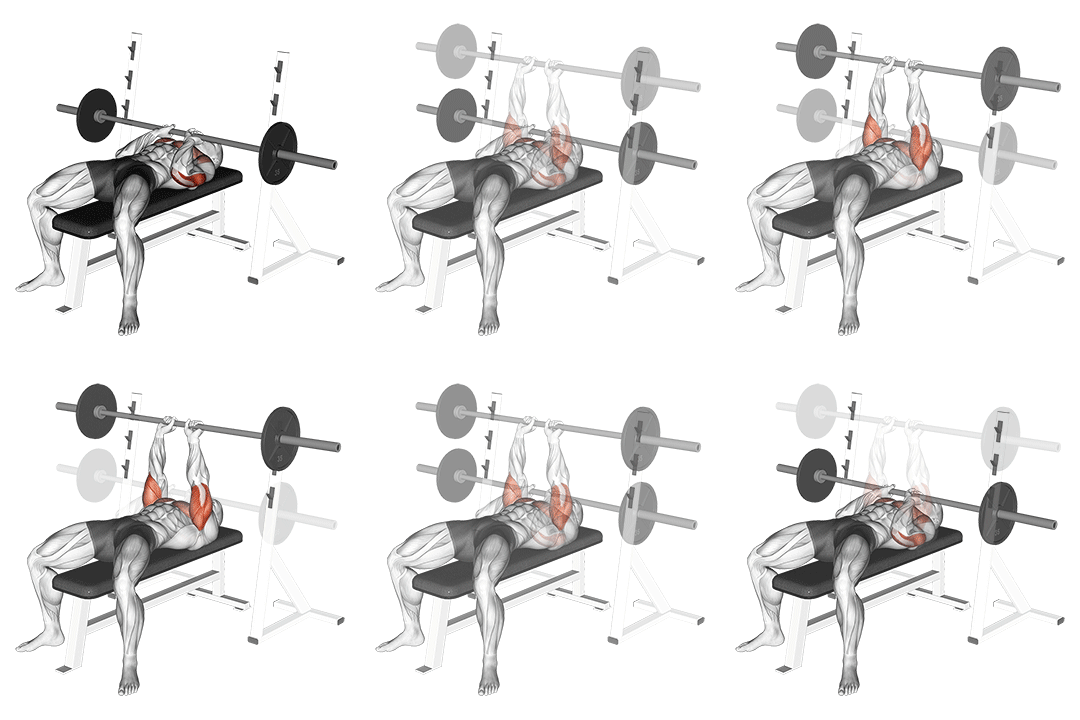
More comparisons with Barbell Incline Reverse-grip Press
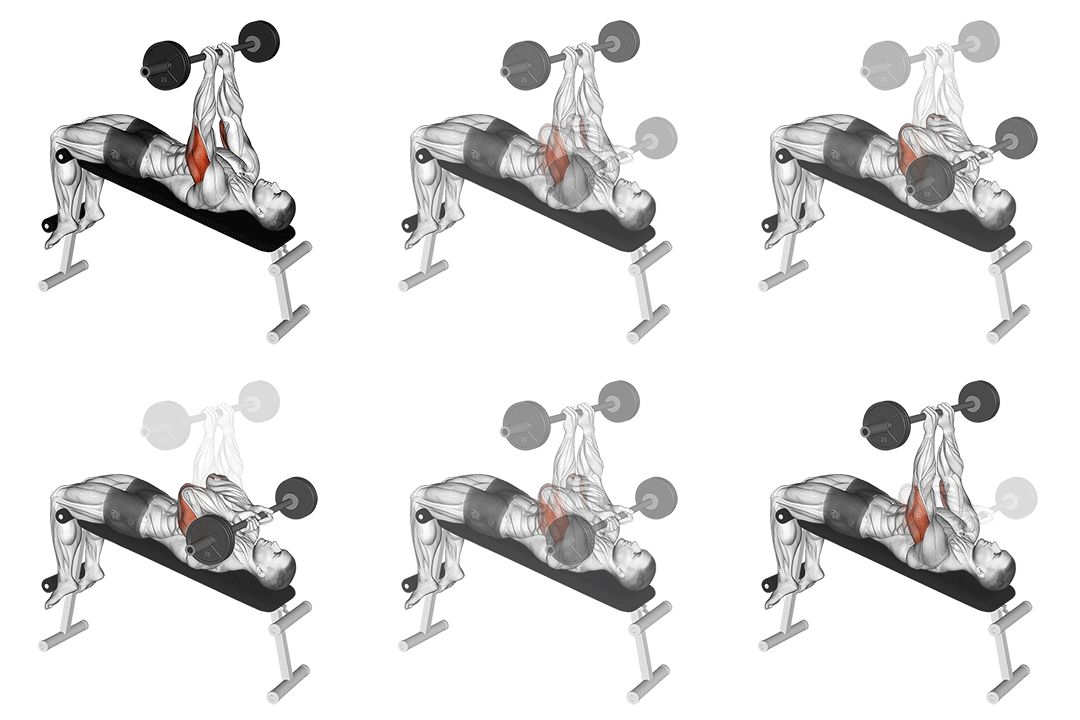
More comparisons with Barbell JM Bench Press
Compare More Exercises
Use our free comparison tool to analyze any two exercises head-to-head.
Compare Exercises