

Barbell Incline Reverse-grip Press vs Barbell Lying Close-grip Press: Complete Comparison Guide
Barbell Incline Reverse-grip Press vs Barbell Lying Close-grip Press — two compound barbell moves that both target the triceps but load the arm and shoulder differently. If you want clear guidance on which to include in your program, this comparison walks you through primary muscle focus, secondary chest and shoulder involvement, equipment needs, technique cues, and when to pick one over the other for strength or hypertrophy. Read on and you’ll get specific angles, rep ranges, safety tips, and short sample progressions so you can use the right press for your goals.
Exercise Comparison
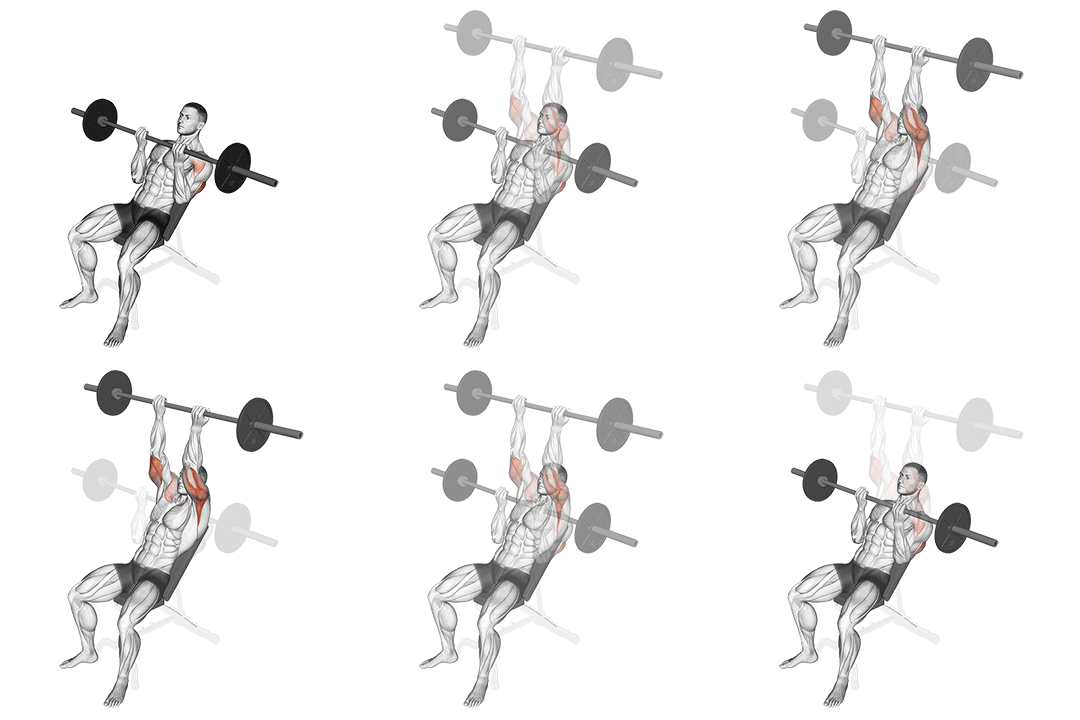
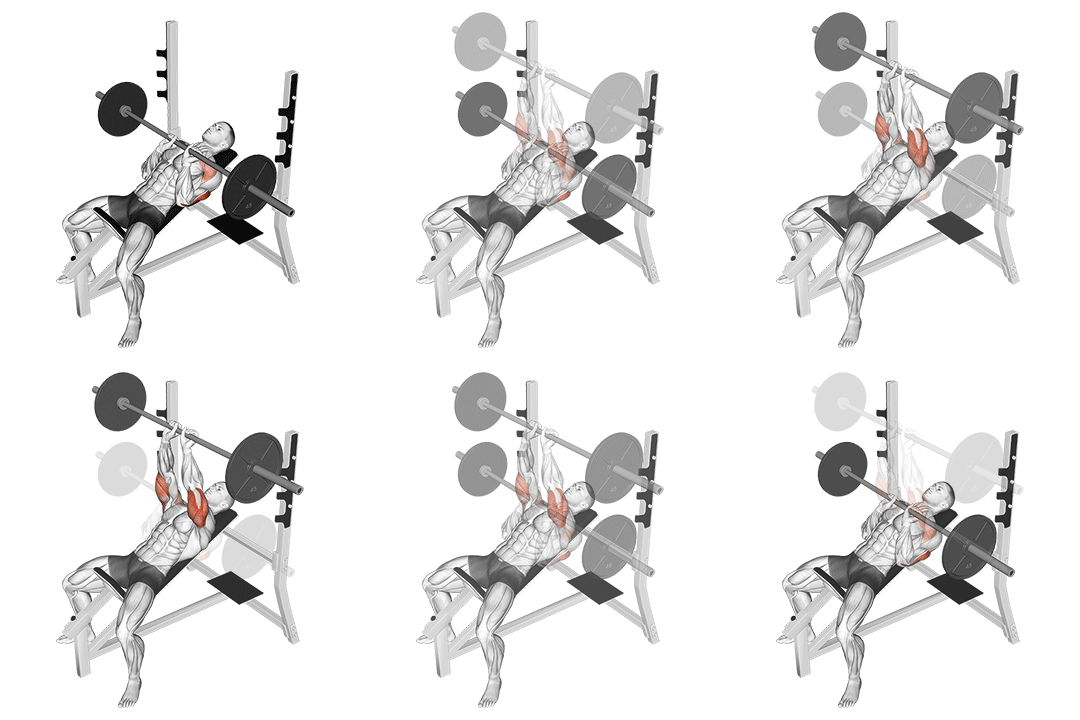
Barbell Incline Reverse-grip Press
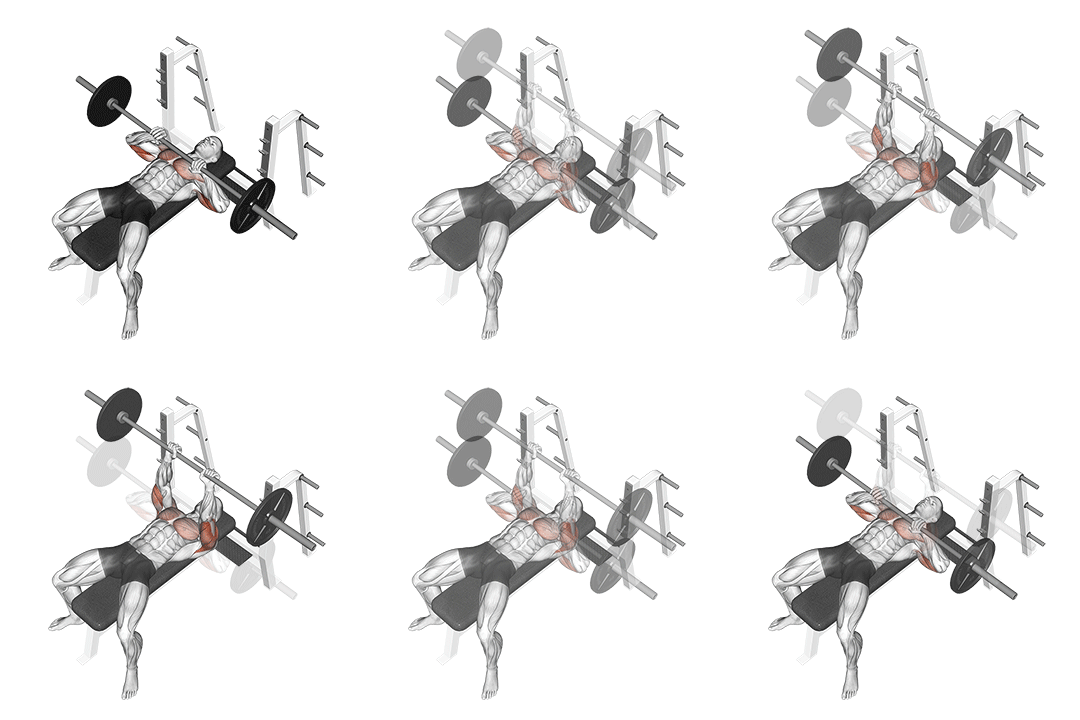
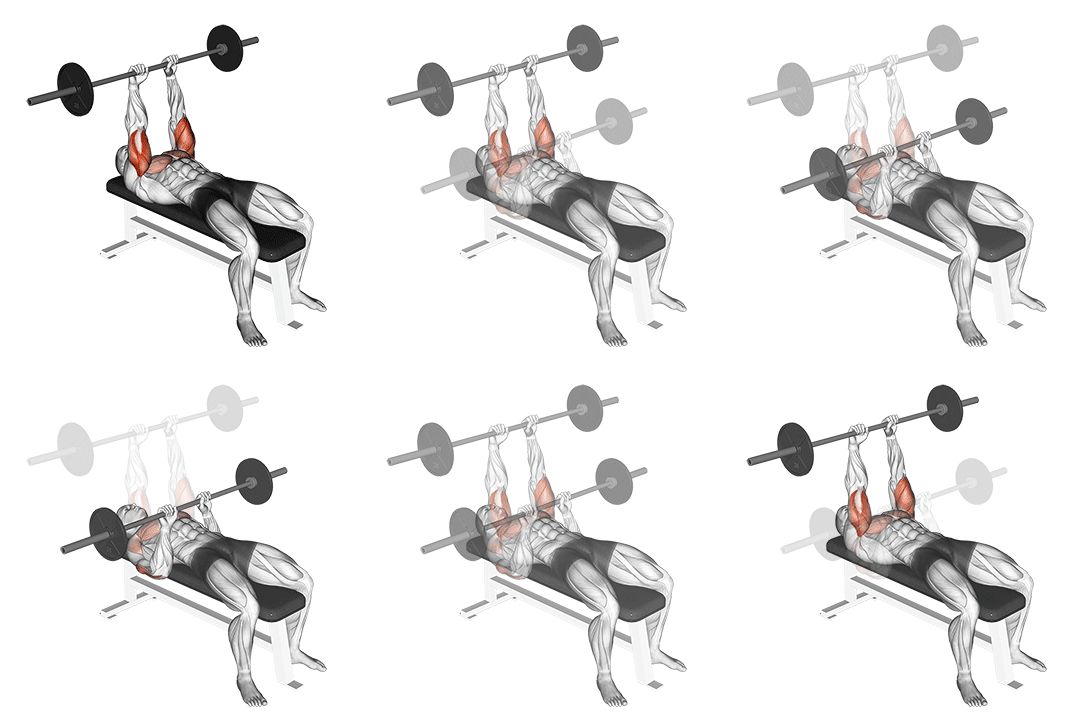
Barbell Lying Close-grip Press
Head-to-Head Comparison
| Attribute | Barbell Incline Reverse-grip Press | Barbell Lying Close-grip Press |
|---|---|---|
| Target Muscle |
Triceps
|
Triceps
|
| Body Part |
Upper-arms
|
Upper-arms
|
| Equipment |
Barbell
|
Barbell
|
| Difficulty |
Intermediate
|
Intermediate
|
| Movement Type |
Compound
|
Compound
|
| Secondary Muscles |
2
|
2
|
Secondary Muscles Activated
Barbell Incline Reverse-grip Press
Barbell Lying Close-grip Press
Visual Comparison
Overview
Barbell Incline Reverse-grip Press vs Barbell Lying Close-grip Press — two compound barbell moves that both target the triceps but load the arm and shoulder differently. If you want clear guidance on which to include in your program, this comparison walks you through primary muscle focus, secondary chest and shoulder involvement, equipment needs, technique cues, and when to pick one over the other for strength or hypertrophy. Read on and you’ll get specific angles, rep ranges, safety tips, and short sample progressions so you can use the right press for your goals.
Key Differences
- Both exercises target the Triceps using Barbell. The main differences are in their movement patterns and muscle activation angles.
Pros & Cons
Barbell Incline Reverse-grip Press
+ Pros
- Stronger long-head triceps and upper-chest stimulus at 30–45°
- Varies shoulder angle and bar path for balanced development
- Good accessory for upper-arm shape and clavicular pec work
- Reduces sternal pec shear compared to flat presses
− Cons
- Higher wrist and anterior shoulder stress with supinated grip
- Harder to handle heavy loads safely without a spotter
- Requires adjustable incline bench and more setup
Barbell Lying Close-grip Press
+ Pros
- Allows heavier loads and greater absolute elbow extension torque
- Simple setup and easier to learn for most lifters
- Excellent for triceps mass and strength work (3–12 rep ranges)
- More accessible in most gyms and home setups
− Cons
- Can stress the elbows if grip is too narrow or technique is poor
- Less emphasis on upper-chest/clavicular fibers than incline variants
- Can become redundant if overused without variation
When Each Exercise Wins
Close-grip lets you overload the triceps with heavier loads and cleaner elbow-extension mechanics, making 6–12 rep sets more effective for overall triceps hypertrophy. Use 3–5 sets of 8–12 with controlled eccentrics to drive muscle growth.
The flat close-grip press supports larger absolute loads and direct transfer to heavier lockout strength; perform 3–6 sets of 3–6 reps with progressive loading. Its stable bar path and simpler setup let you safely chase higher percentages of 1RM.
Beginners benefit from the simpler setup and clearer bar path on the flat bench, which reduces coordination demands and allows faster technical progress. Start with light loads and 8–12 reps to teach elbow control.
Most home gyms have a flat bench or can be substituted by pressing off the floor; you don’t need an adjustable incline bench or advanced wrist mobility to start. Close-grip gives the best trade-off of effectiveness and minimal equipment.
Frequently Asked Questions
Can I do both Barbell Incline Reverse-grip Press and Barbell Lying Close-grip Press in the same workout?
Yes. Place the close-grip press earlier for heavy sets (3–6 reps) and use the incline reverse-grip later as an accessory (8–15 reps). That ordering uses neural freshness for heavy loading and the incline to finish with targeted long-head stimulus.
Which exercise is better for beginners?
Barbell Lying Close-grip Press is better for beginners because the flat setup is more stable and easier to coach. Start light, master elbow tuck and vertical bar path, then increase load gradually.
How do the muscle activation patterns differ?
The incline reverse-grip shifts the force vector toward shoulder flexion, loading the triceps long head and clavicular pecs at a longer muscle length during the eccentric. The close-grip creates higher elbow-extension torque with a more horizontal bar path, recruiting lateral and medial triceps heads more strongly during concentric lockout.
Can Barbell Lying Close-grip Press replace Barbell Incline Reverse-grip Press?
Yes for most triceps mass and strength goals—the close-grip handles heavier loads and provides broad triceps stimulus. If you specifically want upper-chest or long-head emphasis, keep the incline reverse-grip as an accessory rather than a complete replacement.
Expert Verdict
Use the Barbell Lying Close-grip Press as your primary triceps strength and muscle-building movement: it supports heavier loads, simpler progression schemes, and is the most accessible choice for most lifters. Reserve the Barbell Incline Reverse-grip Press as a targeted accessory when you want to bias the triceps long head and upper-chest fibers or add variety to your upper-arm work. Programmatically, do close-grip presses 2–3 times weekly for heavy strength blocks (3–6 sets, 3–8 reps) and slot incline reverse-grip presses for 2–3 sets of 8–15 reps as an accessory or hypertrophy-day exercise. Prioritize strict elbow control and adjust bench angle (30–45°) and grip width to manage shoulder and wrist stress.
Also Compare
More comparisons with Barbell Incline Reverse-grip Press
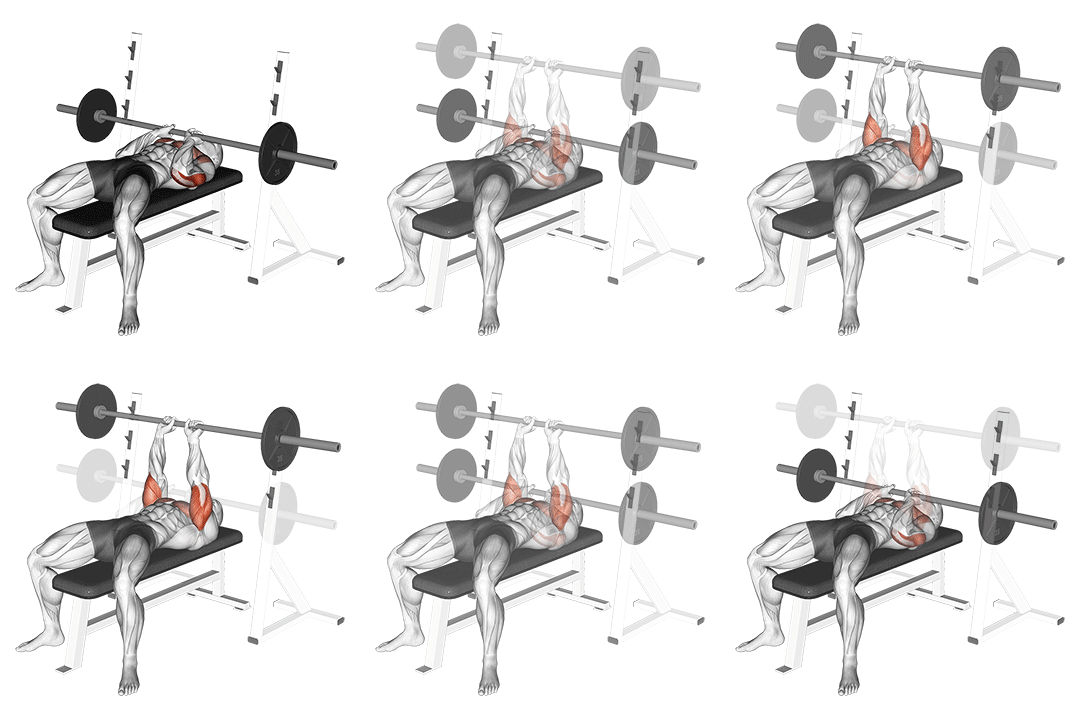
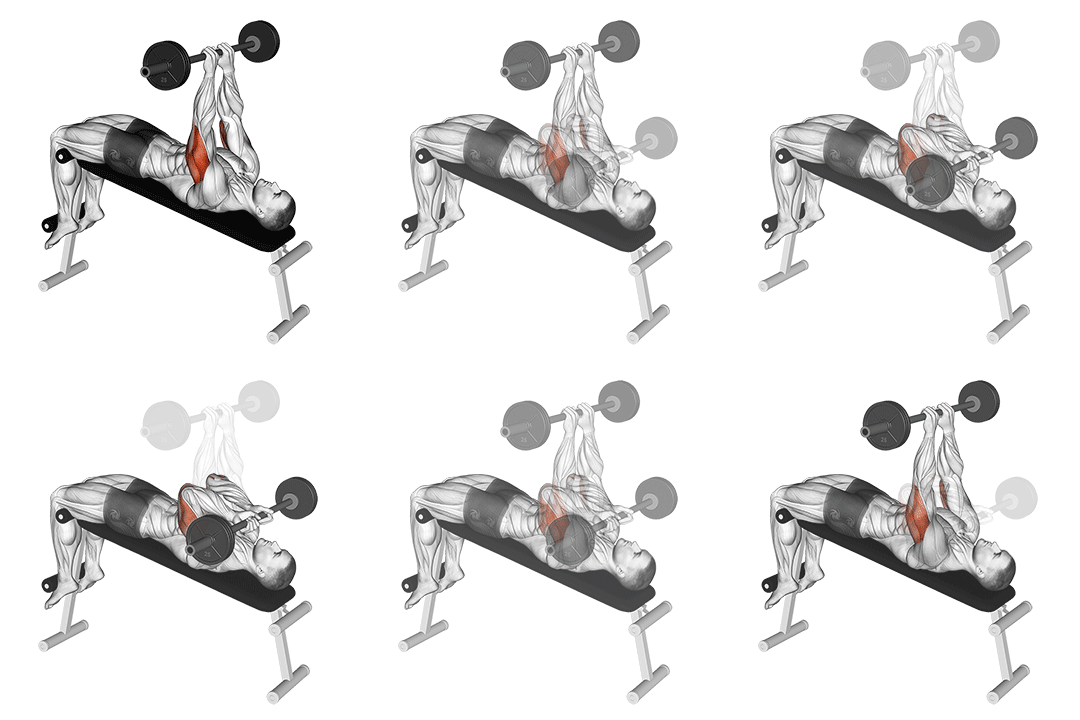
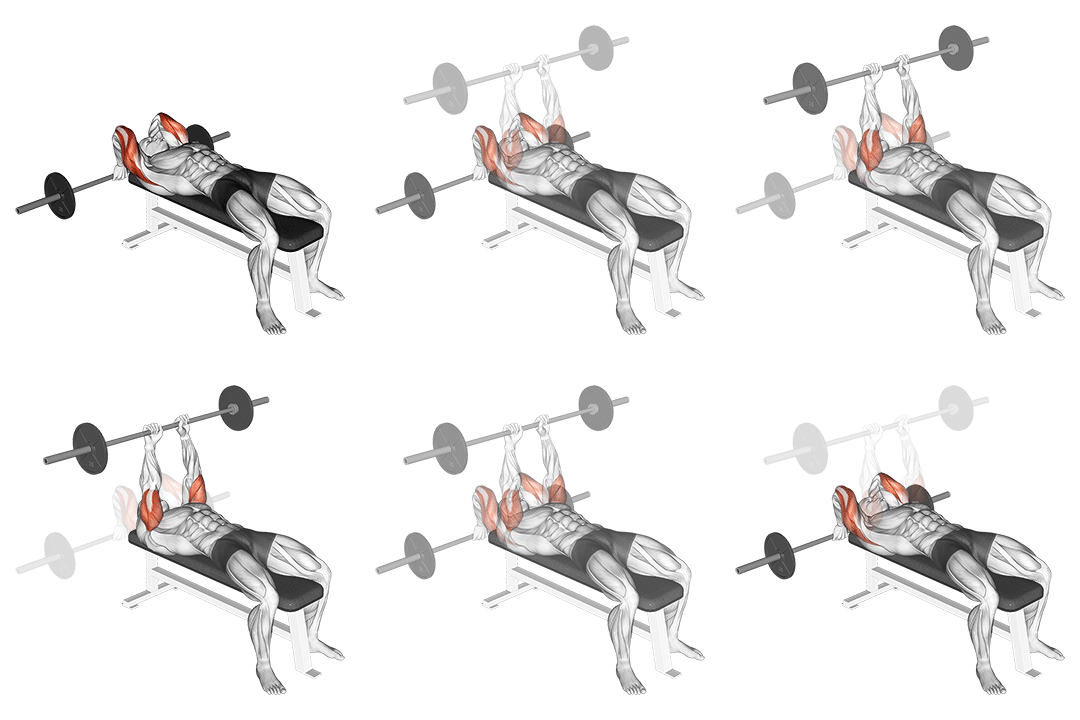
More comparisons with Barbell Lying Close-grip Press
Compare More Exercises
Use our free comparison tool to analyze any two exercises head-to-head.
Compare Exercises