

Barbell Incline Row vs Lever One Arm Bent Over Row: Complete Comparison Guide
Barbell Incline Row vs Lever One Arm Bent Over Row — you’ve picked two solid upper-back builders. This head-to-head will show you how each exercise loads the rhomboids, traps, and posterior deltoids; which one reduces lower-back strain; how they differ in unilateral control and loading potential; and practical programming tips (rep ranges, angles, and progressions). Read on and you’ll know which to pick for hypertrophy, strength, or convenience, plus clear technique cues so you get more muscle growth and less risk of injury.
Exercise Comparison
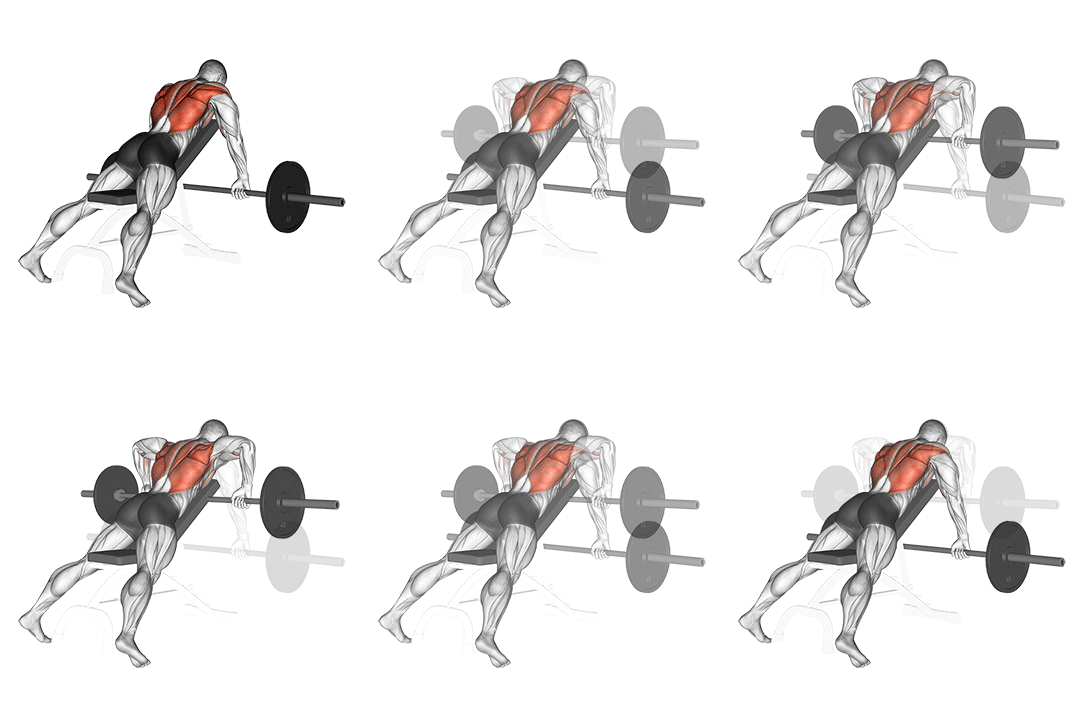
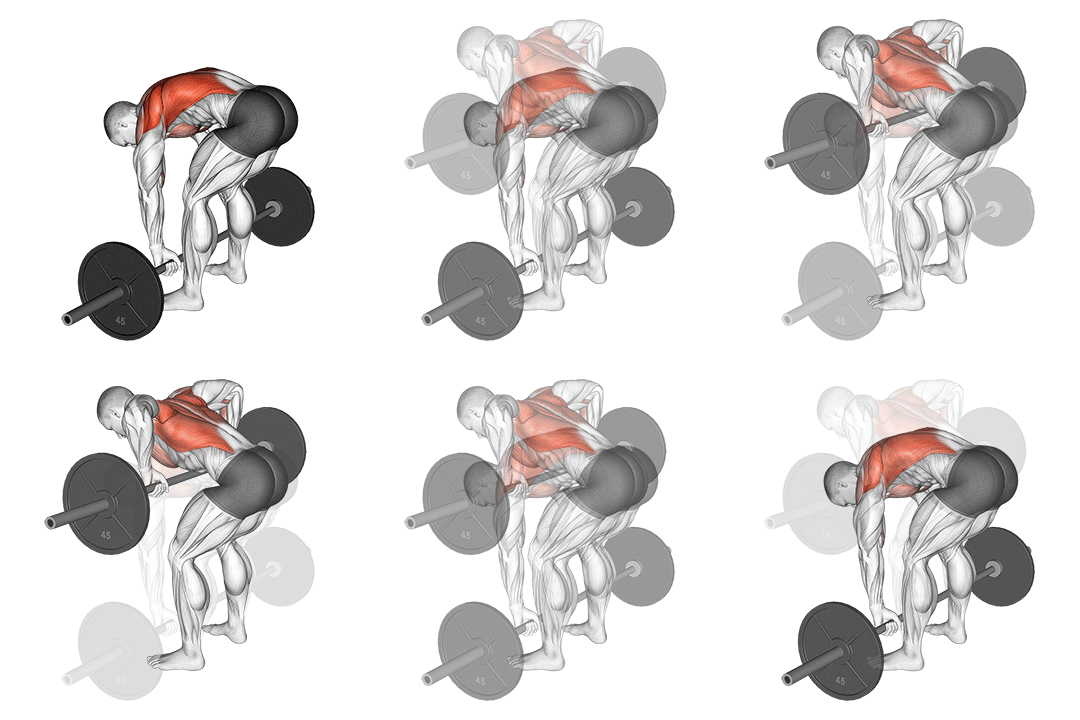
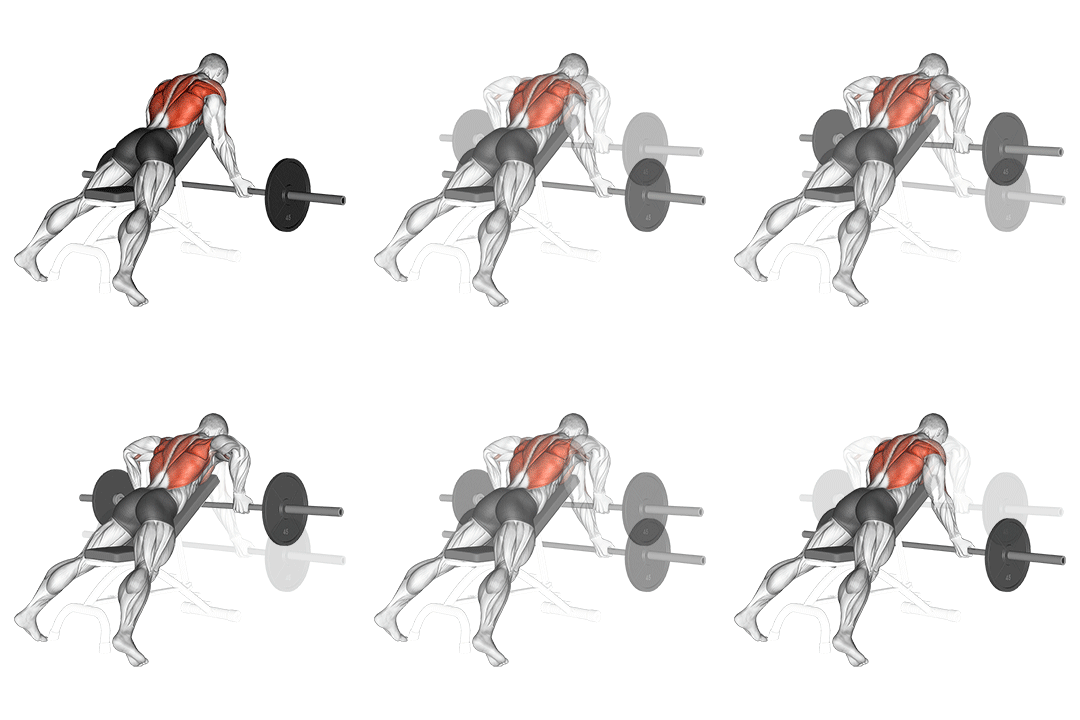
Barbell Incline Row
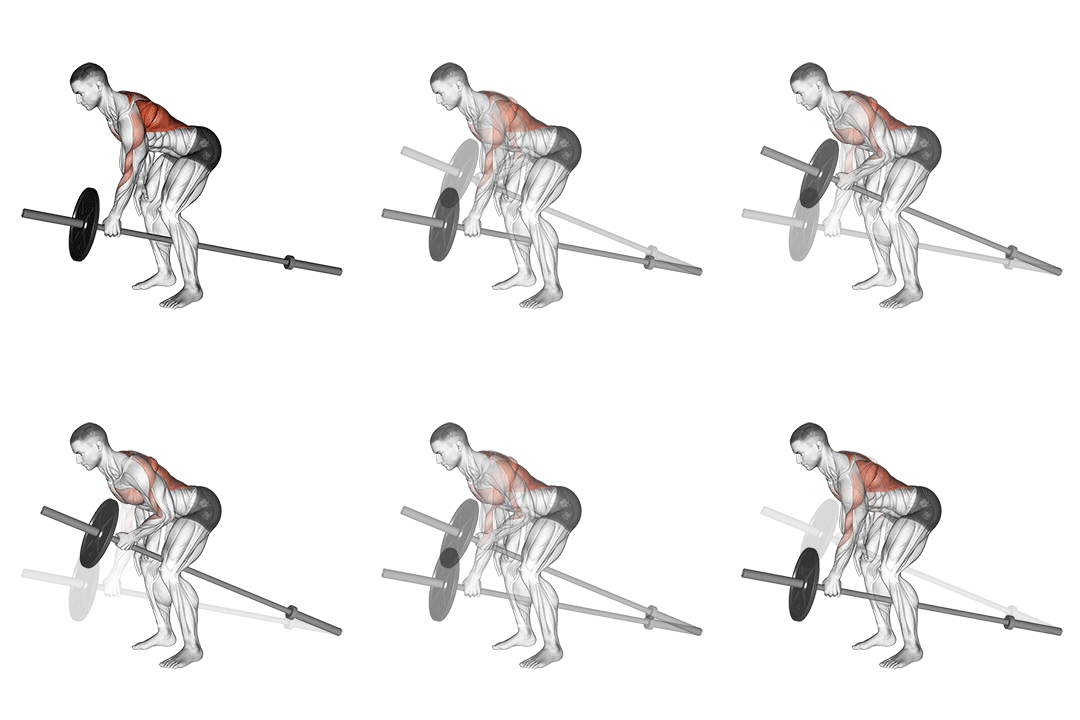
Lever One Arm Bent Over Row
Head-to-Head Comparison
| Attribute | Barbell Incline Row | Lever One Arm Bent Over Row |
|---|---|---|
| Target Muscle |
Upper-back
|
Upper-back
|
| Body Part |
Back
|
Back
|
| Equipment |
Barbell
|
Barbell
|
| Difficulty |
Intermediate
|
Intermediate
|
| Movement Type |
Compound
|
Compound
|
| Secondary Muscles |
2
|
2
|
Secondary Muscles Activated
Barbell Incline Row
Lever One Arm Bent Over Row
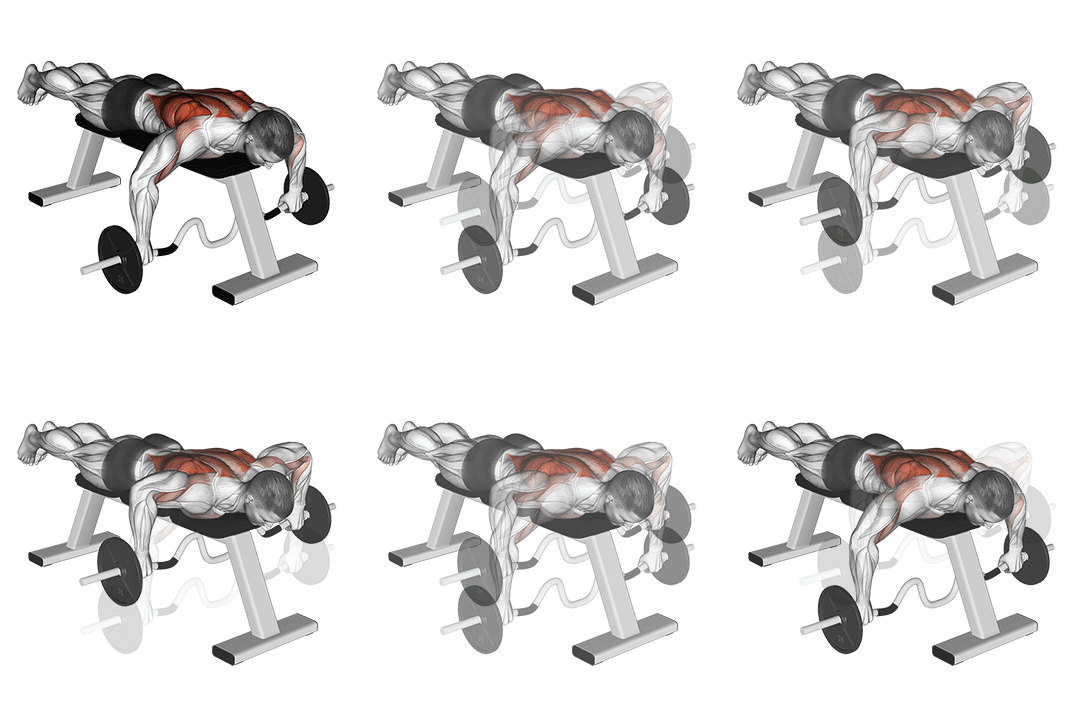
Visual Comparison
Overview
Barbell Incline Row vs Lever One Arm Bent Over Row — you’ve picked two solid upper-back builders. This head-to-head will show you how each exercise loads the rhomboids, traps, and posterior deltoids; which one reduces lower-back strain; how they differ in unilateral control and loading potential; and practical programming tips (rep ranges, angles, and progressions). Read on and you’ll know which to pick for hypertrophy, strength, or convenience, plus clear technique cues so you get more muscle growth and less risk of injury.
Key Differences
- Both exercises target the Upper-back using Barbell. The main differences are in their movement patterns and muscle activation angles.
Pros & Cons
Barbell Incline Row
+ Pros
- Chest support reduces lumbar loading and isolates upper-back
- Allows heavier bilateral loading for strength and hypertrophy
- Consistent range of motion and scapular path (30–45° bench)
- Easier to teach and scale for beginners
− Cons
- Requires an adjustable bench and more gym equipment
- Less carryover to hip-hinge strength
- Limited unilateral correction compared with one-arm rows
Lever One Arm Bent Over Row
+ Pros
- No bench required — more accessible in minimal setups
- Great for fixing left-right imbalances via unilateral loading
- Enhances hip-hinge and core anti-rotation strength
- Can be loaded with tempo variations to increase time under tension
− Cons
- Higher demand on lower back and core stability
- Harder to load very heavy single-arm weights safely
- Requires better technique to avoid spinal flexion
When Each Exercise Wins
The chest-supported position lets you use heavier bilateral loads and achieve stronger peak contractions of the rhomboids and mid-traps. Aim for 6–12 reps per set with 2–3 second eccentrics to maximize time under tension.
Bilateral loading and stable torso support let you incrementally increase absolute load and build upper-back strength that transfers to heavier compound pulls. Use lower rep ranges (3–6) and longer rest for maximal strength.
Support from the bench simplifies motor control and reduces lumbar load, so you can focus on scapular retraction and elbow path before progressing to more technical unilateral rows.
It requires only a barbell and floor space, and you can easily vary angles and grips at home. Its minimal-equipment nature and unilateral options fit limited setups better than an incline bench.
Frequently Asked Questions
Can I do both Barbell Incline Row and Lever One Arm Bent Over Row in the same workout?
Yes. Start with the Barbell Incline Row as your heavy compound for 3–6 or 6–10 reps, then use the Lever One Arm Bent Over Row for unilateral volume (8–12 reps per side) to address imbalances and increase time under tension without overloading the lower back.
Which exercise is better for beginners?
Barbell Incline Row is better for beginners because the chest support simplifies technique and reduces stress on the lumbar spine. Teach scapular retraction and a controlled elbow path first before introducing unilateral bent-over work.
How do the muscle activation patterns differ?
The incline row produces a stronger, more consistent peak contraction of the upper-back because the support stabilizes the torso and aligns the pull vector. The bent-over row shifts activation timing and increases stabilizer and erector involvement due to the hip hinge and unilateral loading, raising EMG in core and posterior chain muscles.
Can Lever One Arm Bent Over Row replace Barbell Incline Row?
It can replace it if your goal is unilateral strength, core stability, or you lack a bench, but it won’t match the bilateral loading potential and lumbar protection the incline row provides. For maximal hypertrophy and heavy loading, keep the incline row in your program and use the one-arm row as a complementary exercise.
Expert Verdict
Use the Barbell Incline Row when your priority is safe heavy loading and focused upper-back hypertrophy — its 30–45° chest support reduces lumbar shear and lets you overload the mid-traps and rhomboids. Pick the Lever One Arm Bent Over Row when you need unilateral work, core anti-rotation challenge, or limited equipment; it builds unilateral strength and fixes asymmetries but requires a solid hip hinge and strict bracing. Program both: prioritize incline rows for heavy 3–6 or 6–12 rep blocks and add one-arm bent-over rows as accessory work for 8–15 reps per side to balance size, stability, and movement quality.
Also Compare
More comparisons with Barbell Incline Row
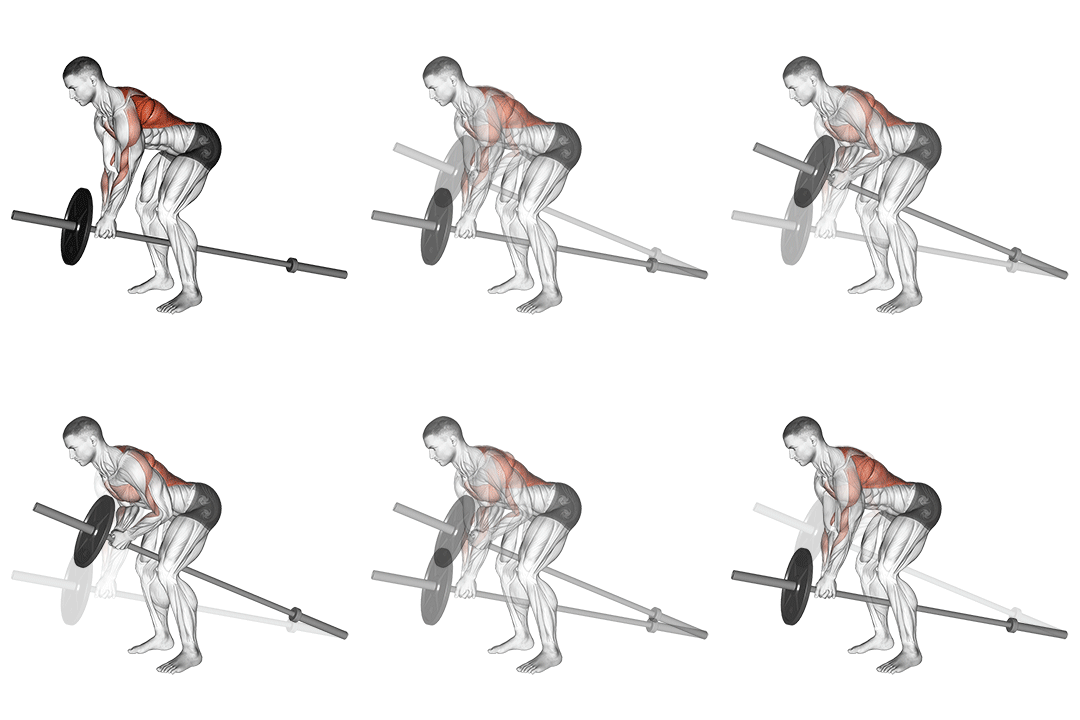
More comparisons with Lever One Arm Bent Over Row
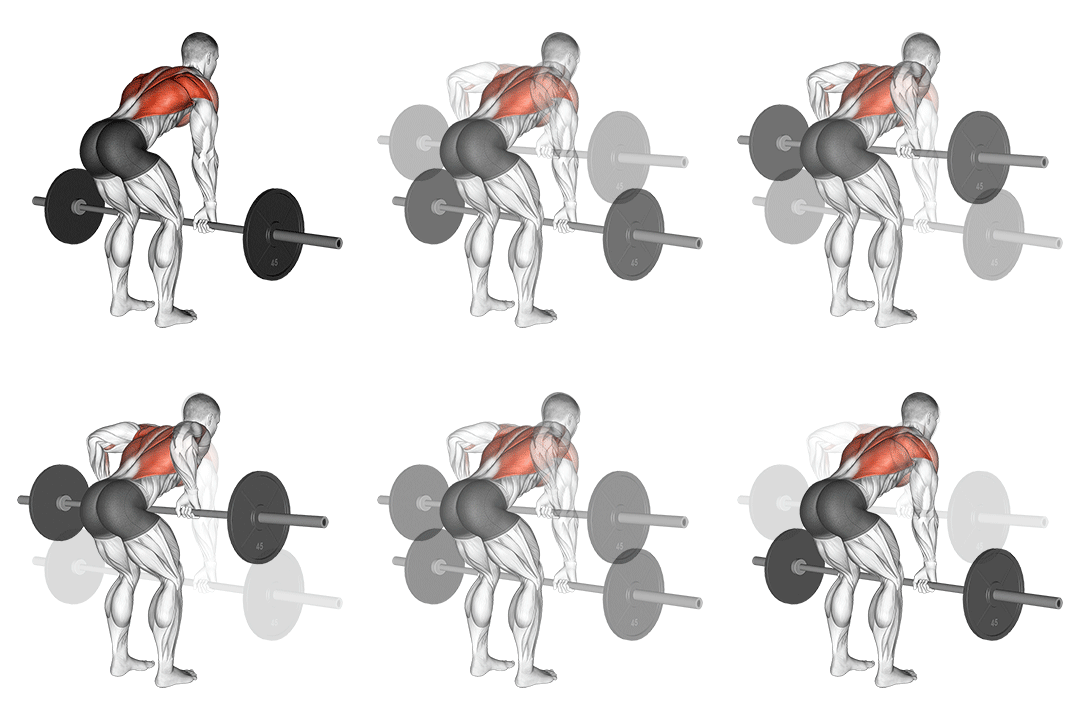
Compare More Exercises
Use our free comparison tool to analyze any two exercises head-to-head.
Compare Exercises