

Barbell One Leg Squat vs Barbell Side Split Squat: Complete Comparison Guide
Barbell One Leg Squat vs Barbell Side Split Squat — if you want stronger, thicker quads you’ve picked two heavy-hitting unilateral options. You’ll learn how each exercise loads the knee extensors, which one lets you add more external weight, what mobility and balance demands look like, and specific cues to keep force vectors safe (knee over toe, hip hinge, torso angle). I’ll cover biomechanics, rep ranges for hypertrophy and strength (6–12 and 3–6 reps), progression strategies, and when to choose one over the other based on your goals.
Exercise Comparison
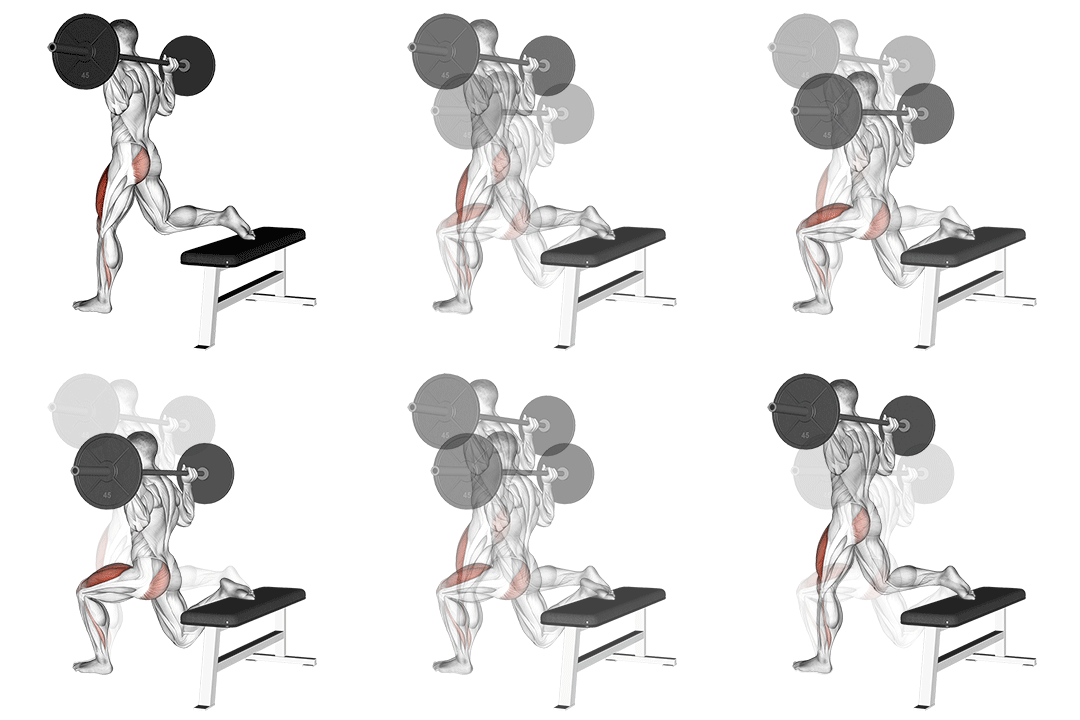
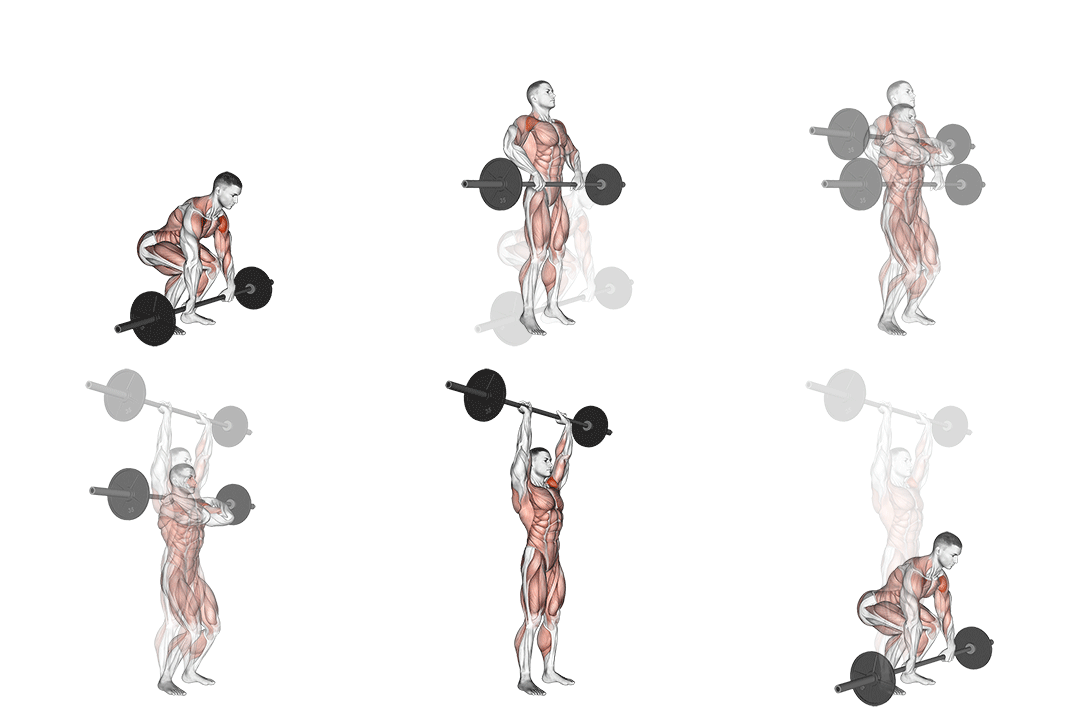
Barbell One Leg Squat
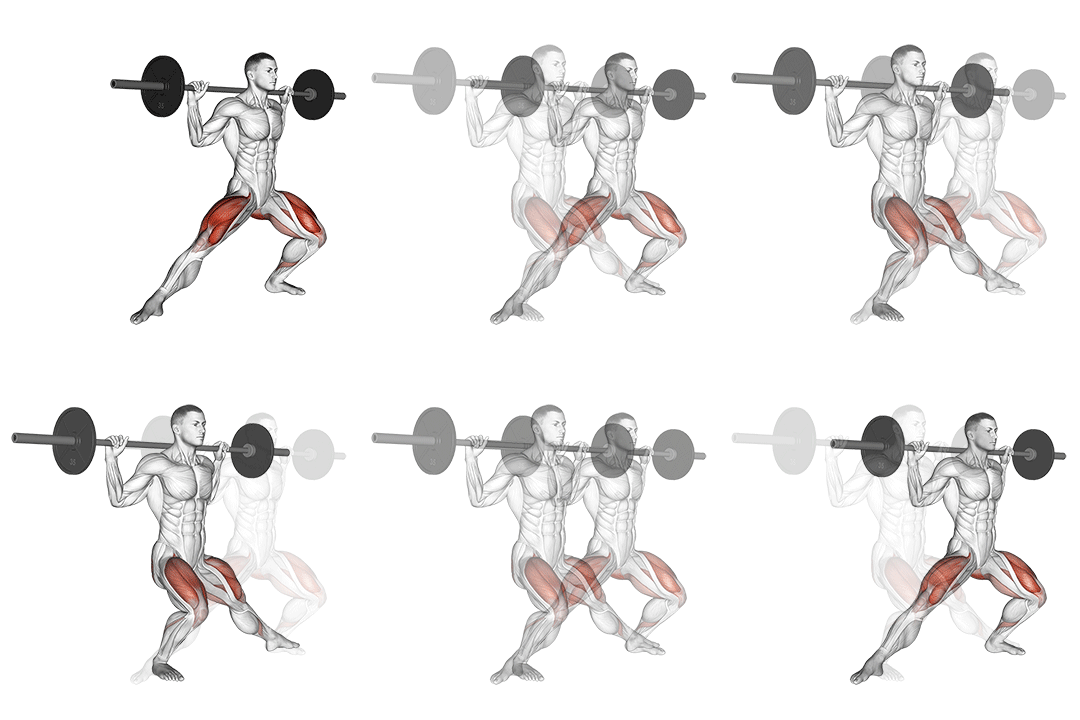
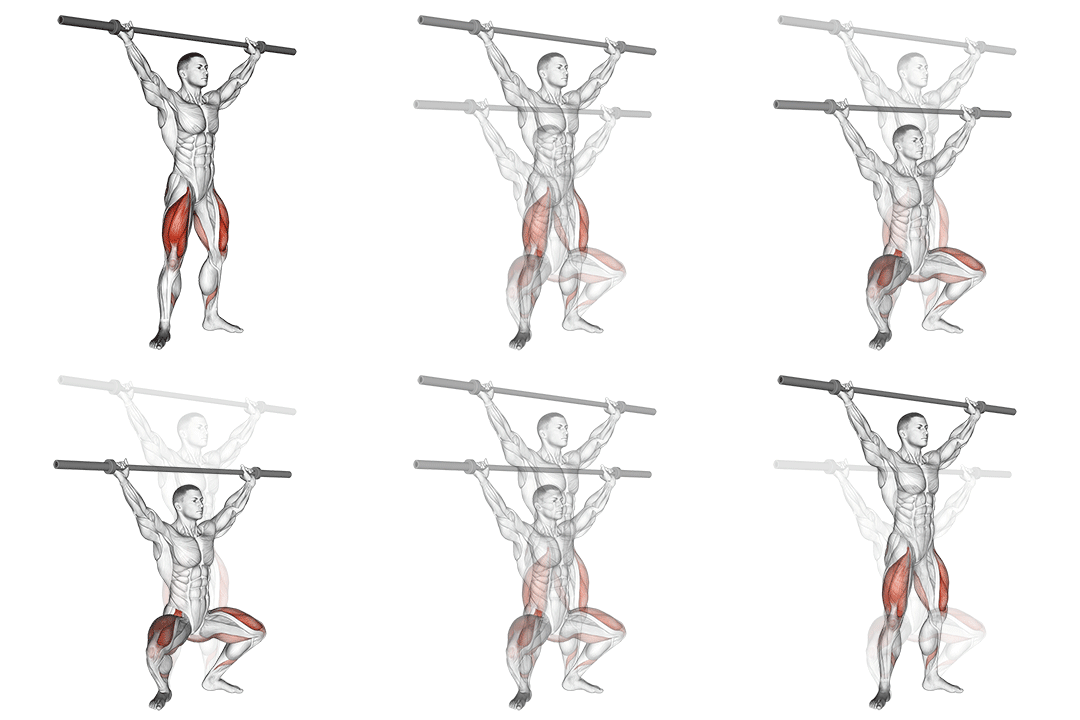
Barbell Side Split Squat
Head-to-Head Comparison
| Attribute | Barbell One Leg Squat | Barbell Side Split Squat |
|---|---|---|
| Target Muscle |
Quads
|
Quads
|
| Body Part |
Upper-legs
|
Upper-legs
|
| Equipment |
Barbell
|
Barbell
|
| Difficulty |
Advanced
|
Intermediate
|
| Movement Type |
Compound
|
Compound
|
| Secondary Muscles |
3
|
3
|
Secondary Muscles Activated
Barbell One Leg Squat
Barbell Side Split Squat
Visual Comparison
Overview
Barbell One Leg Squat vs Barbell Side Split Squat — if you want stronger, thicker quads you’ve picked two heavy-hitting unilateral options. You’ll learn how each exercise loads the knee extensors, which one lets you add more external weight, what mobility and balance demands look like, and specific cues to keep force vectors safe (knee over toe, hip hinge, torso angle). I’ll cover biomechanics, rep ranges for hypertrophy and strength (6–12 and 3–6 reps), progression strategies, and when to choose one over the other based on your goals.
Key Differences
- Difficulty levels differ: Barbell One Leg Squat is advanced, while Barbell Side Split Squat is intermediate.
- Both exercises target the Quads using Barbell. The main differences are in their movement patterns and muscle activation angles.
Pros & Cons
Barbell One Leg Squat
+ Pros
- Extremely effective for unilateral strength and balance development
- High quadriceps activation per limb due to full bodyweight load
- Improves single-leg coordination and ankle stability
- Transfers well to athletic movements that require single-leg control
− Cons
- Hard to load progressively with heavy barbells due to balance limits
- Requires high ankle mobility and hip flexibility
- Greater fall risk and joint stress if technique fails
Barbell Side Split Squat
+ Pros
- Easier to load progressively with heavier barbells (better for overload)
- Lower balance demand; simpler technique cues
- Stronger hip extensor and adductor engagement for complete thigh development
- More forgiving on ankle mobility while still unilateral
− Cons
- Less carryover to maximal single-leg balance tasks
- Can develop side-to-side strength imbalances if not programmed evenly
- May place more shear on the front knee if torso leans forward
When Each Exercise Wins
You can add heavier absolute loads and control tempo (6–12 reps per leg) which increases time under tension and mechanical tension on the quads and glutes. The split stance lets you push heavier while keeping safe knee angles for progressive overload.
Because it allows more consistent loading across sets and safer incremental increases (3–6 rep ranges), the side split squat better supports integer increases in bar weight and measurable strength progress.
It has a gentler learning curve, lower balance and mobility demands, and clearer cues (vertical shin, controlled descent), so a beginner can safely develop quad and hip strength before attempting advanced single-leg pistols.
If you have only basic equipment, the split squat adapts to dumbbells or a single barbell more easily and requires less open mobility space and fewer safety considerations than a loaded one-leg pistol.
Frequently Asked Questions
Can I do both Barbell One Leg Squat and Barbell Side Split Squat in the same workout?
Yes—structure them smartly. Do side split squats first for heavy sets (3–8 reps) to target strength and mechanical tension, then finish with lighter one-leg squat variations for balance and control (6–10 reps or assisted negatives). Keep total unilateral volume to 8–16 working sets per leg per week.
Which exercise is better for beginners?
Barbell Side Split Squat is better for beginners because it reduces balance and mobility barriers while still giving strong quad and glute stimulus. Once you build 8–12 weeks of unilateral strength and 10–20% improved ankle dorsiflexion, progress toward one-leg variations.
How do the muscle activation patterns differ?
One-leg squats drive higher relative knee extensor torque and plantarflexor activity due to single-leg balance and deeper knee flexion (>100°), increasing quad and calf recruitment. Side split squats shift force into hip extension and adduction, increasing glute max and hamstring co-contraction while allowing higher absolute external loads.
Can Barbell Side Split Squat replace Barbell One Leg Squat?
For most goals—hypertrophy and strength—the side split squat can replace the one-leg squat because it provides greater overload potential and similar quad stimulus. Keep a one-leg variation in your program if you need sport-specific single-leg stability or want to refine unilateral motor control.
Expert Verdict
Choose the Barbell Side Split Squat if your priority is systematic overload, muscle growth, and scalable strength — it lets you add 5–20% more weight across cycles, maintains safer knee angles, and recruits glutes and adductors in a way that supports quad development. Pick the Barbell One Leg Squat when you need to train single-leg balance, proprioception, and sport-specific unilateral control; it forces high relative knee extensor torque and trains ankle/hip stability but is harder to load and has higher mobility demands. Program both across phases: use side split squats for base strength and hypertrophy (6–12 reps), then integrate weighted one-leg squats for neuromuscular control and peak single-leg force.
Also Compare
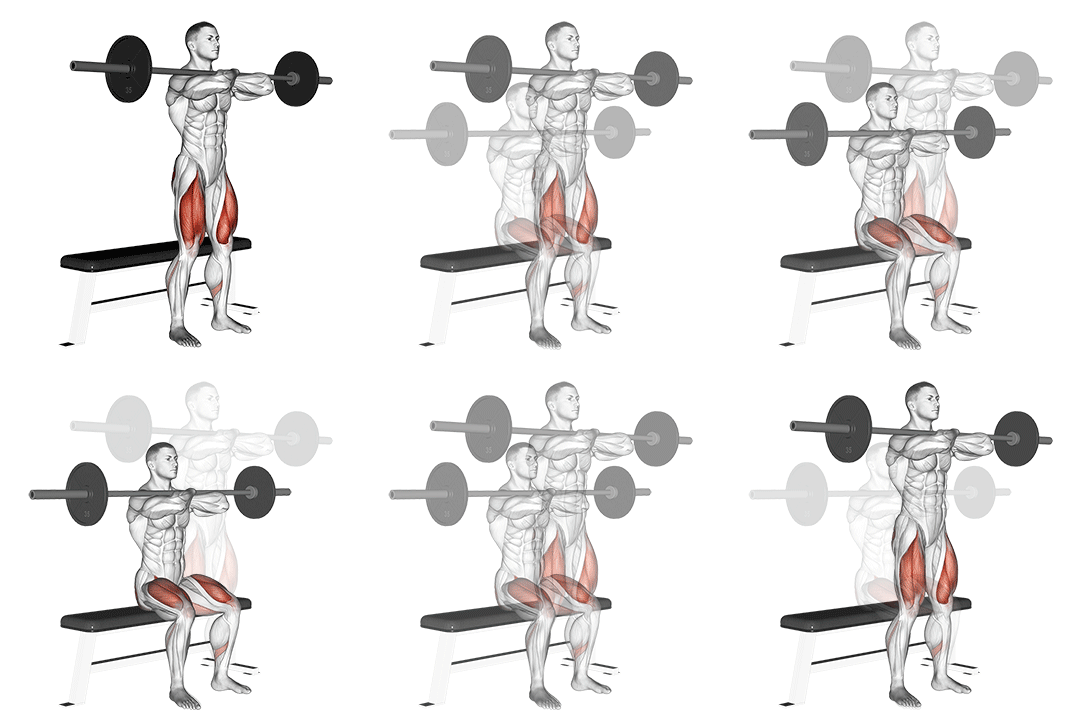
More comparisons with Barbell One Leg Squat
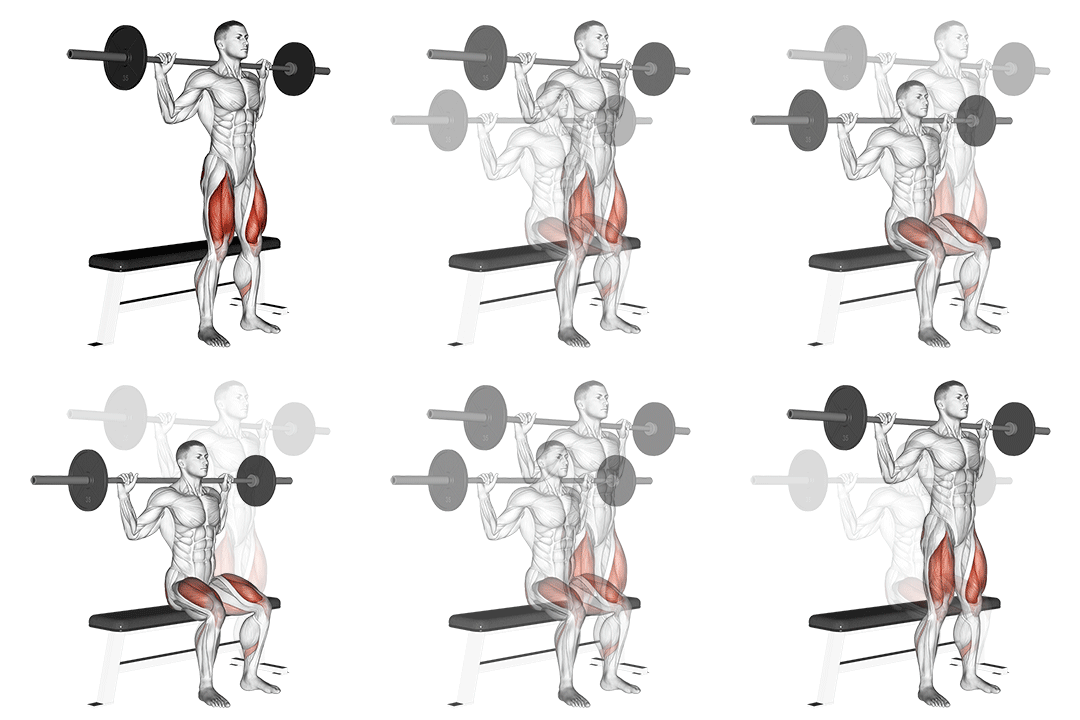
More comparisons with Barbell Side Split Squat
Compare More Exercises
Use our free comparison tool to analyze any two exercises head-to-head.
Compare Exercises