

Barbell Rollerout vs Press Sit-Up: Complete Comparison Guide
Barbell Rollerout vs Press Sit-Up — if you want a stronger, sharper midsection, choosing the right compound core move matters. I’ll walk you through how each exercise loads the rectus abdominis, how secondary muscles like the lower back, chest, and shoulders get involved, and which one fits your training goal, experience level, and equipment access. You’ll get clear technique cues, recommended rep ranges (6–12 for strength, 8–20 for endurance), and biomechanics-based advice so you can pick the exercise that gives the most targeted progress for your waist and trunk control.
Exercise Comparison
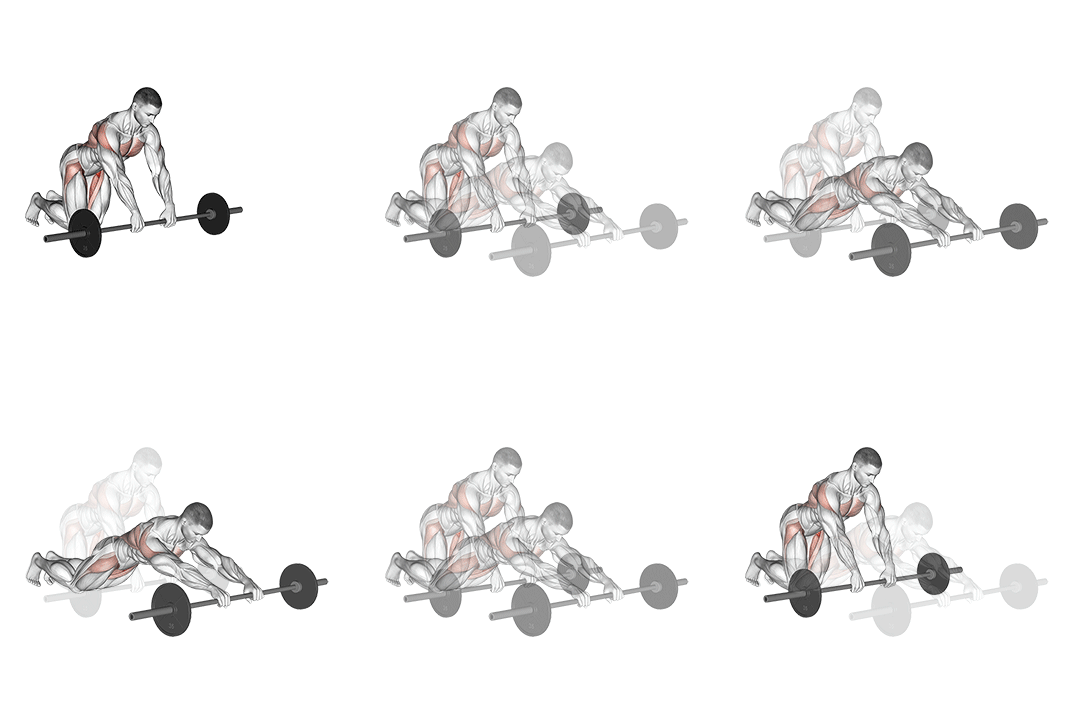
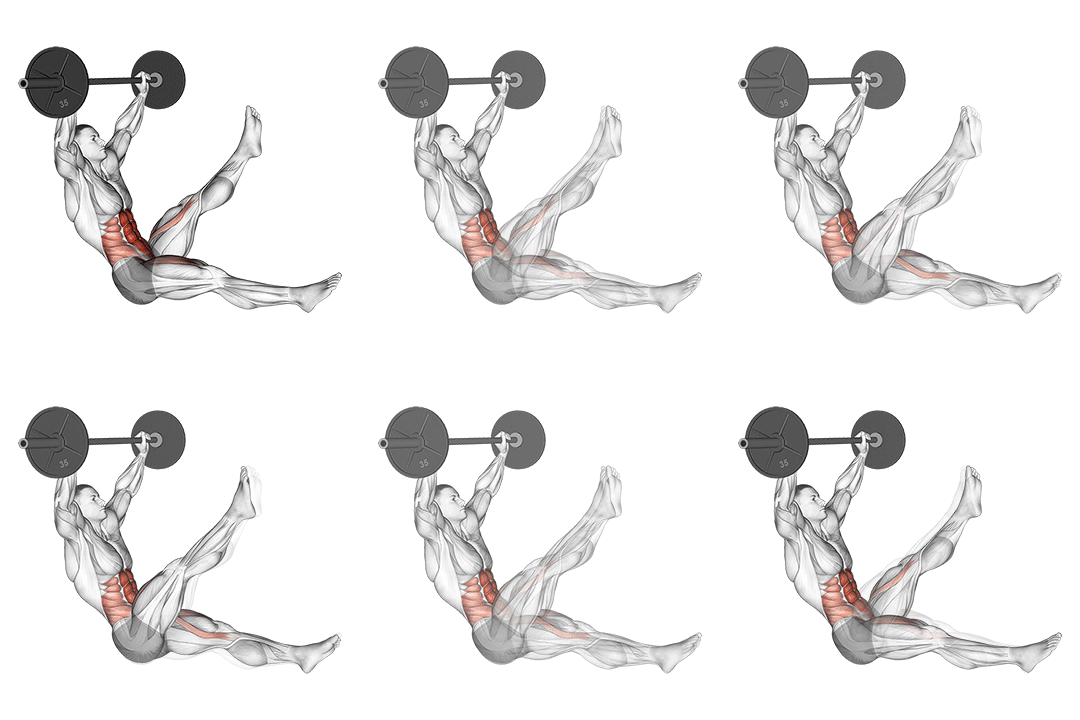
Barbell Rollerout
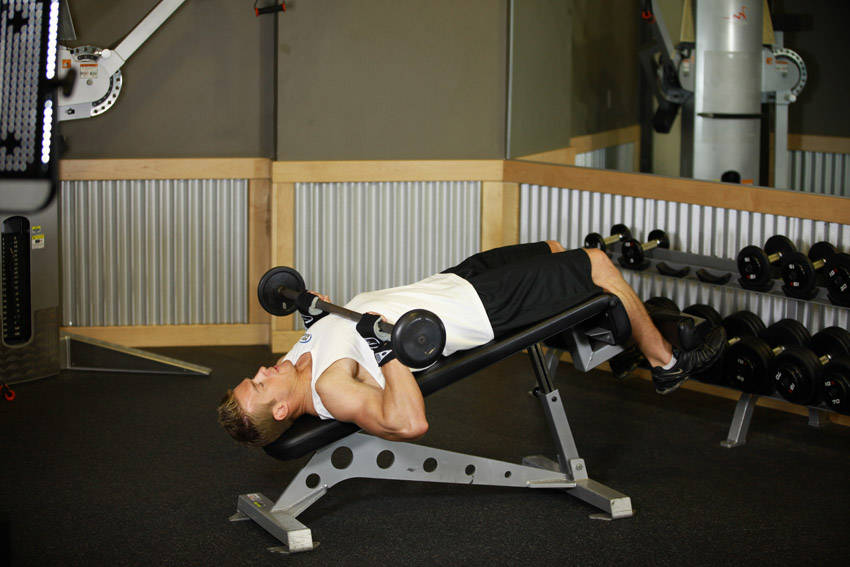
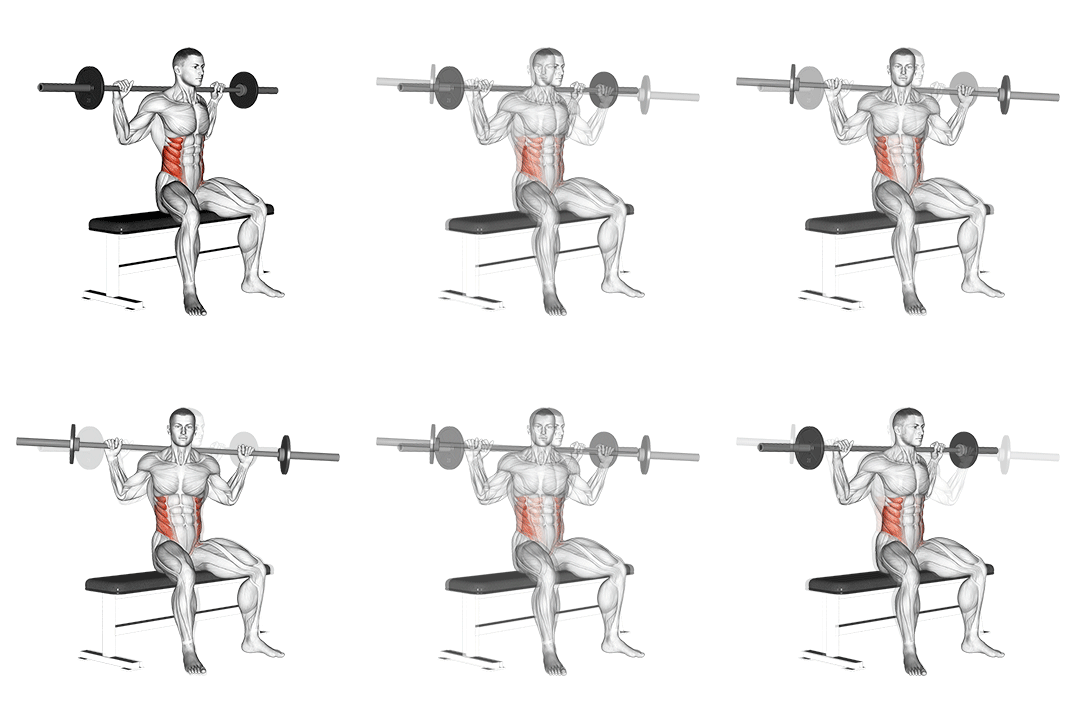
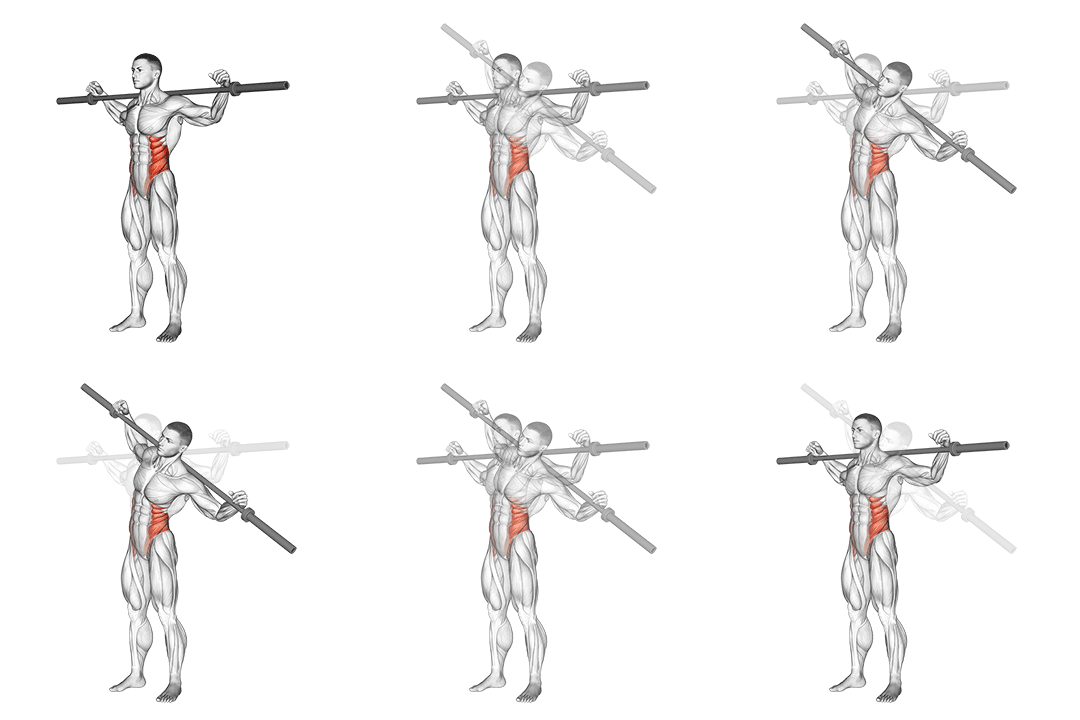
Press Sit-up
Head-to-Head Comparison
| Attribute | Barbell Rollerout | Press Sit-up |
|---|---|---|
| Target Muscle |
Abs
|
Abs
|
| Body Part |
Waist
|
Waist
|
| Equipment |
Barbell
|
Barbell
|
| Difficulty |
Advanced
|
Intermediate
|
| Movement Type |
Compound
|
Compound
|
| Secondary Muscles |
1
|
3
|
Secondary Muscles Activated
Barbell Rollerout
Press Sit-up
Visual Comparison
Overview
Barbell Rollerout vs Press Sit-Up — if you want a stronger, sharper midsection, choosing the right compound core move matters. I’ll walk you through how each exercise loads the rectus abdominis, how secondary muscles like the lower back, chest, and shoulders get involved, and which one fits your training goal, experience level, and equipment access. You’ll get clear technique cues, recommended rep ranges (6–12 for strength, 8–20 for endurance), and biomechanics-based advice so you can pick the exercise that gives the most targeted progress for your waist and trunk control.
Key Differences
- Difficulty levels differ: Barbell Rollerout is advanced, while Press Sit-up is intermediate.
- Both exercises target the Abs using Barbell. The main differences are in their movement patterns and muscle activation angles.
Pros & Cons
Barbell Rollerout
+ Pros
- Maximizes anti-extension strength and anterior core endurance
- Continues tension across a long range of motion for strong neuromuscular recruitment
- Easy to progress by increasing roll-out distance or adding tempo
- Highly specific to decelerative control and transfer to overhead stability
− Cons
- High technical demand—risk of lumbar hyperextension if done poorly
- Requires smooth rolling setup and space
- Limited ability to offload load with upper body, so fatigue can limit training volume
Press Sit-up
+ Pros
- Combines abdominal flexion with upper-body pressing for metabolic and mass stimulus
- Easier to learn and scale with lighter loads or tempo control
- Engages chest and shoulders to help handle heavier loads
- Works well in circuit and hypertrophy contexts (8–20 rep ranges)
− Cons
- Upper-body pressing can take load away from pure core stimulus
- Demands good shoulder mobility and overhead control
- Hip flexors can dominate, reducing isolated rectus activation
When Each Exercise Wins
Press Sit-Up wins for hypertrophy because the combined pressing and sit-up action increases total volume and recruits chest, shoulders, and triceps in addition to the abs, allowing higher rep ranges (8–20) and progressive loading for mass.
Barbell Rollerout is superior for core strength because its long-lever anti-extension load produces high torque on the anterior chain, which translates directly to improved trunk stiffness and heavy-transfer strength.
Press Sit-Up is better for beginners due to an easier learning curve, the ability to start with bodyweight or a light bar, and simpler progressions without the high spinal-control demand of rollouts.
Press Sit-Up is more home-friendly because it needs only a barbell and floor space, while rollerouts often require plates that allow the sleeve to roll smoothly or a specific roller device.
Frequently Asked Questions
Can I do both Barbell Rollerout and Press Sit-Up in the same workout?
Yes. Pair them smartly: do Barbell Rollerouts early for maximal core strength when fresh (3–5 sets of low reps), then use Press Sit-Ups later for volume and metabolic stimulus (8–15 reps). Watch fatigue—avoid maximal loading on both in a single session to reduce lumbar or shoulder strain.
Which exercise is better for beginners?
Press Sit-Up is better for beginners because it’s easier to scale and teaches coordinated flexion and press patterns. Start with light load and focus on bracing; reserve rollouts until you can hold a strong plank for 60+ seconds and maintain neutral lumbar spine through loaded progressions.
How do the muscle activation patterns differ?
Rollouts emphasize continuous anterior chain activation under increasing eccentric load, producing sustained rectus and oblique tension plus isometric erector activity to prevent sag. Press Sit-Ups show a biphasic pattern: core-driven spinal flexion early, then shifted emphasis to pectorals, deltoids, and triceps during the press phase.
Can Press Sit-Up replace Barbell Rollerout?
Press Sit-Up can replace rollouts if your goal is hypertrophy or limited equipment access, but it won’t fully replicate the anti-extension strength and long-lever stimulus rollouts provide. For trunk stiffness and transfer to heavy lifting, keep rollouts in the program.
Expert Verdict
Use Barbell Rollerout when your primary goal is anterior core strength and anti-extension capacity—aim for 3–5 sets of 4–10 controlled reps with progressive range increases and slow eccentrics. Choose Press Sit-Up when you want higher training volume, hypertrophy, or a compound movement that shares load with the chest and shoulders—program 3–4 sets of 8–15 reps and focus on a tight braced core and controlled press. If you lack shoulder mobility or a rolling setup, start with Press Sit-Ups and build into rollouts; if your priority is trunk stiffness and transfer to heavy lifts, prioritize rollouts in your core rotation.
Also Compare
More comparisons with Barbell Rollerout
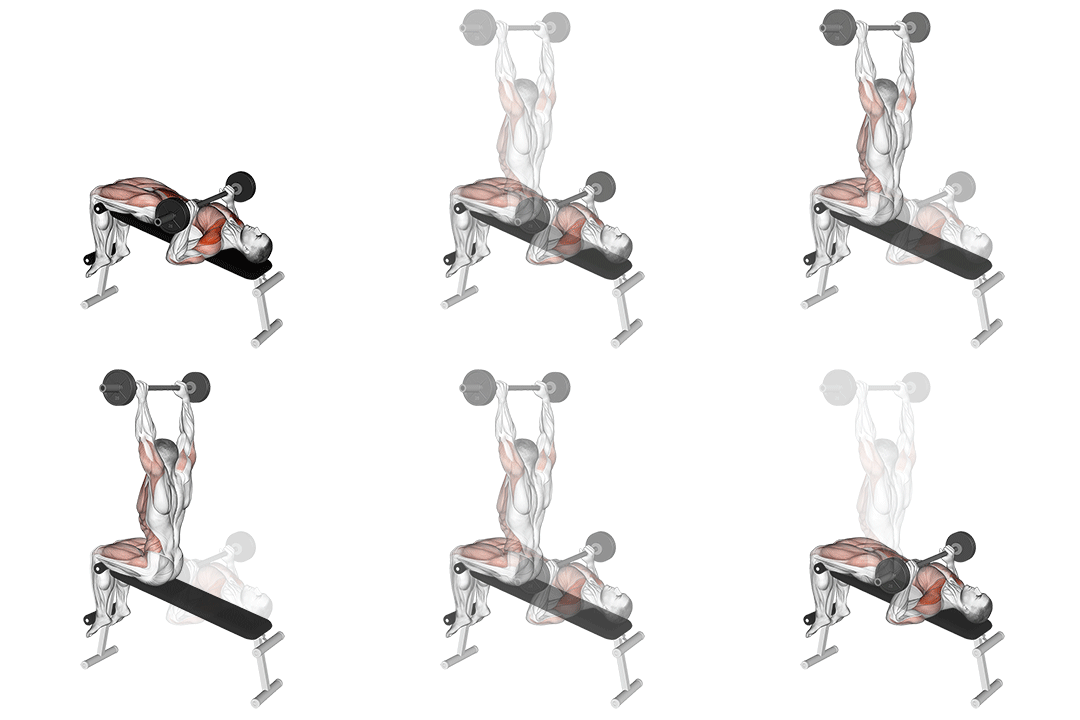
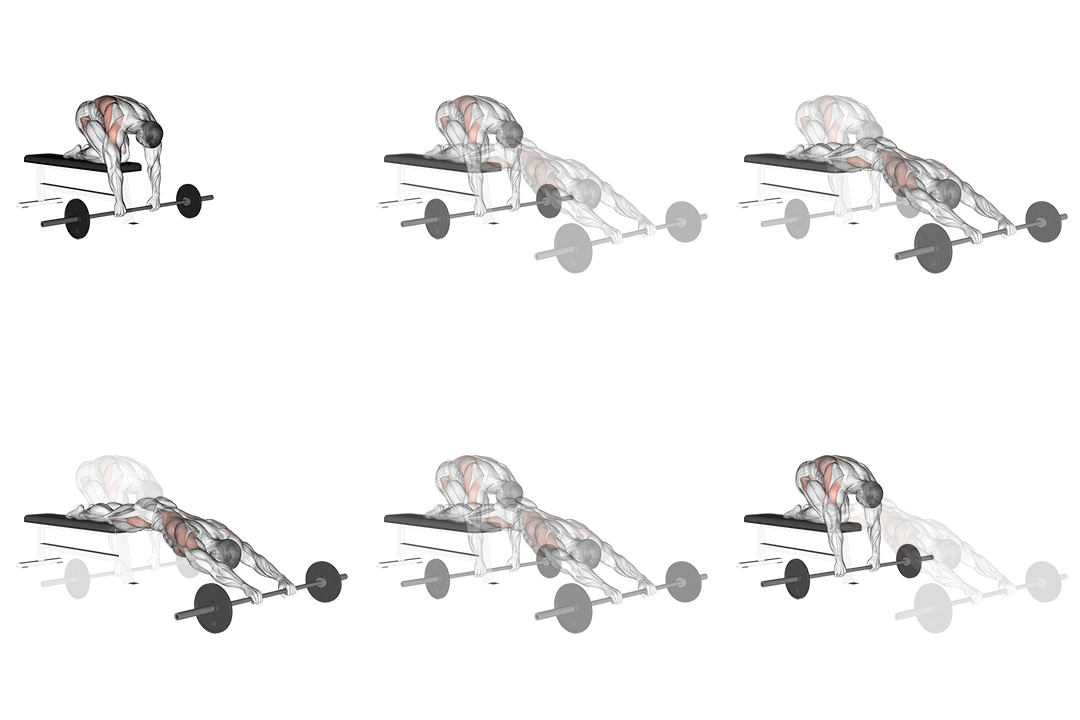
Compare More Exercises
Use our free comparison tool to analyze any two exercises head-to-head.
Compare Exercises