

Barbell Side Bent V. 2 vs Barbell Sitted Alternate Leg Raise (female): Complete Comparison Guide
Barbell Side Bent V. 2 vs Barbell Sitted Alternate Leg Raise (female) — two barbell waist-focused moves that look similar on paper but load your core very differently. If you want clear recommendations, you’re in the right place. I’ll compare primary and secondary muscle activation, biomechanics (force vectors, length-tension), equipment needs, learning curves, rep ranges (8–12, 12–20), and safety cues. Read on and you’ll know which exercise to choose for muscle growth, stability, or rehab-style core work.
Exercise Comparison
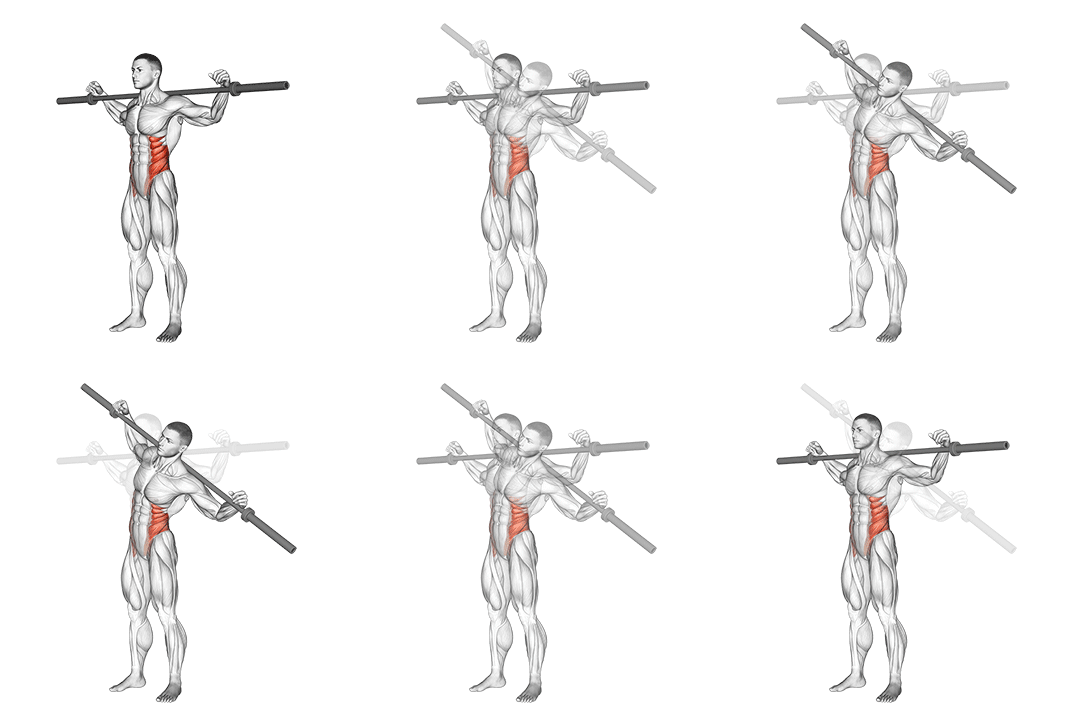
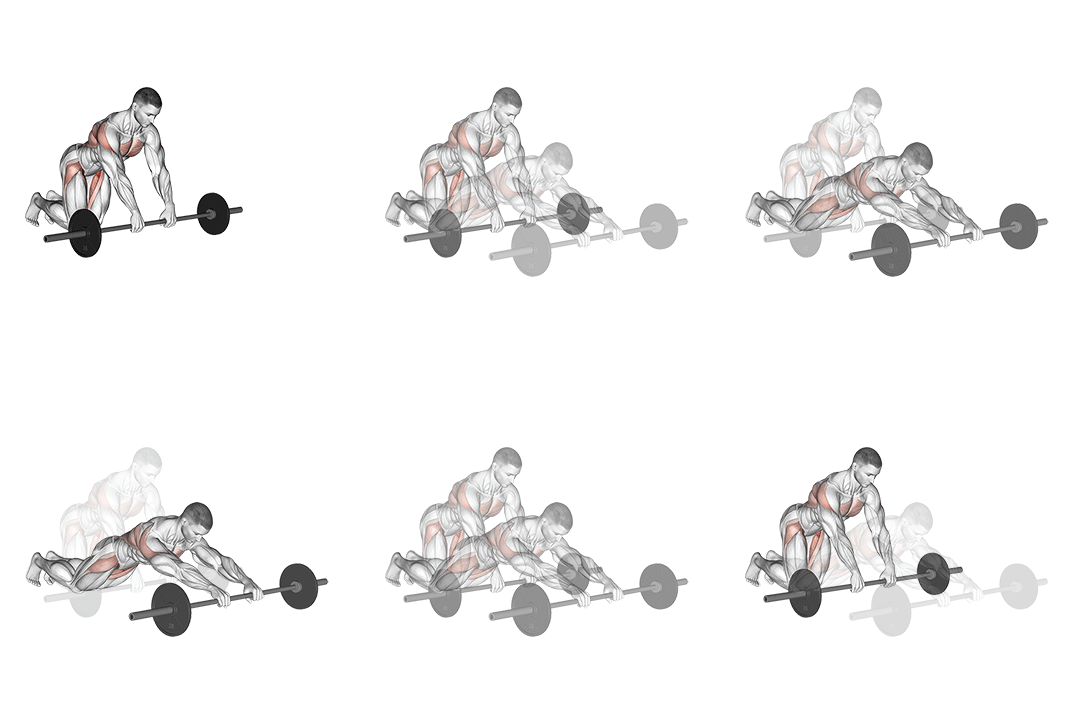
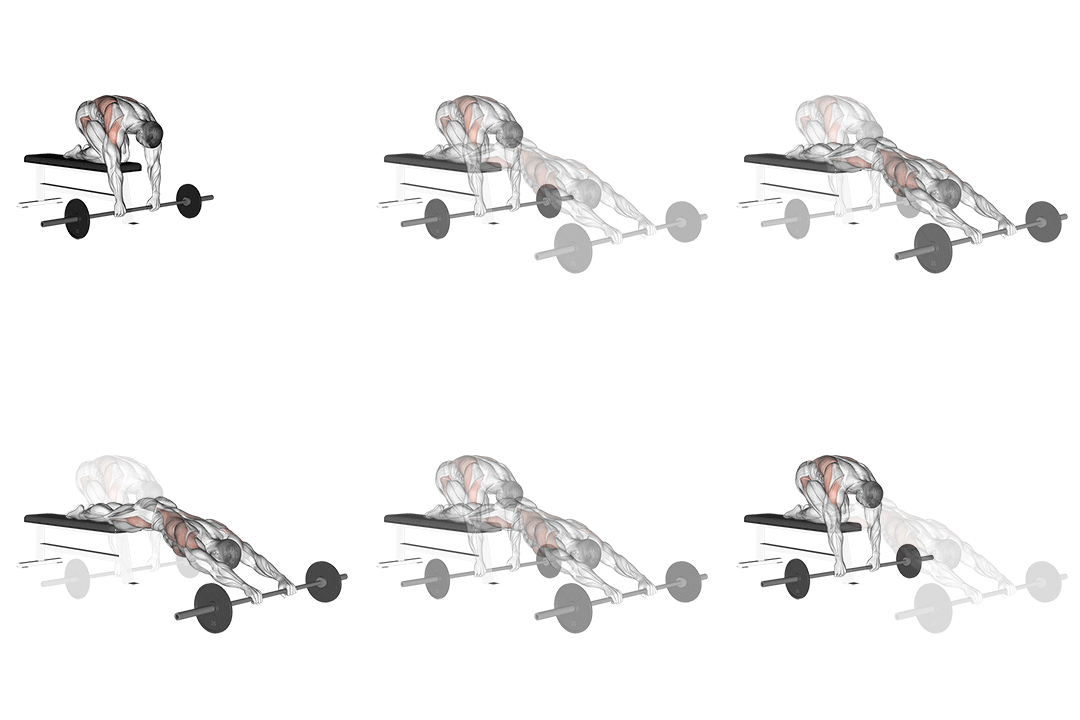
Barbell Side Bent V. 2
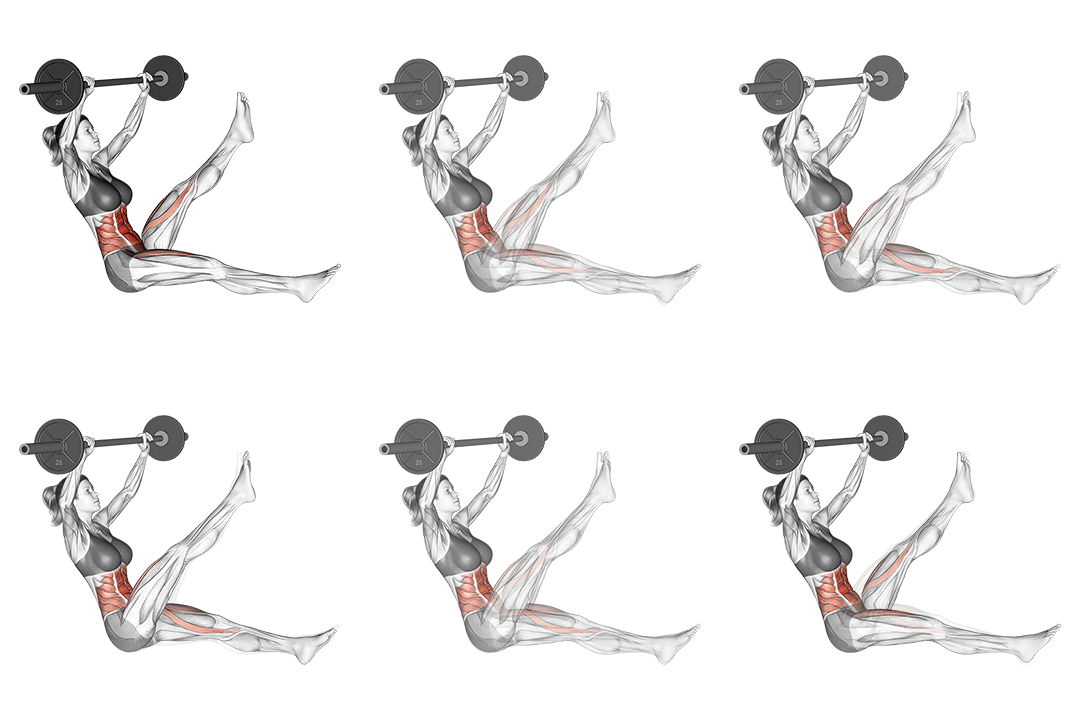
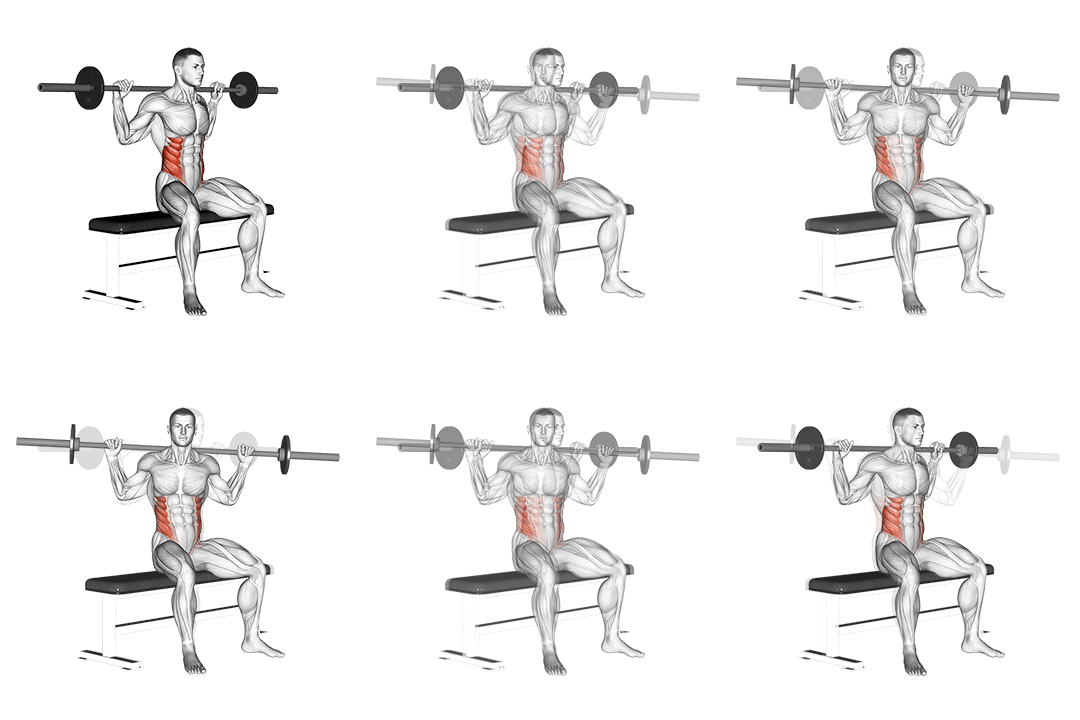
Barbell Sitted Alternate Leg Raise (female)
Head-to-Head Comparison
| Attribute | Barbell Side Bent V. 2 | Barbell Sitted Alternate Leg Raise (female) |
|---|---|---|
| Target Muscle |
Abs
|
Abs
|
| Body Part |
Waist
|
Waist
|
| Equipment |
Barbell
|
Barbell
|
| Difficulty |
Beginner
|
Intermediate
|
| Movement Type |
Compound
|
Isolation
|
| Secondary Muscles |
2
|
2
|
Secondary Muscles Activated
Barbell Side Bent V. 2
Barbell Sitted Alternate Leg Raise (female)
Visual Comparison
Overview
Barbell Side Bent V. 2 vs Barbell Sitted Alternate Leg Raise (female) — two barbell waist-focused moves that look similar on paper but load your core very differently. If you want clear recommendations, you’re in the right place. I’ll compare primary and secondary muscle activation, biomechanics (force vectors, length-tension), equipment needs, learning curves, rep ranges (8–12, 12–20), and safety cues. Read on and you’ll know which exercise to choose for muscle growth, stability, or rehab-style core work.
Key Differences
- Barbell Side Bent V. 2 is a compound movement, while Barbell Sitted Alternate Leg Raise (female) is an isolation exercise.
- Difficulty levels differ: Barbell Side Bent V. 2 is beginner, while Barbell Sitted Alternate Leg Raise (female) is intermediate.
- Both exercises target the Abs using Barbell. The main differences are in their movement patterns and muscle activation angles.
Pros & Cons
Barbell Side Bent V. 2
+ Pros
- Direct oblique overload via lateral flexion for targeted waist shaping
- Simple setup with only a barbell and minimal equipment
- Easy to load progressively with heavier bars for hypertrophy (8–12 reps)
- Lower technical demand; suitable for beginner trainees
− Cons
- Limited rectus abdominis isolation compared with sagittal-core moves
- Risk of using momentum and cheating through trunk rotation
- Can load the lower back if performed with excessive ROM
Barbell Sitted Alternate Leg Raise (female)
+ Pros
- Strong rectus abdominis and hip-flexor stimulus for core curl and pelvic control
- Good for improving anterior core endurance and anti-extension strength
- Versatile rep schemes: 12–20+ reps for endurance or 8–12 with tempo for hypertrophy
- Challenges coordination and hip-core integration
− Cons
- Higher technical demand — needs good pelvic control to protect the lumbar spine
- Requires a bench/seat and secure bar placement
- Can overwork hip flexors and quads, limiting pure abdominal focus
When Each Exercise Wins
Side Bent V. 2 lets you progressively load the obliques with heavier barbells and lower-rep strength sets (8–12). The lateral force vector and capacity to increase external load produce more targeted oblique hypertrophy.
Because you can safely add absolute load to challenge the obliques and train through heavy sets, Side Bent V. 2 better transfers to maximal strength in lateral trunk control and loaded carries.
It has a simpler movement pattern, lower coordination demands, and easier scaling (empty bar then small plates). You can learn bracing and lateral control with less risk than the seated leg-raise variant.
Side Bent V. 2 requires only a barbell and open space; the seated leg raise needs a bench or sturdy seat and careful bar placement, making it less practical for minimal setups.
Frequently Asked Questions
Can I do both Barbell Side Bent V. 2 and Barbell Sitted Alternate Leg Raise (female) in the same workout?
Yes. Sequence them by priority: do the exercise you want to emphasize first (e.g., Side Bent V. 2 for obliques). Keep volume sensible (total 6–10 sets for core) and watch fatigue—perform 3 sets of 8–12 for the prioritized movement and 2–3 sets of 12–20 for the secondary.
Which exercise is better for beginners?
Barbell Side Bent V. 2 is better for beginners because it has lower coordination demands and easier scaling. Start with an empty bar or light dumbbell, learn to brace your ribcage, and limit lateral ROM to 20–30° before adding heavy load.
How do the muscle activation patterns differ?
Side Bent V. 2 emphasizes lateral flexion so obliques and quadratus lumborum show greater activation and eccentrically control the descent; the Sitted Alternate Leg Raise uses sagittal hip flexion, increasing rectus abdominis and iliopsoas activation and requiring isometric pelvic stabilization to prevent lumbar extension.
Can Barbell Sitted Alternate Leg Raise (female) replace Barbell Side Bent V. 2?
Not entirely. If your goal is oblique hypertrophy and lateral trunk strength, the Side Bent V. 2 is superior. The Sitted Alternate Leg Raise can complement your routine by improving anterior core endurance and hip-flexor strength, but it won’t target lateral flexors as effectively.
Expert Verdict
Use Barbell Side Bent V. 2 when your goal is targeted oblique hypertrophy, simple progressive loading, or an accessible core exercise you can perform in most gyms or at home. Keep lateral flexion to about 20–30° and brace your ribs down to avoid spinal shear; perform 3–4 sets of 8–12 for muscle growth. Choose Barbell Sitted Alternate Leg Raise (female) if you want to train anterior core endurance, hip-flexor integration, and anti-extension control — use higher reps (12–20), focus on a posterior pelvic tilt, and limit hip flexor dominance. Train the seated raise only after you’ve built basic core stability to reduce lumbar strain.
Also Compare
More comparisons with Barbell Side Bent V. 2
More comparisons with Barbell Sitted Alternate Leg Raise (female)
Compare More Exercises
Use our free comparison tool to analyze any two exercises head-to-head.
Compare Exercises