

Bear Crawl vs Burpee: Complete Comparison Guide
Bear Crawl vs Burpee — you probably know both as go-to bodyweight conditioners. I’ll walk you through how each move stresses your cardiovascular system, which secondary muscles they recruit, the biomechanics driving their differences, and practical technique cues you can use right away. You’ll learn when to pick the Bear Crawl for steady core and shoulder endurance and when to pick the Burpee for higher-power, full-body conditioning. I’ll also show simple progressions, sensible rep ranges (sets of 6–20 or AMRAPs), and quick drills to learn each safely.
Exercise Comparison
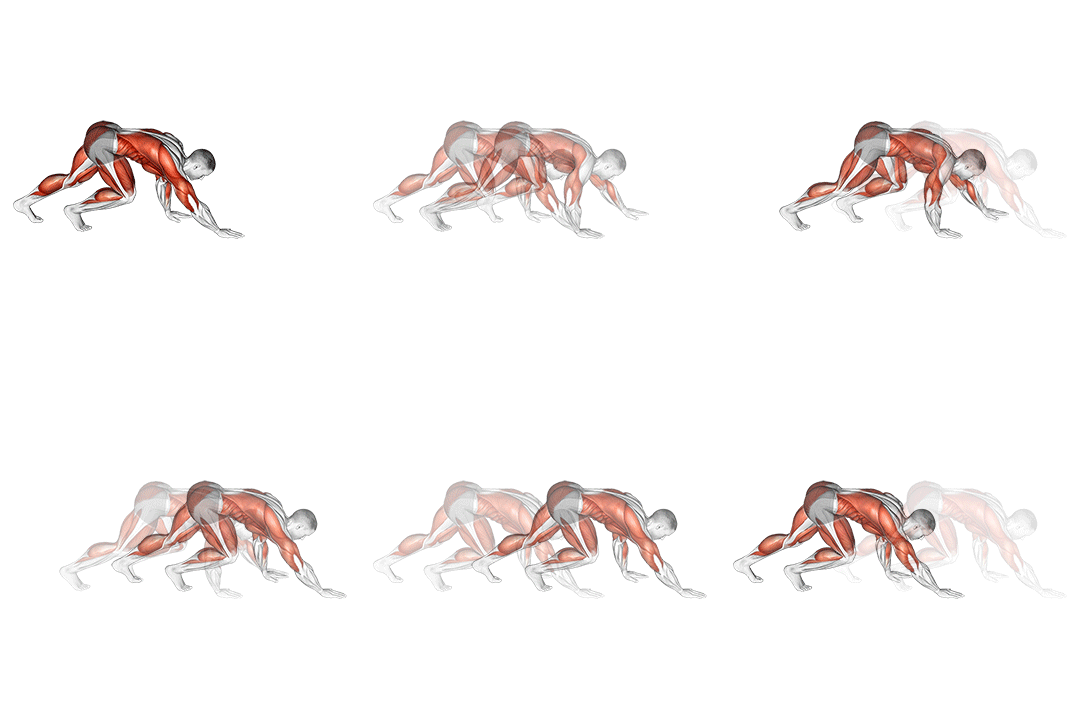
Bear Crawl
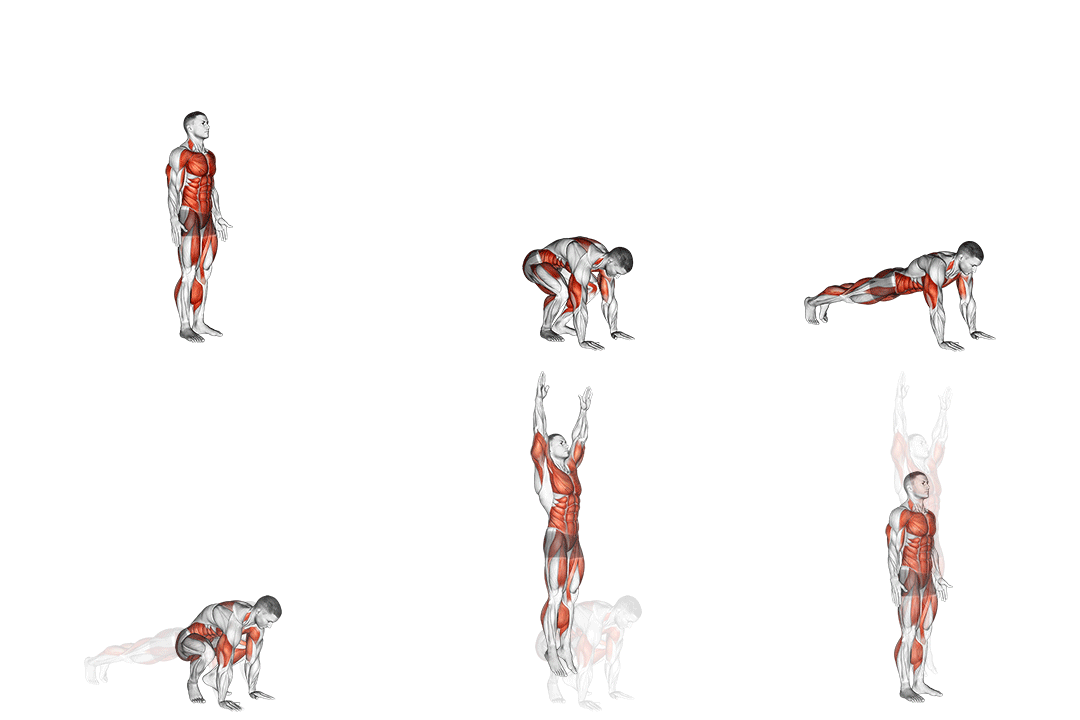
Burpee
Head-to-Head Comparison
| Attribute | Bear Crawl | Burpee |
|---|---|---|
| Target Muscle |
Cardiovascular-system
|
Cardiovascular-system
|
| Body Part |
Cardio
|
Cardio
|
| Equipment |
Body-weight
|
Body-weight
|
| Difficulty |
Intermediate
|
Intermediate
|
| Movement Type |
Compound
|
Compound
|
| Secondary Muscles |
3
|
5
|
Secondary Muscles Activated
Bear Crawl
Burpee
Visual Comparison
Overview
Bear Crawl vs Burpee — you probably know both as go-to bodyweight conditioners. I’ll walk you through how each move stresses your cardiovascular system, which secondary muscles they recruit, the biomechanics driving their differences, and practical technique cues you can use right away. You’ll learn when to pick the Bear Crawl for steady core and shoulder endurance and when to pick the Burpee for higher-power, full-body conditioning. I’ll also show simple progressions, sensible rep ranges (sets of 6–20 or AMRAPs), and quick drills to learn each safely.
Key Differences
- Both exercises target the Cardiovascular-system using Body-weight. The main differences are in their movement patterns and muscle activation angles.
Pros & Cons
Bear Crawl
+ Pros
- Excellent core anti-rotation work through continuous isometric tension — cue: brace your core and keep hips level.
- Low-impact compared with plyometric moves; easier on knees when performed with controlled tempo.
- Builds shoulder and scapular endurance and triceps support for extended periods.
- Scalable: slow crawls, fast crawl sprints, unilateral bear crawls, or loaded carries for progression.
− Cons
- Less vertical power development — not ideal if you want explosive hip extension.
- Requires more horizontal space to perform useful distances.
- Can stress wrists and shoulders if you lose scapular control; cue scapular protraction/retraction patterns.
Burpee
+ Pros
- High metabolic demand and peak power — great for short conditioning sets and HIIT.
- Engages major lower-body muscles (quads, hamstrings, calves) plus chest and shoulders via the push-up.
- Compact footprint and easy to program into circuits or AMRAPs.
- Easy to progress intensity with jump height, weighted vests, or plyometric variations.
− Cons
- High-impact: repeated jumps and fast transitions increase joint loading and fatigue.
- Technique-sensitive: sloppy squat-to-plank transitions can load the lumbar spine.
- Less sustained core stabilization time under tension compared with crawling patterns.
When Each Exercise Wins
Burpees load larger lower-body and chest muscles through full-range squat and push-up actions and allow easy intensity progression (weighted vests, slower eccentrics). That combination produces more mechanical tension and metabolic stress than a crawl when your goal is muscle growth.
Bear Crawls create sustained horizontal force and long time-under-tension for the core and scapular stabilizers, improving isometric strength and transfer to pressing and carry patterns. Use longer sets (30–90 seconds) or loaded variations to prioritize strength adaptations.
The Bear Crawl is lower impact and easier to scale by slowing tempo and shortening distance. Focus on neutral spine, 90° approximate knee bend, and controlled limb cadence to build coordination before adding speed or distance.
Burpees require very little floor space and deliver high cardiovascular return in short time windows, making them ideal for compact home circuits. You can run AMRAPs or timed intervals without changing equipment or layout.
Frequently Asked Questions
Can I do both Bear Crawl and Burpee in the same workout?
Yes. Pair them strategically: use Bear Crawls early for stability and technique-focused sets, then finish with Burpee intervals for metabolic conditioning. For example, 3 rounds of 60-second Bear Crawls followed by 2 minutes of Burpee AMRAPs balances strength and cardio.
Which exercise is better for beginners?
Bear Crawls are generally better for beginners because they’re lower impact and easier to scale by tempo and distance. Focus on maintaining a neutral spine, hips level, and even contralateral steps before increasing speed.
How do the muscle activation patterns differ?
Bear Crawls produce steady activation of core anti-rotators, scapular stabilizers and triceps with horizontal force vectors, while Burpees create high, short-duration activations in quads, hamstrings, calves, chest and shoulders via vertical impulses and stretch-shortening cycles.
Can Burpee replace Bear Crawl?
Burpees can replace Bear Crawls for conditioning needs, but they won’t match the Bear Crawl’s shoulder and core stabilization stimulus. If your goal is improved scapular control and long-duration core tension, keep the Bear Crawl in your plan.
Expert Verdict
Both moves deserve a place in your program but serve different priorities. Choose the Bear Crawl when you want low-impact conditioning, improved core anti-rotation strength, and scapular endurance — emphasize neutral spine, hips level, and steady contralateral drives for 20–90 second sets. Choose the Burpee when you want high-power, full-body conditioning and hypertrophy potential for legs and chest — perform sets of 6–20 or timed AMRAPs with attention to squat depth (~90° knee flexion) and soft landings. Use both in alternating blocks: Bear Crawls for strength/endurance blocks and Burpees for conditioning/power phases.
Also Compare
More comparisons with Bear Crawl
Compare More Exercises
Use our free comparison tool to analyze any two exercises head-to-head.
Compare Exercises