

Bear Crawl vs Half Knee Bends (male): Complete Comparison Guide
Bear Crawl vs Half Knee Bends (male) — two bodyweight, compound cardio movers that look different but both tax your cardiovascular system. You’ll get a side-by-side look at primary and secondary muscle activation, equipment and space needs, difficulty and injury risk, and clear recommendations for your goals. I’ll give you technique cues, specific rep ranges (endurance sets and strength-focused ranges), and the biomechanical reasons one drill stresses core and shoulders while the other loads the quads and glutes. Read on to decide which to use in circuits, conditioning workouts, or steady-state training.
Exercise Comparison
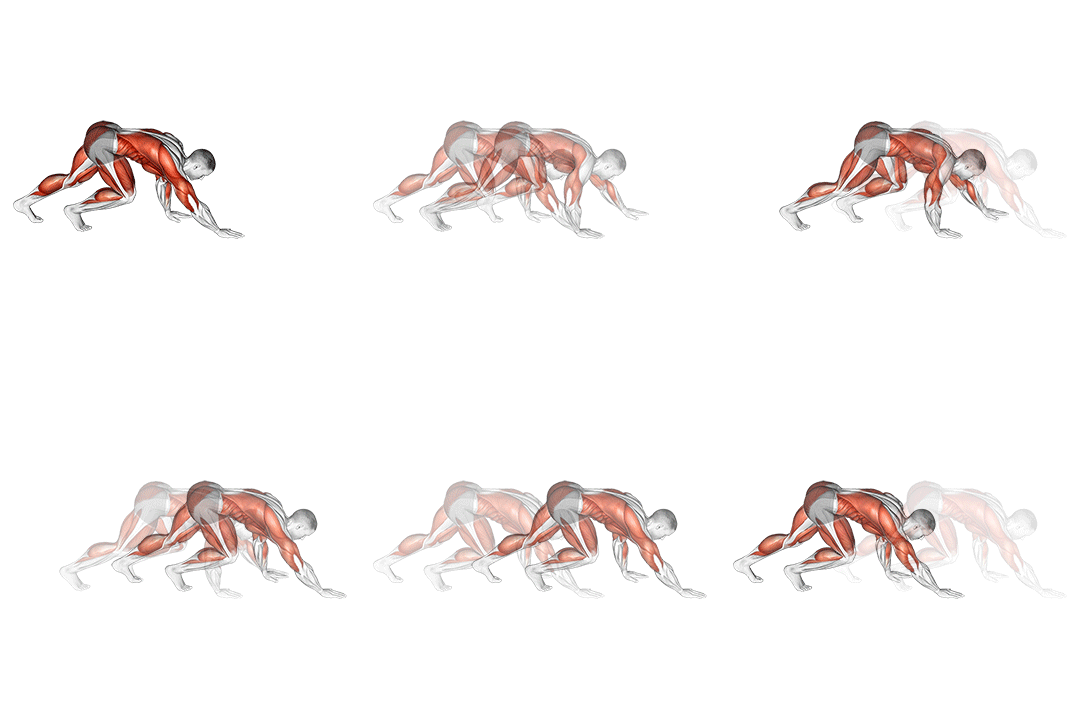
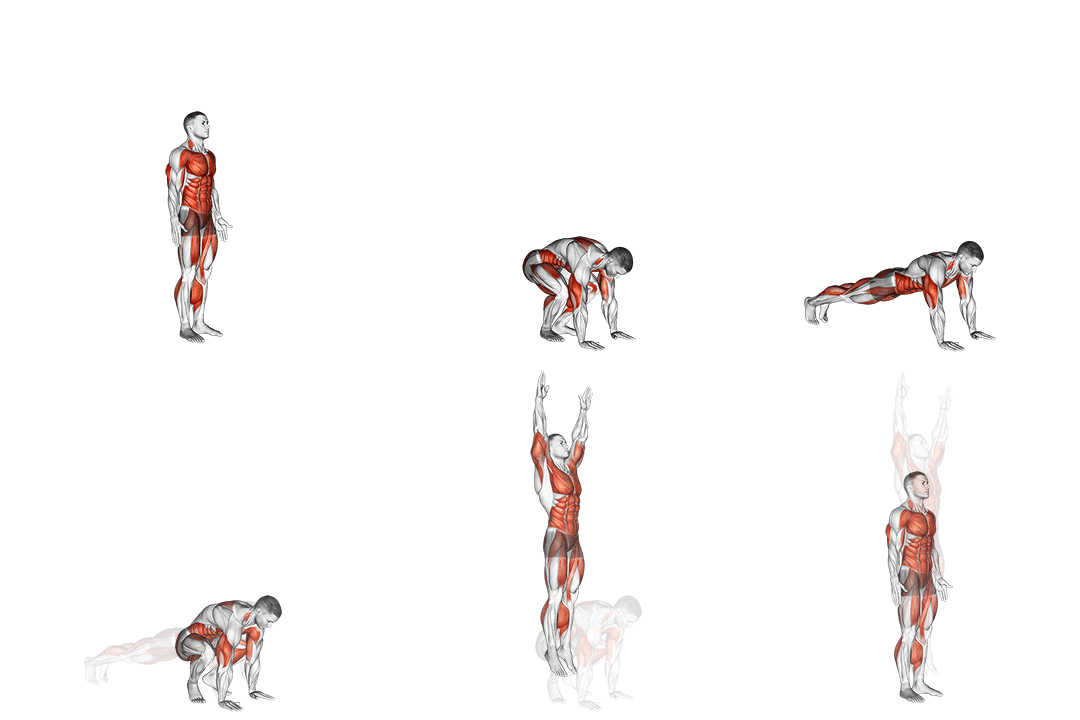
Bear Crawl
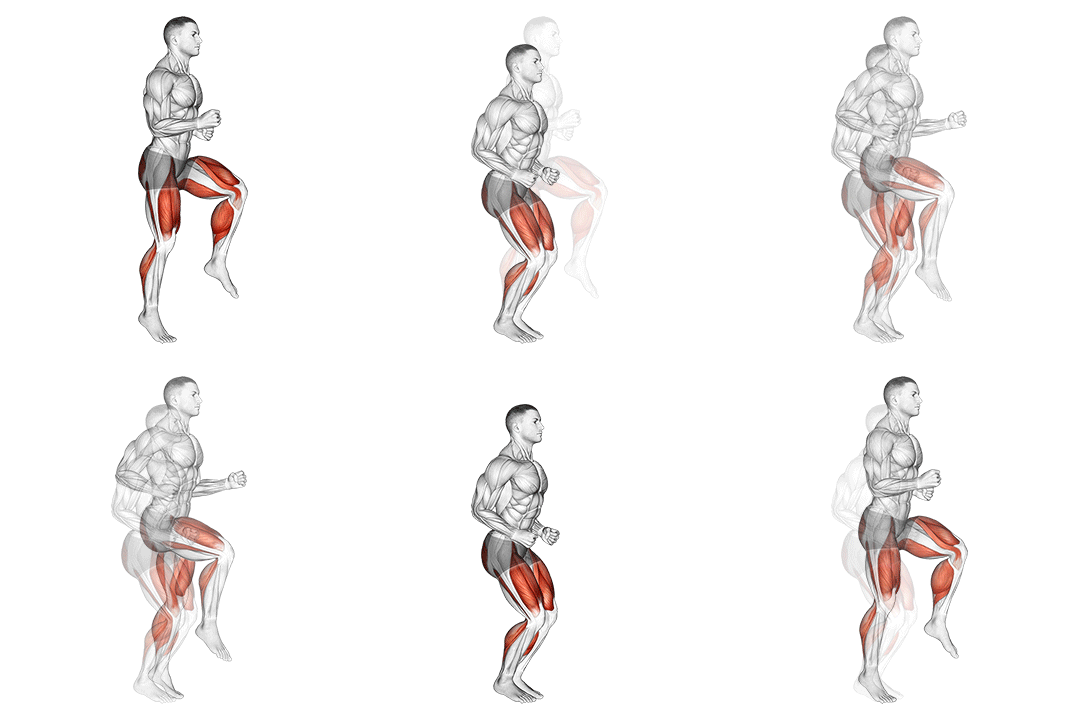
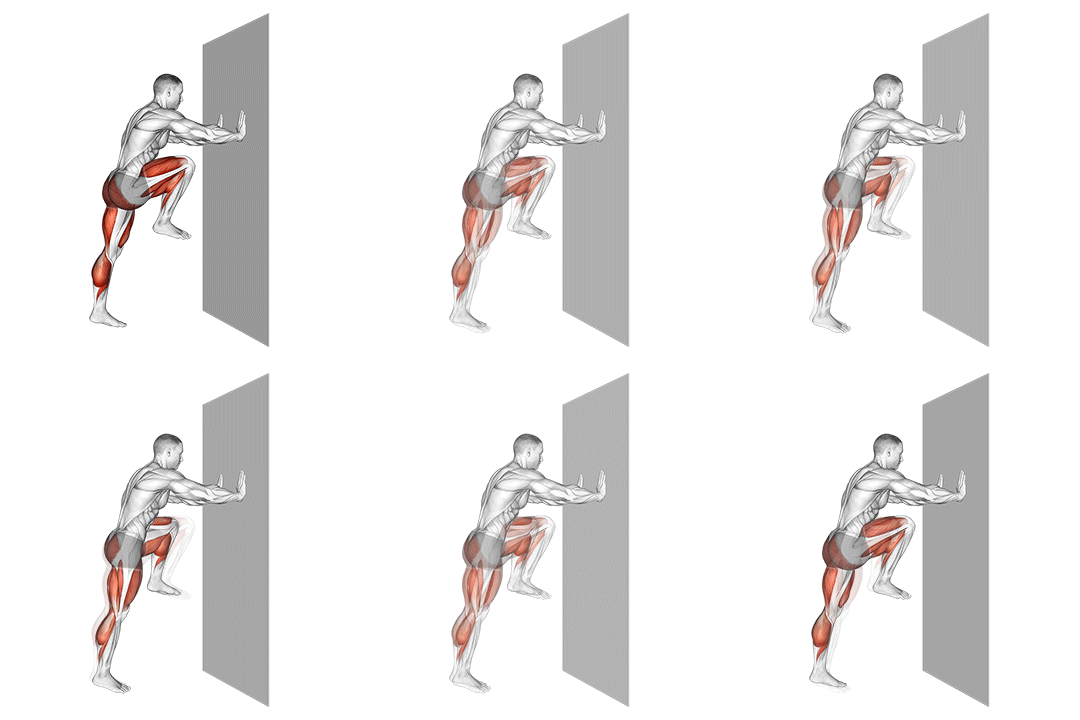
Half Knee Bends (male)
Head-to-Head Comparison
| Attribute | Bear Crawl | Half Knee Bends (male) |
|---|---|---|
| Target Muscle |
Cardiovascular-system
|
Cardiovascular-system
|
| Body Part |
Cardio
|
Cardio
|
| Equipment |
Body-weight
|
Body-weight
|
| Difficulty |
Intermediate
|
Beginner
|
| Movement Type |
Compound
|
Compound
|
| Secondary Muscles |
3
|
3
|
Secondary Muscles Activated
Bear Crawl
Half Knee Bends (male)
Visual Comparison
Overview
Bear Crawl vs Half Knee Bends (male) — two bodyweight, compound cardio movers that look different but both tax your cardiovascular system. You’ll get a side-by-side look at primary and secondary muscle activation, equipment and space needs, difficulty and injury risk, and clear recommendations for your goals. I’ll give you technique cues, specific rep ranges (endurance sets and strength-focused ranges), and the biomechanical reasons one drill stresses core and shoulders while the other loads the quads and glutes. Read on to decide which to use in circuits, conditioning workouts, or steady-state training.
Key Differences
- Difficulty levels differ: Bear Crawl is intermediate, while Half Knee Bends (male) is beginner.
- Both exercises target the Cardiovascular-system using Body-weight. The main differences are in their movement patterns and muscle activation angles.
Pros & Cons
Bear Crawl
+ Pros
- Full-body conditioning that elevates HR quickly and trains coordination
- Strong core and shoulder engagement via anti-rotation and scapular stability
- Scalable for intervals: 20–60 second sets or distance-based sprints
- Low equipment needs—just space and a stable floor
− Cons
- Higher technical demand—requires shoulder stability and coordination
- Can stress wrists, shoulders, or lower back if done with poor posture
- Less direct stimulus for quadriceps and glute hypertrophy
Half Knee Bends (male)
+ Pros
- Simple, low-skill movement ideal for beginners and tight spaces
- Direct quadriceps, hamstring and glute loading useful for leg development
- Easily progressed with reps (10–20), tempo, or added load
- Very low overhead movement, minimal wrist/shoulder demand
− Cons
- Less core and upper-body engagement compared to bear crawl
- Can become repetitive cardio without progressive overload for strength
- Limited coordination and agility training compared to multi-directional drills
When Each Exercise Wins
Half Knee Bends load the knee and hip extensors with repeated concentric/eccentric cycles, producing higher mechanical tension on quads and glutes. Use sets of 3–5 x 8–15 reps, or 4 x 12–20 for metabolic stress, and progress by adding external load.
Vertical force vectors in half knee bends allow greater peak torque at the knee and hip—essential for building lower-body strength. Progress toward heavier, slower reps or deeper range of motion to increase force output.
They have a straightforward movement pattern, low coordination demand and smaller mobility requirements. Simple cues (knees track toes, sit back to ~45°) make them teachable in minutes.
They need minimal space and no coordinated floor movement, so you can stack them into HIIT circuits or steady-state sets without clearing a long floor path. If you have room and want full-body conditioning, add bear crawl intervals.
Frequently Asked Questions
Can I do both Bear Crawl and Half Knee Bends (male) in the same workout?
Yes. Pair them as superset intervals—do 20–40 seconds of bear crawls followed by 10–15 half knee bends for metabolic conditioning and balanced muscle recruitment. Use this combo for circuits where bear crawls tax core/shoulders and knee bends load lower limbs.
Which exercise is better for beginners?
Half Knee Bends (male) are better for beginners because they’re single-plane and easier to cue (sit back, drive through heels). Start with 2–3 sets of 10–15 reps and focus on knee tracking and neutral spine.
How do the muscle activation patterns differ?
Bear crawls produce alternating contralateral limb patterns that emphasize isometric trunk control and scapular stability with horizontal force vectors. Half knee bends rely on cyclical knee and hip extension with vertical force transmission, increasing quadriceps and glute activation during concentric phases.
Can Half Knee Bends (male) replace Bear Crawl?
They can replace bear crawls if your priority is lower-body strength or you lack space, but not if you need core/shoulder conditioning and coordination. For complete conditioning programs include both or substitute based on the specific adaptation you want.
Expert Verdict
Use bear crawls when your goal is conditioning, coordination and core-plus-shoulder endurance. They produce horizontal force vectors and high anti-rotation demand that raise heart rate while training scapular and trunk control—ideal for circuits or conditioning sets of 20–60 seconds. Choose half knee bends (male) when you want targeted lower-body work, simpler progression and lower technical demand; perform 3–5 sets of 8–15 reps or 12–20 for metabolic conditioning, keeping knee flexion near 45°–60° to manage patellofemoral load. Combine both across a program: half knee bends for strength/hypertrophy blocks, bear crawls for conditioning or active recovery.
Also Compare
More comparisons with Bear Crawl
Compare More Exercises
Use our free comparison tool to analyze any two exercises head-to-head.
Compare Exercises