

Bear Crawl vs High Knee Against Wall: Complete Comparison Guide
Bear Crawl vs High Knee Against Wall — you’re choosing between a full-body crawl and a driven knee march. If you want a clear pick for conditioning, core stability, or low-impact cardio, this guide has your back. You’ll get side-by-side muscle comparisons, equipment and difficulty breakdowns, concrete technique cues (angles, tempo, rep ranges), and clear winner scenarios for hypertrophy, strength, beginners, and home workouts. Read on and you’ll know which drill to program into intervals, circuits, or warm-ups based on biomechanics and movement goals.
Exercise Comparison
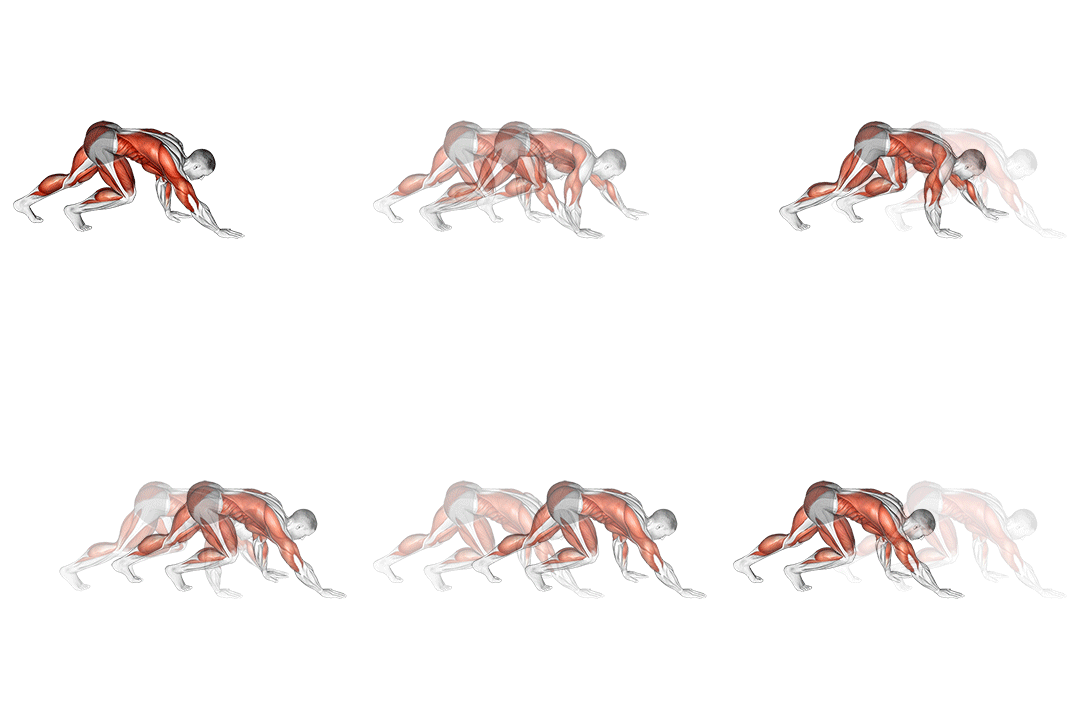
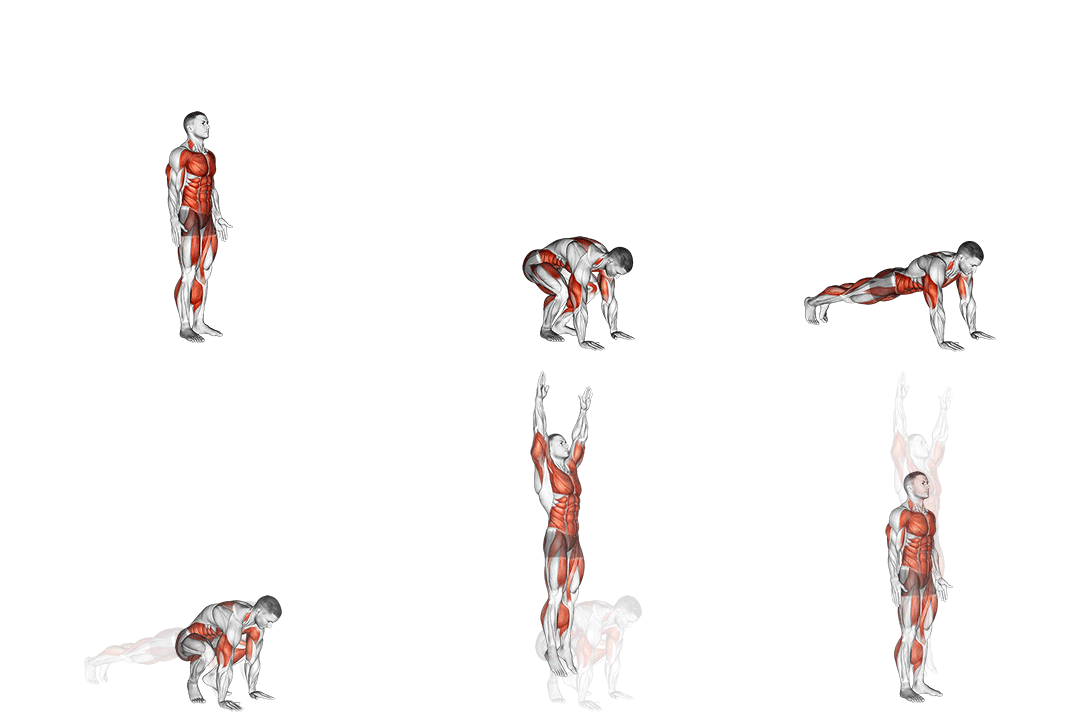
Bear Crawl
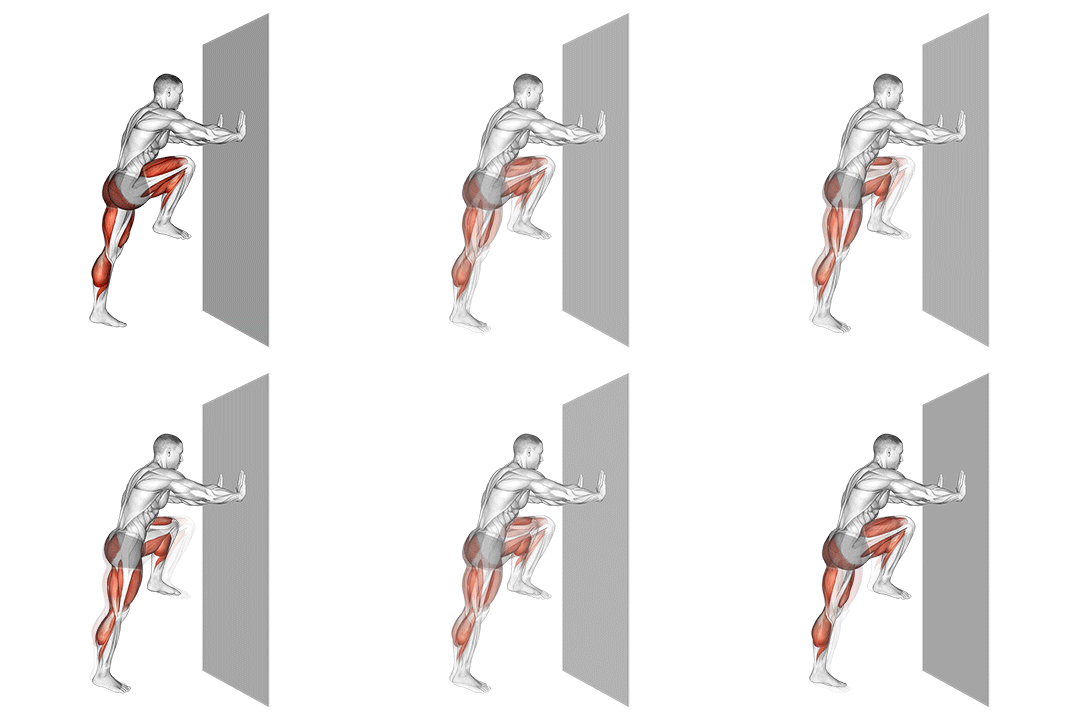
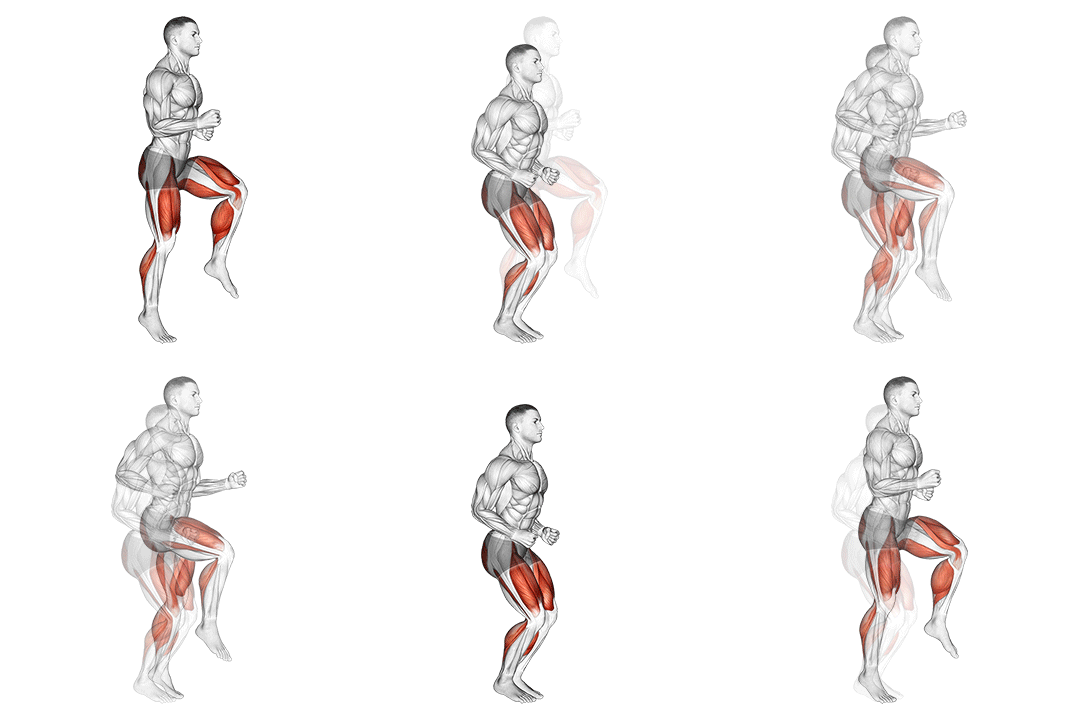
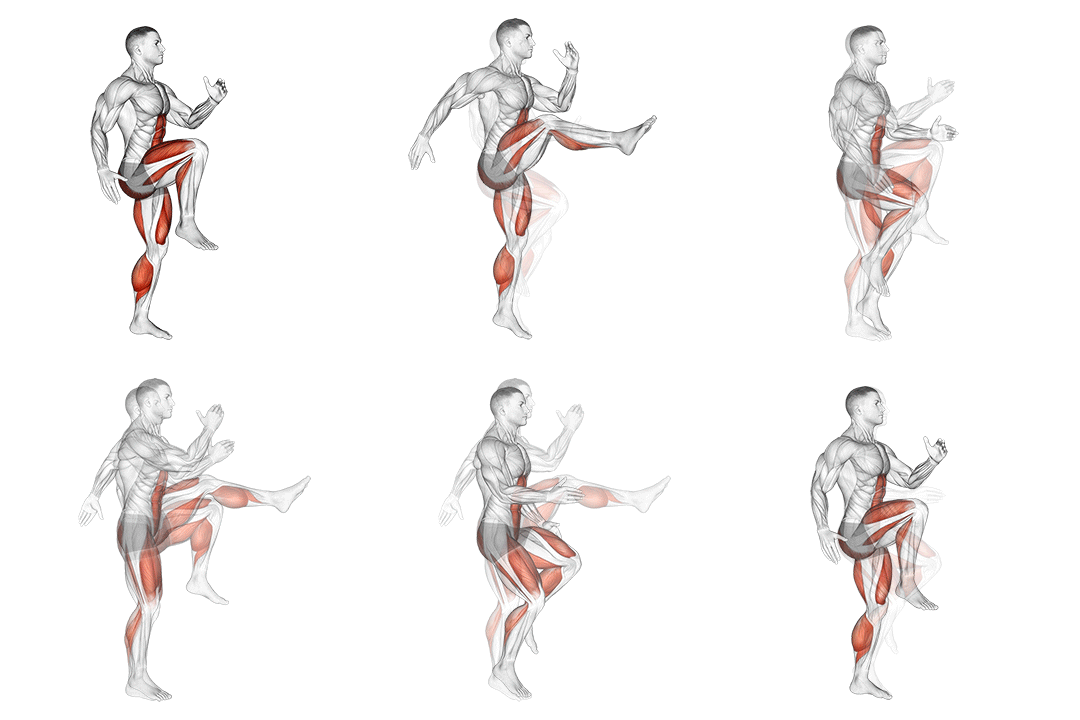
High Knee Against Wall
Head-to-Head Comparison
| Attribute | Bear Crawl | High Knee Against Wall |
|---|---|---|
| Target Muscle |
Cardiovascular-system
|
Cardiovascular-system
|
| Body Part |
Cardio
|
Cardio
|
| Equipment |
Body-weight
|
Body-weight
|
| Difficulty |
Intermediate
|
Beginner
|
| Movement Type |
Compound
|
Compound
|
| Secondary Muscles |
3
|
4
|
Secondary Muscles Activated
Bear Crawl
High Knee Against Wall
Visual Comparison
Overview
Bear Crawl vs High Knee Against Wall — you’re choosing between a full-body crawl and a driven knee march. If you want a clear pick for conditioning, core stability, or low-impact cardio, this guide has your back. You’ll get side-by-side muscle comparisons, equipment and difficulty breakdowns, concrete technique cues (angles, tempo, rep ranges), and clear winner scenarios for hypertrophy, strength, beginners, and home workouts. Read on and you’ll know which drill to program into intervals, circuits, or warm-ups based on biomechanics and movement goals.
Key Differences
- Difficulty levels differ: Bear Crawl is intermediate, while High Knee Against Wall is beginner.
- Both exercises target the Cardiovascular-system using Body-weight. The main differences are in their movement patterns and muscle activation angles.
Pros & Cons
Bear Crawl
+ Pros
- Packed conditioning and muscle recruitment: upper body, core, and lower body work together
- Strong core anti-rotation and stability carryover
- Multiple progression paths: speed, distance, added weight, unilateral variations
- Improves coordination and force transfer across the posterior chain and shoulders
− Cons
- Higher technical demand — needs solid shoulder and core control
- Increased wrist and shoulder load can be problematic for some
- Requires more floor space for effective sets
High Knee Against Wall
+ Pros
- Beginner-friendly and easy to coach with simple cues
- Highly accessible in small spaces with minimal skill required
- Effective for raising heart rate quickly with short intervals (20–40s)
- Targets lower-extremity musculature and ankle stiffness through repeated cycles
− Cons
- Limited upper-body and core strengthening stimulus
- Lower ceiling for progressive overload compared with crawling patterns
- Can irritate hip flexors or anterior knee if performed with poor alignment
When Each Exercise Wins
Bear Crawl produces more total-body time under tension and offers ways to increase load (vests, slow tempo, unilateral variants). That higher mechanical stress across multiple muscle groups supports greater muscle growth than a primarily hip-flexion drill.
Bear Crawl develops horizontal force transfer, unilateral control, and sustained isometric loading in shoulders and core, which better translates to functional strength than the mainly concentric, cyclic pattern of high knees.
High Knee Against Wall has an easier learning curve, low joint load, and simple tempo cues (drive knee to 75°–90°). It allows safe conditioning while you build hip mobility and cardiovascular base.
High Knee Against Wall requires minimal space and no floor clearance; you can do effective interval sets (30s on, 15s off) in a hallway. Bear Crawl is useful at home but needs more floor area and matting.
Frequently Asked Questions
Can I do both Bear Crawl and High Knee Against Wall in the same workout?
Yes. Pair High Knee Against Wall as a warm-up (2–3 sets of 20–30 seconds) to prime hip flexors and heart rate, then use Bear Crawl for 3–5 rounds of 20–40 seconds to train coordination, core stability, and upper-body endurance.
Which exercise is better for beginners?
High Knee Against Wall is better for beginners because it has simpler mechanics, lower shoulder and wrist demand, and clear range-of-motion cues (drive knee to ~75°–90°). It builds a cardio base before progressing to more complex patterns like the bear crawl.
How do the muscle activation patterns differ?
Bear Crawl creates continuous isometric activation in shoulders and core with alternating contralateral limb drives, emphasizing horizontal force transfer and anti-rotation. High Knee Against Wall produces phasic concentric hip flexion and knee extension with vertical force vectors and short on/off activation of quads and hip flexors.
Can High Knee Against Wall replace Bear Crawl?
Not fully. High Knee Against Wall can replace the cardiovascular component in a session, but it won’t match the shoulder, triceps, and core anti-rotation stimulus of the bear crawl. Use it as a substitute for cardio or warm-up, and keep the bear crawl when you need full-body stability and strength-conditioning.
Expert Verdict
Choose Bear Crawl when you want full-body conditioning that also builds core stability and upper-body endurance. Use 3–5 rounds of 20–40 second crawls or 6–10 x 10–15 meter shuttles, and progress via tempo, unilateral versions, or added load to target strength and muscle growth. Pick High Knee Against Wall if you need an accessible, beginner-safe cardio drill — use 30–60 second intervals or 20–40 reps per leg to improve hip flexor power and aerobic capacity with minimal shoulder stress. Program both: High Knees for warm-ups and short cardio blasts, Bear Crawls for strength-endurance and coordination work.
Also Compare
More comparisons with Bear Crawl
Compare More Exercises
Use our free comparison tool to analyze any two exercises head-to-head.
Compare Exercises