

Bear Crawl vs Jack Burpee: Complete Comparison Guide
Bear Crawl vs Jack Burpee — you’re comparing two compound, body-weight cardio moves that crank up heart rate while challenging your shoulders and core. I’ll walk you through how each exercise loads movement patterns, which muscles drive the work, technique cues (hand placement, hip angle, breathing), progression options, and practical programming (rep ranges and set durations). Read on to see which one fits your goal—core stability and joint control, or explosive lower-body power and metabolic conditioning.
Exercise Comparison
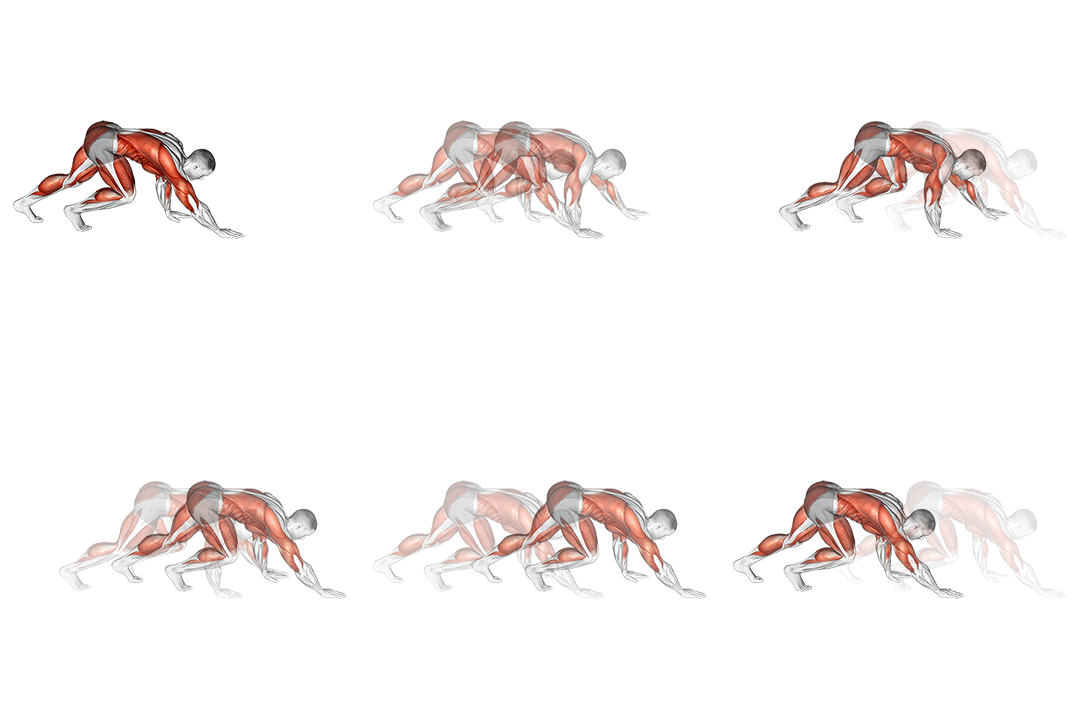
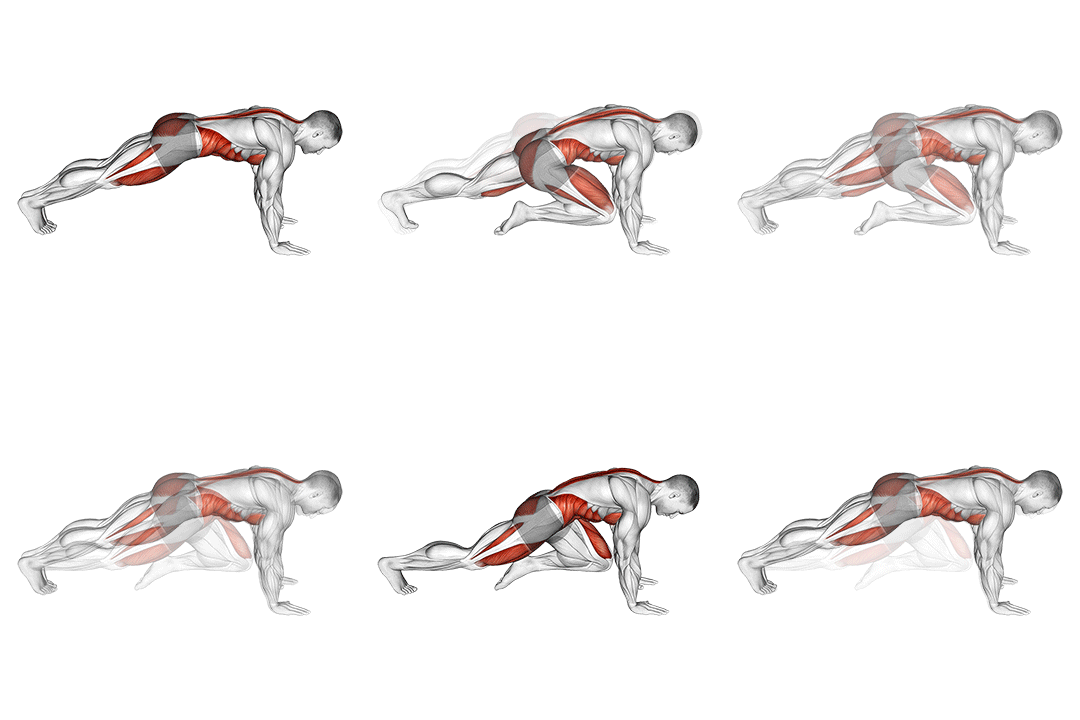
Bear Crawl
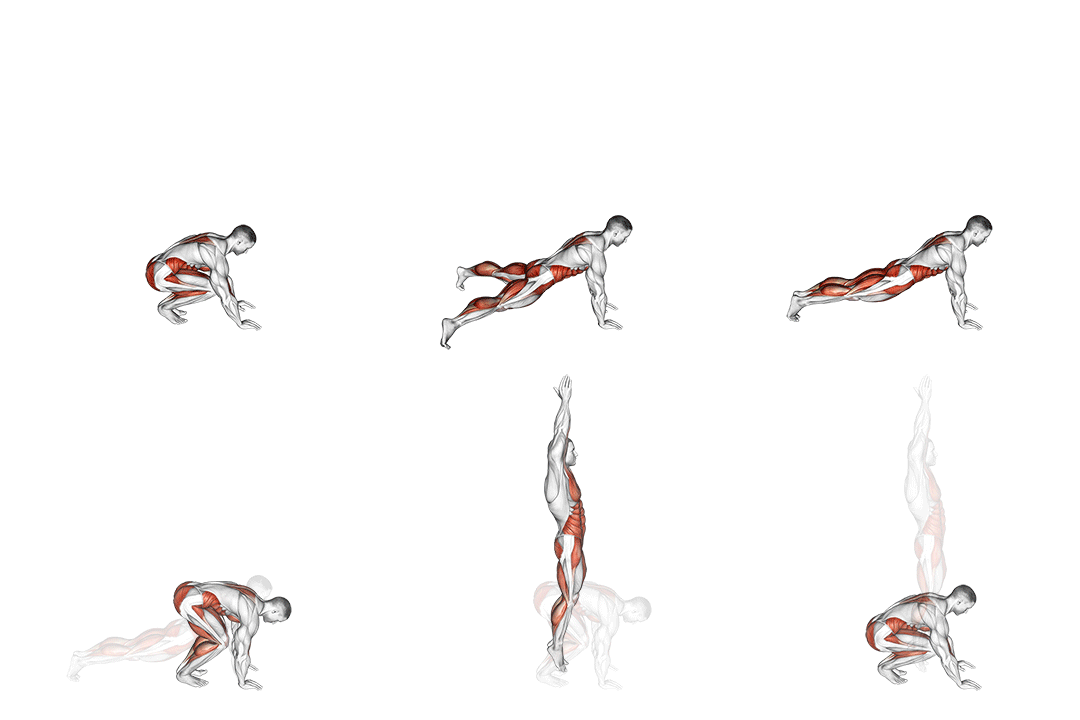
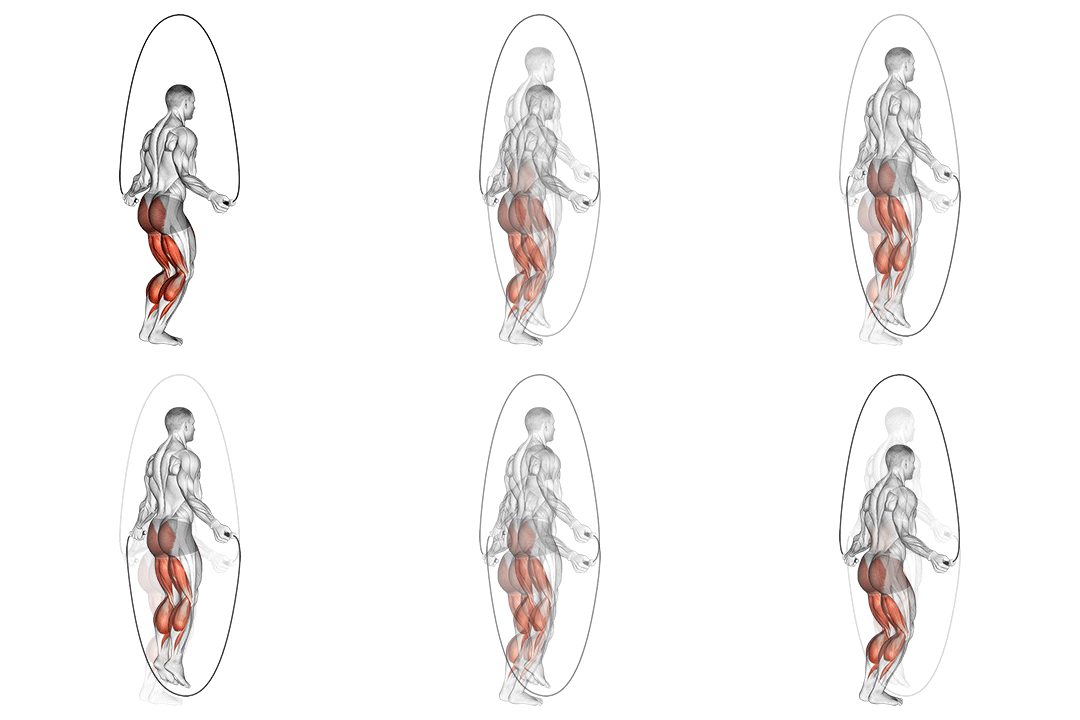
Jack Burpee
Head-to-Head Comparison
| Attribute | Bear Crawl | Jack Burpee |
|---|---|---|
| Target Muscle |
Cardiovascular-system
|
Cardiovascular
|
| Body Part |
Cardio
|
Cardio
|
| Equipment |
Body-weight
|
Body-weight
|
| Difficulty |
Intermediate
|
Intermediate
|
| Movement Type |
Compound
|
Compound
|
| Secondary Muscles |
3
|
6
|
Secondary Muscles Activated
Bear Crawl
Jack Burpee
Visual Comparison
Overview
Bear Crawl vs Jack Burpee — you’re comparing two compound, body-weight cardio moves that crank up heart rate while challenging your shoulders and core. I’ll walk you through how each exercise loads movement patterns, which muscles drive the work, technique cues (hand placement, hip angle, breathing), progression options, and practical programming (rep ranges and set durations). Read on to see which one fits your goal—core stability and joint control, or explosive lower-body power and metabolic conditioning.
Key Differences
- Bear Crawl primarily targets the Cardiovascular-system, while Jack Burpee focuses on the Cardiovascular.
Pros & Cons
Bear Crawl
+ Pros
- Sustains core and anti-rotational strength through continuous contralateral movement
- Lower-impact conditioning compared with repeated jumping
- Improves scapular control and shoulder endurance
- Easy to program as timed intervals (20–60 seconds) for conditioning
− Cons
- Requires more horizontal space for meaningful work
- Steeper coordination and technique learning curve
- Lower peak power output compared with ballistic movements like burpees
Jack Burpee
+ Pros
- High power and metabolic spike from ballistic triple extension
- Strong lower-body recruitment — quads, glutes, hamstrings, calves
- Very space-efficient and easy to scale intensity
- Clear rep-based progressions for intervals or circuits
− Cons
- Higher impact on knees and spine if landing is uncontrolled
- Form breaks quickly with fatigue, increasing injury risk
- Less sustained core anti-rotation demand than crawling
When Each Exercise Wins
Jack Burpee creates higher concentric and eccentric loading through triple extension and landing phases, recruiting quads, glutes and hamstrings more intensely. If you target hypertrophy, use 6–15 controlled reps with added resistance or tempo to increase time under tension.
Bear Crawl builds sustained isometric shoulder and core strength and improves intermuscular coordination under load, which transfers to bodyweight strength. Use 30–60 second sets and progress by adding resistance or longer distances to increase force demands.
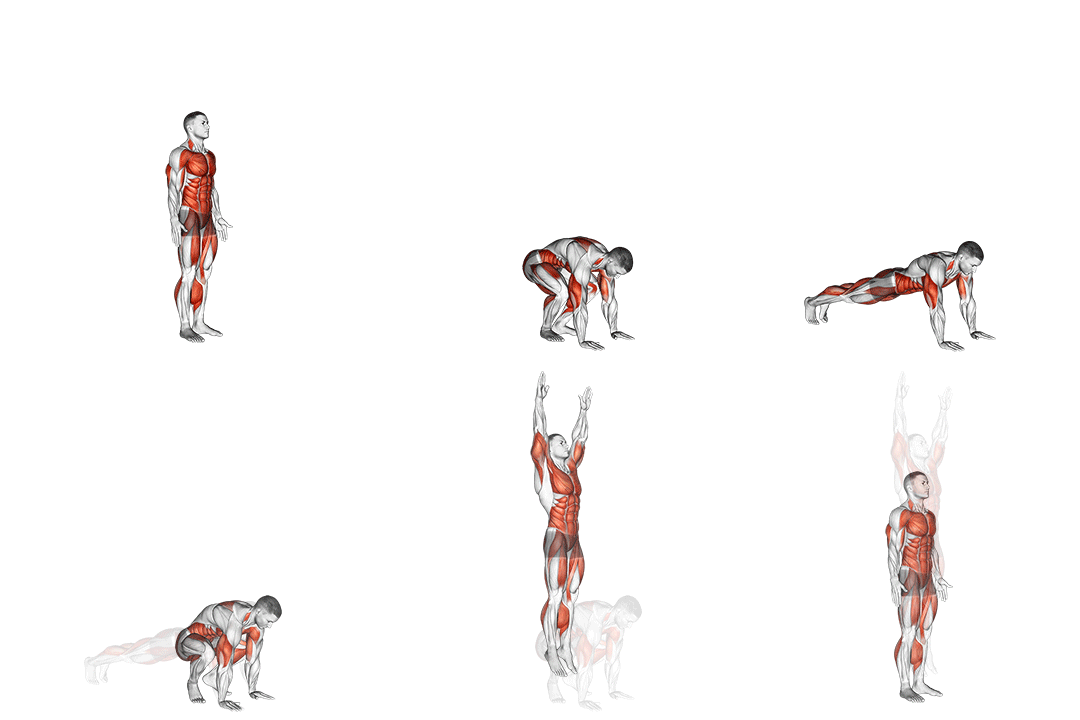
A scaled burpee (step-back, no jump) is easier to teach and modify for fitness novices and still delivers cardio stimulus. You can progress reps or add the jump once technique and landing mechanics (soft knees, neutral spine) are solid.
Burpees need minimal horizontal space and produce large metabolic effects with a small footprint. For cramped rooms or short ceilings, modify the jump or remove the push-up to fit your environment.
Frequently Asked Questions
Can I do both Bear Crawl and Jack Burpee in the same workout?
Yes. Sequence them to emphasize different qualities: use Bear Crawls early for core and shoulder control (3 rounds of 30–45 seconds), then finish with 3–5 sets of 6–12 Jack Burpees for power and conditioning. Monitor form—fatigue can degrade scapular control and landing mechanics.
Which exercise is better for beginners?
Jack Burpee is generally easier to scale for beginners because you can remove the jump and push-up while maintaining cardiovascular stress. Bear Crawl requires more coordination and shoulder stability, so introduce it after basic bodyweight control is established.
How do the muscle activation patterns differ?
Bear Crawl emphasizes sustained isometric and anti-rotational activation of the core and prolonged scapular stabilization in low hip flexion. Jack Burpee alternates eccentric loading and explosive concentric power, producing higher peak forces in the quadriceps, glutes and calves during the jump and landing.
Can Jack Burpee replace Bear Crawl?
Only partially. Jack Burpee can replace crawls if your goal is metabolic conditioning or lower-body power, but it won’t replicate the sustained scapular and anti-rotational core demands of the Bear Crawl. Keep both in your toolbox when you want complementary training effects.
Expert Verdict
Choose Bear Crawl when your priority is core stability, scapular control, and low-impact metabolic conditioning — program it as 3–6 rounds of 30–60 second efforts focusing on hip height (~20–30° flexion) and neutral spine. Choose Jack Burpee when you want high-power output, maximal leg recruitment, and compact, rep-based conditioning — program 6–15 reps per set or EMOMs to spike heart rate. For balanced sessions, alternate crawls and burpees: crawls train sustained tension and control, burpees train explosive force and metabolic capacity. Both are body-weight staples; select the one that matches your biomechanical goal.
Also Compare
More comparisons with Bear Crawl
Compare More Exercises
Use our free comparison tool to analyze any two exercises head-to-head.
Compare Exercises