

Bear Crawl vs Jack Jump (male): Complete Comparison Guide
Bear Crawl vs Jack Jump (male) — you’re choosing between a horizontal, full-body crawl and a vertical plyometric hop. I’ll walk you through how each stresses your cardiovascular system, which secondary muscles light up, the key technique cues to use (wrist and scapular alignment for Bear Crawl; hip drive and soft landings for Jack Jump), programming suggestions, and which exercise fits your goal: stability, endurance, or power. Read on for rep ranges, biomechanical reasons, and actionable drills so you can pick the right move for your training.
Exercise Comparison
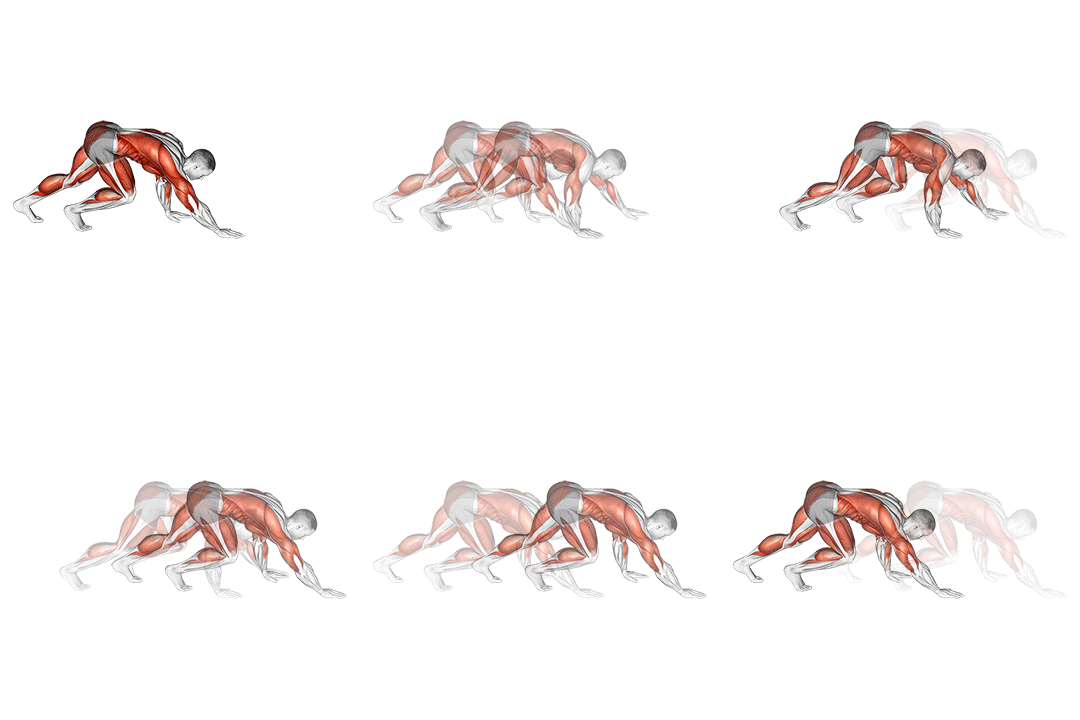
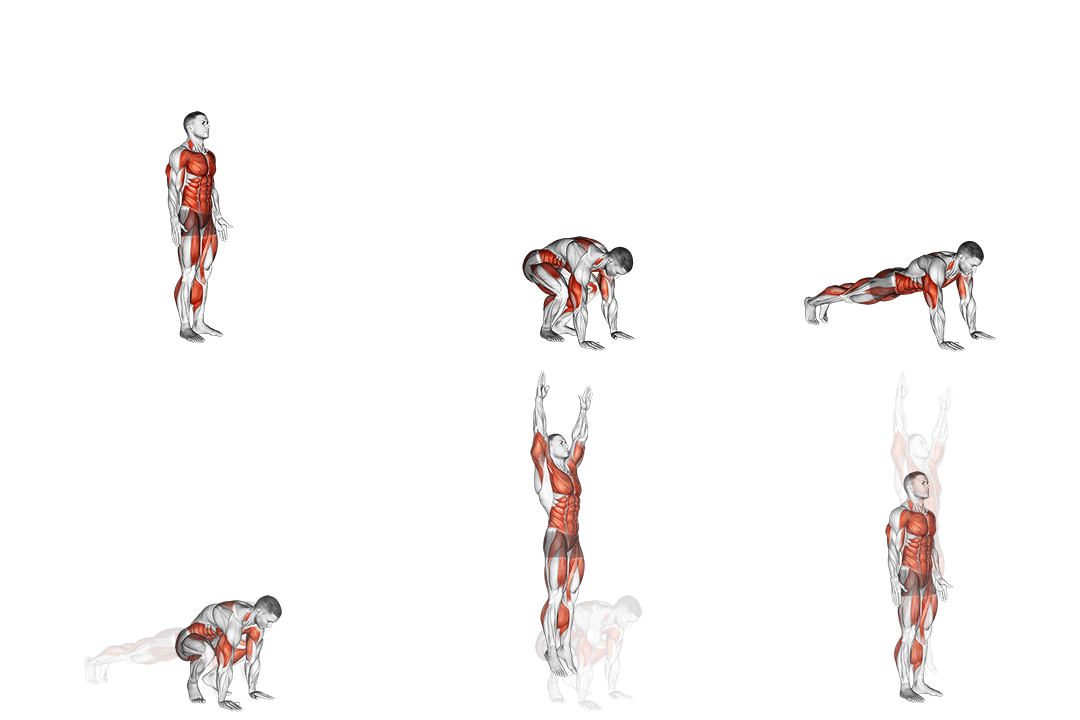
Bear Crawl
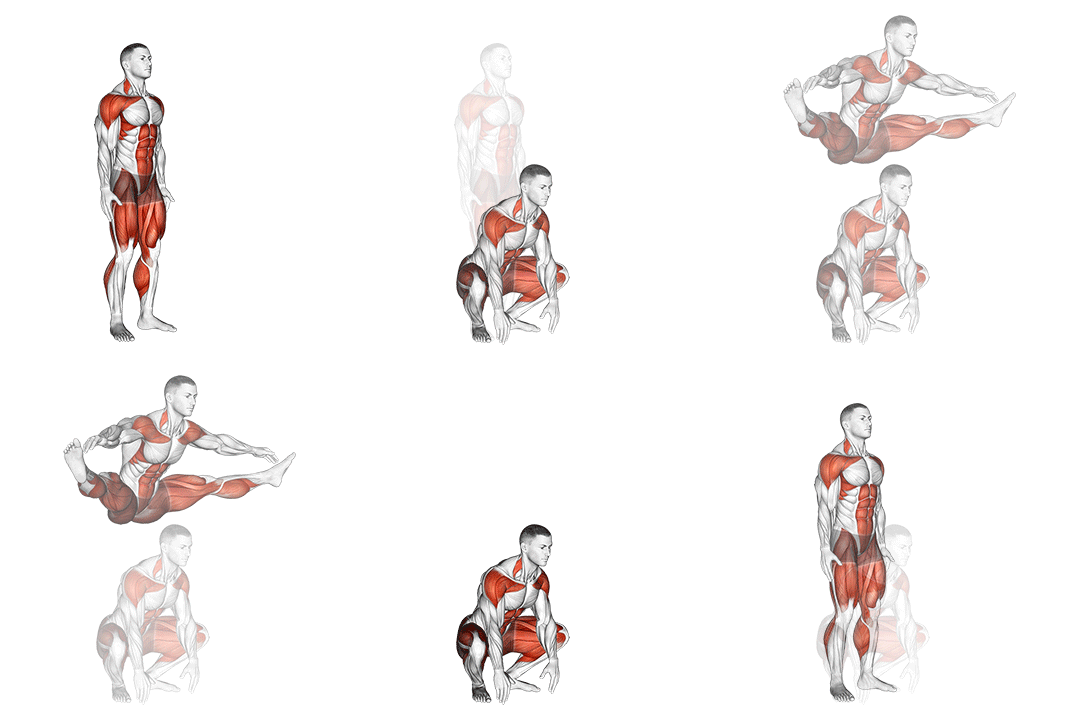
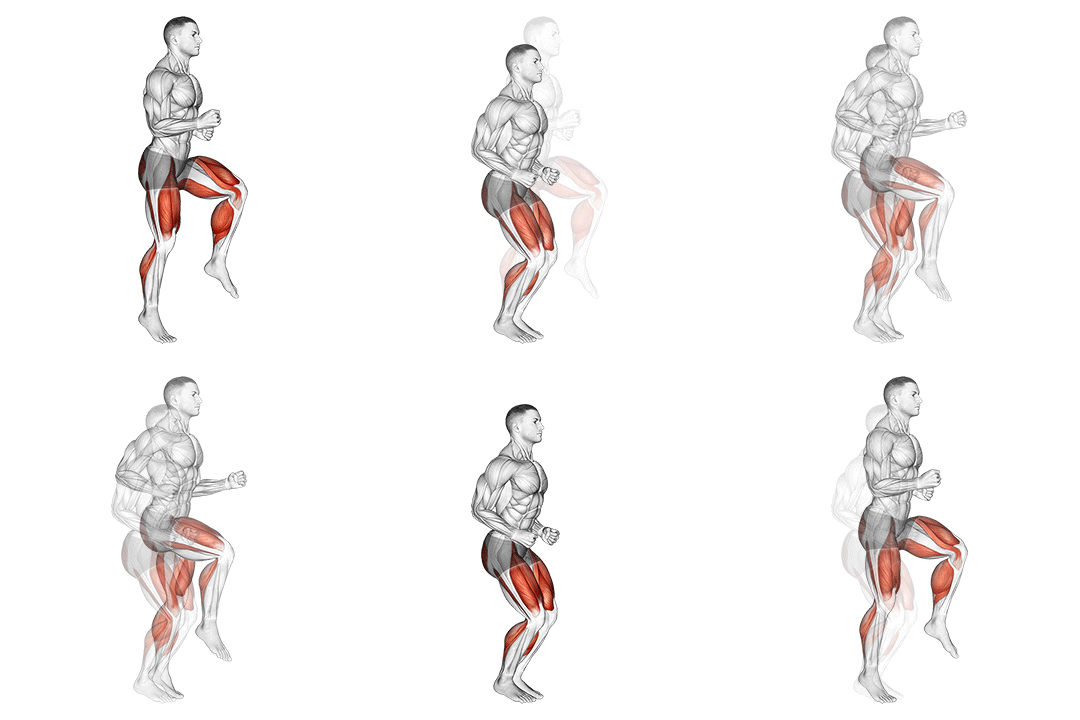
Jack Jump (male)
Head-to-Head Comparison
| Attribute | Bear Crawl | Jack Jump (male) |
|---|---|---|
| Target Muscle |
Cardiovascular-system
|
Cardiovascular
|
| Body Part |
Cardio
|
Cardio
|
| Equipment |
Body-weight
|
Body-weight
|
| Difficulty |
Intermediate
|
Beginner
|
| Movement Type |
Compound
|
Compound
|
| Secondary Muscles |
3
|
2
|
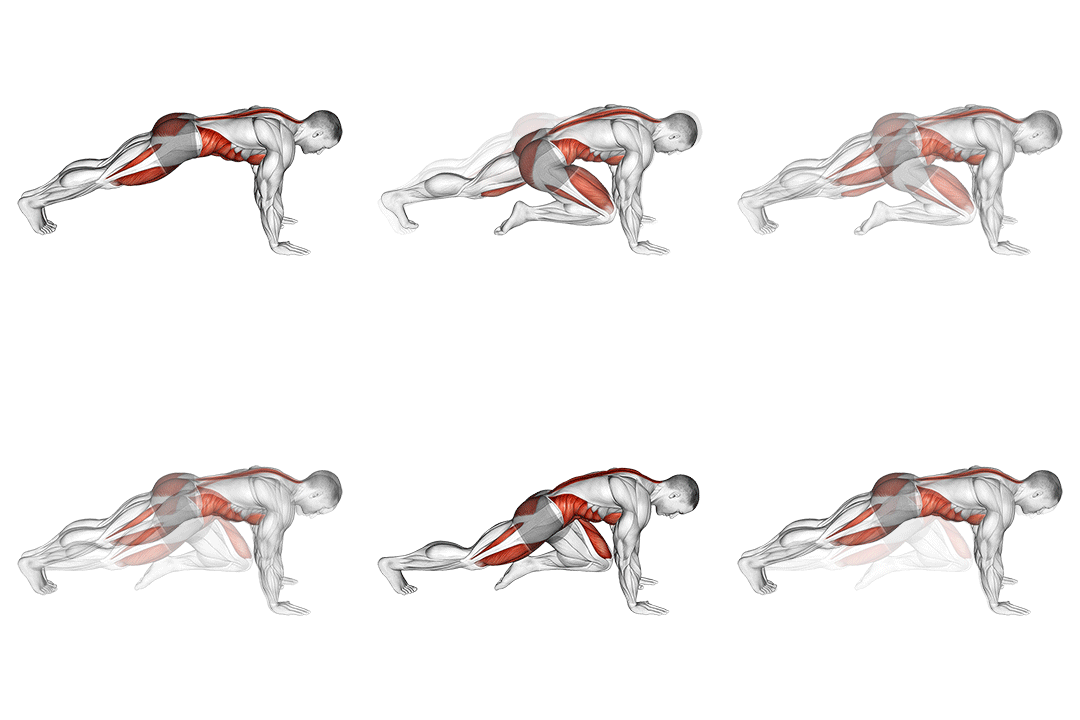
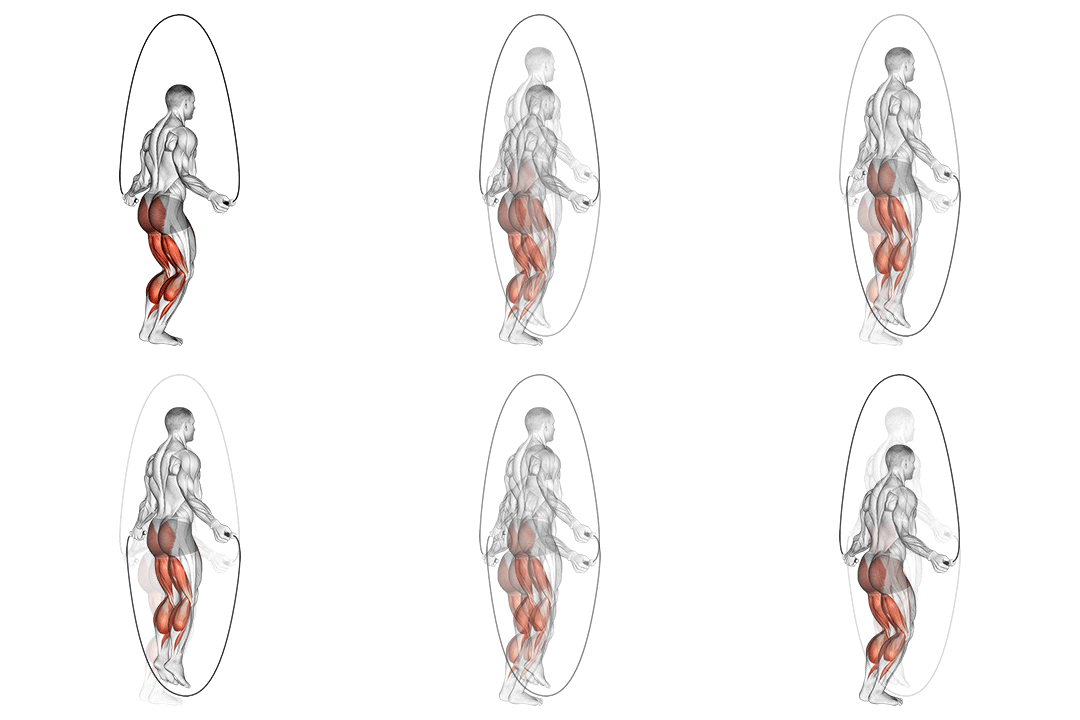
Secondary Muscles Activated
Bear Crawl
Jack Jump (male)
Visual Comparison
Overview
Bear Crawl vs Jack Jump (male) — you’re choosing between a horizontal, full-body crawl and a vertical plyometric hop. I’ll walk you through how each stresses your cardiovascular system, which secondary muscles light up, the key technique cues to use (wrist and scapular alignment for Bear Crawl; hip drive and soft landings for Jack Jump), programming suggestions, and which exercise fits your goal: stability, endurance, or power. Read on for rep ranges, biomechanical reasons, and actionable drills so you can pick the right move for your training.
Key Differences
- Bear Crawl primarily targets the Cardiovascular-system, while Jack Jump (male) focuses on the Cardiovascular.
- Difficulty levels differ: Bear Crawl is intermediate, while Jack Jump (male) is beginner.
Pros & Cons
Bear Crawl
+ Pros
- Builds anterior core endurance and anti-rotation strength under load
- Develops shoulder girdle stability and scapular control
- Low-impact on lower-body joints compared to plyometrics
- Easy to scale for conditioning with distance/time (30–60s or 20–40m intervals)
− Cons
- Requires wrist and shoulder mobility; can irritate wrists
- Less vertical power development for explosive athletes
- Technique demands make it hard to maintain intensity for beginners
Jack Jump (male)
+ Pros
- Simple to learn and highly accessible for beginners
- Develops explosive lower-body power and fast cardiovascular spikes
- Requires almost no space or equipment
- Easy to program into EMOMs or interval sets (20–40 reps or 30–60s)
− Cons
- High-impact landings increase stress on knees and ankles
- Limited upper-body and core anti-rotation stimulus
- Quality suffers when fatigue accumulates—form breakdown increases injury risk
When Each Exercise Wins
Bear Crawl provides longer time under tension across core, shoulders, and triceps and allows for progressive overload (weighted vest or slower tempos). That sustained contraction pattern better supports local muscular hypertrophy than short high-velocity jumps.
Bear Crawl produces isometric and concentric demands on the shoulder and trunk that build functional strength through long-duration force production, whereas Jack Jump primarily trains power and rate of force development rather than maximal strength.
Jack Jump has a simple movement pattern and immediate cardiovascular effect with minimal coordination demands. Start with 2–3 sets of 10–20 reps and focus on soft landings with 20–30° knee flexion.
Jack Jump needs almost no surface prep or mobility considerations and fits small spaces. Its straightforward programming (intervals or circuits) makes it ideal for at-home conditioning.
Frequently Asked Questions
Can I do both Bear Crawl and Jack Jump (male) in the same workout?
Yes. If your priority is power, perform Jack Jumps first while fresh for higher vertical output (3–5 sets with full rest), then use Bear Crawls for conditioning and stability as a finisher. If you want to overload core stability, reverse the order and keep jumps low-volume.
Which exercise is better for beginners?
Jack Jump (male) is generally better for beginners because the pattern is simpler and immediately effective for cardiovascular conditioning. Start with low reps and focus on soft landings to limit joint stress.
How do the muscle activation patterns differ?
Bear Crawl emphasizes prolonged core and scapular stabilizer activation with horizontal shear and anti-rotation demands, while Jack Jump produces brief, high-amplitude quad and calf activation through the stretch–shortening cycle and vertical ground reaction forces.
Can Jack Jump (male) replace Bear Crawl?
Not entirely. Jack Jump can replace Bear Crawl for cardiovascular conditioning and lower-body power, but it won’t replicate the shoulder stability and anti-rotation core work of the Bear Crawl. Match the exercise to your goal: pick Jack Jump for power and accessibility, Bear Crawl for core and shoulder resilience.
Expert Verdict
Choose Bear Crawl when your priorities are core stability, shoulder endurance, and low-impact conditioning. Program it for 3–5 sets of 30–60 seconds or 20–40 meters, emphasize a neutral spine, knees ~90° flexion, and controlled contralateral stepping to maximize anti-rotation strength. Pick Jack Jump (male) when you want fast cardiovascular spikes and lower-body power—use 3–5 sets of 10–30 reps or 30–60 second intervals, focus on full hip extension and soft landings with 20–40° knee flexion. Use Jack Jump for beginner-friendly, space-efficient conditioning and Bear Crawl to build durable core and shoulder capacity; alternate them based on whether you prioritize power or stability.
Also Compare
More comparisons with Bear Crawl
Compare More Exercises
Use our free comparison tool to analyze any two exercises head-to-head.
Compare Exercises