

Bear Crawl vs Push To Run: Complete Comparison Guide
Bear Crawl vs Push To Run — two bodyweight, compound cardio tools that push your conditioning and coordination. You’ll get a clear, direct breakdown of how each movement taxes your cardiovascular system, which secondary muscles they recruit, the biomechanics behind each pattern, and specific technique cues and programming suggestions. I’ll cover equipment needs, learning curves, progression options, and when to pick one over the other based on whether you want core-driven metabolic conditioning or sprint-power work. Read on to decide which suits your sessions and how to program reps, distances, and rest.
Exercise Comparison
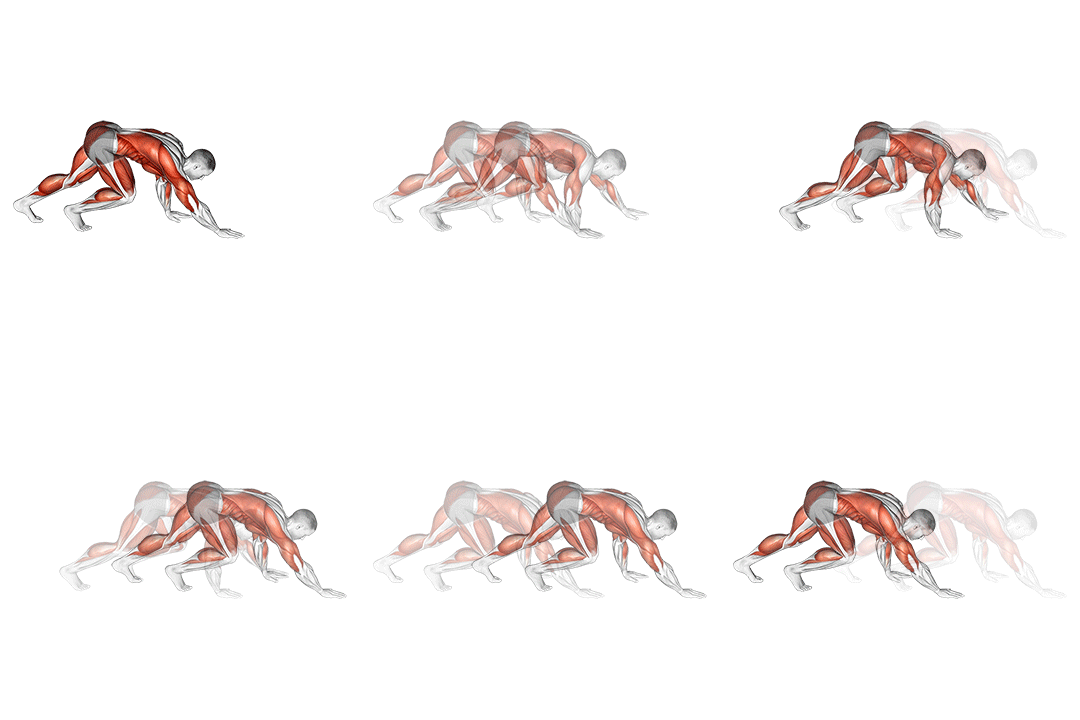
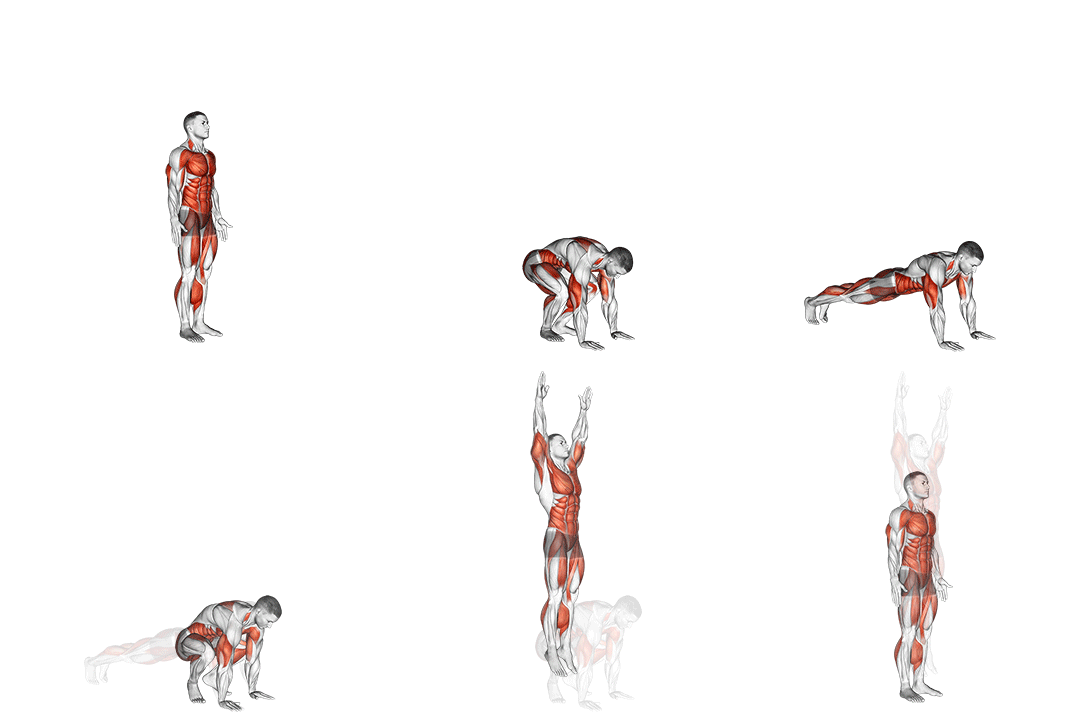
Bear Crawl
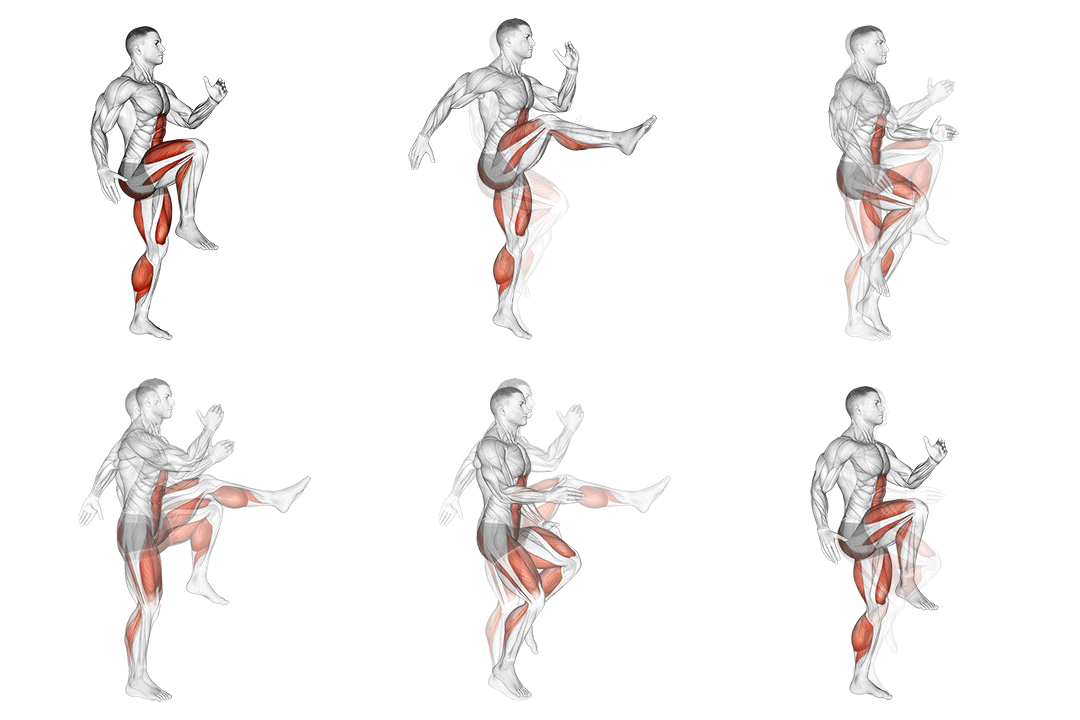
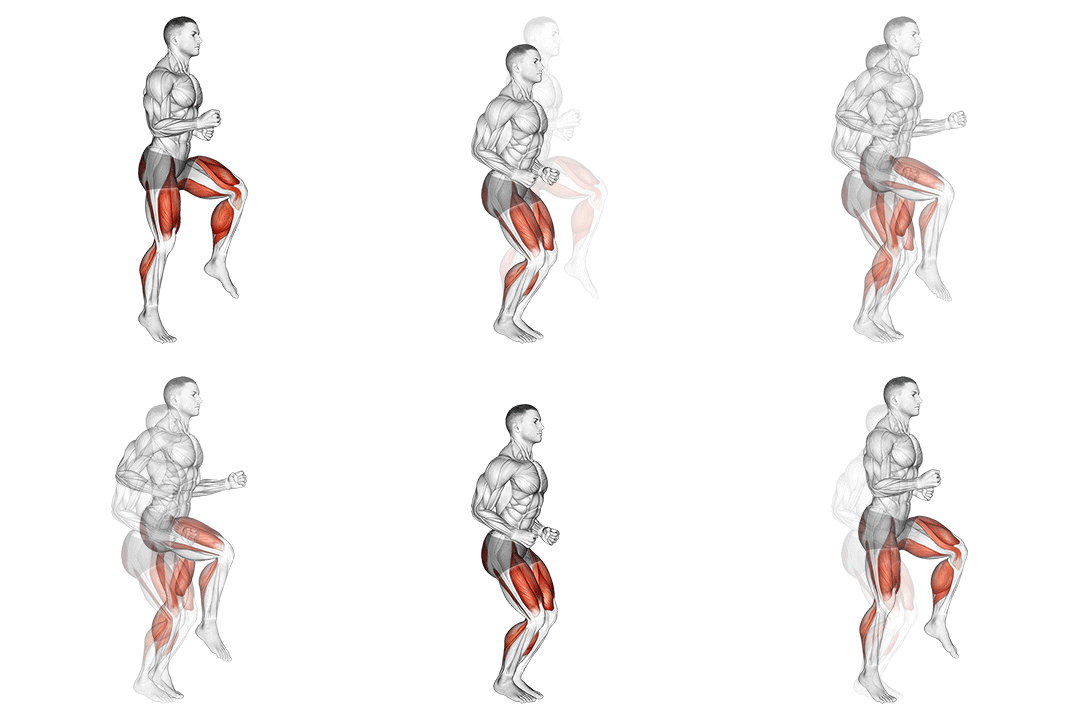
Push To Run
Head-to-Head Comparison
| Attribute | Bear Crawl | Push To Run |
|---|---|---|
| Target Muscle |
Cardiovascular-system
|
Cardiovascular-system
|
| Body Part |
Cardio
|
Cardio
|
| Equipment |
Body-weight
|
Body-weight
|
| Difficulty |
Intermediate
|
Intermediate
|
| Movement Type |
Compound
|
Compound
|
| Secondary Muscles |
3
|
3
|
Secondary Muscles Activated
Bear Crawl
Push To Run
Visual Comparison
Overview
Bear Crawl vs Push To Run — two bodyweight, compound cardio tools that push your conditioning and coordination. You’ll get a clear, direct breakdown of how each movement taxes your cardiovascular system, which secondary muscles they recruit, the biomechanics behind each pattern, and specific technique cues and programming suggestions. I’ll cover equipment needs, learning curves, progression options, and when to pick one over the other based on whether you want core-driven metabolic conditioning or sprint-power work. Read on to decide which suits your sessions and how to program reps, distances, and rest.
Key Differences
- Both exercises target the Cardiovascular-system using Body-weight. The main differences are in their movement patterns and muscle activation angles.
Pros & Cons
Bear Crawl
+ Pros
- High upper‑body and core stabilizer recruitment while maintaining metabolic demand
- Low-impact option that fits small indoor spaces
- Improves contralateral coordination and scapular control
- Easily paced for 30–60 second conditioning intervals
− Cons
- Requires nuanced coordination; can feel awkward initially
- Wrist and shoulder fatigue if mobility or scapular strength is lacking
- Less specific for leg power and sprinting ability
Push To Run
+ Pros
- Develops explosive hip extension and lower-body power
- Direct carryover to running speed and sprint conditioning
- Simple to scale by distance, speed, or resisted sprinting
- Short, high-intensity efforts produce large cardiovascular stimulus
− Cons
- Needs open space and good footwear for safety
- Higher impact increases hamstring and ankle strain risk if progressed too quickly
- Technique errors on the sprint can reduce effectiveness and raise injury risk
When Each Exercise Wins
Bear Crawl promotes sustained time under tension for the shoulders and core and allows controlled loading with tempo or a weighted vest. For hypertrophy in stabilizers and upper-body endurance, long 30–60 second sets or higher-volume circuits (4–6 sets) are preferable.
Push To Run produces higher peak force and rate of force development during the sprint phase, which better drives lower‑body strength and power adaptations when you progress distance, add resistance, or focus on short, maximal efforts.
Most beginners adapt faster to the push+run sequence thanks to intuitive running mechanics. Start with 10–15 m sprints and a simple push-up or incline push to reduce complexity while you build conditioning.
Bear Crawl fits small spaces and soft floors, and you can scale intensity with set time (30–60 seconds) rather than distance. Minimal risk of colliding with objects makes it more practical indoors.
Frequently Asked Questions
Can I do both Bear Crawl and Push To Run in the same workout?
Yes — pair them intelligently. Do Bear Crawl as a technical warm-up or conditioning drill (30–45 seconds) and save Push To Run sprints for fresh legs to avoid form breakdown. Keep total high-intensity work under 8–12 minutes per session for quality power output.
Which exercise is better for beginners?
Push To Run is generally easier to learn because running mechanics are familiar; start with short 10–15 m efforts and scaled push variations. If you want to build core and shoulder stability first, introduce Bear Crawl with slow tempo drills and short distances.
How do the muscle activation patterns differ?
Bear Crawl emphasizes sustained isometric and low-velocity contractions in the scapular stabilizers and abdominals with horizontal push vectors, while Push To Run adds a ballistic hip-extension and plantarflexion phase that produces high peak forces in quads, hamstrings and calves.
Can Push To Run replace Bear Crawl?
Not perfectly. Push To Run can substitute when you need leg power and sprint conditioning, but it won’t deliver the same shoulder and core stabilization stimulus. Pick Push To Run for speed/power goals and Bear Crawl for coordination and upper-body endurance.
Expert Verdict
Use Bear Crawl when your priority is core-driven metabolic conditioning, shoulder endurance and improving coordination in confined spaces. Program it for 30–60 second intervals, 3–6 rounds, or as part of a circuit for muscle endurance and scapular health. Choose Push To Run when you want to build lower‑body power, sprint economy and raw cardiovascular punch—program short maximal sprints of 10–30 m with full recovery or mixed into HIIT sets for speed and force development. If you want both, alternate them across sessions: one day focused on crawl-based conditioning and technique, another on sprint power and short-rest intervals.
Also Compare
More comparisons with Bear Crawl
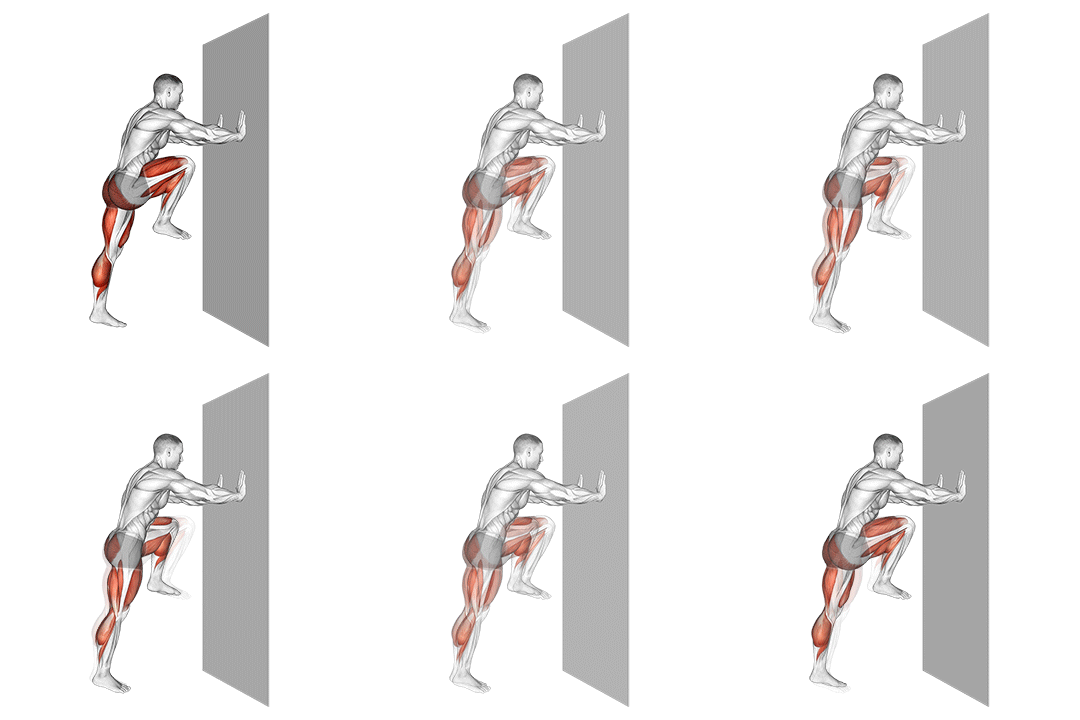
Compare More Exercises
Use our free comparison tool to analyze any two exercises head-to-head.
Compare Exercises