

Bench Hip Extension vs Bent Knee Lying Twist (male): Complete Comparison Guide
Bench Hip Extension vs Bent Knee Lying Twist (male) — two bodyweight moves that both target the glutes but load them differently. You’ll get a clear, practical comparison of primary and secondary muscle activation, movement mechanics, equipment needs, difficulty, and when to pick each exercise. I’ll show you concrete technique cues, rep ranges (8–15 for strength/hypertrophy or 12–20 for endurance), and simple progressions so you can choose the movement that matches your goals and training environment.
Exercise Comparison
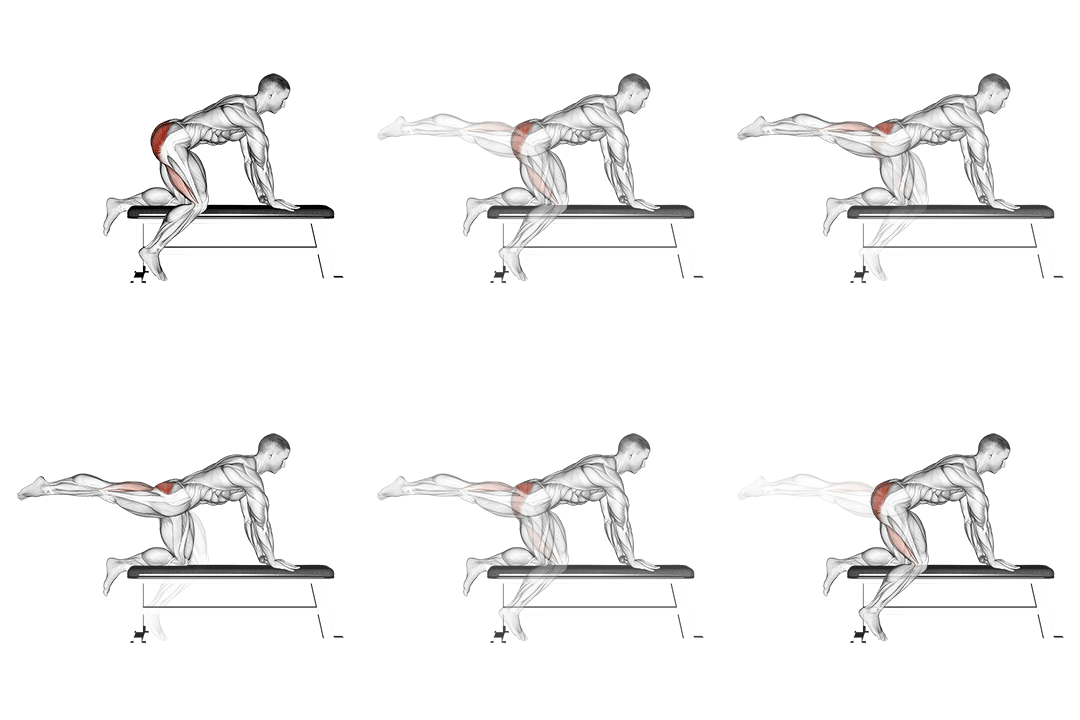
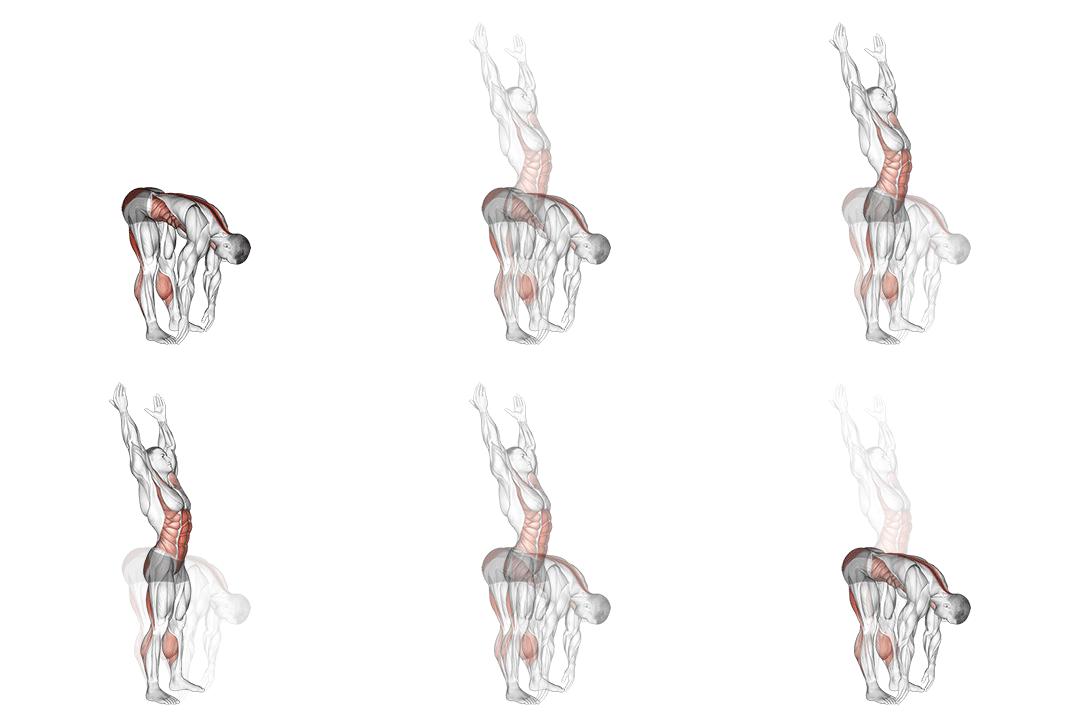
Bench Hip Extension
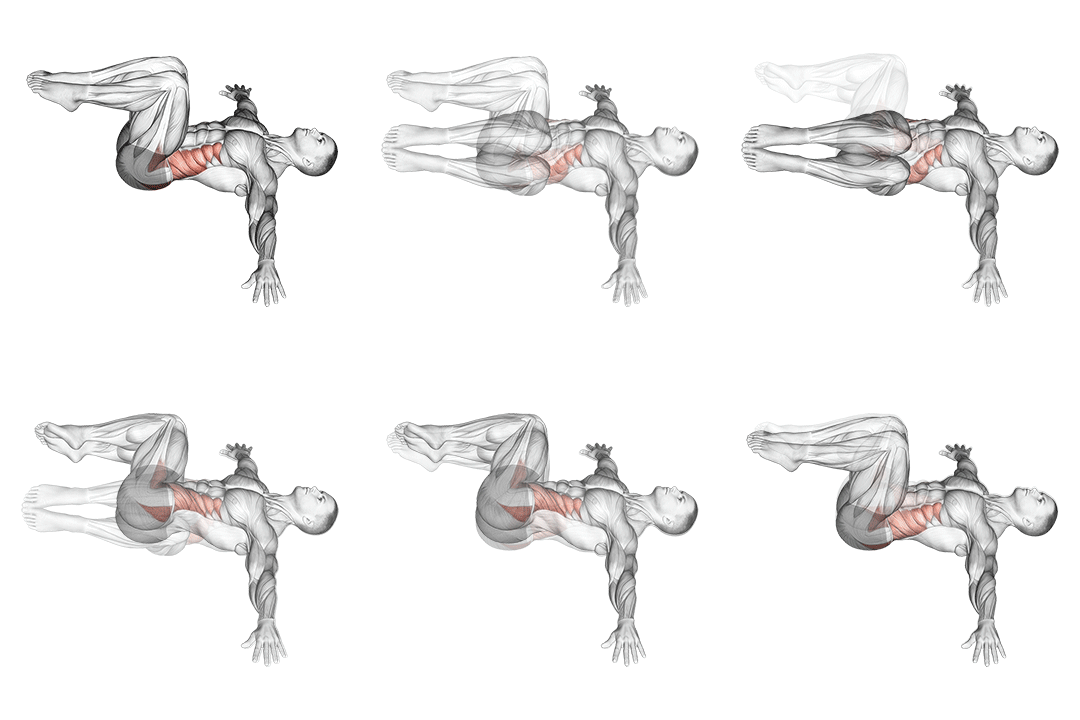
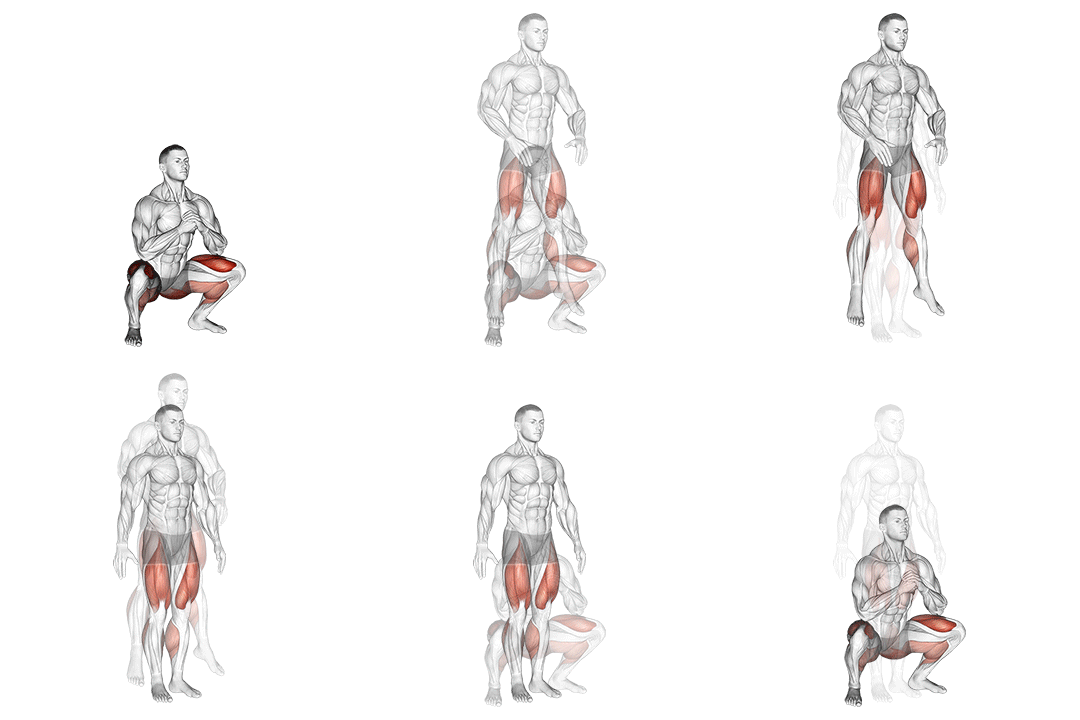
Bent Knee Lying Twist (male)
Head-to-Head Comparison
| Attribute | Bench Hip Extension | Bent Knee Lying Twist (male) |
|---|---|---|
| Target Muscle |
Glutes
|
Glutes
|
| Body Part |
Upper-legs
|
Upper-legs
|
| Equipment |
Body-weight
|
Body-weight
|
| Difficulty |
Beginner
|
Beginner
|
| Movement Type |
Compound
|
Isolation
|
| Secondary Muscles |
1
|
2
|
Secondary Muscles Activated
Bench Hip Extension
Bent Knee Lying Twist (male)
Visual Comparison
Overview
Bench Hip Extension vs Bent Knee Lying Twist (male) — two bodyweight moves that both target the glutes but load them differently. You’ll get a clear, practical comparison of primary and secondary muscle activation, movement mechanics, equipment needs, difficulty, and when to pick each exercise. I’ll show you concrete technique cues, rep ranges (8–15 for strength/hypertrophy or 12–20 for endurance), and simple progressions so you can choose the movement that matches your goals and training environment.
Key Differences
- Bench Hip Extension is a compound movement, while Bent Knee Lying Twist (male) is an isolation exercise.
- Both exercises target the Glutes using Body-weight. The main differences are in their movement patterns and muscle activation angles.
Pros & Cons
Bench Hip Extension
+ Pros
- High sagittal-plane hip extension torque that drives strong glute recruitment
- Effective posterior chain carryover — engages hamstrings and glute max
- Simple progressions: add weight, single-leg, or slow eccentrics
- Clear technique cues (bench edge, drive hips up, squeeze glutes) that are easy to coach
− Cons
- Requires a bench or elevated surface
- Higher risk of lumbar hyperextension if technique breaks down
- Less transverse-plane or oblique engagement
Bent Knee Lying Twist (male)
+ Pros
- Requires minimal equipment — just a mat — ideal for home work
- Builds rotational control and trains obliques alongside the glutes
- Low peak spinal loading when performed with shoulders down
- Good for mobility and pelvic control with low impact
− Cons
- Lower peak glute torque and less potential for progressive overload
- Limited ability to increase mechanical tension substantially
- Can provoke low-back discomfort if rotation occurs through the lumbar spine instead of the pelvis
When Each Exercise Wins
Bench Hip Extension produces higher peak hip-extension torque and can be loaded progressively (8–12 reps with added weight) to increase mechanical tension and time under tension, which better stimulates muscle growth in the glutes and hamstrings.
Strength requires high torque and overload; the bench hip extension lets you add external load and perform single-leg variants to increase force demands and neural adaptation, making it the superior choice for building hip-extension strength.
The twist is easier to learn, places low compressive load on the spine, and teaches pelvic control and rotational stability with simple cues — good first steps before adding weighted hip-extension work.
You only need a mat and small space to perform controlled knee drops, making the twist the most practical option when you lack a bench or gym equipment.
Frequently Asked Questions
Can I do both Bench Hip Extension and Bent Knee Lying Twist (male) in the same workout?
Yes. Use the Bent Knee Lying Twist early as an activation and mobility drill (2–3 sets of 10–15 reps per side) then follow with Bench Hip Extensions for strength or hypertrophy (3–5 sets of 6–15 reps). That order primes pelvic control and reduces low-back compensation.
Which exercise is better for beginners?
Bent Knee Lying Twist (male) is better for absolute beginners because it demands less hip-hinge coordination and lower spinal loading. Once you can control pelvic rotation and maintain neutral spine, add bench hip extensions to build posterior-chain strength.
How do the muscle activation patterns differ?
Bench Hip Extension emphasizes concentric hip extension with higher peak glute and hamstring activation across the sagittal plane, while the Bent Knee Lying Twist emphasizes transverse-plane control with isometric and eccentric glute work and greater oblique involvement. The twist produces lower peak torque but longer time-under-tension per rep.
Can Bent Knee Lying Twist (male) replace Bench Hip Extension?
Not if your primary goal is building hip-extension strength or maximal glute hypertrophy. The twist can supplement activation and stability work, but for progressive overload and strength you should keep bench hip extensions or more loaded hip-extension variations in your program.
Expert Verdict
If your goal is targeted glute development and posterior-chain strength, prioritize the Bench Hip Extension — it generates higher hip-extension torque, easier progressive overload, and better carryover to standing movements. Use sets of 6–12 reps with added load for strength and 8–15 for hypertrophy, and focus on a strong posterior pelvic tilt and an isometric squeeze at the top. If you want a low-equipment drill to improve pelvic control, rotational stability, and oblique co-contraction, the Bent Knee Lying Twist (male) is an excellent choice for beginners and home sessions. For balanced training, combine both: use the twist for warm-up and control work, and the bench hip extension as your main posterior-chain builder.
Also Compare
More comparisons with Bench Hip Extension
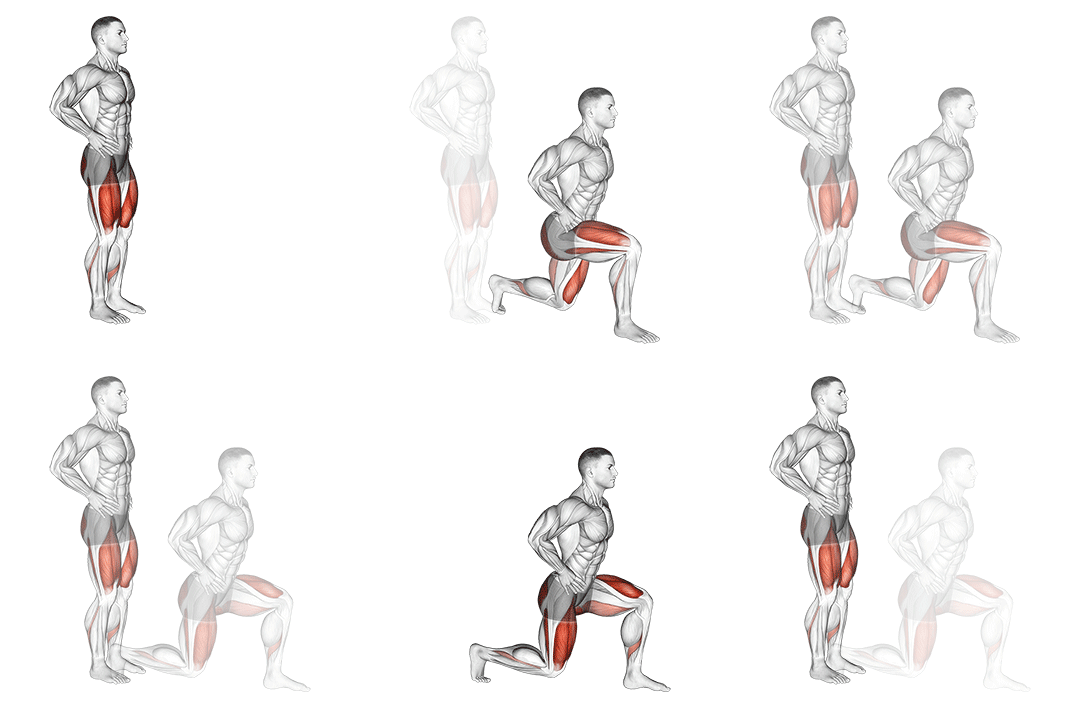
More comparisons with Bent Knee Lying Twist (male)
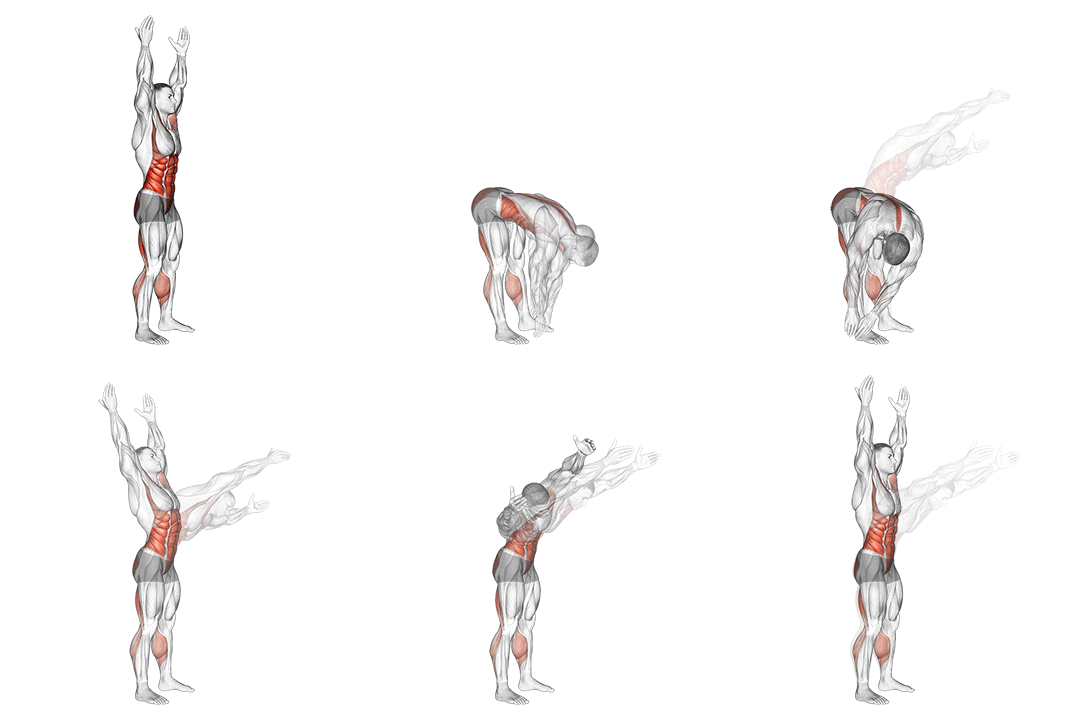
Compare More Exercises
Use our free comparison tool to analyze any two exercises head-to-head.
Compare Exercises