

Bench Hip Extension vs Curtsey Squat: Complete Comparison Guide
Bench Hip Extension vs Curtsey Squat — two beginner, body-weight moves that both target the glutes but load the body differently. You’ll get a clear breakdown of which exercise hits the glutes more, how the hamstrings and quads respond, the equipment and space each needs, and concrete programming suggestions (rep ranges, progressions, and technique cues). Read on if you want a direct recommendation for hypertrophy, strength, beginner training, or home workouts, plus simple cues you can use on your next workout.
Exercise Comparison
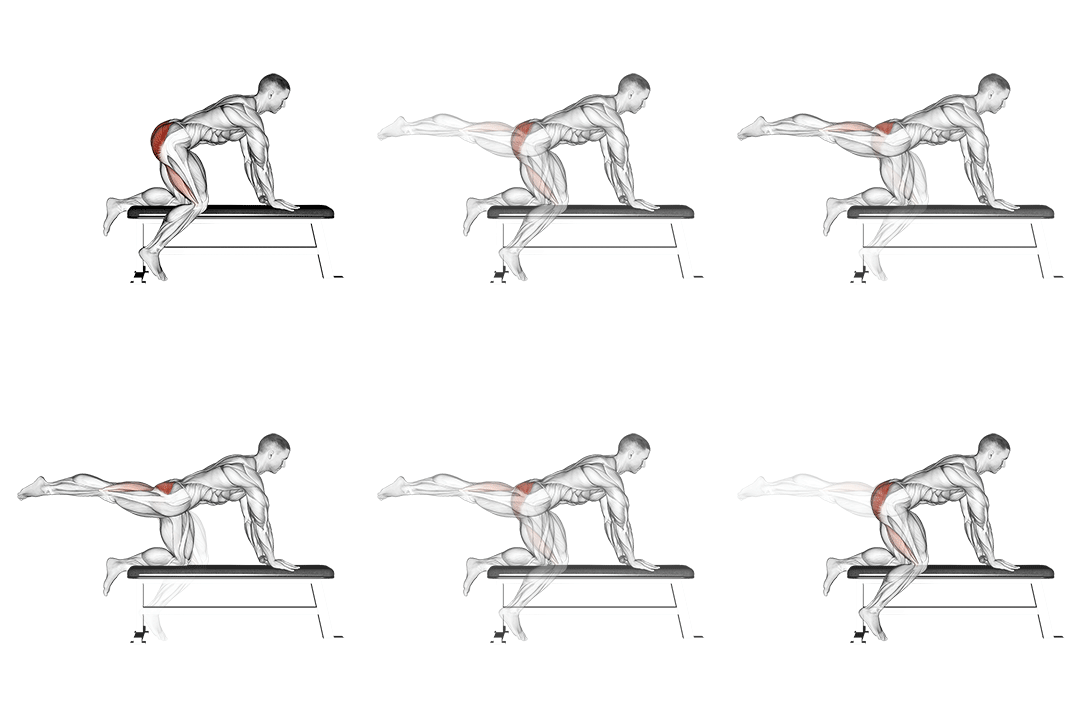
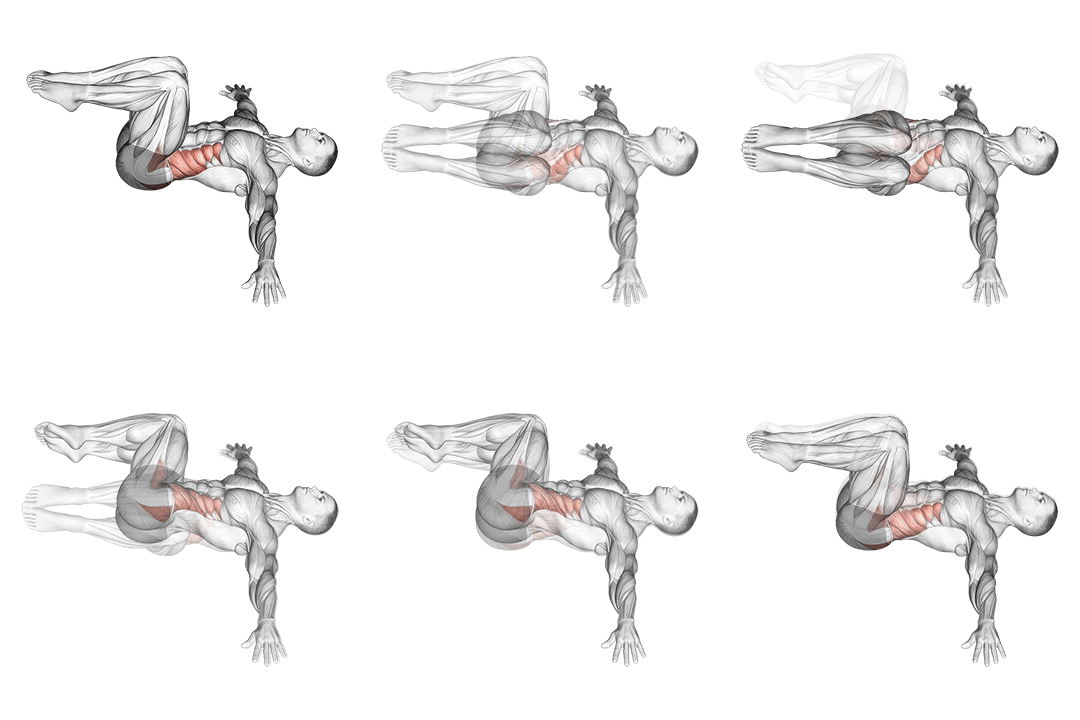
Bench Hip Extension
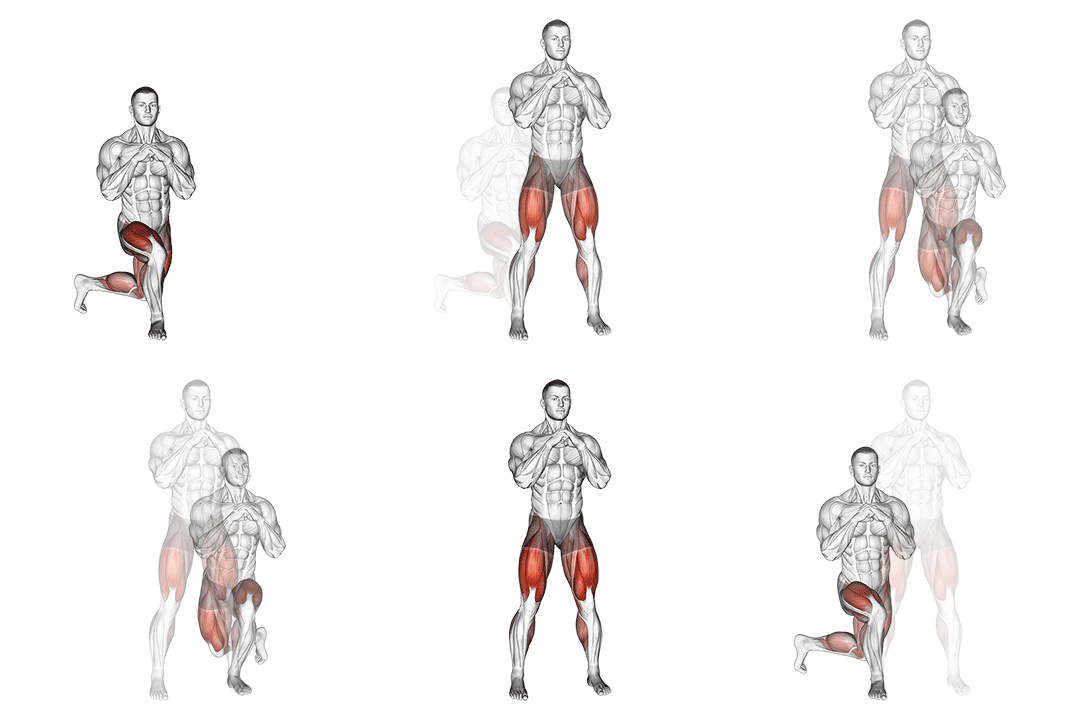
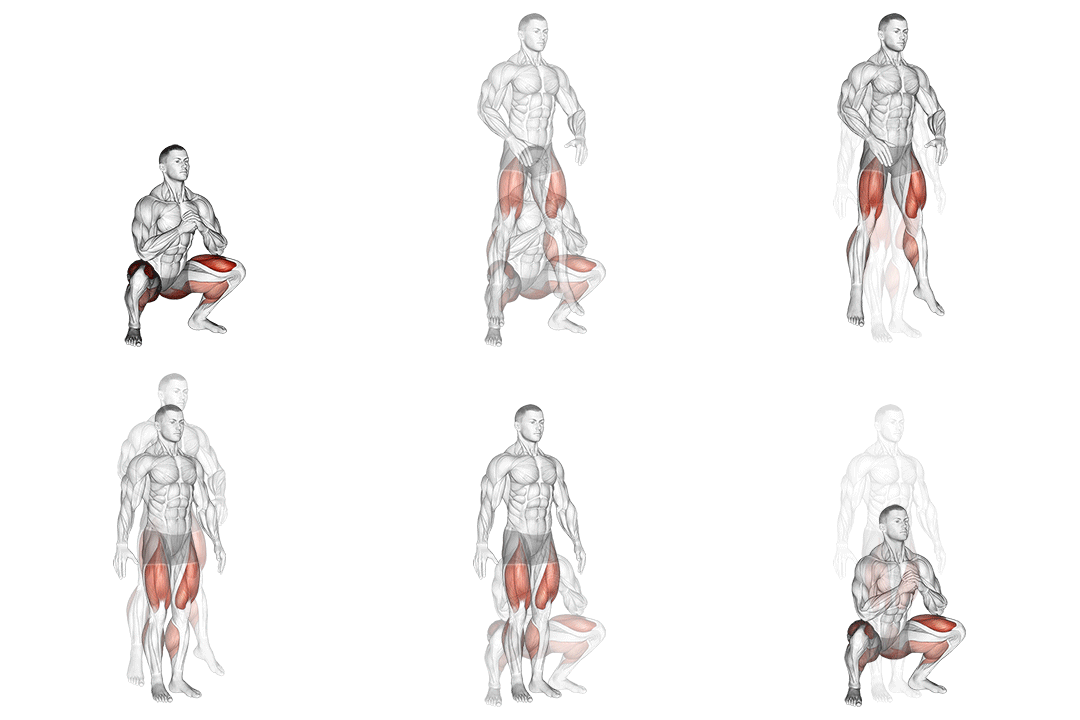
Curtsey Squat
Head-to-Head Comparison
| Attribute | Bench Hip Extension | Curtsey Squat |
|---|---|---|
| Target Muscle |
Glutes
|
Glutes
|
| Body Part |
Upper-legs
|
Upper-legs
|
| Equipment |
Body-weight
|
Body-weight
|
| Difficulty |
Beginner
|
Beginner
|
| Movement Type |
Compound
|
Compound
|
| Secondary Muscles |
1
|
3
|
Secondary Muscles Activated
Bench Hip Extension
Curtsey Squat
Visual Comparison
Overview
Bench Hip Extension vs Curtsey Squat — two beginner, body-weight moves that both target the glutes but load the body differently. You’ll get a clear breakdown of which exercise hits the glutes more, how the hamstrings and quads respond, the equipment and space each needs, and concrete programming suggestions (rep ranges, progressions, and technique cues). Read on if you want a direct recommendation for hypertrophy, strength, beginner training, or home workouts, plus simple cues you can use on your next workout.
Key Differences
- Both exercises target the Glutes using Body-weight. The main differences are in their movement patterns and muscle activation angles.
Pros & Cons
Bench Hip Extension
+ Pros
- Direct hip-extension emphasis maximizes glute activation at the top of the lift
- Low spinal and knee shear when performed with neutral spine
- Easy to teach and cue — fast neural learning for beginners
- Single-leg variations provide clear unilateral overload (8–15 reps per leg)
− Cons
- Requires bench or elevated surface for the classic setup
- Limited natural progressive overload unless you add external weight
- Less frontal-plane stability work compared to lateral or crossover patterns
Curtsey Squat
+ Pros
- No equipment required — highly accessible for home training
- Develops frontal-plane control and targets glute medius plus quads
- Easy to load with dumbbells or kettlebells for progressive overload
- Improves balance and unilateral leg strength with functional transfer
− Cons
- Higher knee torsion and valgus risk if form breaks down
- Requires coordination and balance — steeper initial learning curve
- Glute max stimulus is less isolated compared to pure hip-extension moves
When Each Exercise Wins
Bench Hip Extension produces high glute max activation near full hip extension and allows precise volume control (8–15 reps, 3–4 sets). The length-tension position at the top creates sustained mechanical tension optimal for muscle growth.
Curtsey Squat loads multiple joints including the knee and hip and scales easily with external weight (5–40+ lb increments). That wider loading range and multi-joint stress make it better for overall lower-body strength development.
Bench Hip Extension is simpler to cue and execute, with a straightforward hip hinge and visible top position. New trainees can learn motor patterning quickly and feel immediate glute activation with low coordination demands.
Curtsey Squat requires zero equipment and little space, making it ideal for home sessions. You can progressively overload it with household items or dumbbells while maintaining a useful multi-planar challenge.
Frequently Asked Questions
Can I do both Bench Hip Extension and Curtsey Squat in the same workout?
Yes — pairing them creates a smart push-pull for the lower body: do Bench Hip Extensions first to pre-exhaust the glutes (3–4 sets of 8–12), then follow with Curtsey Squats for load and stability work (2–3 sets of 8–12 per leg). Keep total weekly volume in mind to avoid overtraining the hamstrings and quads.
Which exercise is better for beginners?
Bench Hip Extension is better for most beginners because the movement is single-plane, easy to cue, and quickly activates the glutes. Once basic hip-extension strength and control are present, introduce Curtsey Squats to challenge balance and frontal-plane stability.
How do the muscle activation patterns differ?
Bench Hip Extension peaks glute max activation at the top of hip extension and uses hamstrings as synergists with limited knee flexion. Curtsey Squat spreads load between quads and glutes through knee flexion and hip adduction, increasing gluteus medius and stabilizer activation due to the crossover vector (30–45°).
Can Curtsey Squat replace Bench Hip Extension?
Not entirely — Curtsey Squat is a great multi-joint alternative, but it won’t isolate the glute max like a focused hip-extension. If your primary goal is maximal glute hypertrophy, keep Bench Hip Extensions in the program and use Curtsey Squats as a complementary strength and stability exercise.
Expert Verdict
Use Bench Hip Extension when your goal is targeted glute development and low joint shear — program it for 8–15 reps, 3–4 sets, and progress with single-leg variations or pauses at the top. Choose Curtsey Squat when you want multi-joint strength, balance, and frontal-plane control; program 6–12 reps per leg for strength or 10–20 for endurance, and load with dumbbells as you progress. For beginners start with Bench Hip Extensions to learn hip extension, then add Curtsey Squats for variety and functional strength. Both belong in a balanced program: one isolates posterior chain extension, the other builds transfer to walking, lunging, and sport.
Also Compare
More comparisons with Bench Hip Extension
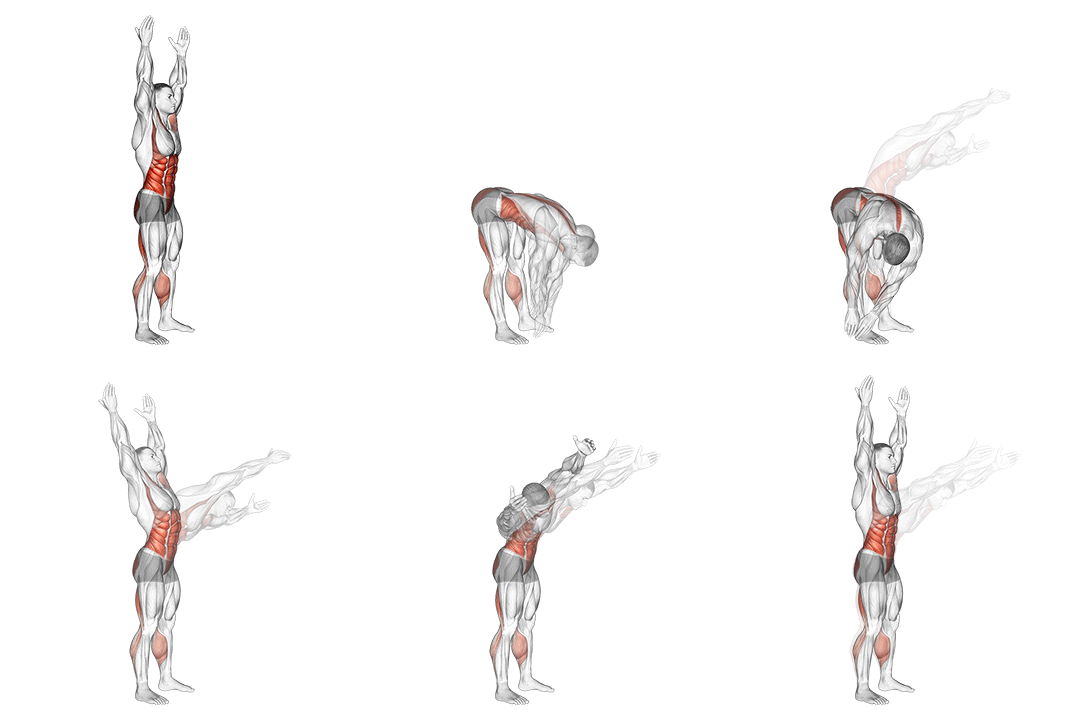
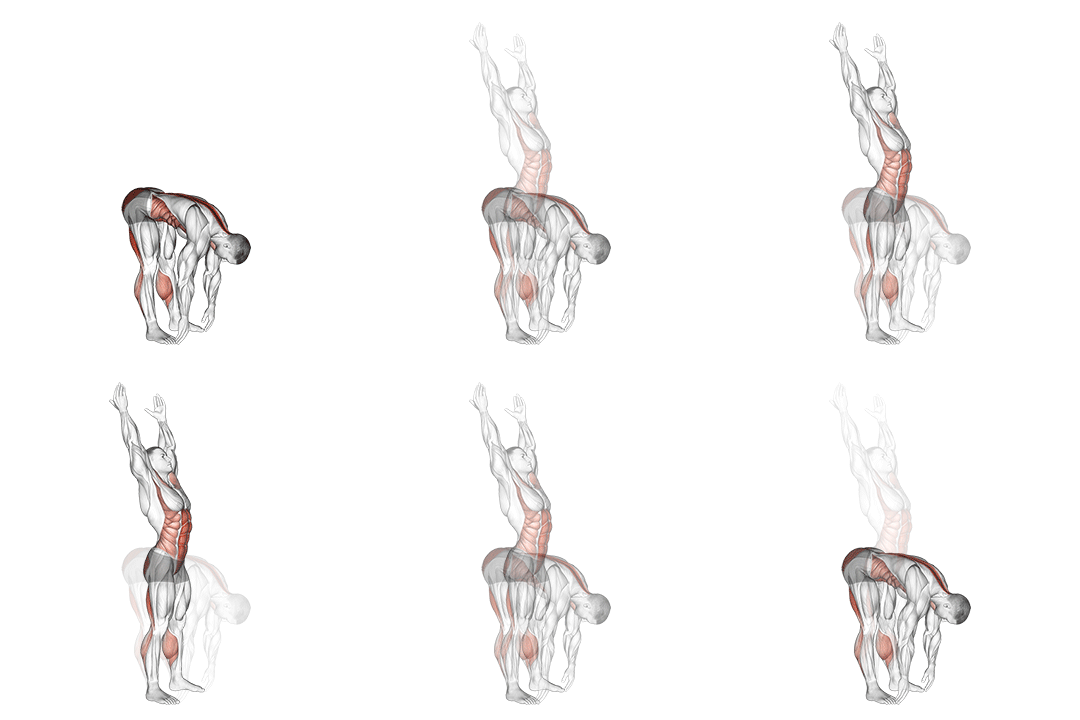
Compare More Exercises
Use our free comparison tool to analyze any two exercises head-to-head.
Compare Exercises