

Bench Jump vs Forward Jump: Complete Comparison Guide
Bench Jump vs Forward Jump — both are bodyweight plyometrics that overload your quads and build explosive upper-leg power. You’ll get a clear, actionable comparison here: how each exercise loads the quads, what secondary muscles engage, equipment and space needs, technique cues, injury risk, and which to pick for hypertrophy, strength, beginners, or home workouts. Read on for rep ranges, progression ideas, and biomechanical reasons so you can choose the move that matches your goals and training phase.
Exercise Comparison
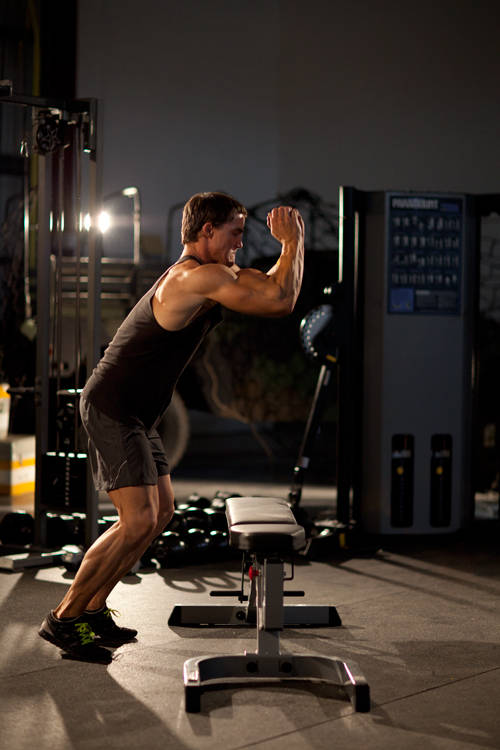
Bench Jump
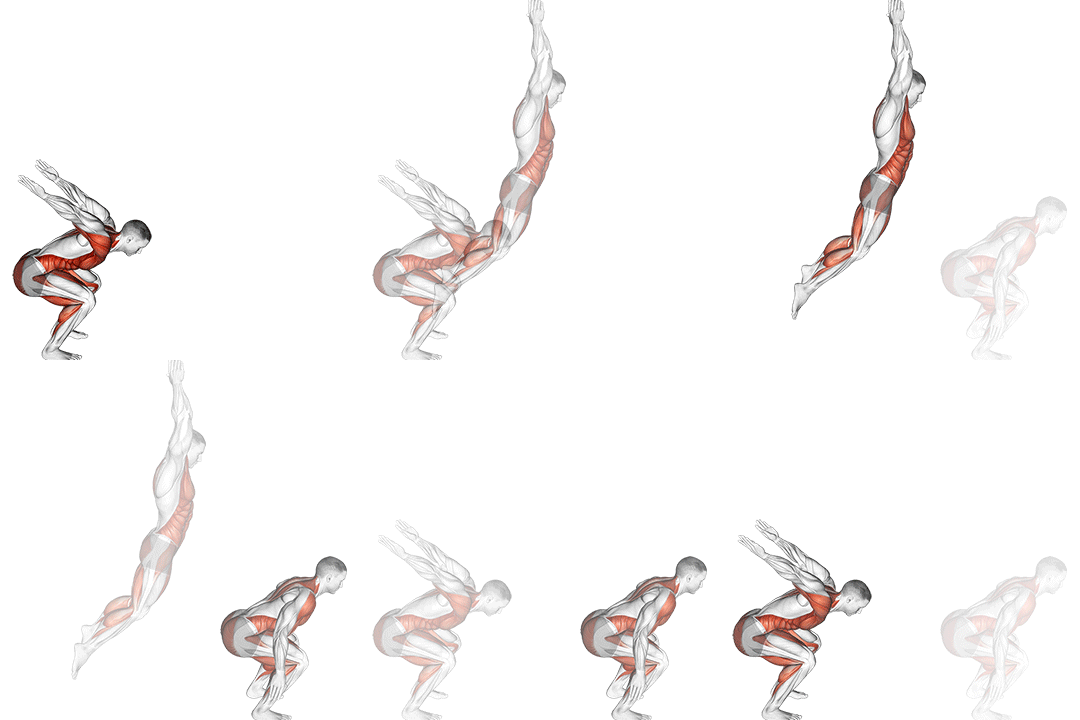
Forward Jump
Head-to-Head Comparison
| Attribute | Bench Jump | Forward Jump |
|---|---|---|
| Target Muscle |
Quads
|
Quads
|
| Body Part |
Upper-legs
|
Upper-legs
|
| Equipment |
Body-weight
|
Body-weight
|
| Difficulty |
Intermediate
|
Intermediate
|
| Movement Type |
Compound
|
Compound
|
| Secondary Muscles |
3
|
3
|
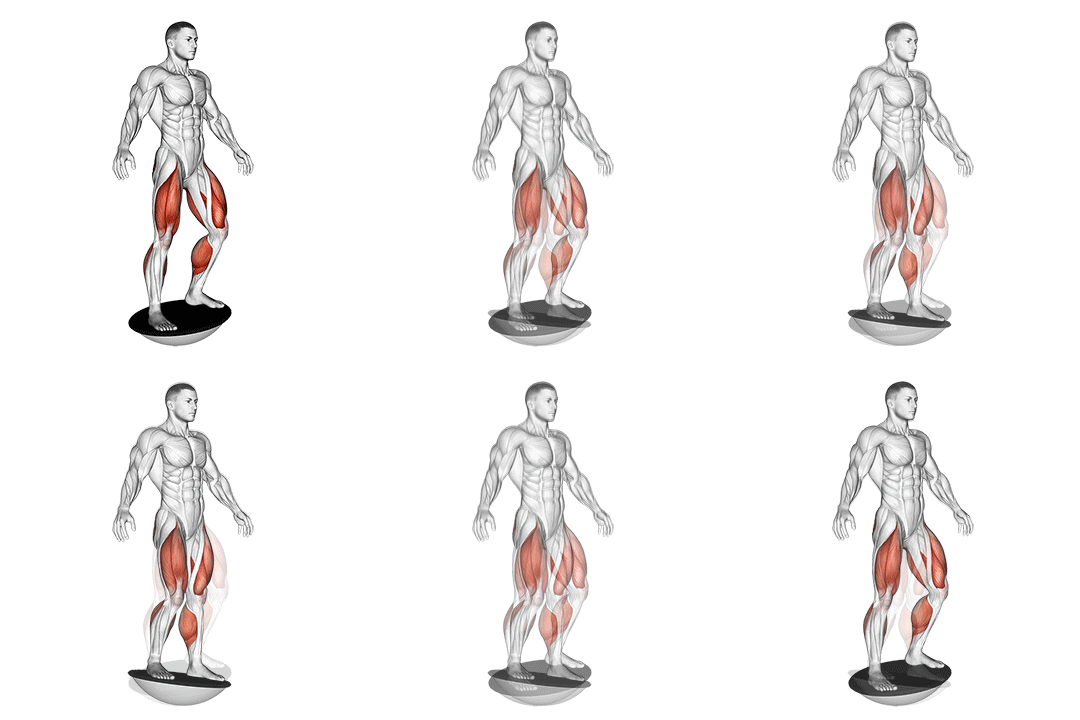
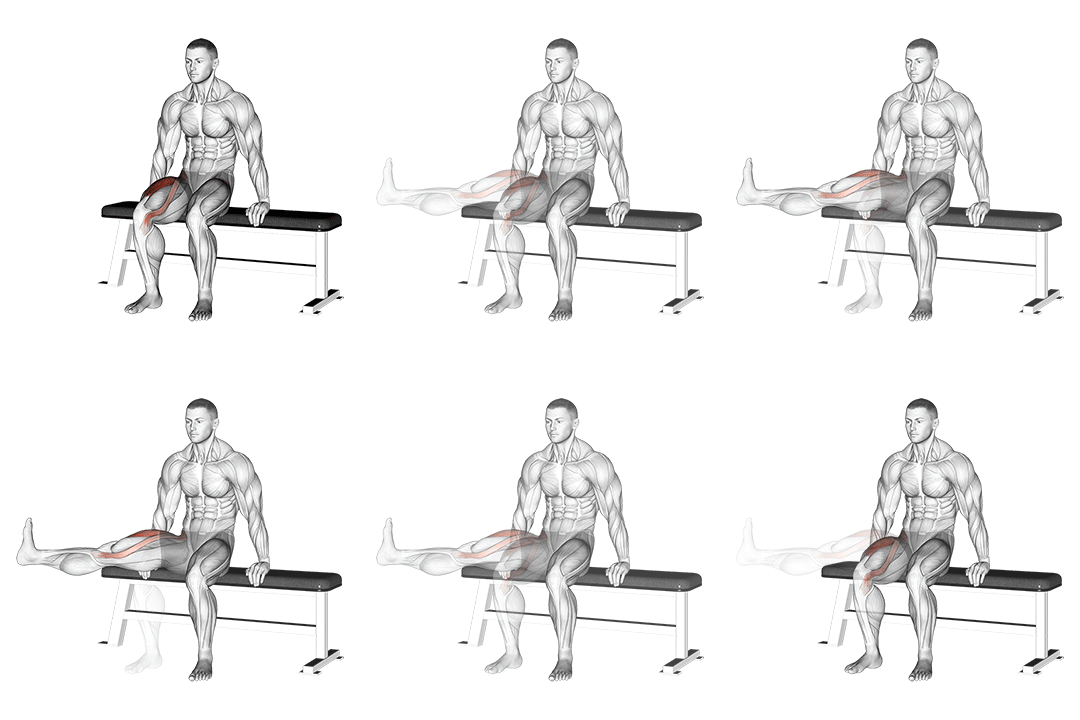
Secondary Muscles Activated
Bench Jump
Forward Jump
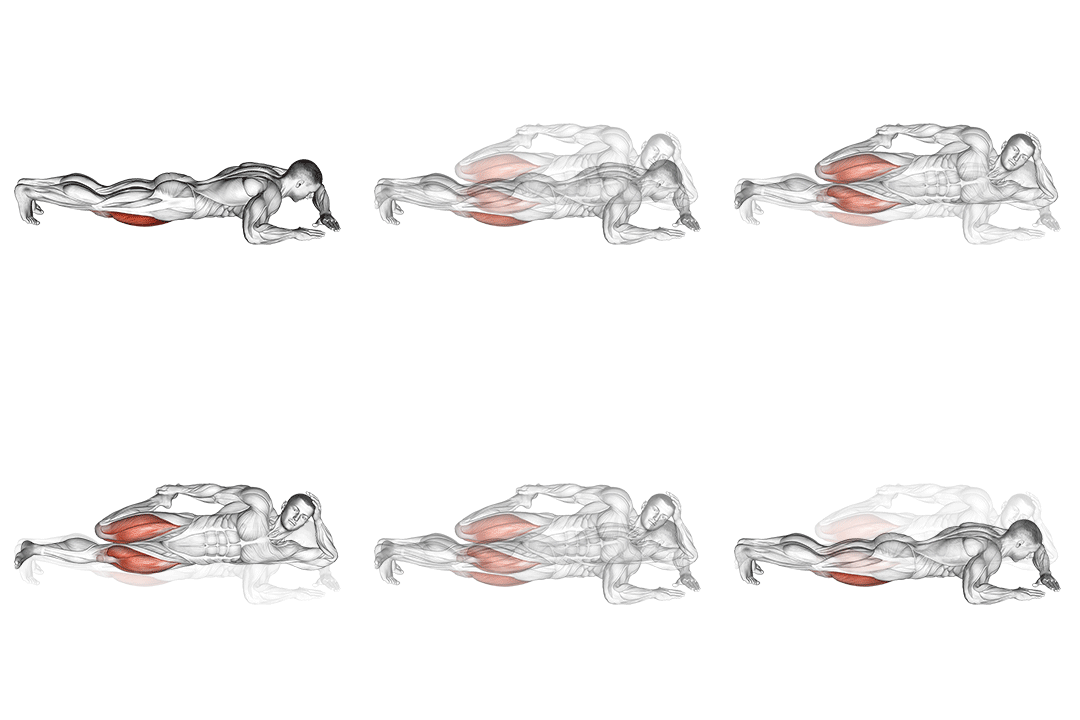
Visual Comparison
Overview
Bench Jump vs Forward Jump — both are bodyweight plyometrics that overload your quads and build explosive upper-leg power. You’ll get a clear, actionable comparison here: how each exercise loads the quads, what secondary muscles engage, equipment and space needs, technique cues, injury risk, and which to pick for hypertrophy, strength, beginners, or home workouts. Read on for rep ranges, progression ideas, and biomechanical reasons so you can choose the move that matches your goals and training phase.
Key Differences
- Both exercises target the Quads using Body-weight. The main differences are in their movement patterns and muscle activation angles.
Pros & Cons
Bench Jump
+ Pros
- Strong vertical power stimulus for quads and calves
- Easy to micro-progress by increasing box height (increments of 2–4 inches)
- Short ground contact times train reactive strength (RC ~200 ms)
- Can reduce landing eccentric stress by stepping down instead of dropping
− Cons
- Requires a stable elevated surface and space to approach
- Higher fall risk if you miss the platform
- Less horizontal force development compared to forward jumps
Forward Jump
+ Pros
- No equipment needed — highly accessible
- Builds both horizontal and vertical power, improving deceleration strength
- Greater eccentric load for posterior chain (good for muscle growth stimulus)
- Safer when scaled (short hops → longer bounds) and performed on soft surfaces
− Cons
- Requires more space to progress distance safely
- Higher eccentric knee and hamstring stress if overdone
- Harder to precisely increase intensity in small increments
When Each Exercise Wins
Forward Jump produces a larger eccentric braking phase and longer time under tension during landing, which increases eccentric overload on quads and hamstrings — a stronger stimulus for muscle growth compared with purely concentric vertical hops.
Bench Jump lets you target vertical force production and easily add load (higher box, weight vest) and specific rep ranges (3–6 explosive reps) to improve single-joint torque and rate of force development relevant to vertical strength.
Forward Jump scales more gradually with distance and low-impact hops, follows natural movement patterns, and removes the fall risk associated with elevated platforms, making it easier to teach landing and hip-hinge mechanics.
Forward Jump requires no equipment and minimal space (1.5–3 m), so you can train explosive quads and conditioning at home without a stable plyo box or risk of damaging floors.
Frequently Asked Questions
Can I do both Bench Jump and Forward Jump in the same workout?
Yes. Use one as the primary power exercise (3–5 sets of 3–6 reps) and the other as a secondary volume or technique drill (2–3 sets of 6–8 reps). Put them early in the session while fresh and keep total high-intensity plyo contacts under 50 per session.
Which exercise is better for beginners?
Forward Jump is better for most beginners because it scales easily with distance and has lower fall risk. Start with low-distance hops and focus on soft, hip-driven landings with knees aligned over toes.
How do the muscle activation patterns differ?
Bench Jump emphasizes vertical concentric quad and calf activation with short contact times, while Forward Jump adds horizontal force and greater eccentric hamstring and glute loading during deceleration. This shifts the length–tension and force-vector demands between the two.
Can Forward Jump replace Bench Jump?
Forward Jump can substitute if you lack equipment or want more eccentric stimulus, but it won’t match the strict vertical force specificity of bench jumps. If your goal is vertical jump height or loaded vertical power, keep bench jumps in the program.
Expert Verdict
Use Bench Jumps when your goal is pure vertical power and measurable strength progressions: raise box height in 5–10 cm increments, limit sets to 3–5 with 3–6 reps, and add a weighted vest only after technique is flawless. Choose Forward Jumps when you want a broader athletic transfer, more eccentric stimulus for muscle growth, or a no-equipment option for home training—start with 0.5–1 m hops and build to bounds. Both are solid quad-dominant plyometrics; pair them with bilateral strength work (e.g., squats at 70–85% 1RM) and control volume to keep contact times <250 ms for reactive work and 48–72 hours between intense plyo sessions.
Also Compare
More comparisons with Bench Jump
Compare More Exercises
Use our free comparison tool to analyze any two exercises head-to-head.
Compare Exercises