

Bench Pull-ups vs Pull-up: Complete Comparison Guide
Bench Pull-ups vs Pull-up — if you want a stronger, wider back you need to pick the right pulling pattern. In this guide you’ll learn how each move loads the lats, how the force vector and joint angles change recruitment, and which one fits specific goals like hypertrophy, strength, or home training. I’ll cover technique cues (body angle, scapular control, grip width), concrete rep ranges (6–12 for growth, 3–6 for strength), and practical progressions so you can choose the best option for your training.
Exercise Comparison
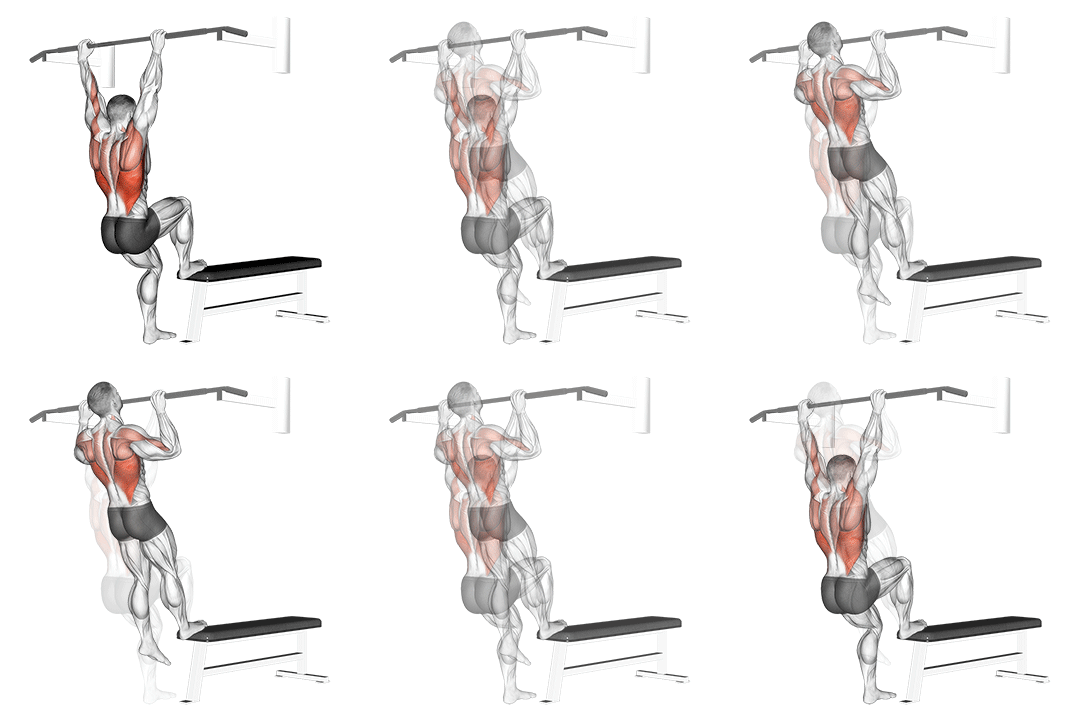
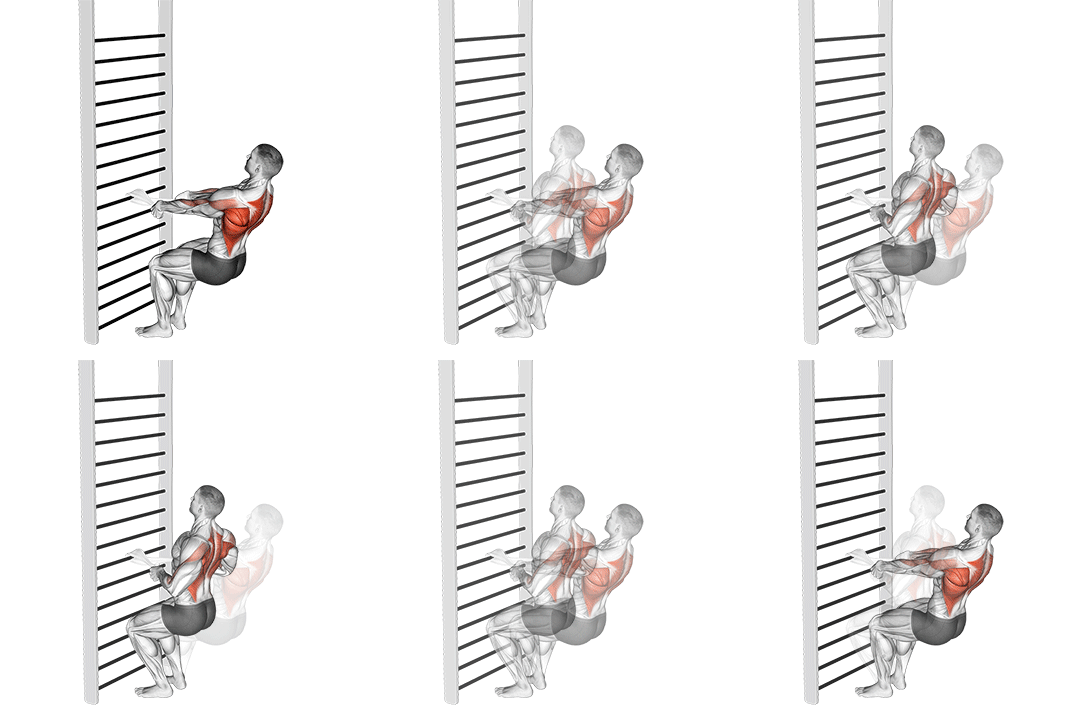
Bench Pull-ups
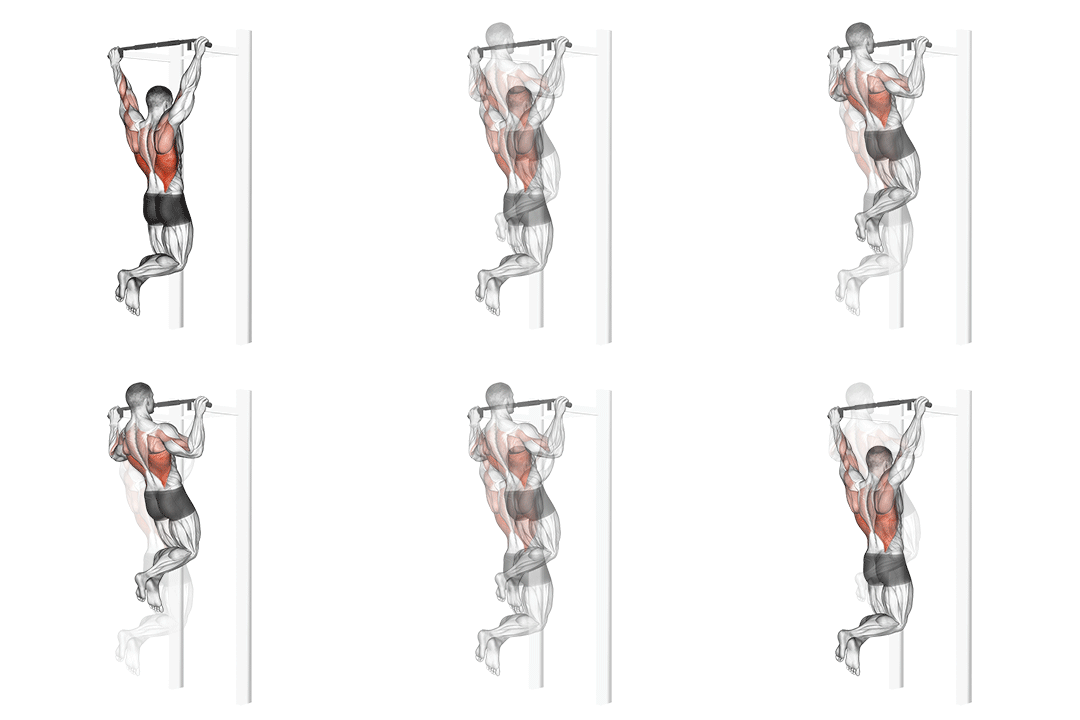
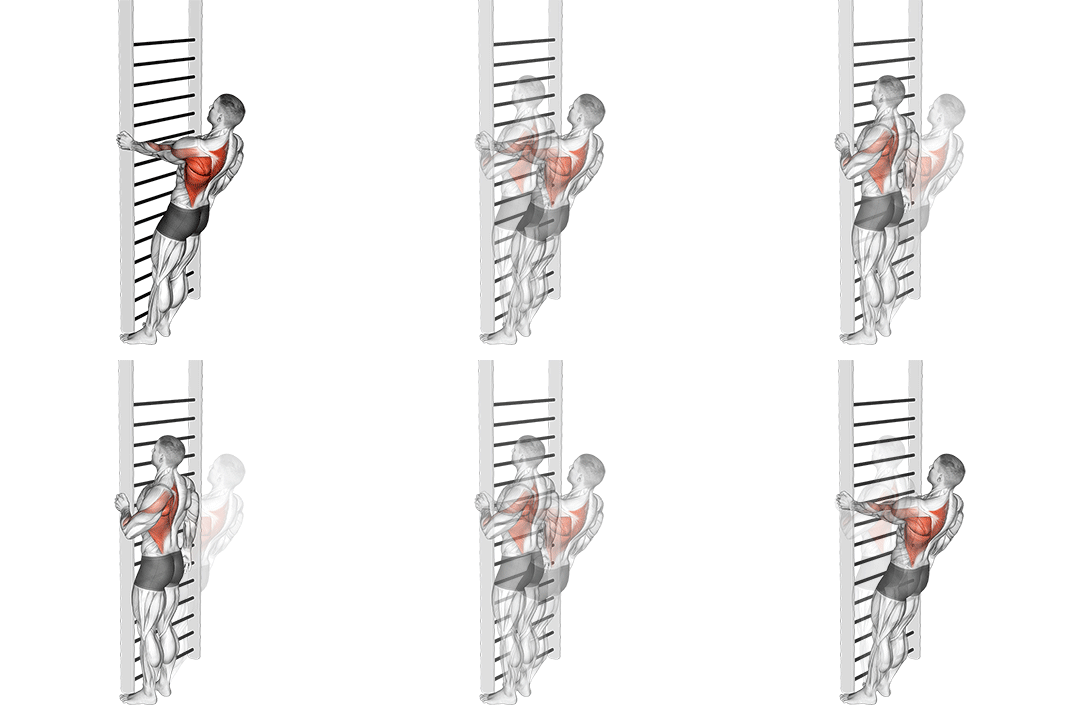
Pull-up
Head-to-Head Comparison
| Attribute | Bench Pull-ups | Pull-up |
|---|---|---|
| Target Muscle |
Lats
|
Lats
|
| Body Part |
Back
|
Back
|
| Equipment |
Body-weight
|
Body-weight
|
| Difficulty |
Intermediate
|
Advanced
|
| Movement Type |
Compound
|
Compound
|
| Secondary Muscles |
2
|
2
|
Secondary Muscles Activated
Bench Pull-ups
Pull-up
Visual Comparison
Overview
Bench Pull-ups vs Pull-up — if you want a stronger, wider back you need to pick the right pulling pattern. In this guide you’ll learn how each move loads the lats, how the force vector and joint angles change recruitment, and which one fits specific goals like hypertrophy, strength, or home training. I’ll cover technique cues (body angle, scapular control, grip width), concrete rep ranges (6–12 for growth, 3–6 for strength), and practical progressions so you can choose the best option for your training.
Key Differences
- Difficulty levels differ: Bench Pull-ups is intermediate, while Pull-up is advanced.
- Both exercises target the Lats using Body-weight. The main differences are in their movement patterns and muscle activation angles.
Pros & Cons
Bench Pull-ups
+ Pros
- Easier to scale by adjusting torso angle (30–60°) or knee bend
- Lower compressive load on shoulders and spine
- Requires minimal vertical clearance—good for home setups
- Targets mid-trap and rhomboid activation through horizontal pull
− Cons
- Generally produces less peak lat activation than vertical pull-ups
- Harder to apply heavy progressive overload compared to weighted pull-ups
- Less carryover to true vertical pulling strength and dead-hang grip
Pull-up
+ Pros
- Higher peak lat activation and greater ROM through shoulder extension
- Easier to progressively overload with weight belts or vests
- Direct transfer to vertical pulling strength and gymnastic movements
- Stronger demand on grip endurance and scapular depression control
− Cons
- Harder for beginners to perform with full ROM from a dead hang
- Requires a high bar and more vertical space
- Greater shoulder and elbow stress if technique breaks down
When Each Exercise Wins
Pull-ups allow a larger length-tension change in the lats thanks to greater shoulder extension and vertical force vector, so you can hit the lats harder across the movement. The ability to add external load and work in the 6–12 rep range makes progressive hypertrophy programming straightforward.
Weighted pull-ups let you overload the vertical pull with 3–6 rep sets and clear intensities, directly improving maximal pulling strength. The dead-hang start increases force production demand and improves lockout strength at the top.
Bench pull-ups let you control effective load by changing torso angle or foot position, teaching scapular retraction and elbow flexion safely. Progressive angle reduction and higher rep ranges (8–15) build the foundation before attempting full bodyweight pull-ups.
A low bench, table, or broom across chairs can simulate the movement with little vertical space required. That makes it easier to train lats and mid-back at home without investing in a pull-up bar or rig.
Frequently Asked Questions
Can I do both Bench Pull-ups and Pull-up in the same workout?
Yes — pair them in a priority scheme: do pull-ups first when you want maximal strength or weighted work, then bench pull-ups as an accessory for volume and scapular control. Alternatively, use bench pull-ups to pre-fatigue the mid-back if you want to change emphasis, keeping total weekly volume balanced (e.g., 6–12 hard sets per week per exercise).
Which exercise is better for beginners?
Bench Pull-ups are better for beginners because you can reduce load by changing body angle and teach proper scapular retraction without a full dead hang. Work in 8–15 rep ranges and gradually lower the bench angle or straighten the legs as you gain strength.
How do the muscle activation patterns differ?
Bench Pull-ups produce more horizontal pull force, increasing mid-trap and rhomboid activation and reducing peak lat strain due to a shorter moment arm. Pull-ups use a vertical force vector and greater shoulder extension, increasing lat length change and peak activation by roughly 10–20% in comparative measures.
Can Pull-up replace Bench Pull-ups?
Pull-ups can replace bench pull-ups if your goal is maximal lat overload and you have the strength or regressions to perform them safely. However, bench pull-ups remain valuable for technique practice, higher-rep volume, and situations where vertical space or heavy loading options are limited.
Expert Verdict
Use bench pull-ups when you’re teaching technique, rehabbing shoulders, or training at home—they let you manipulate torso angle (30–60°) and reduce effective load while training scapular retraction and mid-trap endurance. Choose pull-ups when you want maximal lat loading, vertical pulling strength, and simple progressive overload via added weight; structure those sessions with 3–6 reps for strength or 6–12 reps for hypertrophy and emphasize full dead-hang starts and controlled scapular depression. Both belong in a balanced program: start most athletes on rows/bench pull-ups to build stability, then add weighted pull-ups to drive long-term lat development and strength.
Also Compare
More comparisons with Bench Pull-ups

Compare More Exercises
Use our free comparison tool to analyze any two exercises head-to-head.
Compare Exercises