

Bent Over One-Arm Long Bar Row vs Bent Over Two-Arm Long Bar Row: Complete Comparison Guide
Bent Over One-Arm Long Bar Row vs Bent Over Two-Arm Long Bar Row — if you're trying to build a thicker, stronger middle-back you need to pick the right row. I'll walk you through mechanics, muscle activation, equipment needs, and programming so you can choose the one that matches your goals. You'll get clear technique cues (hip hinge angle, elbow path, rep ranges), a breakdown of which muscles carry the load, and specific progressions for strength, hypertrophy, and unilateral stability. Read on to see which row earns the win for your training plan.
Exercise Comparison
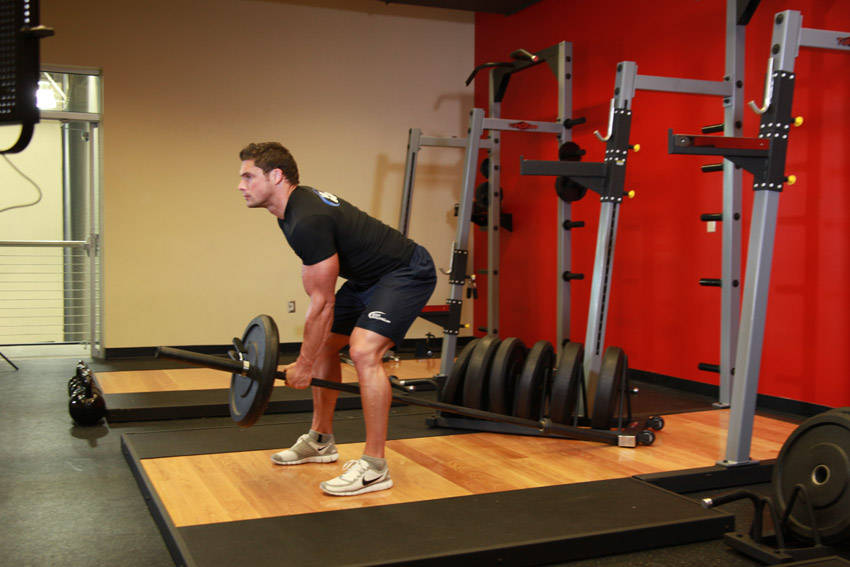
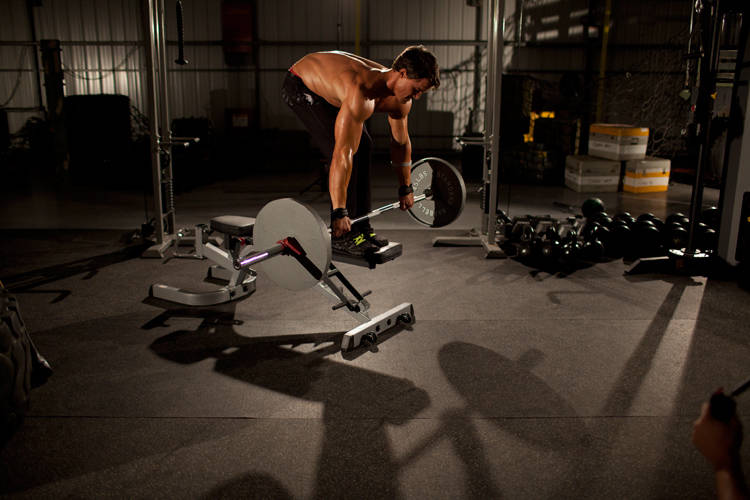
Bent Over One-arm Long Bar Row
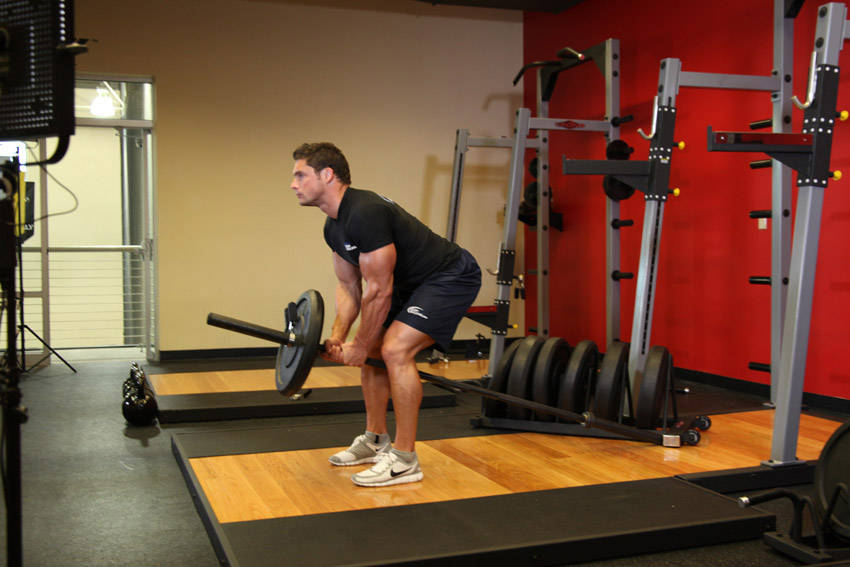
Bent Over Two-arm Long Bar Row
Head-to-Head Comparison
| Attribute | Bent Over One-arm Long Bar Row | Bent Over Two-arm Long Bar Row |
|---|---|---|
| Target Muscle |
Middle-back
|
Middle-back
|
| Body Part |
Back
|
Back
|
| Equipment |
Barbell
|
Barbell
|
| Difficulty |
Intermediate
|
Intermediate
|
| Movement Type |
Compound
|
Compound
|
| Secondary Muscles |
4
|
2
|
Secondary Muscles Activated
Bent Over One-arm Long Bar Row
Bent Over Two-arm Long Bar Row
Visual Comparison
Overview
Bent Over One-Arm Long Bar Row vs Bent Over Two-Arm Long Bar Row — if you're trying to build a thicker, stronger middle-back you need to pick the right row. I'll walk you through mechanics, muscle activation, equipment needs, and programming so you can choose the one that matches your goals. You'll get clear technique cues (hip hinge angle, elbow path, rep ranges), a breakdown of which muscles carry the load, and specific progressions for strength, hypertrophy, and unilateral stability. Read on to see which row earns the win for your training plan.
Key Differences
- Both exercises target the Middle-back using Barbell. The main differences are in their movement patterns and muscle activation angles.
Pros & Cons
Bent Over One-arm Long Bar Row
+ Pros
- Improves unilateral strength and corrects left-right imbalances
- Increases core and anti-rotation stabilization (obliques, erectors)
- Better time under tension per side for hypertrophy when using 8–15 reps
- Allows precise focus on a weak side and targeted mind-muscle connection
− Cons
- Harder to load heavy without awkward plate setup
- Greater demand on low-back stability — higher technical requirement
- Slower total volume accumulation per session compared to bilateral rows
Bent Over Two-arm Long Bar Row
+ Pros
- Allows heavier absolute loads for strength development (3–6 rep work)
- Easier to set up and scale in most gyms with standard plates
- More efficient for accumulating total back volume
- Synchronous activation produces higher overall mid-back force output
− Cons
- Less core anti-rotation challenge, so it misses unilateral stability work
- Can mask left-right imbalances if you always train bilaterally
- Heavier loads increase spinal compression if technique degrades
When Each Exercise Wins
Two-arm rows let you use heavier absolute loads and accumulate more total volume efficiently, which supports middle-back hypertrophy in the 6–12 rep range. The bilateral force vector produces higher combined tension across rhomboids and mid-traps, accelerating progressive overload.
For absolute strength the two-arm variation wins because it lets you load heavier (3–6 reps) and produce greater net horizontal-pull force. That higher external load trains force production and neural adaptations more directly.
Two-arm rows are easier to learn due to symmetrical loading and simpler technique cues (hip hinge 30–45° torso angle, pull elbows to lower ribs). They allow safer, measurable progression before introducing unilateral complexity.
If you have limited plates or space, the one-arm row can be done with uneven loading or a single dumbbell alternative and provides focused work per side. It also doubles as a stability exercise when you lack heavy bilateral loading options.
Frequently Asked Questions
Can I do both Bent Over One-Arm Long Bar Row and Bent Over Two-Arm Long Bar Row in the same workout?
Yes. Use the two-arm row as your primary heavy movement (3–6 or 6–8 reps) and follow with one-arm rows as an accessory (8–12 reps per side) to target unilateral stability and additional time under tension.
Which exercise is better for beginners?
Bent Over Two-Arm Long Bar Row is better for beginners because symmetrical loading simplifies learning the hip hinge, spinal bracing, and elbow path. Start bilaterally and add unilateral work once form and core stability are solid.
How do the muscle activation patterns differ?
One-arm rows create higher unilateral peak activation on the working side with increased anti-rotation firing from obliques and erectors, while two-arm rows produce more synchronous bilateral activation of rhomboids, mid-traps, and lats. The force vectors are similar, but timing and stabilizer demands shift.
Can Bent Over Two-Arm Long Bar Row replace Bent Over One-Arm Long Bar Row?
For many trainees the two-arm row can replace the one-arm row for strength and hypertrophy, but it won't address unilateral imbalances or anti-rotation strength as effectively. If symmetry and core stability aren't priorities, two-arm rows suffice; otherwise keep both in the program.
Expert Verdict
Use the Bent Over Two-Arm Long Bar Row when your primary goal is middle-back thickness and absolute strength: it lets you handle heavier loads, accumulate volume, and progress with clear weight jumps (aim 3–6 reps for strength, 6–12 for hypertrophy). Choose the Bent Over One-Arm Long Bar Row when you need to fix asymmetries, build unilateral stability, or increase time under tension per side — program it for 8–15 reps per side and focus on anti-rotation bracing. A smart program pairs them: emphasize two-arm rows for base strength and add one-arm rows as accessory work to polish stability and balance.
Also Compare
More comparisons with Bent Over One-arm Long Bar Row

More comparisons with Bent Over Two-arm Long Bar Row
Compare More Exercises
Use our free comparison tool to analyze any two exercises head-to-head.
Compare Exercises