

Bicycling vs Dumbbell Burpee: Complete Comparison Guide
Bicycling vs Dumbbell Burpee — you’re choosing between steady, joint-friendly quad work and an advanced, full-body power move. This comparison walks you through primary and secondary muscle recruitment, mechanics and force vectors, equipment needs, learning curve, injury risk, and practical programming. I’ll show specific technique cues (cadence, knee angle, landing mechanics), numbers you can use (rep ranges, interval lengths), and clear recommendations so you can pick the right move for your goals—whether you want sustained quad time-under-tension, explosive conditioning, or a compact home workout.
Exercise Comparison
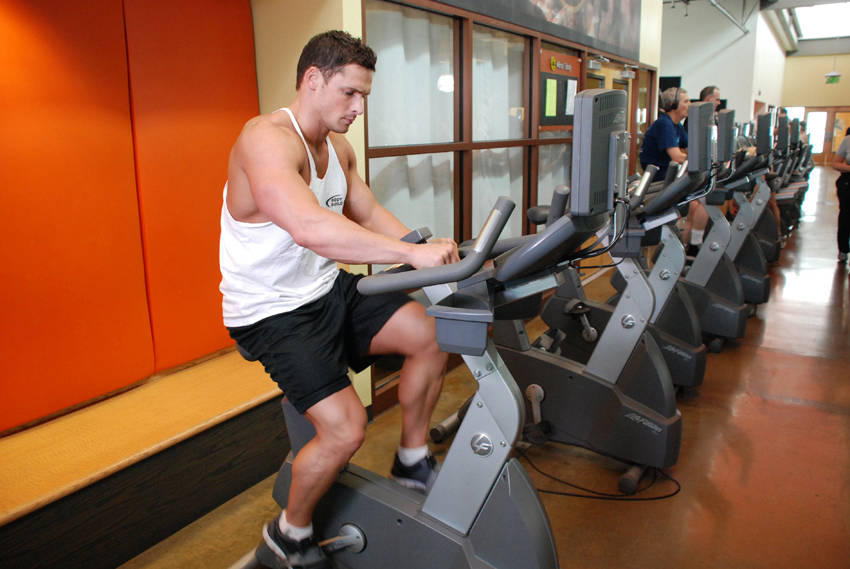
Bicycling
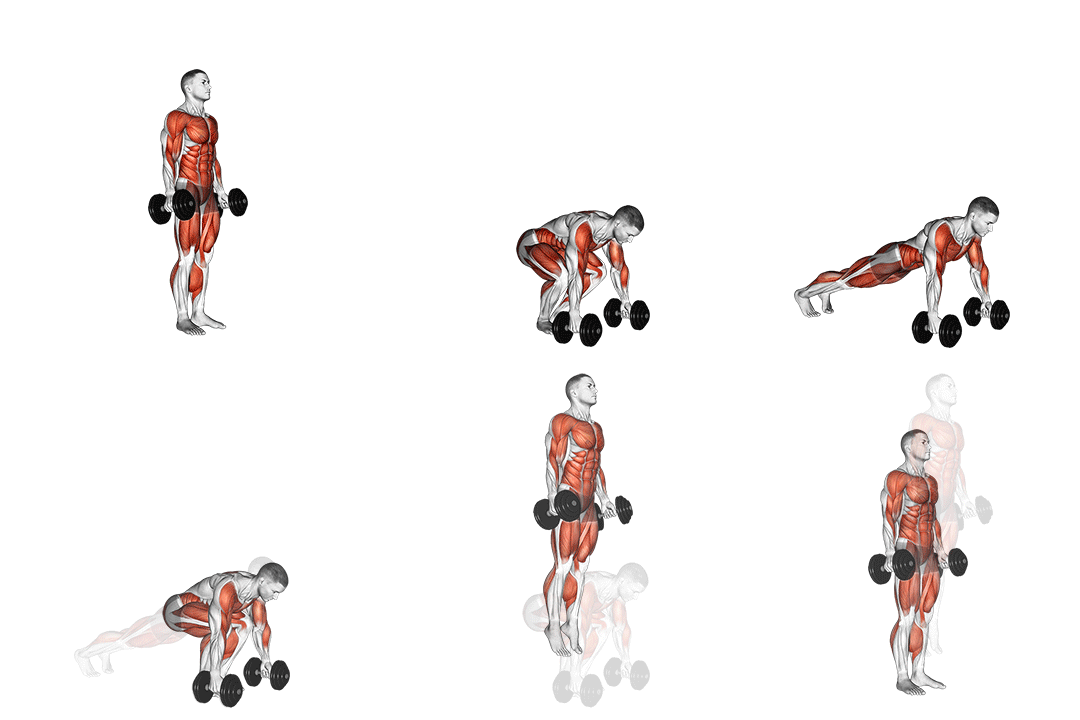
Dumbbell Burpee
Head-to-Head Comparison
| Attribute | Bicycling | Dumbbell Burpee |
|---|---|---|
| Target Muscle |
Quads
|
Quads
|
| Body Part |
Cardio
|
Cardio
|
| Equipment |
Other
|
Dumbbell
|
| Difficulty |
Intermediate
|
Advanced
|
| Movement Type |
Compound
|
Compound
|
| Secondary Muscles |
3
|
6
|
Secondary Muscles Activated
Bicycling
Dumbbell Burpee
Visual Comparison
Overview
Bicycling vs Dumbbell Burpee — you’re choosing between steady, joint-friendly quad work and an advanced, full-body power move. This comparison walks you through primary and secondary muscle recruitment, mechanics and force vectors, equipment needs, learning curve, injury risk, and practical programming. I’ll show specific technique cues (cadence, knee angle, landing mechanics), numbers you can use (rep ranges, interval lengths), and clear recommendations so you can pick the right move for your goals—whether you want sustained quad time-under-tension, explosive conditioning, or a compact home workout.
Key Differences
- Equipment differs: Bicycling uses Other, while Dumbbell Burpee requires Dumbbell.
- Difficulty levels differ: Bicycling is intermediate, while Dumbbell Burpee is advanced.
Pros & Cons
Bicycling
+ Pros
- Low-impact, sustained quad loading for long-duration work
- Easy to scale intensity with resistance and cadence
- Consistent sagittal-plane force vector reduces unpredictable stress
- Great for metabolic conditioning and joint-friendly steady-state work
− Cons
- Requires bike or trainer and proper bike fit
- Less upper-body and core recruitment per rep
- Can cause overuse knee pain if cadence/load and saddle height are incorrect
Dumbbell Burpee
+ Pros
- High peak quad activation and powerful triple extension for explosiveness
- Full-body recruitment — shoulders, triceps, core, and posterior chain engage
- Easy to program for interval-based conditioning or mixed-strength work
- Requires minimal space and a single dumbbell for substantial intensity
− Cons
- Advanced skill demands: coordination of push-up, plank, jump and load
- Higher impact and shoulder/lower-back injury risk without proper technique
- Harder to sustain long steady-state workloads due to high neuromuscular demand
When Each Exercise Wins
Bicycling provides longer time-under-tension for the quads across many repetitions and sustained concentric loading that supports metabolic stress and volume-based hypertrophy. Use higher resistance and 20–40 minute steady-state sessions or 8–15 minute high-volume intervals to prioritize quad size.
Dumbbell Burpee produces higher peak forces and allows progressive overload via heavier dumbbells and slower eccentric tempos, which recruit high-threshold motor units needed for strength and power. Program 3–6 sets of 4–8 reps with controlled eccentrics and loaded jumps for strength emphasis.
Bicycling is easier to learn, lower impact, and more forgiving on technique while still letting you control intensity by cadence and resistance. Beginners can safely build aerobic base and quad endurance with sessions of 20–40 minutes at moderate intensity (RPE 5–6).
Dumbbell Burpee requires minimal equipment and space and combines strength, cardio, and mobility in one movement—ideal for time-crunched home sessions. Use a single 20–60 second AMRAP or EMOM format to get both strength and conditioning benefits.
Frequently Asked Questions
Can I do both Bicycling and Dumbbell Burpee in the same workout?
Yes — pairing works well. Start with dumbbell burpees as a high-intensity strength-power primer (3–6 sets of 4–8 reps) then follow with 20–30 minutes of cycling intervals to build metabolic endurance while keeping quad volume high.
Which exercise is better for beginners?
Bicycling is better for most beginners because it’s lower impact and easier to self-regulate intensity. Begin with 20–40 minutes at moderate resistance and focus on cadence and bike fit before progressing to advanced movements like burpees.
How do the muscle activation patterns differ?
Bicycling produces cyclical concentric knee extension with long time-under-tension and modest peak forces, emphasizing metabolic stress. Dumbbell burpees combine eccentric deceleration, isometric stabilization, and explosive concentric triple extension, producing higher peak activation and rapid stretch-shortening cycles.
Can Dumbbell Burpee replace Bicycling?
Not entirely — dumbbell burpees can replace some conditioning and quad-loading but lack the continuous, low-impact volume of cycling that’s ideal for endurance and high accumulated hypertrophic stimulus. Use burpees for power and metabolic density and cycling for sustained quad volume and joint-friendly cardio.
Expert Verdict
Choose bicycling when your goal is sustained quad development, low-impact conditioning, or high-volume endurance work; it delivers steady concentric knee extension and is easy to scale by resistance and cadence. Pick dumbbell burpees when you want full-body power, higher peak quad activation, and a compact, intense stimulus that builds strength and conditioning together. If you’re new or rehabbing knees, prioritize cycling and focus on proper bike fit and cadence control. If you have solid shoulder and core stability and want explosive strength, program dumbbell burpees with controlled eccentrics, progressive load, and strict landing mechanics.
Also Compare
More comparisons with Bicycling
Compare More Exercises
Use our free comparison tool to analyze any two exercises head-to-head.
Compare Exercises